
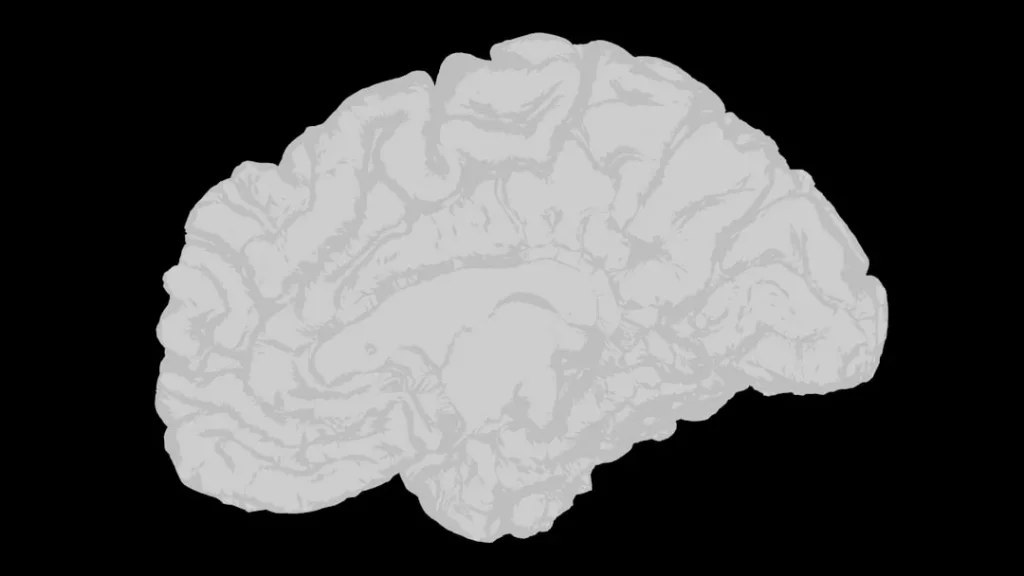
No — if you’re asking is left brain right brain true, the short answer is no. The idea that you’re either a logical “left-brained” person or a creative “right-brained” person is a myth, even though the brain’s two hemispheres do handle some tasks differently. In this article, I’ll show you is left brain right brain true in plain English: where the claim came from, what split-brain research actually found, and what modern neuroscience says instead.
You’ve probably seen a left brain right brain test, a personality quiz, or one of those colorful charts claiming to reveal your hidden brain type. Sounds neat, right? But the real brain is messier and more interesting than that. And when we review popular brain claims at FreeBrain — like our science-based verdict on brain training — the same pattern keeps showing up: catchy ideas spread fast, but the evidence is usually more nuanced.
So what will you get here? A clear answer to is left brain right brain true, a simple explanation of what is the left brain right brain myth, and a breakdown of where did the left brain right brain myth come from. I’ll also separate real hemispheric specialization from the fake personality version, answer common questions like whether smart people are left- or right-brained, and connect this myth to learning, creativity, handedness, and study habits that actually matter — including methods like is the Feynman Technique effective.
One reason this myth hangs on is that it contains a tiny grain of truth. Some functions, like aspects of language, are often more left-lateralized, while some attention and spatial processes lean more right-lateralized. But personality-wide “brain types”? That’s not what the evidence supports. Even broad overviews of lateralization of brain function make that distinction clear.
I’m a software engineer, not a neuroscientist. But building FreeBrain taught me to test popular learning ideas against research instead of repeating productivity folklore. And that’s really the point here: if you want the honest answer to is left brain right brain true, you need the evidence, not the meme version.
📑 Table of Contents
- The short answer: is left brain right brain true?
- What is the left brain right brain myth, and why does it sound true?
- Where did the left brain right brain myth come from?
- What neuroscience actually says about the two hemispheres
- Myth vs reality: left brain vs right brain comparison chart and common mistakes to avoid
- Are left brain right brain tests accurate? A step-by-step way to judge them
- Real-World Application: what this means for studying, creativity, and productivity
- Bottom line: left brained right brained myth debunked
- Frequently Asked Questions
- Is left brain right brain true?
- What is the left brain right brain myth?
- Where did the left brain right brain myth come from?
- Are people really left-brained or right-brained?
- Are smart people left- or right-brained?
- Which is more powerful, left brain or right brain?
- What percentage of people are left-brained vs right-brained?
- Are left brain right brain tests accurate?
- Conclusion
The short answer: is left brain right brain true?
Now for the direct answer. No, is left brain right brain true? Not in the way most people mean it. Modern neuroscience does not support the idea that you’re a globally “left-brained” or “right-brained” person with a fixed personality type. For more on memory and brain health, see our memory and brain health guide.
But wait. Some brain functions really do show hemispheric specialization, and that’s where people get confused. At FreeBrain, we built an evidence-first habit around checking popular brain claims against actual research, the same approach behind our science-based verdict on brain training.
Snippet-ready definition: myth vs reality
So, is left brain right brain true? No. The personality theory is false, while limited hemispheric specialization is real.
Here’s the one-line version to remember: myth = whole-person label; reality = partial division of labor. Research on lateralization of brain function shows that some processes lean more on one hemisphere, such as aspects of language or spatial attention, but your brain works through networks that span both sides.
That’s why is left brain right brain true has a nuanced answer. Language is often more left-lateralized, and some spatial processing is often more right-lateralized, yet creativity, reasoning, planning, and learning all recruit both hemispheres. A broad review hosted by the National Library of Medicine on split-brain and lateralization research supports that distinction between real specialization and exaggerated pop claims: research on split-brain studies and hemispheric specialization.
What people usually mean by left-brained and right-brained
Usually, people mean something like this:
- Left-brained = logical, analytical, organized
- Right-brained = creative, intuitive, emotional
- Your “type” explains how you learn and work best
And that’s the problem. The left brain vs right brain myth turns loose tendencies into rigid identity labels, even though neuroscience does not recognize “left-brained” and “right-brained” as accepted personality types.
Why does it sound true? Because it contains a small scientific seed wrapped in a much bigger story. Personally, I think this is the part most people get wrong: they swap “some tasks show partial lateralization” for “my whole mind runs on one side.” If you want better learning results, methods matter far more than labels, which is why questions like is the Feynman Technique effective are more useful than asking whether is left brain right brain true.
This article is educational, not medical advice. If you have neurological symptoms, persistent cognitive changes, or concerns after injury or illness, consult a qualified healthcare professional. Which brings us to the next question: where did this myth come from, and why has the left and right hemisphere myth spread so widely?
What is the left brain right brain myth, and why does it sound true?
So the short answer is still no: is left brain right brain true isn’t a good way to describe how your mind works. But wait—if the idea is wrong, why does it feel so familiar, and why do so many smart people repeat it?

The myth says one hemisphere dominates your personality, learning style, intelligence, and strongest skills. That’s the core claim behind what is the left brain right brain myth, and it’s also why it keeps showing up in pop psychology, school posters, and even brain-branding content that sounds scientific at first glance.
If you’ve read our science-based verdict on brain training, this pattern will look familiar. A small piece of real neuroscience gets stretched into a big promise about who you are.
The popular personality version of the theory
Here’s the version most people know. “Left-brained” people are supposed to be logical, verbal, mathematical, organized, detail-focused, and good with schedules. “Right-brained” people are supposed to be creative, intuitive, visual, emotional, spontaneous, and big-picture thinkers.
Sounds neat, right? Maybe you picture a spreadsheet-loving planner on one side and an artistic brainstormer on the other. And yet most people recognize themselves in both descriptions. You might love color-coding your calendar and also enjoy music, design, or storytelling.
That’s the giveaway. In left brain right brain psychology, these labels act more like broad personality stereotypes than real brain categories.
- Good at math doesn’t mean your “left brain” runs the show.
- Enjoying art doesn’t mean your “right brain” is dominant.
- Being organized, emotional, analytical, or imaginative reflects habits, traits, training, and context—not a single-sided brain identity.
So what is the left brain right brain myth in plain language? It’s the claim that your brain has a main side, and that side explains how you think, learn, and succeed. That’s simple. It’s also misleading.
Why the logic-vs-creativity split feels convincing
Now this is where it gets interesting. The left brain vs right brain myth borrows just enough truth to sound legitimate.
Some functions are partly lateralized. Language is often more left-lateralized in many people, while some aspects of spatial attention are more right-lateralized. You can see that reflected in basic overviews of brain lateralization and in NIH resources such as NCBI’s summary of neuroanatomy and hemispheric specialization.
But people overextend that into “all logic lives on the left” and “all creativity lives on the right.” That leap is the problem. Is left brain right brain true if you mean total personality sorting by hemisphere? No.
Think about writing an essay. You need language, yes, but also memory, planning, visual imagery, emotion, attention, and motor control to type or write. Both hemispheres and multiple brain networks are involved. Personally, I think this is the part most people get wrong: complex tasks don’t stay in one mental lane.
And here’s the kicker—creativity itself isn’t one thing. Generating ideas, evaluating them, revising structure, and expressing them clearly use different systems. If you’re wondering whether is left brain right brain true because you feel “more logical” or “more creative,” that feeling is real, but the explanation is usually oversimplified.
Why the myth keeps spreading
Because it’s sticky. Identity-based explanations are easy to remember, a little flattering, and weirdly comforting. If you struggle with planning, it feels better to say “I’m just right-brained” than to ask whether you need better systems, practice, sleep, or feedback.
Quizzes help too. Online tests, infographics, and workplace training packages turn the left and right hemisphere myth into a neat binary you can share in 30 seconds. Which brings us to a bigger point: people love simple categories, especially when they explain strengths and struggles with almost no effort.
This also mirrors other appealing but weak ideas, like learning styles. Instead of asking what methods fit the material, people ask what “type” they are. Well, actually, better learning usually comes from strategy choice and practice quality—like checking whether the Feynman Technique is effective for understanding—not from brain-type labels.
So, is left brain right brain true as a personality theory, a learning-style model, or a measure of intelligence? No. It sounds true because it mixes a partial neuroscience fact with a very human desire for a simple self-story. Next, let’s look at where that story came from.
Where did the left brain right brain myth come from?
The idea sounds believable because it started with real neuroscience. But if you’re asking, is left brain right brain true, the history matters: a careful line of research got flattened into a catchy personality story.
I’ve spent a lot of time pulling apart popular brain claims, and the pattern is familiar. It happens with brain training too, which is why our science-based verdict on brain training starts with the same question: what did the research actually test?
📋 Quick Reference
What was real: some brain functions are more lateralized, meaning one hemisphere often contributes more.
What was overclaimed: that healthy people have a dominant “brain side” that determines personality, learning style, or career fit.
Why the myth stuck: it’s simple, visual, and easy to turn into quizzes, posters, and training slides.
Early discoveries about hemispheric specialization
Researchers have known for a long time that the brain isn’t perfectly symmetrical in function. This is called hemispheric specialization, or brain lateralization.
For example, language functions are often more left-lateralized in most right-handed people, while some spatial processing and attention tasks show stronger right-hemisphere involvement. Notice the wording, though: more involved, not exclusively in charge.
That distinction is the whole story. If you’re wondering, is left brain right brain true, the honest answer starts with “partly, but not in the way pop culture means it.”
Work by Roger W. Sperry and Michael S. Gazzaniga helped clarify how the hemispheres can process information differently under special conditions. Their names matter here, but well, actually, their research did not prove that one group of people is “logical” and another is “creative.”
How split-brain findings were oversimplified into pop psychology
Split-brain research focused on a very unusual group: patients whose corpus callosum, the large bundle connecting the hemispheres, had been severed, often to reduce severe epilepsy. Under those clinical conditions, the two hemispheres could sometimes respond differently when information was presented in tightly controlled experiments.
You can read a plain-language overview in Wikipedia’s summary of split-brain research, and the historical background is also tied to Roger Sperry’s work on hemispheric specialization. The key point is simple: these studies examined disconnected hemispheres, not everyday thinking in healthy brains.
And here’s the kicker — findings from rare surgical cases got generalized far beyond what the evidence justified. “The hemispheres can handle some tasks differently” became “you are a right-brained person.” That’s a huge leap.
- Real finding: the hemispheres can show different processing strengths.
- False claim: your personality lives mainly on one side.
- Real finding: split-brain patients revealed what connection pathways do.
- False claim: healthy learners need teaching matched to a brain side.
So, where did the left brain right brain myth come from? From a mix of legitimate split-brain research, oversimplified summaries, and a public appetite for neat categories. That’s why asking is left brain right brain true requires looking at the original context, not just the meme version.
How schools, self-help, and workplace content spread the myth
Once the idea escaped the lab, it became marketable. Schools used posters. Self-help books used identity labels. Workplace trainers turned it into one-slide charts with “left = analytical” and “right = creative.”
Those charts leave out the corpus callosum, distributed brain networks, and the fact that most real tasks use both hemispheres together. Writing an essay, solving an equation, reading a map, or learning a language? None of that is a one-sided event.
This is the part most people get wrong. A “left brain right brain test” may feel insightful, but it usually tells you more about your self-image than your neurobiology.
And when people want better learning results, brain-type labels rarely help. Practical methods do. If you want evidence-based alternatives, start with whether is the Feynman Technique effective and use concrete memory methods like these elaborative rehearsal examples.
So, is left brain right brain true as a personality system? No. Is that idea accurate in the narrow sense that some functions are somewhat lateralized? Yes, to a limited extent. Which brings us to the next question: what does modern neuroscience actually say about how the two hemispheres work together?
What neuroscience actually says about the two hemispheres
The myth had a catchy origin. But the real science is more useful. If you’re asking is left brain right brain true, the short answer is no: not as a personality label, and not as a reliable way to sort people into fixed thinking types.
That matters because pop-neuroscience claims spread fast, much like other brain myths we’ve unpacked in our science-based verdict on brain training. Modern neuroscience does support hemispheric specialization, but it does not support the idea that one half of your brain runs your whole identity.
Real lateralization: some functions are more dominant on one side
Here’s the part most people get wrong. Brain lateralization is real, but it’s partial, not total. Some functions tend to be more dominant in one hemisphere, yet that’s very different from saying you are a “left-brained person” or a “right-brained person.”
Language is the classic example. In many right-handed people, and in a good number of left-handed people too, parts of language processing are more left-lateralized. But wait. That doesn’t mean all language lives on the left, or that every person has the same pattern.
Research on the lateralization of brain function shows a messier, more realistic picture: speech production, prosody, attention, emotion, and spatial processing can lean one way or the other, with meaningful variation across individuals. So when people ask is left brain right brain true, the evidence-based answer is that some tasks show asymmetry, while whole-person labels don’t hold up.
Three examples make this clearer:
- Reading recruits visual processing, language networks, attention control, memory, and eye-movement planning.
- Music draws on timing, pattern detection, emotional meaning, prediction, and memory.
- Problem-solving often blends verbal analysis with mental imagery and flexible attention.
Personally, I think this is why simple brain-type quizzes feel convincing. They take one real idea — hemispheric specialization — and stretch it way past what the science can support.
Why both hemispheres work together most of the time
Most everyday thinking is network-based. Not side-based. And that’s why is left brain right brain true keeps getting the wrong answer in popular culture.
Take writing. You need language retrieval, motor planning, working memory, visual monitoring, and error correction. Conversation? Same story, plus social cues, tone, timing, and comprehension. Navigation adds spatial mapping, memory, decision-making, and attention shifts.
Studying is another great example. If you explain an idea in your own words, test yourself, and connect it to prior knowledge, you’re using broad networks across both cerebral hemispheres. That’s also why methods like is the Feynman Technique effective and practical elaborative rehearsal examples help more than trying to match your study style to a supposed brain side.
Now this is where it gets interesting. Modern brain imaging focuses less on simplistic left/right labels and more on distributed activity across networks that coordinate attention, memory, language, movement, and control. Imaging can show relative dominance for certain functions, yes, but it cannot sort healthy people into stable whole-brain personality camps.
So are people really left-brained or right-brained? As a broad personality identity, no. Is one side more “powerful”? Also no. Healthy cognition depends on coordination, not a winner-takes-all hemisphere.
The role of the corpus callosum in integration
OK wait, let me back up. The two hemispheres aren’t isolated rivals. They’re connected by the corpus callosum, a thick bundle of nerve fibers that acts like a high-speed bridge between the left and right sides of the brain.
That bridge matters constantly. When you read, listen, write, play music, or practice immersion language learning, signals move between specialized regions so the whole system can work as one. The left and right hemisphere myth falls apart because real cognition depends heavily on this integration.
And here’s the kicker — the better question isn’t “Which side are you?” It’s “Which networks are active, and how well do they coordinate for this task?” That framing fits actual evidence-based neuroscience far better than personality memes ever did.
So, is left brain right brain true? Only in the narrow sense that some functions show partial lateralization. In the broader sense people usually mean — creativity on one side, logic on the other, fixed brain-type identity — no. Next, let’s make that distinction visual with a myth-vs-reality comparison chart and the biggest mistakes to avoid.
Myth vs reality: left brain vs right brain comparison chart and common mistakes to avoid
The last section covered what the two hemispheres actually do. Now let’s clear up the part most people still get wrong: when people ask is left brain right brain true, they’re usually mixing real hemispheric specialization with pop-psychology personality labels.
That confusion didn’t come from nowhere. Split-brain research in the 1960s and 1970s showed some tasks can be more lateralized, but self-help books, school posters, and workplace quizzes stretched that into “your hemisphere determines who you are.” It doesn’t. If you’ve read our science-based verdict on brain training, this pattern will feel familiar: a small real finding gets turned into a giant claim.
Personality claims that are false
Here’s the short version of the left brained right brained myth debunked: people are not neatly divided into two brain-based personality types. Research using brain imaging has not supported the idea that most people are globally “left-brained” or “right-brained” across their whole life, intelligence, or identity.
📋 Quick Reference
- Claim: Left-brained people are smarter. Reality: False. Intelligence depends on distributed networks across both hemispheres.
- Claim: Right-brained people are more creative. Reality: False. Creativity draws on multiple systems, including executive control, memory, and association networks.
- Claim: Handedness determines brain type. Reality: False. Handedness and the brain are related in limited ways, but being left-handed does not make you “right-brained.”
- Claim: One side controls your learning style. Reality: False. The learning styles myth has weak evidence, and hemisphere labels don’t predict how you learn best.
Want a left brain vs right brain characteristics chart you can actually trust? Use one that separates false personality claims from narrow task differences. That’s the only version worth keeping.
And what about the old question, are smart people left or right brained? Neither. There’s no accepted percentage of people who are supposedly one or the other, and no hemisphere is “more powerful” in any general sense.
Functional differences that are partly true
Now this is where it gets interesting. Some brain functions are commonly more lateralized, but that still doesn’t mean your life runs on one side.
- Language production is often more left-lateralized, especially in right-handed people.
- Some aspects of spatial attention are often more right-lateralized.
- Face processing, prosody, and parts of emotional tone can show asymmetry too.
- But complex tasks like reading, problem-solving, music, and creativity recruit both hemispheres working together.
A classic review by Michael Corballis in PLoS Biology argued that hemispheric specialization is real, but the popular “two kinds of people” story goes far beyond the evidence. So if you’re asking is left brain right brain true, the accurate answer is: partly true for some functions, false for personality destiny.
That’s why a real brain function chart should use phrases like “often more involved” or “commonly more lateralized.” Absolute statements are usually wrong. Well, actually, they’re worse than wrong—they’re misleading.
Common mistakes and what to avoid
The biggest mistake is using brain-type labels to explain grades, focus, creativity, or career fit. A student struggling in math isn’t failing because they’re “too right-brained.” More often, the issue is background knowledge, practice quality, sleep, stress, or weak study methods.
Three things matter more than labels: repetition, feedback, and retrieval. If you want something practical, try methods like explaining ideas in simple language—our piece on is the Feynman Technique effective covers why that works better than identity-based myths.
Another mistake? Confusing handedness with hemisphere dominance, or assuming artists use one side while engineers use the other. That logic-vs-creativity split is too neat to be real. Evidence indicates creative work needs evaluation and structure, while analytical work often needs imagination and flexible thinking.
So, is left brain right brain true in any useful everyday sense? Not as a label for who you are. And if you keep using it that way, you can limit your effort, narrow your identity, and ignore factors like stress, environment, and habits that actually change performance. We’ll test that idea directly next by looking at whether left-brain/right-brain quizzes tell you anything real—and how to judge them.
Are left brain right brain tests accurate? A step-by-step way to judge them
That comparison chart helps separate real brain science from pop psychology. But if you’re still wondering is left brain right brain true, here’s the short answer: most online quizzes are not scientifically valid measures of hemisphere dominance, personality, or learning potential.
Personally, I think this is where people get pulled in. A quiz feels objective. But when you compare those claims with evidence-based neuroscience, the typical left brain right brain test falls apart fast.
Why online quizzes feel convincing
Most quizzes feel accurate for psychological reasons, not because they measured your brain. And yes, that includes the polished ones with colorful diagrams and percentages.
First, they use vague statements. This is the Barnum effect: people tend to accept broad descriptions as personally meaningful, especially when the wording sounds flattering or insightful. Many personality tests lean on this, and left brain right brain test results often do the same thing.
Second, they force a binary choice. Are you “logical” or “creative”? Structured or intuitive? OK wait, let me back up. Real people are usually both, depending on the task, context, and skill level.
Third, confirmation bias does the rest. If you already see yourself as artistic, you’ll notice the “right-brained” parts that fit and ignore the rest. Which brings us to the real question: is left brain right brain true as a personality system? Not in the way these quizzes claim.
Binary labels are emotionally satisfying. They make identity feel simple. But brains aren’t simple, and modern imaging research shows that most complex tasks recruit networks across both hemispheres rather than one side acting alone.
Red flags that a brain-type test is pseudoscience
If you’re asking are left brain right brain tests accurate, start with the red flags. Most bad quizzes show the same pattern.
- No peer-reviewed citations or links to real research databases.
- No explanation of validity, reliability, or how the test was developed.
- Claims to reveal your intelligence, creativity, ideal job, or relationship style.
- Absolute language like “you only use your right brain” or “left-brained people can’t be artistic.”
- Confusion between preferences and neuroscience.
Well, actually, there is a grain of truth underneath the myth. Some functions do show hemispheric specialization. For example, language is often more left-lateralized in many people, while some aspects of spatial processing can lean right. But that is very different from saying whole personalities live in one hemisphere.
You’ll also see fake percentages: “You’re 83% right-brained.” Based on what measurement? There usually isn’t one. If a quiz can’t explain how it maps answers to brain function, is left brain right brain true stops being a neuroscience question and becomes a marketing trick.
How to fact-check a brain-type claim
How to fact-check a brain-type claim
- Step 1: Look for real sources. Check whether the article links to places like PubMed or the National Institute of Neurological Disorders and Stroke, not just other blogs repeating the same claim.
- Step 2: Ask what is actually being measured. Is the claim about one function, like language lateralization, or a whole personality type? Those are not the same thing.
- Step 3: Watch for absolute words and unsupported numbers. “Always,” “only,” and neat percentages are common signs that the claim is oversold.
- Step 4: Ask the practical question. Does this change what you should do to learn better, or is it just giving you an identity label?
This last step matters most. A quiz result should not decide how you study, what you’re capable of, or whether you can improve. If you want methods with stronger support, start with strategies that improve understanding and recall, like retrieval practice and explanation; for example, here’s our breakdown of is the Feynman Technique effective.
So, is left brain right brain true? As a catchy pop-psych personality split, no. As a simplified distortion of real hemispheric specialization, yes — but only in a narrow and much less dramatic sense.
And here’s the kicker — the myth spreads because it feels useful, even when it isn’t. Next, let’s turn that into something practical: what this actually means for studying, creativity, and productivity in real life.
Real-World Application: what this means for studying, creativity, and productivity
If the last section helped you judge online quizzes, this section answers the practical question. Once you stop asking “is left brain right brain true?” as an identity test, you can start asking what actually improves learning and performance.
That shift matters. Whether is left brain right brain true comes up in study advice, workplace personality content, or creativity myths, the useful answer is the same: your habits, workload, sleep, and practice design usually explain more than any “brain type” label.
Better ways to improve learning than chasing a brain type
If you want better study skills, don’t match methods to a supposed hemisphere identity. Match them to how memory works.
Research in cognitive psychology has repeatedly found that retrieval practice, spaced review, and elaboration improve long-term retention more than passive rereading. A well-known review by Dunlosky and colleagues in Psychological Science in the Public Interest highlighted practice testing and distributed practice as especially effective for many learners and subjects.
So how do the brain hemispheres actually work during learning? Not as separate personalities. Complex tasks recruit distributed networks across both sides of the brain, with some partial specialization, but your exam score won’t rise because you found the “right” hemisphere-friendly trick.
What helps instead?
- Use retrieval practice: close the book and recall key ideas from memory.
- Add elaboration: explain why a fact is true and how it connects to what you already know.
- Space your review: revisit material over days and weeks, not one long cram session.
- Take active notes: summarize, question, compare, and generate examples.
For exam prep, that might mean 20 minutes of self-testing, then checking errors, then a short spaced review two days later. For self-study, it might mean building your own examples from topics like recursion, grammar, or statistics. If you need practical models, these elaborative rehearsal examples show what deeper processing looks like in real study sessions.
And here’s the kicker — focused reading, technical problem-solving, and creative writing all rely on multiple systems at once: attention control, working memory, prior knowledge, language, and feedback. So when people ask, “is left brain right brain true for studying?” the evidence-based answer is mostly no.
From experience: what actually changes performance
After building FreeBrain tools and reviewing how learners use them, one pattern keeps showing up. People improve more from better structure than from better labels.
Personally, I think this is the part most people get wrong. They ask whether are people really left brained or right brained, when the real bottlenecks are usually inconsistency, overload, weak feedback loops, poor note quality, bad reading strategy, stress, or not enough sleep.
Well, actually, performance differences often look mysterious only from a distance. Up close, they’re usually concrete:
- A language learner plateaus because review is irregular, not because they’re “right-brained.”
- A technical student struggles because they recognize solutions but can’t retrieve steps independently.
- A creative professional feels blocked because stress narrows attention and reduces cognitive flexibility.
- A reader loses focus because the environment is noisy and the task is too long for their current attention span.
This is where evidence-based neuroscience helps. It gives you better questions: Are you sleeping enough? Are you practicing recall? Are you getting feedback? Are you switching contexts too often? Those questions are far more useful than “is left brain right brain true for me?”
⚠️ Important: If concentration, memory, anxiety, or fatigue problems are persistent or severe, treat this as educational information, not medical advice. Consult a qualified healthcare professional, because sleep disorders, anxiety, depression, and other health issues can affect cognitive performance.
Quick Reference: what to remember instead
📋 Quick Reference
- You are not a fixed left-brained or right-brained person.
- Some functions are partly lateralized, but that’s not the same as a personality type.
- Complex work uses both hemispheres plus broader brain networks.
- Study habits matter more than brain-type labels.
- Better explanations for poor performance: sleep, stress, weak practice, low-quality notes, and distracting environments.
- If you’re still wondering “is left brain right brain true?”, remember this: the left and right hemisphere myth overpromises, while good systems quietly work.
So no, there isn’t a “more powerful” side that determines whether you’re logical, creative, or productive. Which brings us to the final takeaway: the left brained right brained myth debunked, plainly and directly.
Bottom line: left brained right brained myth debunked
So here’s the direct answer. If you’ve made it this far, the short version is simple: is left brain right brain true as a personality theory? No. The left brained right brained myth debunked means this idea survives in pop psychology, not modern neuroscience.
One-paragraph takeaway
Research on hemispheric specialization is real, but it’s limited. Some functions show stronger involvement in one hemisphere than the other—language is often more left-lateralized, and some attention or spatial processes lean right—but whole-person labels like “logical left-brained” or “creative right-brained” don’t hold up well in brain imaging research. A widely cited 2013 analysis from the University of Utah found no evidence that people consistently rely more on one hemisphere overall for personality or thinking style. So, is left brain right brain true? Only in the narrow sense that certain tasks can be somewhat lateralized, not in the broad sense that you have a fixed brain type.
What to remember instead
Three things matter more than labels:
- Where the myth came from: early split-brain findings got stretched into personality claims by media, education, and workplace quizzes.
- What neuroscience supports: both hemispheres work together constantly through dense cross-talk.
- Why labels fail: they can distract you from habits that actually improve performance, like sleep, retrieval practice, and focused repetition.
Personally, I think this is the part most people get wrong. If you want better learning, use evidence-based study skills and basics like sleep memory and focus, not online tests built on the left and right hemisphere myth. And if you’re still wondering, is left brain right brain true for handedness, creativity, or “which side is stronger”? Not in the simplified way those claims are usually sold.
This is written from an evidence-first perspective by a software engineer and self-taught learner focused on translating research into practical study advice. It’s educational, not a diagnosis or substitute for medical or psychological evaluation; if you have neurological symptoms, cognitive concerns, or mental health questions, consult a qualified clinician. And if you want practical next steps, FreeBrain’s study and focus resources are a better place to start. Which brings us to the most common questions people still ask.
Frequently Asked Questions
Is left brain right brain true?
No—if you’re asking whether people fall into fixed “left-brained” or “right-brained” personality types, the best answer is no. Is left brain right brain true in any sense? A little: some functions show partial hemispheric specialization, but everyday thinking, learning, and decision-making usually depend on both hemispheres working together through connected brain networks.
What is the left brain right brain myth?
What is the left brain right brain myth? It’s the claim that one hemisphere determines your personality, intelligence, creativity, and learning style—so you’re supposedly either analytical and “left-brained” or artistic and “right-brained.” But is left brain right brain true as a full explanation of how people think? No. Research supports partial lateralization for some functions, not whole-person brain types, and the myth sticks around because it’s simple, flattering, and easy to turn into quizzes and social media labels.
Where did the left brain right brain myth come from?
Where did the left brain right brain myth come from? Mostly from oversimplified versions of real split-brain and lateralization research, including work associated with Roger Sperry and Michael Gazzaniga. Their findings helped show that some functions can be more lateralized than others, but is left brain right brain true as a personality theory? No—and pop psychology stretched a nuanced scientific idea into a catchy story about identity.
Are people really left-brained or right-brained?
No, evidence doesn’t support stable whole-brain personality types, so are people really left brained or right brained is the wrong question. Is left brain right brain true in a limited way? Yes, individual differences exist, and some tasks may lean more on one hemisphere than the other, but complex behavior—attention, language use, planning, creativity, emotion—depends on distributed networks rather than one side acting alone.
Are smart people left- or right-brained?
No. Are smart people left or right brained is based on a false split, because intelligence doesn’t sort neatly into hemisphere labels. Is left brain right brain true as an ability ranking system? Not at all—reasoning, memory, creativity, and problem-solving involve multiple systems across the brain, so using “left-brained” or “right-brained” as shorthand for talent usually hides more than it explains.
Which is more powerful, left brain or right brain?
Neither hemisphere is simply “more powerful” overall. Which is more powerful left brain or right brain depends on the task, because each side contributes differently and constantly exchanges information with the other. So is left brain right brain true as a competition between two separate minds? No—the more useful model is integration, not rivalry. For a broader breakdown of common brain misconceptions, you can also read FreeBrain resources on learning and memory.
What percentage of people are left-brained vs right-brained?
There’s no accepted scientific percentage, because the categories themselves aren’t valid personality types. What percentage of people are left brained vs right brained sounds like a measurable fact, but is left brain right brain true in that population-sorting sense? No. Be skeptical of quizzes or listicles that invent neat percentages; a better question is which specific functions show variation across people, not which “brain type” you belong to.
Are left brain right brain tests accurate?
Usually not. Are left brain right brain tests accurate as scientific measures? In most cases, no—these tests often rely on vague personality statements, forced either-or choices, and claims that go far beyond what brain research supports. Is left brain right brain true enough to justify those quizzes? Not really. Two fast red flags: they assign you a fixed identity after a few questions, and they don’t cite credible sources such as NINDS brain education materials or peer-reviewed research.
Conclusion
So, is left brain right brain true? Not in the way pop psychology usually claims. The most useful takeaway is this: don’t use “left-brained” or “right-brained” labels to explain your strengths, your study style, or your career fit. Instead, focus on skills you can actually train. If a quiz tells you you’re “logical, not creative” or “creative, not analytical,” treat that as entertainment, not diagnosis. And when you’re trying to learn better, build systems around what evidence supports: active recall, spaced repetition, focused practice, sleep, and feedback.
That’s good news, honestly. You’re not stuck with one half of your brain running the show. Your brain works as a connected system, and that means you can improve across areas that may have felt “not you” before. Struggle with math but love writing? You can still get better at quantitative thinking. Great with structure but feel scattered creatively? That can improve too. This is the part most people get wrong: once you stop asking “is left brain right brain true” as an identity question, you can start asking a better one — “What skill should I train next?”
If you want to turn that into action, explore more evidence-based learning guides on FreeBrain.net. A good next step is reading How to Study Effectively and Active Recall vs Passive Review. They’ll help you replace brain-type myths with methods that actually work. And if you ever catch yourself wondering again, “is left brain right brain true?” use that as your cue to skip the label, trust the evidence, and train the skill.