How to Build a Weekly Study Schedule for Busy Students

Student planner, pen, and yellow alarm clock illustrating time management tips for students on a pastel backdrop
Published
📖 14 min read · 3164 words

Most study advice falls apart the second real life shows up. If you’re looking for time management tips for students that actually work when you’re juggling classes, work shifts, commuting, and family stuff, you don’t need a perfect color-coded calendar — you need a system you can keep using on messy weeks.

That’s the problem, right? You start with a neat plan on Sunday, then Monday runs late, Tuesday gets overloaded, and by Wednesday your whole weekly study plan for students is wrecked. Research on time management and planning behavior helps explain why rigid schedules often fail: they look efficient on paper but leave no room for real constraints.

So here’s the deal. This guide will show you how to create a weekly study schedule using a repeatable weekly loop: first audit your fixed commitments, then assign study blocks based on your actual energy, then build in flexible focus and review sessions so missed time doesn’t ruin the whole week. You’ll get a practical framework, a realistic weekly planner template, sample schedules for classes and work, and better time management tips for students than the usual “just wake up earlier” nonsense.

And yes, we’ll keep it concrete. You’ll see how to structure deep-work blocks, lighter review sessions, catch-up space, and weekly resets — plus when to use active recall, spaced repetition, and other science-backed study methods so your schedule helps you remember more, not just sit at your desk longer.

I’m a software engineer, not a neuroscientist, but I’ve spent years building FreeBrain tools for self-learners and testing these systems in real study life. Personally, I think the best time management tips for students are the ones you can still follow when the week goes sideways — and that’s exactly what this article is built to help you do.

Why busy students need a weekly loop

If daily routines were enough, most students wouldn’t keep rebuilding their schedule every Monday. The real problem is simpler: most time management tips for students assume stable days, but your week probably includes shifting classes, work, commuting, family stuff, and energy that rises and crashes. Curious about productivity and focus beyond this article? Our productivity and focus guide goes deeper.

So here’s the deal. A weekly loop means you plan the week, study in focused blocks, review what actually happened, and adjust before the next week starts. That’s why I built FreeBrain planning tools as a software engineer and self-directed learner — and why I prefer evidence-based systems over productivity hype. If you want a place to start, use this weekly planner template.

Why rigid routines break

Most students design a fantasy schedule: four hours every night, zero interruptions, perfect focus. Then one late shift or missed class blows it up, especially when hidden drains like meal prep, admin tasks, transition time, and mental fatigue never made it onto the calendar.

A realistic study schedule for busy students has to fit a study schedule with classes and work, not compete with it.

The 4-part weekly loop

Four parts matter:

  • audit fixed commitments
  • choose weekly priorities
  • assign blocks by energy level
  • review and adjust in 15 minutes

Need help choosing priorities and capturing loose tasks? A simple GTD setup for students makes this part much easier. And for block design, compare Pomodoro vs time blocking based on the kind of work you’re doing.

Key Takeaway: Weekly planning beats rigid daily planning because one bad Tuesday doesn’t ruin the system. The goal is weekly progress, not perfect streaks.

What this guide will help you do

This guide will show you how to create a weekly study schedule that works for college students, at-home learners, and working students. Personally, I think this is the part most people get wrong: adding more hours matters less than using better methods, protecting sleep, and managing workload. Research on sleep and memory consolidation from NCBI Bookshelf and evidence around retrieval practice and the testing effect point in the same direction.

You’ll get a realistic study schedule for busy students, copyable templates, one class-and-work example, and a weekly reset method. Which brings us to the first step: map your real week before you try to improve it.

Map your real week first

If the weekly loop is the system, this is the setup. For practical time management tips for students, start by mapping reality, not your ideal self, using a weekly planner template and your course list.

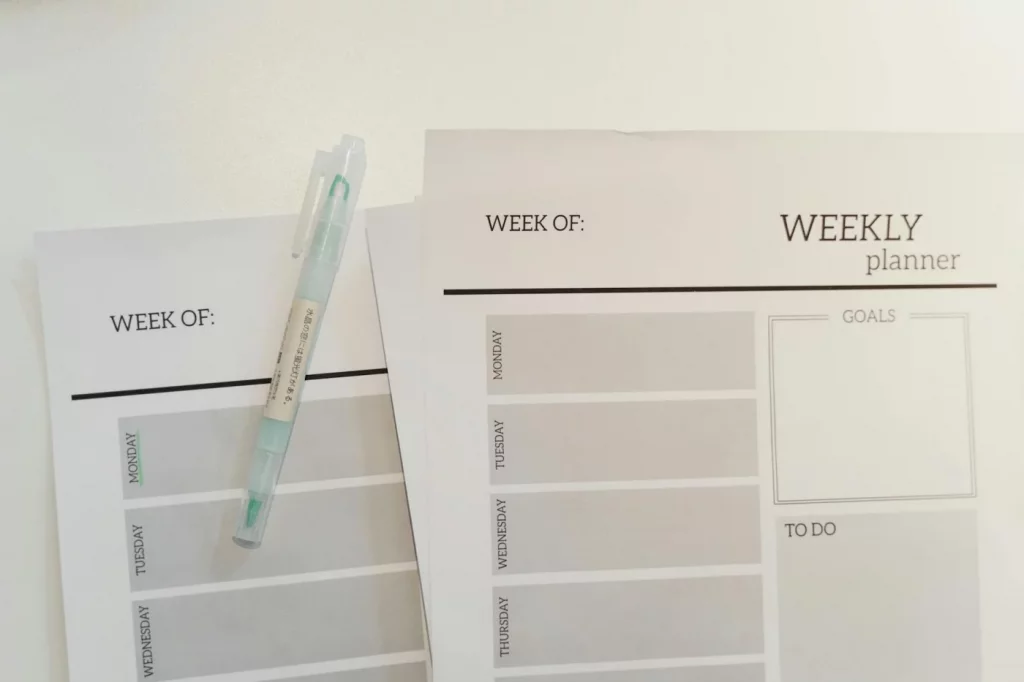
Planner, sticky notes, and lined papers mapping a real week with time management tips for students
Start by mapping your real week so you can see where study time actually fits. — Photo by Tara Winstead / Pexels

How to create a weekly study schedule

  1. Step 1: Block fixed commitments first.
  2. Step 2: Find your true study windows.
  3. Step 3: Pick 1-3 weekly outcomes, then place study blocks.

Step 1: List fixed commitments

Sleep goes in first. Then your class schedule, work shifts, commute, meals, exercise, family duties, errands, and recovery time. Sleep isn’t optional padding; both CDC guidance on sleep health and National Institute of Mental Health information on sleep explain why sleep affects attention, memory, and recovery.

Try the math. A student with 15 class hours, 12 work hours, 7 commuting, 56 sleeping, and 14 for meals and personal care already has 104 hours spoken for before errands or downtime. And that’s exactly why a study schedule with classes and work has to be built from constraints.

Step 2: Find true study windows

Open time isn’t the same as usable focus time. A 9 p.m. slot after a shift is not equal to a 10 a.m. library block between classes, so label each window high, medium, or low energy.

Personally, I think this is the part most people skip. Capture assignment deadlines from every course in one place, then use a simple GTD setup for students so nothing hides in five different apps.

Step 3: Pick weekly outcomes

Don’t schedule 17 intentions. Choose 1-3 outcomes: finish biology chapter quiz, draft history essay intro, review 120 flashcards across 4 sessions. That’s one of the most useful time management tips for students because it forces tradeoffs.

  • Urgent and important: due soon, high grade impact
  • Important, not urgent: exam prep, long projects
  • Low energy blocks: admin, reading, flashcards

Then place blocks where they fit best. Use demanding work in stronger windows and lighter review in weaker ones; if you need help structuring sessions, compare Pomodoro vs time blocking. Which brings us to energy — because not all hours are created equal.

Build blocks that fit your energy

Once you’ve mapped your real week, don’t fill empty space blindly. The best time management tips for students match task difficulty to your energy, not just your calendar, and a weekly planner template makes that much easier to see.

High-energy vs low-energy work

Hard work goes where your brain is sharpest. For many students, that means mornings for calculus, coding, essay drafting, or concept-heavy reading, while lower-energy evenings work better for flashcards, review, discussion posts, printing, and organizing notes.

But wait. Don’t copy someone else’s ideal weekly study schedule for college students. Test your own deep work sessions and low-energy tasks for 2-3 weeks, then adjust after reviewing what actually got finished; using a capture system like this GTD setup for students helps keep priorities realistic.

How long each block should be

  • 30 minutes: flashcards, quiz review, admin, note cleanup
  • 60 minutes: focused reading, one problem set chunk, short writing sprint
  • 90 minutes: deep work if your attention and schedule allow

Personally, I think 60 minutes is the sweet spot for demanding tasks, especially if you’re building around classes and commuting. FreeBrain’s guide to a 60-minute deep work block pairs well with evidence from research on active recall and retrieval practice, because time blocking works best when you’re testing yourself, not rereading.

Breaks, buffers, and rest

Use 5-minute breaks after 25-30 minutes of lighter work, or after 50-60 minutes of heavier work. And here’s the kicker — add 10-15 minutes between classes and study blocks, plus 1-2 unscheduled buffer blocks each week for spillover.

Protect one lighter evening or half-day weekly too. Research summarized by the American Psychological Association on burnout supports flexible planning and recovery, which is why these time management tips for students work better when paired with spaced repetition, active recall, and smart breaks. Next, I’ll show you templates and real-world examples.

💡 Pro Tip: Build your week in layers: classes first, then high-energy study blocks, then low-energy review. Leave buffers last, not as an afterthought.

Templates and real-world examples

Once you’ve matched study blocks to your energy, the next step is simple: put them on a real week. These time management tips for students work better when you can copy a structure, tweak it fast, and keep one visible plan in a weekly planner template.

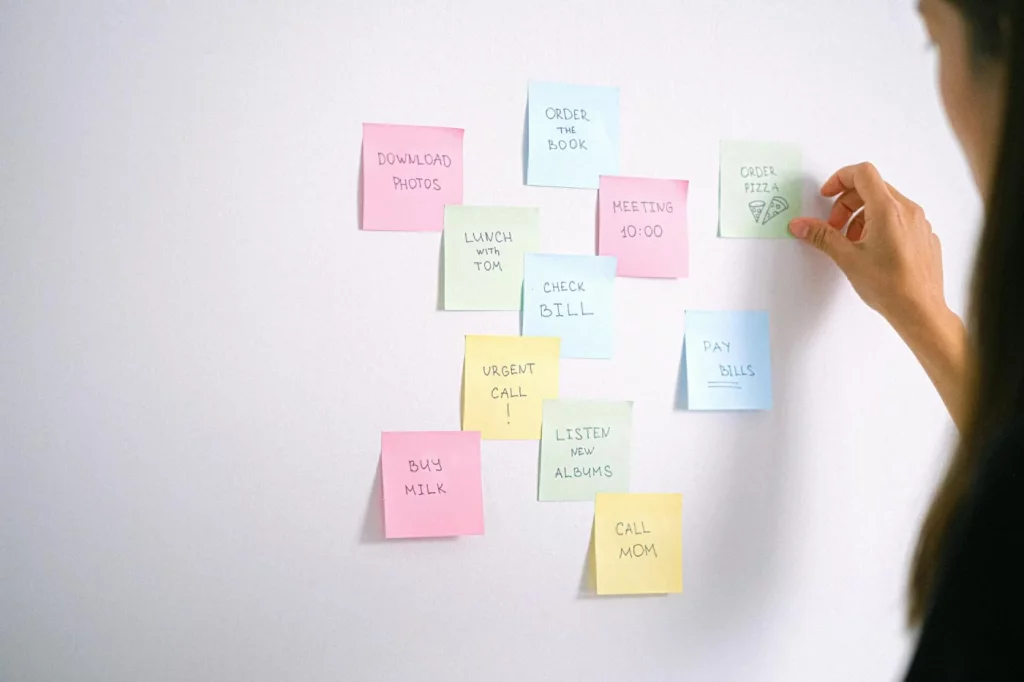
Whiteboard with sticky note templates showing time management tips for students and a weekly study loop
Sticky note templates on a whiteboard illustrate a practical weekly study loop students can adapt to plan classes, homework, and revision. — FreeBrain visual guide

Template for a full-time student

For a solid study schedule template for students, aim for 5-6 total study blocks, not every free hour. That means 2 deep-work blocks, 3 shorter review blocks, 1 catch-up block, and 1 weekly review on Friday afternoon or Sunday.

  • Mon/Wed: 90-minute deep work after class
  • Tue/Thu/Sat: 30-45 minute review blocks
  • Fri: 45-minute weekly review and planning
  • Sun: 60-minute catch-up or preview

Personally, I think this is why many weekly study schedule for college students plans fail: they leave no slack. If exams are close, fold this into a 30-day exam study plan.

Template with classes and work

A weekly study schedule for working students needs shorter weekday blocks and one longer weekend reset. Example: classes 9-12 Monday to Friday, commute 12-1, work Tuesday/Thursday 5-9 p.m., so hard tasks go Monday and Wednesday 2-3:30, while work days get 25-minute review or admin only.

OK wait, one caution: commute audio review is fine for vocab or summaries, but not core learning. Research on attention and working memory, including material indexed by the National Library of Medicine, supports keeping demanding thinking for low-distraction blocks.

At-home timetable and friction fixes

Need a timetable for study for a student at home? Try 6:30-7:30 a.m. focus, 3:30-4:00 p.m. admin/review, and 8:00-8:20 p.m. light recall. In a noisy house, use a pre-packed study kit, headphones, and one backup location; if that’s your issue, this guide on study in a noisy house helps.

📋 Quick Reference

Build a compact table with five columns: day, fixed commitments, focus block, review block, and buffer block. That one view makes time management tips for students easier to follow when the week changes.

Which brings us to the next piece: what to do inside those blocks, what mistakes to avoid, and how to reset the whole week when life gets messy.

Study methods, mistakes, and weekly reset

Templates help, but your schedule still lives or dies by what you do inside each block. That’s where most time management tips for students fall apart: the calendar looks neat, but the study method is weak.

What to do inside each block

Keep it simple. In 30 minutes, do 5 minutes setup, 20 minutes active recall, and 5 minutes recap. In 60 minutes, spend 10 minutes reviewing notes, 35 to 40 minutes on retrieval or problem solving, then 10 minutes checking errors. In 90 minutes, run two focused rounds with a short break between them.

Active recall means pulling information from memory instead of rereading. Spaced repetition means revisiting material over increasing gaps of time. Research indexed on PubMed supports both retrieval practice and spacing, which is why I’d start with these science-backed study methods.

  • 5-10-15 method: 5 minutes preview, 10 minutes focused recall, 15 minutes practice or summary
  • 3-2-1 method: 3 key ideas, 2 questions, 1 next action

Mistakes that quietly wreck schedules

Most schedules fail because they’re fantasy maps. Students overbook every hour, ignore commute and setup time, put hard tasks in low-energy slots, rely on rereading, and skip weekly review. And yes, your phone can erase a whole block faster than you think.

The 15-minute weekly reset

Here’s how to adjust a study schedule when life gets busy: do a 15-minute weekly review. Keep what worked, move what slipped, drop low-value tasks, then rebuild around next week’s deadlines, classes, work, and energy patterns. That’s the realistic routine behind a weekly study schedule for students who procrastinate.

If stress, sleep problems, anxiety, or burnout keep disrupting your plan and daily function, consult a qualified professional. Next, I’ll answer the questions students usually ask once they try to make this system stick.

Frequently Asked Questions

What is the most effective study schedule?

The answer to what is the most effective study schedule is simple: the best schedule is the one you can repeat every week, not the one that looks impressive on paper. Match your hardest work to your best energy hours, add short review blocks so you don’t forget what you studied, and leave buffer space for assignments, fatigue, or last-minute changes. Personally, I think this is one of the most overlooked time management tips for students, because consistency beats overloaded plans almost every time.

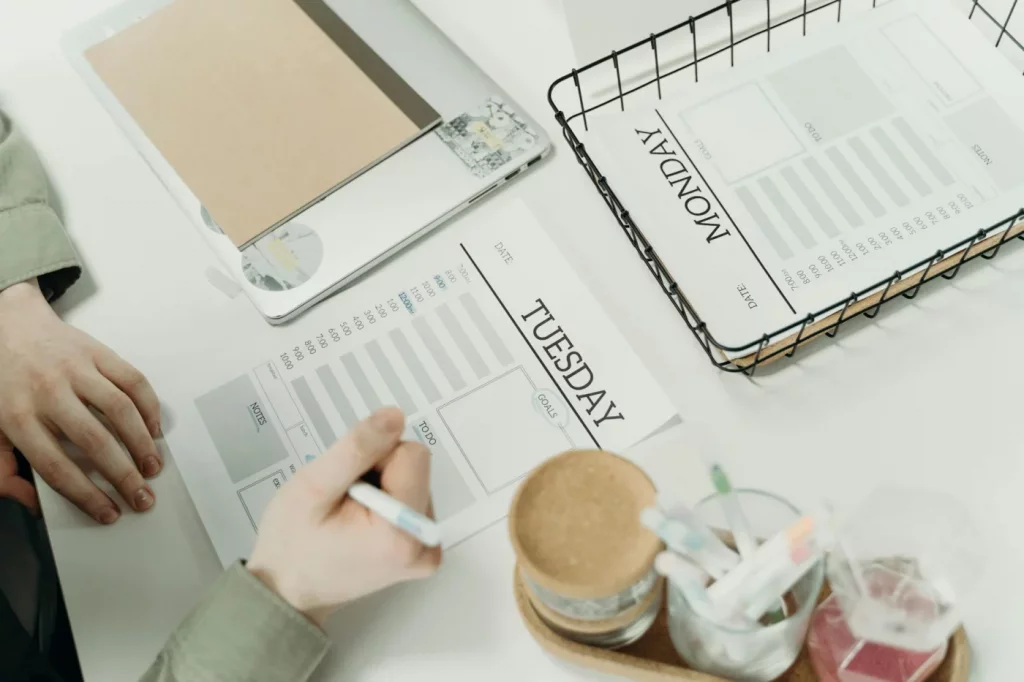
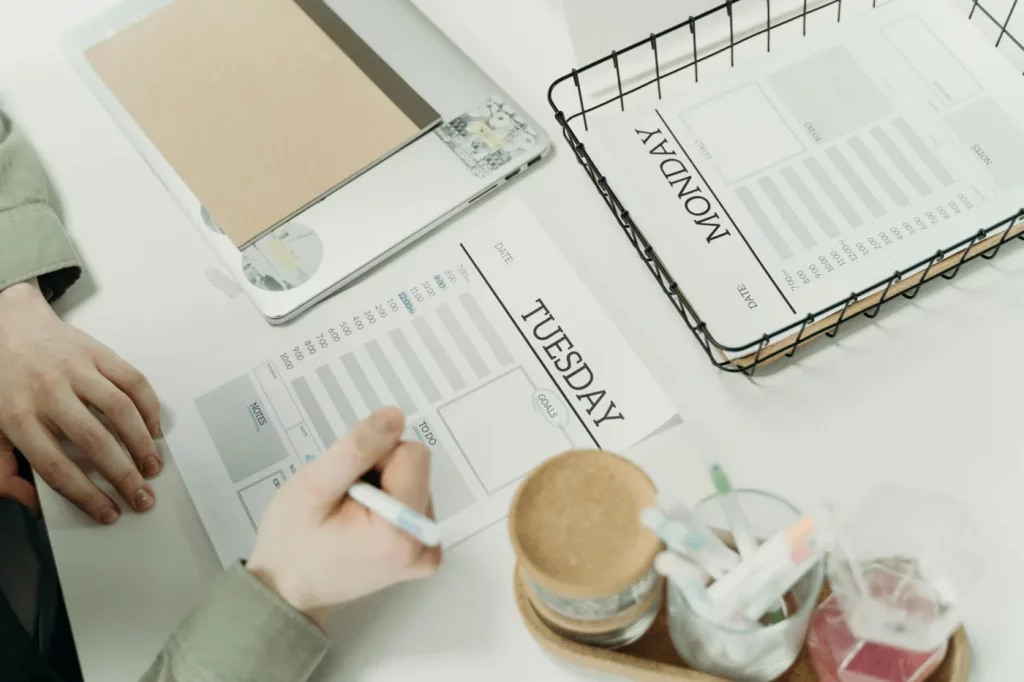
Tuesday planner on a wire basket illustrating time management tips for students and weekly study scheduling
A minimalist Tuesday planner highlights how structured scheduling can support a consistent weekly study loop. — Photo by cottonbro studio / Pexels

How to create a weekly study schedule for busy students?

If you’re wondering how to create a weekly study schedule for busy students, start by blocking the non-negotiables first: classes, work, sleep, commute, and meals. Then pick 1-3 priorities for the week and place realistic focus blocks and review sessions around them instead of trying to schedule every subject every day. And yes, shorter planned blocks usually work better than an ideal schedule you can’t actually follow.

How many hours should a student study each day?

There isn’t one perfect answer to how many hours should a student study each day because your course load, deadlines, difficulty, and energy all change the number. For many students, 1-3 focused hours on weekdays plus longer sessions on lighter days works better than forcing long daily marathons that lead to sloppy work. Quality matters more than raw hours, especially if you’re using active recall, practice questions, and spaced review.

How do busy students manage study time?

How do busy students manage study time well? They plan by the week, not just by the day, and they protect a few high-value blocks for their hardest subjects. Low-energy time can still be useful for flashcards, rereading notes, organizing tasks, or quick review, which is why the best time management tips for students focus on matching the task to the energy you actually have.

How do working students make a study schedule?

If you’re asking how do working students make a study schedule, anchor your week around fixed shifts first, then place harder tasks on non-shift days when your brain is less drained. On workdays, keep study blocks shorter and more specific, like 30-45 minutes for review, problem sets, or quiz prep. A weekly reset matters even more when your shifts change, and tools like FreeBrain’s planning resources can help you adjust your schedule without rebuilding everything from scratch.

What is the 5 10 15 method for studying?

What is the 5 10 15 method for studying? It’s a short review structure: 5 minutes to preview, 10 minutes to recall or explain, and 15 minutes to practice or summarize. This works especially well between classes, before a quiz, or during low-energy periods when a full deep-work block isn’t realistic, and it fits nicely with evidence-based review methods like retrieval practice described by the American Psychological Association.

What is the 3 2 1 method for studying?

The usual answer to what is the 3 2 1 method for studying is this: write down 3 key ideas, 2 questions, and 1 next step at the end of a study session. It’s a simple way to close a block with clarity instead of stopping randomly, and it helps you know exactly what to review next. But wait, that’s the real value here — it turns vague studying into a clear follow-up plan.

How can students avoid burnout while studying?

If you’re wondering how can students avoid burnout while studying, the big moves are leaving buffer time, protecting sleep, using realistic block lengths, and not filling every open hour with work. Research on sleep and learning from sources like the NIH makes this pretty clear: less sleep usually means worse attention, memory, and recovery. And if burnout, anxiety, or ongoing sleep problems keep building, talk with a qualified professional, because this article is educational and not medical advice.

Conclusion

Your weekly study schedule doesn’t need to be perfect. It needs to be real. Start by mapping your actual week first, including classes, work, commuting, meals, and downtime. Then build study blocks around your energy, not some ideal version of yourself. Keep those blocks specific, pair them with effective methods like active recall and spaced repetition, and finish each week with a short reset so you can adjust before small problems turn into missed deadlines.

And honestly, that’s the part most students skip. They try to “be more disciplined” when what they really need is a system that fits their life. If your schedule has felt messy, crowded, or impossible to follow, you’re not lazy — you’re probably working with a plan that was too rigid. A flexible weekly loop gives you room to recover, adapt, and keep moving. That’s what makes these time management tips for students actually useful: they help you build consistency without pretending your week will always go smoothly.

If you want to keep improving your study system, spend a few minutes exploring more on FreeBrain.net. You might start with How to Stop Procrastinating While Studying or Spaced Repetition for Studying. Which brings us to the next step: open your calendar, block your first realistic study session, and test your schedule this week. Small changes, repeated weekly, are how busy students get real results.

⚠️ Educational Content Notice: This article is for educational and informational purposes only. It is not intended as medical, psychological, or professional advice. If you have concerns about your health or well-being, please consult a qualified healthcare professional. Always seek the guidance of your doctor or other qualified health provider with any questions you may have.