What is immersion language learning? It means surrounding yourself with meaningful input and regular use of your target language so your brain learns through context, repetition, and real communication. If you’re wondering what is immersion language learning in practical terms, it’s less about moving abroad and more about building a daily environment where the language shows up in what you watch, read, hear, say, and review. And yes, what is immersion language learning at home can be simple: understandable input, active speaking, and consistent feedback.
Maybe you’ve tried apps, flashcards, or random YouTube videos and still felt stuck after a few weeks. You’re not lazy. Usually, the problem is that people hear what is immersion language learning and imagine total chaos — full-speed movies, native podcasts, zero subtitles — when beginners actually need input they can mostly follow, plus a way to turn exposure into memory. Research on language immersion education matters here because it shows the core idea works best when comprehension and use go together.
In this article, you’ll get a clear answer to what is immersion language learning, plus seven proven ways to do it at home without wasting hours on passive exposure. I’ll show you how immersion actually works, how to learn a language through immersion for beginners, what to use online, whether adults should study differently, and a 30-day plan you can follow right away. We’ll also cover the part most people skip: how to pair immersion with retrieval practice using tools like these best active recall apps, and how to make your routine sustainable with tactics such as the 2-minute rule for procrastination.
I’m a software engineer, not a linguist — but I’ve spent years building learning tools and translating cognitive science into study systems people can actually use. So here’s the deal: if you’ve been asking what is immersion language learning and whether it can work without living overseas, the short answer is yes — if you set it up the right way.
📑 Table of Contents
- What is immersion language learning? A clear definition, examples, and why it works
- How does immersion language learning work, and can you learn a language through immersion alone?
- 7 proven ways to learn a language through immersion at home
- How to learn a language through immersion online: tools, adult routines, and a real-world system
- A simple 30-day immersion plan, progress tracking, and quick reference
- Common immersion mistakes to avoid, how long it takes, and whether immersion is the best way
- Frequently Asked Questions
- Conclusion
What is immersion language learning? A clear definition, examples, and why it works
So here’s the direct answer. What is immersion language learning? It means surrounding yourself with meaningful, understandable input and regular use of your target language so your brain learns patterns through context, repetition, and communication. For more on learning and study skills, see our learning and study skills guide.
If you’re new to this, don’t picture moving abroad tomorrow. What is immersion language learning for beginners? Often, it’s a home setup where 70% to 90% of what you hear or read is understandable enough to follow the gist.
A simple definition
In plain English, what is immersion language learning? It’s using the language so often, and in such clear context, that your brain starts predicting words and grammar without translating every line.
Here’s a beginner example. You change your phone settings, listen to a learner podcast, read one graded story, and send one short voice note in the target language. That’s language immersion. And no, it’s not magic.
It works because your brain gets repeated exposure to words and structures in context. Research in second-language acquisition, including work summarized in a review on language learning and memory in PubMed Central, suggests comprehensible input, retrieval, and feedback all matter, but no single method works alone for every learner.
- Understand most of the message
- Notice repeated words and patterns
- Respond in some small way
For online practice, you can even use AI for students as a conversation partner for simple prompts and feedback — ethically and as a supplement, not your only teacher.
Immersion vs passive exposure
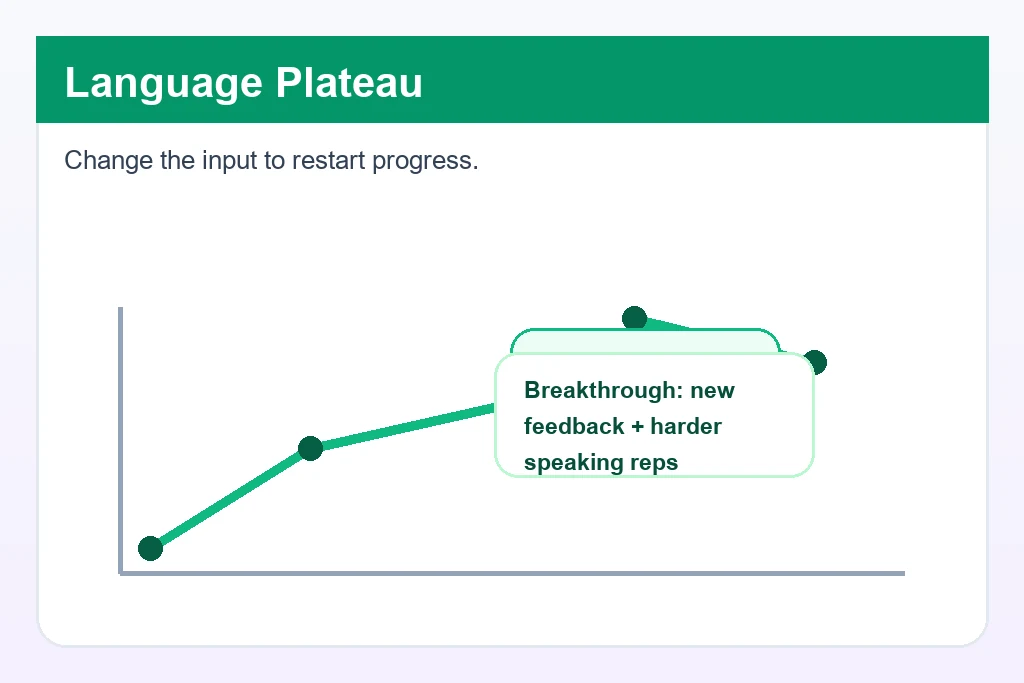
This is the part most people get wrong. Hearing a language in the background for 3 hours isn’t the same as 20 focused minutes of active listening, reading, and response.
Passive exposure helps familiarity. Active immersion builds usable skill. Think: pausing a video, repeating a phrase, answering a question, or writing two sentences from memory. That’s why pairing immersion with active recall vs passive review makes new vocabulary stick better.
Evidence from Krashen’s input hypothesis overview supports the value of understandable input, but speaking, retrieval, and correction help turn exposure into recall. And if stress, attention problems, or burnout keep interfering, talk with a qualified professional.
Which brings us to the next question: how does immersion language learning actually work day to day, and can immersion alone get you fluent?
How does immersion language learning work, and can you learn a language through immersion alone?
So now that we’ve defined it, the next question is practical: what is immersion language learning actually doing inside your study routine? And more importantly, can it carry the whole job by itself?

Here’s the short answer. What is immersion language learning in practice? It works through a repeatable loop: input, noticing, retrieval, feedback, and repetition. You hear or read something understandable, notice a new pattern, try to recall or use it later, get corrected or compare your output, then meet that pattern again until it sticks.
That’s why passive exposure isn’t enough. If you want durable vocabulary and usable grammar, immersion usually works best when paired with retrieval practice, not just re-reading or re-watching. I’ve written more about that in active recall vs passive review, because this is the part most people get wrong.
📋 Quick Reference
Best learning zone: content you understand about 80% of.
Too hard for most beginners: under 50% understanding.
Core loop: input → noticing → retrieval → feedback → repetition.
Best simple upgrade: add 15–30 minutes of speaking once a week plus spaced review.
Why comprehensible input matters
If you’re asking how does immersion language learning work, start here: your brain learns faster when sound, meaning, and sentence patterns arrive together in material you can mostly follow. That idea is often called comprehensible input, and it matters because your brain can map words to meaning without translating every line.
A useful benchmark is simple. If you understand roughly 80% of a short video, graded reader, or dialogue, it’s usually productive. If you understand less than 50%, beginners often stop noticing patterns and start drowning in noise.
Good examples include:
- graded readers with controlled vocabulary
- slow podcasts for learners
- subtitled learner videos
- short dialogues you can replay 3 to 5 times
Research on language acquisition and feedback from educational psychology points in this direction, even if exact methods vary by study. For memory and skill learning more broadly, evidence summarized by the American Psychological Association on memory and learning supports the idea that repeated, meaningful exposure helps build stronger recall pathways.
Personally, I think adults learning online should treat immersion like a filter, not a flood. What is immersion language learning if not targeted exposure you can actually process? Random native content for two hours sounds serious, but 20 minutes of understandable content often works better.
Why speaking and feedback still matter
Input builds recognition. Output reveals gaps. That’s the cleanest way to understand why what is immersion language learning can’t just mean silent listening forever.
When you speak, write, or even shadow sentences aloud, missing grammar, weak pronunciation, and fragile vocabulary show up fast. And yes, that can feel uncomfortable. But speaking once a week for just 15 to 30 minutes often exposes more weak spots than several days of silent study.
Low-friction options work fine:
- a tutor once a week
- a language exchange partner
- voice notes to yourself
- structured AI chat for conversation drills and feedback, used carefully, as in this guide on how to use AI for students
If you want a research trail to follow later, look at work on error correction, retrieval, and feedback in learning science from sources like PubMed, Stanford, and Harvard. Broadly, evidence suggests that feedback speeds improvement because it stops you from repeating the wrong form too many times. Even outside language learning, the NCBI Bookshelf overview of learning and memory explains why repeated retrieval strengthens access to stored information.
And here’s the kicker — immersion gives you raw material, but output tells you whether you can use it.
When immersion is enough, and when it is not
So, can you learn a language through immersion alone? Maybe for survival comprehension, everyday listening, and basic phrase pickup — especially if you’re highly motivated and spend lots of time with understandable content.
Immersion can carry most of the load when:
- you get daily input you mostly understand
- you have strong motivation and lots of exposure time
- your goal is basic conversation or comprehension
But can you learn a language through immersion alone if you want accurate speaking, writing, and pronunciation? Usually not. Most adult learners improve faster with grammar notes, corrective feedback, and spaced review, especially when time is limited.
Here’s a quick comparison:
| Approach | Best for | Main weakness |
|---|---|---|
| Immersion alone | Listening growth, intuition, survival comprehension | Fossilized mistakes, weak recall |
| Immersion plus review | Balanced progress across skills | Takes planning |
| Textbook-only study | Clear structure, explicit grammar | Weak real-world comprehension |
Well, actually, that middle path is where most adults win. If you’re wondering how to learn a language without immersion, you can still make progress with grammar, flashcards, and classes, but adding even small amounts of immersion plus spaced review through the best active recall apps usually makes vocabulary far more usable.
That’s the practical answer to what is immersion language learning: not magic, not passive exposure, but a system. Next, I’ll show you seven proven ways to build that system at home.
7 proven ways to learn a language through immersion at home
So now that you know how immersion works, the practical question is simpler: what should you actually do each day? If you’re still asking what is immersion language learning, this is the part where it becomes concrete instead of vague.
Daily routine and learner-friendly input
Start with structure. For most adults, the best answer to what is immersion language learning is not “surround yourself with random foreign media,” but “build repeatable contact with understandable input.”
How to build home immersion that sticks
- Step 1: Create a daily routine. Use a 15-minute version if you’re busy: 5 minutes listening, 5 reading, 3 review, 2 speaking notes. Use a 30-minute version: 10 listening, 10 reading, 5 review, 5 speaking. Use a 60-minute version: 20 listening, 20 reading, 10 review, 10 speaking or writing.
- Step 2: Time-block it. Low friction matters more than motivation, so keep your app, reader, and notebook ready before the session starts.
- Step 3: Begin with graded readers, slow podcasts, and learner YouTube channels. True beginners usually waste time on fully native content they understand under 30%.
- Step 4: Track comprehension. If you understand roughly 70-90% with support, you’re in a useful learning zone.
- Step 5: Add weekly speaking. One 20-minute session with a tutor, exchange partner, or AI chat is a solid minimum.
- Step 6: Review vocabulary with spaced repetition. Use a 2-7-30 cadence so new words come back before you forget them.
- Step 7: Change your environment. Switch your phone, playlists, browser, and labels into the target language so exposure becomes automatic.
Method 1 is your anchor. If you want to know how to learn a language through immersion for beginners, this is it: short daily contact beats occasional marathon sessions. I’d rather see you do 15 minutes for 30 days than 3 hours once a week.
Method 2 is about input quality. Research on comprehensible input and reading-based learning suggests you learn faster when material is challenging but still understandable, not when you’re drowning in unknown words. And yes, that means beginner podcasts and graded readers often beat Netflix early on.
For adults, low-friction setup matters a lot. Put your reader on your home screen, preload audio, and use simple scheduling ideas from pomodoro vs time blocking so your routine happens automatically. That’s a much better answer to how to immerse yourself in a language at home than relying on willpower.
Passive vs active immersion that actually helps
Method 3 is passive immersion, but used strategically. Replay familiar audio during chores, walks, or commuting for 10-30 minutes, especially content you’ve already studied once. Passive exposure helps patterns feel familiar, but it is not, by itself, what is immersion language learning in the effective sense.
Method 4 is active listening and shadowing. Take a 60-second clip, listen three times, check the transcript, then mimic the speaker’s rhythm and pronunciation out loud. It takes about 5-10 minutes per clip, and it’s one of the best immersion methods for language learning at home because it forces attention.
Why does this work? Focused repetition improves sound discrimination and retrieval, while shadowing links listening to speech production. If you want the memory side explained clearly, FreeBrain’s piece on active recall vs passive review maps well onto language study too.
Speaking, review, and environment design
Method 5 is weekly speaking. One 20-minute session per week is the minimum; two is better. A tutor or exchange partner is ideal, but if cost or scheduling is a problem, you can use AI for students as a practice layer for role-plays, corrections, and phrase rehearsal.
Method 6 is spaced repetition. Save words and phrases from your immersion sessions, not random frequency lists, then review them on a 2-day, 7-day, and 30-day schedule using flashcards or one of the best active recall apps. That cadence matches the logic behind the 2 7 30 memory rule and keeps immersion language learning benefits from fading after a good session.
Method 7 is environment design. Change your phone language, rename household items with labels, follow target-language creators, and build playlists for different moods. Personally, I think this is the most underrated part of what is immersion language learning, because it turns effort into default behavior.
- Aim for 15-60 minutes daily of active input
- Do 1-2 speaking sessions weekly
- Review saved phrases on a 2-7-30 schedule
- Raise difficulty only when comprehension stays above roughly 70%
That’s the system. And once you understand what is immersion language learning as a mix of input, output, review, and environment, the next step is building it online with the right tools and routines.
How to learn a language through immersion online: tools, adult routines, and a real-world system
If the last section showed you the methods, this section shows you the setup. And if you’re still asking what is immersion language learning in practice, it’s this: building daily contact with understandable language, then turning some of that input into output and review.

Adults usually don’t fail because they picked the wrong resource. They fail because their system has too much friction. After building study systems for self-learners, I’ve noticed that when people understand what is immersion language learning and reduce setup costs, they stay consistent far longer.
Best tool stack by skill
Here’s the simplest answer to how to learn a language through immersion online: match one tool type to one skill. Don’t use everything for everything. That’s where overwhelm starts.
- Listening: learner podcasts, slow-news audio, and subtitled YouTube channels
- Reading: graded readers, dual-text articles, browser pop-up dictionaries, and subtitles
- Speaking: online tutors, conversation classes, and language exchange partners
- Writing: short daily messages, corrected journal entries, and AI chat prompts
- Review: flashcards for high-frequency words, phrases, and sentence patterns
Research supports this mix. Stephen Krashen’s input hypothesis argues that learners improve when they get understandable input slightly above their current level, and later work on vocabulary learning shows repeated encounters across contexts matter more than isolated memorization. So, what is immersion language learning if not random exposure? It’s structured exposure you can mostly understand, repeated often enough to stick.
A beginner stack might be: 10 minutes of learner podcast audio, 10 minutes of a graded reader, 5 minutes of flashcards, and one 20-minute tutor session each week. A busy professional might use commute audio in the morning, lunch-break reading on a phone, and one evening speaking session on Thursday. If you want low-pressure conversation practice between tutor sessions, FreeBrain’s guide on use AI for students is a good starting point for ethical AI chat, feedback, and prompt design.
From experience: what busy adults actually stick with
This is the part most people get wrong. They build a perfect two-hour plan, miss one day, then quit. But how to learn a language through immersion for adults usually looks smaller and less dramatic.
What works better? Fifteen minutes a day, every day, plus one 30-minute speaking session each week. That’s enough to create momentum, especially if your listening and reading are easy enough to follow without constant stopping.
In practice, a sustainable adult routine often looks like this:
- 5-10 minutes of audio during a commute or walk
- 10 minutes of reading during lunch
- 5 minutes of flashcards after dinner
- One tutor or language exchange session each week
And yes, that sounds almost too simple. But consistency beats intensity for adults with jobs, kids, and limited attention. A 2021 review in Language Learning also found that regular engagement and meaningful use predict progress better than occasional heavy study bursts.
So, what is immersion language learning for adults who can’t travel? It’s not pretending your apartment is Paris. It’s making your phone, playlists, reading time, and speaking practice work together often enough that the language stops feeling foreign.
A low-friction online immersion setup
Want one repeatable system? Use four layers: input, interaction, retrieval, and feedback. That’s how to learn a language naturally online without depending on motivation alone.
Start with input from native content that’s been made easier: subtitles, slower YouTube channels, beginner podcasts, and graded readers. Add interaction through one tutor session or one language exchange each week. Then use AI chat for low-stakes writing and conversation drills, especially for role-play, reformulation, and error spotting. Keep it ethical: use AI for practice and feedback, not to fake fluency or replace real human conversation forever.
Then add retrieval. Save 10-20 useful phrases per week into flashcards, not 100 random words. Review the phrases you actually saw in podcasts, videos, and reading. That’s the difference between passive exposure and a system that compounds.
One more thing: sustainability matters. If chronic stress, sleep problems, or burnout are making it hard to focus or remember new material, consult a qualified healthcare professional. This article is educational, not medical advice.
Now you have the structure, the tools, and a realistic answer to what is immersion language learning in daily life. Next, I’ll turn this into a simple 30-day immersion plan with progress tracking and a quick reference you can actually follow.
A simple 30-day immersion plan, progress tracking, and quick reference
So now you’ve got the tools. The next step is turning them into a system you’ll actually follow for 30 days, because what is immersion language learning matters a lot less than whether you can do it consistently.
Personally, I think this is where most people stall. They understand what is immersion language learning in theory, then build a routine so complicated they never start.
Week 1 setup
Your first week is not about intensity. It’s about making what is immersion language learning practical at home, without travel, expensive classes, or a perfect schedule.
Keep setup under 10 minutes. Really. Use the 2-minute rule for procrastination mindset: pick resources fast, start tiny, and improve later.
- Choose 2 listening sources: one easy podcast or YouTube channel, and one slightly harder source.
- Choose 1 graded reader matched to your level.
- Choose 1 speaking option: tutor, language partner, or AI chat for short practice.
- Choose 1 flashcard system for review.
- Choose 1 tracking sheet, even if it’s just a notes app or spreadsheet.
And here’s the baseline you want on day one. Take a 3-minute clip and estimate what percent you can follow: 30%, 60%, 85%? Then read a short text, pull out 5 to 10 new words, and check tomorrow how many you still remember without looking.
Also measure your real study capacity. Can you honestly do 15 minutes a day, or is 30 more realistic? This is the part most people get wrong — they plan for motivation peaks instead of normal weekdays.
If you’re wondering how to create a language immersion routine, start embarrassingly small. For language immersion at home without travel, consistency beats ambition for the first seven days.
Weeks 2 to 4 progression
Weeks 2 through 4 should feel slightly harder, not dramatically harder. That’s the sweet spot if you’re still figuring out what is immersion language learning as a beginner or busy adult.
Increase one variable at a time: longer clips, a denser reader, one extra speaking session, or more review. But wait. Don’t block one skill for a whole week and ignore the rest.
Research on mixed practice suggests interleaving can improve discrimination and transfer compared with blocked practice, especially when you need flexible retrieval. That’s why rotating listening, reading, speaking, and review usually works better than doing only vocabulary or only listening; FreeBrain covers the logic in interleaving vs blocked practice.
Try these daily options:
- 15 minutes: 5 listening, 5 reading, 5 flashcards
- 30 minutes: 10 listening, 10 reading, 5 flashcards, 5 speaking or writing
- 60 minutes: 20 listening, 15 reading, 10 flashcards, 15 speaking or writing
Want a simple study plan? Week 2: repeat easy content with light challenge. Week 3: add one harder source and one extra speaking block. Week 4: keep the rotation, review weak spots, and compare your baseline numbers.
Now this is where it gets interesting. A 2021 review in Language Learning and related second-language research suggests comprehension improves fastest when input is understandable but not trivial. So if you catch almost nothing, simplify. If everything feels effortless, raise the bar a little.
Quick Reference: the weekly scorecard
If you want to know how to know if language immersion is working, track four numbers each week. Not twenty. Four.
📋 Quick Reference
- Comprehension percentage: Estimate how much of a 3-minute clip or short text you understand. Under 60%? Simplify input. Over 95%? Increase difficulty.
- Speaking frequency: Track total speaking minutes or number of sessions per week.
- Retained words: Test whether new words are still retrievable after 7 days.
- Streak days: Count how many days in a row you showed up, even for 10 minutes.
This is a better way to measure what is immersion language learning than asking, “Do I feel fluent yet?” Fluency feelings are noisy. Progress tracking is cleaner.
And yes, one more thing: passive exposure alone isn’t enough. If your comprehension rises but retained words stay flat after 7 days, add more retrieval and short speaking bursts.
Use this 30-day system, then tighten it with FreeBrain’s related guides on memory systems, interleaving, and active recall. Which brings us to the next question: what mistakes slow immersion down, how long does it really take, and is it actually the best method for everyone?
Common immersion mistakes to avoid, how long it takes, and whether immersion is the best way
If you followed the 30-day plan, you’ve already seen that what is immersion language learning in practice isn’t just “surround yourself and hope.” Now we need to clean up the mistakes that make immersion feel busy but produce weak results.

This is the part most people get wrong. They understand what is immersion language learning at a surface level, but they miss the conditions that make it actually work.
Mistakes that slow beginners down
The biggest beginner mistake is too much incomprehensible input. Watching native TV with 5% understanding feels productive because you’re hearing real speech, but for most beginners it’s mostly noise, not learning.
Research on comprehensible input, popularized by Stephen Krashen, suggests learners improve faster when they understand most of what they hear or read, with just enough new material to stretch them. So instead of jumping straight to fast dramas or comedy shows, start with graded readers, slow podcasts, subtitled learner videos, or short clips you can replay.
Mistake two: passive immersion only. If your whole routine is listening and scrolling, you may recognize words without being able to use them. That gap is common in beginner language learning.
One fix? Turn input into output every day:
- Record a 30-second voice note summarizing what you watched
- Write 3 to 5 sentences using new phrases
- Make flashcards from expressions, not isolated words
- Ask a tutor or language partner to correct one short message
And yes, that sounds simple. But simple works. After reading about active recall vs passive review, many learners realize why passive immersion stalls: recognition is not recall.
Mistake three is ignoring review. You hear something once, understand it, and assume it’s learned. Well, actually, memory doesn’t work that way. Hermann Ebbinghaus’s forgetting curve research showed that forgetting happens fast unless you revisit material.
A practical fix is a 2-7-30 rhythm: review after 2 days, 7 days, and 30 days. If you want to understand what is immersion language learning beyond the buzzword, this is part of the answer: active immersion beats passive immersion because it includes retrieval, repetition, and speaking.
How long does immersion take, realistically?
Short answer: it depends on the language, your daily hours, and how active your immersion is. Anyone promising exact timelines without those variables is overselling.
So, how long does it take to learn a language through immersion? For many adults, noticeable comprehension gains show up in 4 to 8 weeks if you practice daily with material you mostly understand. Several months of consistent input plus speaking often leads to basic conversational comfort.
Advanced fluency takes much longer. The U.S. Foreign Service Institute estimates that English speakers may need roughly 600 to 750 class hours for languages like Spanish or French, and 2,200 hours or more for languages like Arabic, Chinese, Japanese, or Korean. Full immersion can speed progress, but language distance still matters.
Three things matter most:
- How many focused hours you do each week
- How understandable and repeated your input is
- How often you speak, get feedback, and review
If you’re wondering what is immersion language learning when measured realistically, think in milestones, not magic. Better listening in weeks. Basic conversations in months. Comfortable, flexible fluency in years for most learners.
Is immersion the best way to learn a language?
Usually, yes, as a foundation. But not by itself. That’s the honest answer to “is immersion the best way to learn a language?”
The best way to learn a language immersion-style is to combine four parts: lots of understandable input, frequent output, corrective feedback, and spaced review. Input builds familiarity. Output exposes gaps. Feedback prevents fossilized mistakes. Review makes the gains stick.
Personally, I think what is immersion language learning gets oversimplified online. It’s not just moving abroad, changing your phone settings, or bingeing YouTube. It’s building an environment where the language shows up daily and your brain has to notice, retrieve, and use it.
So is immersion the best way to learn a language? Often yes. Is it enough alone for every learner? Usually no.
Your next move is simple: keep the immersion, reduce passive-only time, and track whether you can understand more, say more, and remember more each week. That’s how you know what is immersion language learning is working for you rather than just taking up time.
Next, I’ll wrap this up with the most common reader questions, a clear final verdict, and the smartest next steps if you want to keep going with what is immersion language learning.
Frequently Asked Questions
What is immersion language learning for beginners?
What is immersion language learning for beginners? It means surrounding yourself with understandable listening, reading, and speaking opportunities so your brain keeps meeting the language in context. When people ask what is immersion language learning, the beginner-friendly answer is simple: lots of input, but not input that’s so hard you understand nothing. Start with learner podcasts, graded readers, short dialogues, and slow videos instead of jumping straight into full-speed native shows.
How to learn a language through immersion for beginners at home?
If you’re wondering how to learn a language through immersion for beginners, start small and make it repeatable: 15 to 30 minutes a day of graded reading, slow audio, and one speaking activity each week is enough to build momentum. What is immersion language learning in practice? It’s not just study time — it’s also changing your environment by switching phone settings, building playlists in your target language, and adding labels around your home so the language shows up throughout your day.
How to learn a language through immersion online?
How to learn a language through immersion online comes down to building a simple stack you can actually keep using: podcasts, YouTube lessons, graded reading, a tutor or language exchange, and flashcards for review. That’s really the practical version of what is immersion language learning — repeated contact with understandable content plus a little active use. Keep the system lean, because five tools you use daily will beat fifteen tools you abandon after a week.
Can you learn a language through immersion alone?
Can you learn a language through immersion alone? You can definitely improve comprehension that way, especially your listening and reading, because what is immersion language learning if not repeated exposure to real language in context. But most adult learners get stronger results when they add speaking, feedback, and review, since output helps you notice gaps and correction helps prevent bad habits from sticking. Personally, I think immersion is the base layer, not the whole system.
How long does it take to learn a language through immersion?
How long does it take to learn a language through immersion depends on three big things: language distance, total hours, and whether your input is understandable. Early comprehension gains can show up within a few weeks, but conversational ability usually takes months of steady practice, because what is immersion language learning really doing? It’s building pattern recognition over time, not delivering instant fluency. Research summaries from the American Psychological Association also support the broader idea that repeated exposure and retrieval matter for durable learning.
Is immersion the best way to learn a language?
Is immersion the best way to learn a language? Often, it’s one of the best foundations because it teaches words, grammar, and meaning in context instead of as isolated facts. Still, what is immersion language learning at its best? A system that combines rich input with output, correction, and spaced review, not a stand-alone method where you only consume content and hope for the best. For review, tools based on spaced repetition can help you keep high-frequency words active between immersion sessions.
How to know if language immersion is working?
How to know if language immersion is working is easier to answer when you track a few simple signals:
1) comprehension percentage, 2) speaking minutes per week, 3) vocabulary you still remember after a few days, and 4) your consistency streak. What is immersion language learning supposed to feel like? Challenging but understandable. If your content feels impossible, lower the difficulty; if it feels effortless and repetitive, raise it. A simple study tracker like FreeBrain’s learning tools can make these trends much easier to spot over time.
How to immerse yourself in a language at home without travel?
How to immerse yourself in a language at home starts with your environment: change your phone settings, follow social accounts in the language, listen to music and podcasts, label common objects, and schedule regular speaking practice. That’s the everyday version of what is immersion language learning — repeated, understandable contact with the language across normal life, not only during formal study. And if you want the science behind why repeated exposure helps memory stick, this overview from the NCBI Bookshelf on learning and memory is a useful starting point.
Conclusion
If you remember four things, make them these: first, what is immersion language learning really comes down to surrounding yourself with meaningful input you can understand and use daily. Second, don’t wait for a “perfect” setup — switch your phone, playlists, videos, and a few repeat tasks into your target language now. Third, pair immersion with active recall: shadow short clips, speak out loud, track unknown words, and review them with spaced repetition. And fourth, keep your system small enough to repeat. A 30-day routine with 20 to 45 focused minutes a day will beat random bursts of motivation every time.
And honestly, that’s the good news. You don’t need to move abroad, study for four hours a day, or become “naturally gifted” at languages. You just need consistency, enough understandable input, and a routine that fits your real life. If you’ve been wondering what is immersion language learning and whether it can work from home, the answer is yes — if you make it active, measurable, and sustainable. Progress may feel slow week to week, but it compounds fast when your environment starts doing part of the work for you.
Want help building that system? Explore more on FreeBrain.net, including How to Study Effectively and Spaced Repetition. Those two guides pair especially well with what is immersion language learning because they help you turn exposure into memory and memory into usable skill. Pick one habit, start today, and make your environment teach you.