No: you do not use only 10% of your brain. If you are asking where did the 10 brain myth come from, the safest answer is that it likely grew from a mix of misquoted ideas about human potential, self-help marketing, and repeated media claims rather than one proven inventor.
The myth survives because it sounds motivating: if 90% of your brain were unused, extraordinary ability would seem like something you could simply unlock. Neuroscience points in a different direction. Brain activity shifts by task and state, damage to small regions can matter, and the brain is metabolically expensive even at rest. This article explains the likely origin story, why “100% of the brain” is also an oversimplified phrase, and what practical steps are more useful than chasing hidden-capacity claims.
📑 Table of Contents
Short answer: the myth is false
So here’s the direct answer. Humans do not use only 10% of the brain: brain imaging, lesion evidence, and the brain’s high energy cost all show that many regions are active over time, even during quiet rest. If you’re asking where did the 10 brain myth come from, the first thing to know is that the claim itself is wrong. For more on memory and brain health, see our memory and brain health guide.

And there’s a detail people miss. Using your whole brain over time does not mean every neuron fires at once. FreeBrain was built by a software engineer focused on evidence-based learning tools, not hype, so I’d rather point you to how to learn better and how attention affects learning than any “unlock the other 90%” promise.
Myth vs fact in plain English
The 10 percent of the brain myth says most of your brain sits unused. The correction is simple: different brain systems contribute at different times, and damage to small areas can cause major losses in speech, movement, memory, or vision.
- Myth: We use just 10% of our brain.
- Fact: We use brain regions across the day, depending on the task and state.
The adult brain is only about 2% of body weight, yet it uses roughly 20% of the body’s energy at rest, a point summarized by Wikipedia’s overview of the human brain. Honestly, that alone makes “90% unused” hard to believe.
Why this idea sounds convincing
Why is the 10 percent brain myth false but still persuasive? Because reading, movement, memory, and attention rely on partly different circuits, so no single task lights up the whole brain equally. People see “not active right now” and mistake it for “unused.”
But wait. Rest isn’t inactivity either. Research on the default mode network shows that wakeful rest still involves organized brain activity, which matters for attention, memory, and self-generated thought.
That’s also why better performance usually comes from training skills, not chasing myths. If you’re wondering whether working memory can be improved, there’s a more realistic answer there than “do we use 10 percent of our brain?” Next, let’s look at where did the 10 brain myth come from and how it spread.
Where did the 10 brain myth come from?
So if the claim is false, where did the 10 brain myth come from? Short answer: probably not from one inventor. Most science historians trace it to a messy mix of motivational language, misquote origin stories, and later media repetition rather than a single proven source.
Likely roots, not one clean origin
William James is often dragged into this story. But wait. James wrote about people using only a small part of their mental and physical resources as a statement about human potential, not as a literal neuroscience fact. Later retellings seem to have hardened that metaphor into a fake percentage.
That matters because “unused potential” and “unused brain tissue” are completely different claims. If you want practical ways to improve learning instead of chasing myths, start with how to learn better and how attention affects learning. For background, high-trust summaries from the APA on common brain myths and Wikipedia’s history of the ten percent myth show why the origin is still debated.
How media helped it spread
This is where it gets interesting. The myth flatters you: hidden power, no tradeoff, just “unlock the other 90%.” That’s perfect fuel for self-help culture, seminar marketing, TV segments, and pop culture myth-making in books and films.
- Early self-improvement messaging reframed vague potential as a measurable brain limit.
- Later ads and seminars sold the idea that extraordinary ability was sitting dormant.
- Movies and internet repetition made the claim feel familiar, which made it feel true.
What to avoid when repeating the story
Three mistakes show up constantly: claiming one definitive source, confusing metaphor with neuroscience, and treating “10 percent brain myth debunked reddit” threads as evidence. Reddit can show what readers are asking, sure, but not what primary sources prove.
Personally, I think the better question is what can improve performance in real life. Skills can change through practice, sleep, stress management, and training limits that are much less magical than “unlocking 90%,” which is why it helps to read what working memory be improved actually means. Which brings us to what neuroscience really shows.
What neuroscience actually shows
So here’s the deal: asking where did the 10 brain myth come from matters less than testing it against actual evidence. And once you look at lesions, scans, and energy use, the claim falls apart fast—plus it points you toward how attention affects learning and more realistic ways of learning better.

Lesion studies: damage has consequences
Lesion studies look at what happens when specific brain tissue is damaged through injury, stroke, or disease. The scientific evidence is straightforward: damage to Broca’s area can disrupt speech production, occipital damage can impair vision, and hippocampal damage can cause major memory problems. If 90% of the brain were unused, most small injuries wouldn’t matter much. But they do, which helps explain why is the 10 percent brain myth false.
Brain scans: activity changes by task
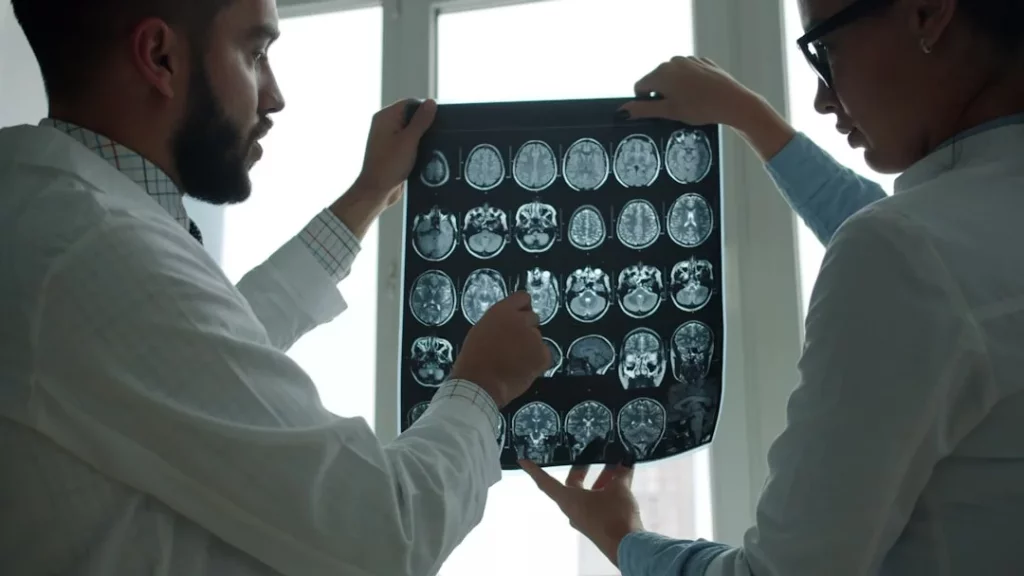
fMRI tracks blood-oxygen changes linked to neural activity, while PET tracks metabolic activity using tracers. Neither scan shows every neuron firing at once—thankfully, because that would be inefficient and dangerous. Instead, brain imaging shows shifting networks for reading, movement, planning, remembering, and even rest, including the default mode network.
- You use different regions over time, not every neuron at once.
- Resting isn’t “off”; the brain stays active in internal thought and prediction.
Energy use: the brain is expensive tissue
Your brain is about 2% of body weight but uses roughly 20% of resting energy. That’s a huge metabolic bill for an organ that’s supposedly mostly idle. Even sitting quietly, your brain is regulating perception, memory, body control, and expectation.
Educational note: this section is for learning, not medical advice. If you have neurological symptoms or serious cognitive concerns, consult a qualified healthcare professional. Next, let’s get practical and look at what to do instead of chasing brain hacks.
What to do instead of chasing brain hacks
If the 10% myth brought you here because you want better focus, memory, or performance, the useful pivot is not “activate more brain tissue.” It is to remove the bottleneck that is actually hurting your work: too little sleep, scattered attention, passive review, stress overload, or an unrealistic schedule.
Myth vs fact: Einstein and the “unlock 90%” claim
There is no scientific percentage for how much of his brain Einstein used. He did not succeed because he accessed a hidden 90%. A better explanation is deep knowledge, long practice, creative problem-solving, and the coordinated use of brain networks over time. The same point applies to “do we use 100% of our brain?” Over time, many systems are involved, but every neuron firing at once would not be a useful goal.
A practical 5-step reset for better brain performance
- Protect the next sleep window. If you are foggy, start by making tonight easier: reduce late scrolling, set a realistic bedtime, and avoid turning a bad day into a bad week.
- Cut the task down. Replace “study biology” with one visible target, such as “answer 12 questions on cell respiration.” Vague work invites distraction.
- Use active recall before rereading. Close the notes, ask what you remember, then check the gaps. Rereading can feel productive while hiding weak recall.
- Space the next review. If the material matters, decide when you will revisit it instead of hoping you remember it later.
- Lower stress before high-stakes work. Use a short routine: write the worry, name the next action, breathe slowly for a minute, then start the first small task.
Use this decision rule: if a claim promises hidden brain access, skip it. If a method helps you sleep, focus, retrieve, space, move, or manage overload, it is much more likely to help your real performance.
2026 update: a quick test for brain-unlocking claims
Before you share a claim about “using more of your brain,” run it through this short check. It helps separate a harmless metaphor about potential from a false neuroscience claim.
- Translate the promise into plain English. If the claim says you can “unlock the unused 90%,” rewrite it as: “Most of my brain is dormant and can be activated by this method.” That version is much easier to question.
- Ask what kind of evidence would have to be true. A real 90% unused claim would need to fit brain scans, brain-injury evidence, and the brain’s high energy use. The existing article already explains why those lines of evidence point the other way. For a broader overview of common brain myths, compare the claim with the APA’s brain-myths summary.
- Watch for all-or-nothing wording. Phrases like “use 100% of your brain,” “activate dormant regions,” or “instant genius” usually blur two different ideas: normal shifting brain activity and dramatic hidden capacity. Your brain does not need every region maximally active at the same moment to work well.
- Separate the goal from the myth. The goal may be reasonable even when the explanation is wrong. Want better recall? Use the Active Recall Builder. Need a review schedule? Try the Spaced Repetition Generator. Not sure which method fits the task? Start with the Study Method Picker. If worry is blocking focus, use the Stress Worry Plan Builder to turn the concern into a next action.
Here is a simple example. An ad says, “This technique activates the 90% of your brain you never use.” It fails the test because it depends on a false premise. A better version would say, “This technique helps you practice recall, reduce distractions, or plan reviews.” That is less flashy, but it gives you something concrete to test in your own study session.
Frequently Asked Questions
FAQ: where did the 10% brain myth start?
The short answer to where did the 10 brain myth come from is that nobody can point to one proven inventor. Its likely roots are misread claims about human potential, often loosely connected to comments by William James, then amplified by self-help writers, advertisers, and movies that preferred a catchy idea over accurate neuroscience. So if you’re asking where did the 10 brain myth come from, the safest answer is: it probably grew gradually from misunderstanding and repetition, not from a single scientific discovery.
Do we use 10 percent of our brain?
No, do we use 10 percent of our brain is the wrong question because neuroscience shows the answer is no. Brain imaging, clinical evidence from strokes and injuries, and the brain’s very high energy use all show that many regions contribute to thinking, movement, sensation, emotion, and rest across the day. The confusion usually comes from assuming that if one area isn’t highly active at a given moment, it’s doing nothing — but that’s not how brain systems work. For a reliable overview, see the explanation from McGill University’s Office for Science and Society.
Do we use 100% of our brain?
If you’re wondering do we use 100% of our brain, the best answer is: over time, yes, your brain uses a wide range of systems across different tasks and even during rest. But not every neuron fires at once, and that would actually be harmful rather than helpful. So “100%” isn’t a very useful way to think about brain function; a better model is that different networks turn on and coordinate when needed.
Why is the 10 percent brain myth false?
Why is the 10 percent brain myth false? Because even small areas of brain damage can cause major problems with speech, memory, movement, vision, or attention, which would be hard to explain if most of the brain were sitting idle. And here’s the kicker — brain scans and metabolism research show that the brain remains active and expensive to run even at rest, which is one more reason the myth doesn’t hold up. If you want the practical version, think of the brain less like a warehouse with unused rooms and more like a city where different districts become more or less busy depending on the time and task.
What percentage of brain did Einstein use?
There is no scientific answer to what percentage of brain did Einstein use because researchers don’t measure genius that way. Einstein did not succeed because he somehow accessed a hidden chunk of unused brain; his work is better explained by deep knowledge, years of practice, unusual creativity, and brain networks supporting complex reasoning. Personally, I think this matters because it shifts the focus from myths to things you can actually improve: learning habits, deliberate practice, and better thinking tools.
How can we unlock the 90% of our brain that we never use?
You can’t, because how can we unlock the 90% of our brain that we never use starts from a false premise. Neuroscience does not support the idea that 90% of your brain is dormant and waiting to be activated, but you can improve performance through basics that work: sleep, regular exercise, stress control, and evidence-based study methods like retrieval practice and spaced repetition. If you want a practical next step, start with FreeBrain’s learning tools and pair them with habits supported by public-health guidance such as the CDC’s sleep recommendations.
Conclusion
Here’s the practical bottom line: stop treating your brain like it has 90% “locked away,” and start working with what neuroscience actually shows. First, the myth is false — your whole brain is active across the day, just not all at once. Second, if you’ve been wondering where did the 10 brain myth come from, the answer is that it grew from misquotes, pop psychology, and oversimplified ideas about unused potential. Third, real improvement doesn’t come from secret hacks. It comes from basics that keep showing up in the evidence: sleep, focused practice, retrieval, spaced repetition, movement, and stress management.
And honestly, that’s good news. You don’t need a magical trick or some hidden reserve of intelligence to learn better. You need a system you can actually stick to. Personally, I think this is the part people find most freeing: your brain isn’t failing because you haven’t “unlocked” it. It changes through use. Small, repeated actions matter more than flashy claims ever will.
If this article helped clear up where the 10 brain myth came from, keep going. On FreeBrain.net, you can dig into practical, evidence-based strategies that actually help you study and think better. Start with our guide to spaced repetition and this breakdown of active recall. Then pick one method, use it this week, and give your brain something better than a myth: real training that works.