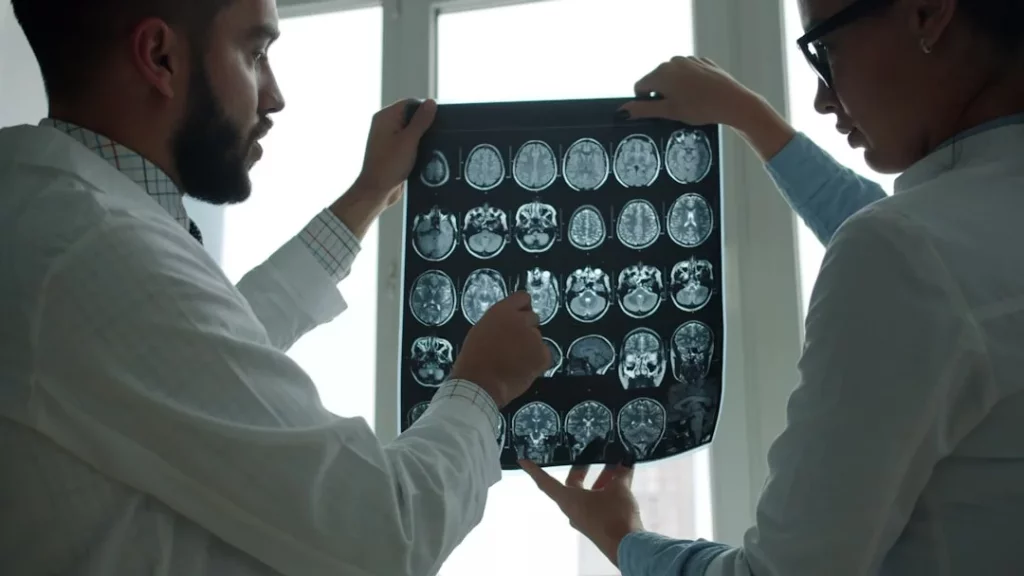

Why brain fog happens plays a crucial role in how we learn, perform, and retain information.
Brain-computer interfaces are suddenly everywhere, and your real question is simple: does a brain-computer interface actually change how you study, focus, or manage mental fatigue today? Short answer: sometimes, but not in the sci-fi way headlines suggest.
A brain-computer interface usually reads brain signals, often through EEG or implanted sensors, then turns patterns into commands, feedback, or data. But wait — detecting a signal isn’t the same as improving learning, attention span, working memory, or mental clarity.
Here’s the learner problem: a device says it can “boost focus,” your feed shows a slick demo, and suddenly it feels like studying without one means falling behind. If you want the deeper attention angle, I’ve written separately about BCIs and attention, but this article is more practical: how do you judge the claim before buying the story?
By the end, you’ll have a simple FreeBrain rule: Signal–Task–Outcome. What brain signal is being measured? What real task is it supposed to improve? And what outcome proves it helped — faster recall, fewer attention drops, better practice quality, or lower cognitive fatigue?
That rule matters because an EEG brain-computer interface may capture useful patterns, but EEG signals are noisy, indirect, and easy to overinterpret if you don’t know how brain waves are measured. So here’s the deal: BCI neuroscience is genuinely exciting, yet most learners need better study systems before they need brain-linked hardware.
I’m looking at this as a software engineer and self-taught learner who builds FreeBrain tools, not as a clinician or neuroscientist. Personally, I think the useful question isn’t “Does this sound futuristic?” — it’s “Does this give reliable feedback that improves a real learning task?”
Why Brain Fog Happens — Table of Contents
What a brain-computer interface does
OK wait, let me make this concrete. A brain-computer interface records brain activity, finds a useful pattern, then turns that pattern into an action or feedback signal. Curious about memory and brain health beyond this article? Our memory and brain health guide goes deeper.
The simple signal flow
The “signal” is measurable activity, not a magical window into the mind. In basic BCI neuroscience, the flow usually looks like this:
- Brain signals: electrical or neural activity linked to a task, state, or attempted movement.
- Sensor or implant: EEG electrodes, implanted arrays, or other recording hardware.
- Decoder: software that maps patterns to commands, text, stimulation, or feedback.
- Output: cursor movement, selected letters, speech synthesis, or training feedback.
For example, attempted hand movement could move a cursor. In a 2021 Nature paper, implanted sensors decoded attempted handwriting for brain-to-text communication at 90 characters per minute, with 94.1% raw accuracy and over 99% accuracy after autocorrect, according to the Nature handwriting BCI study.
Research progress vs consumer claims
This is the part most people get wrong. The strongest evidence sits in clinical and research settings, especially communication and control for people with severe motor impairment.
An implanted BCI can record cleaner, more specific neural activity, but it also sits in medical-device territory; the FDA treats these systems with that level of seriousness. Consumer headsets usually rely on noisier noninvasive signals, and if you want the basics, my guide to how brain waves are measured explains why EEG is useful but limited.
Not thought-reading
But wait. Reading brain signals isn’t the same as reading private thoughts.
BCIs classify patterns linked to tasks, states, or intentions under controlled conditions. A device may detect a shift in attention-related EEG patterns, but that doesn’t reveal the exact sentence you’re thinking about.
So be careful with claims about mind reading, instant knowledge upload, or perfect concentration. Next, we’ll look at what this actually means for learning and focus.
What it means for learning and focus
So here’s the deal: the near-term value isn’t instant learning. A brain-computer interface for attention is more realistic as feedback, accessibility support, fatigue detection, or an adaptive study aid.

The realistic near-term uses
For learning, the most useful BCI ideas are practical and narrow. Think accessibility tools, fatigue alerts, attention feedback, and study interfaces that adjust timing or difficulty when cognitive fatigue rises.
- Accessibility: helping someone control a device when movement or speech is limited.
- BCI attention feedback: nudging you when focus appears to drift.
- Adaptive study: pausing a hard problem set when fatigue signals rise.
But wait. That study app still has to prove better quiz scores, retention, or transfer — not just prettier focus graphs. A closed-loop system detects a signal, gives feedback, watches whether behavior or brain state changes, then updates the next prompt.
EEG, attention, and noisy signals
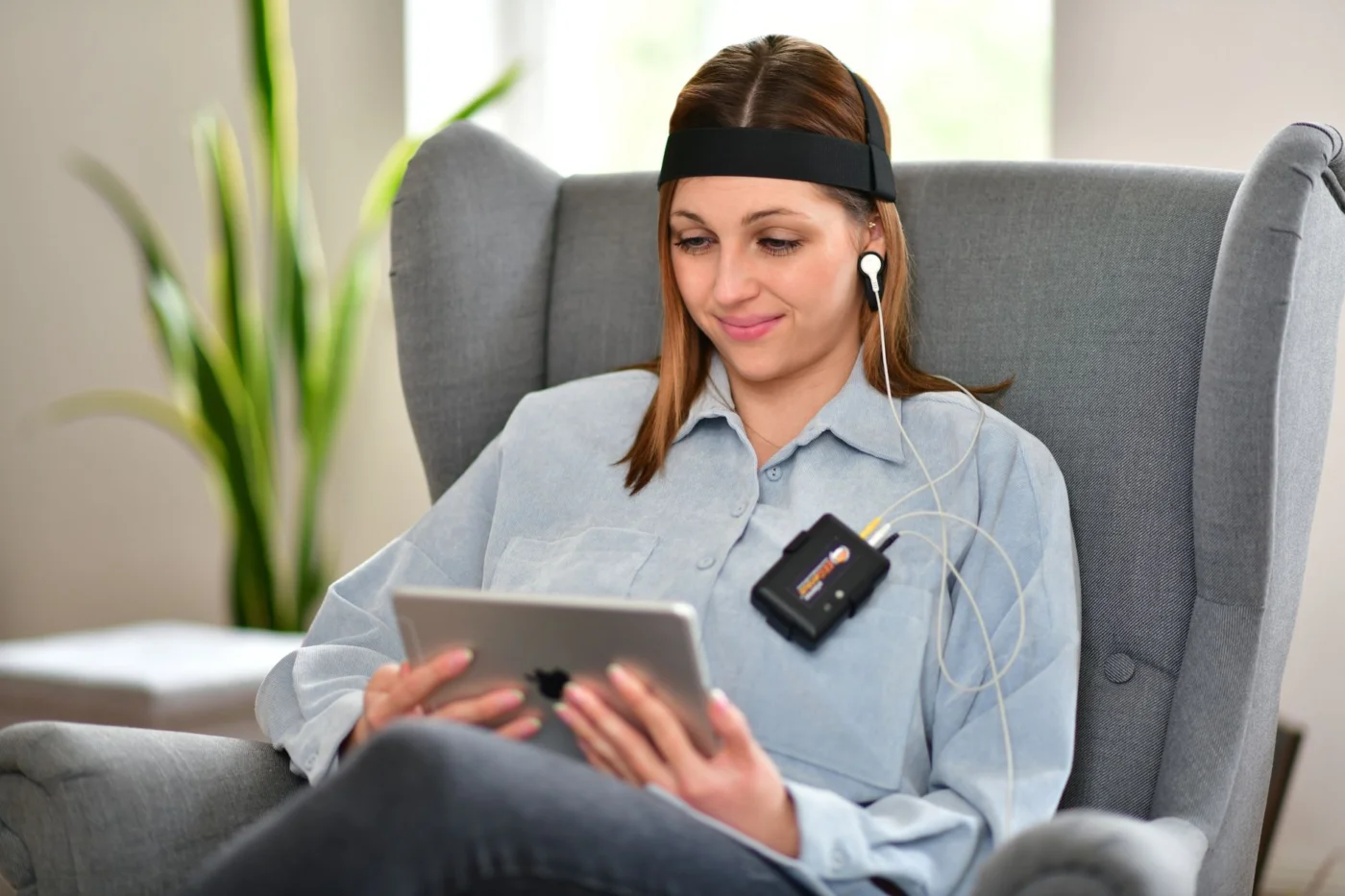
An EEG brain-computer interface records electrical activity from the scalp, and the NIH describes EEG as a noninvasive way to measure brain electrical patterns in clinical testing through scalp electrodes. It’s attractive because it’s wearable, cheaper, and non-surgical.
Thing is, EEG is noisy. Eye blinks, jaw tension, movement, sleepiness, and context can all distort the signal, so attention span, working memory, executive function, and mental clarity can’t be reduced to one “focus wave.”
Comparison table to include
| Tool type | Invasiveness | Signal quality | Realistic use | Learning relevance | Biggest caution |
|---|---|---|---|---|---|
| EEG headset | Noninvasive | Rough, artifact-prone | Good for rough state feedback | May flag fatigue or attention shifts | Not a direct learning score |
| Implanted BCI | Surgical | Higher precision | High-signal research or medical use | Limited everyday study use | Don’t compare it with consumer tools |
| Neurofeedback app | Usually noninvasive | Varies widely | Behavioral feedback | May build awareness of states | Not proof of better grades |
Common mistakes to avoid
Quick Reference
Don’t assume a focus score means better learning. Don’t treat consumer headsets like implanted clinical BCIs. And don’t ignore sleep, spacing, retrieval practice, workload, or medical evaluation while chasing mental clarity gadgets.
Neurofeedback may help some people notice or train certain states in some contexts. But it isn’t proven as a universal everyday studying upgrade.
If ADHD, anxiety, sleep disorders, or neurological symptoms are part of the picture, talk with a qualified professional. Next, use the Signal–Task–Outcome rule to judge any BCI learning claim without getting fooled by hype.
Use the Signal–Task–Outcome rule
So here’s the deal: a brain-computer interface can measure a real signal and still fail to improve the learning task you care about. Before buying any focus gadget, use the Signal–Task–Outcome rule; my deeper notes on BCIs and attention can help you sanity-check the claims.
Step-by-step device check
How to test BCI claims before you trust them
- Step 1: Signal — ask what’s measured: EEG, implanted neural activity, heart rate, movement, eye tracking, or a blended “focus” score.
- Step 2: Task — ask whether that signal maps to your real focus problems: reading comprehension, problem solving, memorization, typing, or sustained attention.
- Step 3: Outcome — look for better recall, accuracy, time-on-task, error rate, or fatigue recovery — not just a prettier dashboard.
- Step 4: Evidence — prefer independent research, comparison conditions, and meaningful outcomes over testimonials.
From experience: how I’d test a focus tool
When building FreeBrain learning tools, the recurring design question is simple: does feedback change behavior in a useful way? Try two 25-minute study blocks on comparable material, one with the device and one without, then compare next-day recall, careless errors, and cognitive fatigue notes.
If the device only changes how focused you feel, but not what you remember or produce, treat it as interesting feedback. Not a learning upgrade.
Privacy and medical boundaries
Brain data privacy matters because neural signals may be sensitive even when they don’t reveal exact thoughts. Check what’s stored, who can access it, whether it’s shared, and whether deletion is possible.
This article is educational, not medical advice. Implanted BCIs, neurological devices, paralysis support, communication systems, ADHD-like symptoms, or medical concerns should be discussed with qualified professionals; the FDA’s medical device guidance is a useful starting point.
Quick reference checklist
- Real now: communication research, accessibility, feedback, and fatigue detection.
- Not proven for everyday studying: instant learning, perfect focus, private thought reading, or replacing sleep and study habits.
- Best next step: evaluate the signal, match it to the task, and demand a meaningful outcome.
That decision rule gives us a clean way to answer the common brain-computer interface questions people ask next.
Frequently Asked Questions
What is a brain-computer interface in simple terms?
A brain-computer interface is a system that records brain activity, analyzes the signal, and turns it into a computer output, device command, or feedback. Simple version: your brain signal becomes input, a bit like a keyboard or mouse — except it’s noisier and much harder to interpret. It works with measurable patterns such as electrical activity, not full private thoughts or “mind reading.” For a technical overview, the NIH has a useful introduction to brain-computer interface systems.
Can a brain-computer interface improve focus while studying?
A brain-computer interface focus tool may give attention-related feedback or detect signs of fatigue in some settings, especially when paired with EEG or other brain-signal tracking. But wait — that doesn’t mean it can reliably create perfect concentration, improve grades by itself, or replace boring-but-effective study habits. If you use one, compare its “focus score” against real outcomes: completed practice questions, recall accuracy, time on task, and how well you can explain the material afterward.
Can a brain-computer interface help people learn faster?
Brain-computer interface learning tools may eventually support adaptive study systems, accessibility tools, and fatigue-aware learning environments. Personally, I think the most realistic near-term use is feedback: noticing when your workload is too high, when attention is dropping, or when a task needs to adapt. For most learners today, though, the bigger wins still come from retrieval practice, spaced repetition, sleep, and keeping study sessions manageable. If a BCI tool doesn’t improve those basics, it’s probably a shiny distraction.
Is an EEG headset the same as a brain-computer interface?
An EEG brain-computer interface uses EEG signals as part of a loop: record brain activity, decode it, then turn it into feedback or action. But an EEG headset by itself is not automatically a useful BCI. Three things matter: signal quality, a clear task, and a meaningful outcome, such as controlling a cursor, giving fatigue feedback, or adapting a training task. A device that only shows vague brainwave charts may be interesting, but it’s not the same as a well-designed brain-computer interface.
What is the biggest risk of consumer BCI attention tools?
The practical risk with BCI attention tools is trusting a vague focus score more than your actual performance. If the device says you were “focused” but you can’t solve problems or recall what you studied, the score didn’t help you learn. The broader risk is privacy: brain-related data can be sensitive, so check how signals are stored, whether they’re shared, and whether you can delete them. For privacy basics, the FTC’s privacy and security guidance is a good starting point.
Conclusion: Treat the Interface as Feedback, Not Magic
A brain-computer interface is useful only when you can connect three things: the signal it reads, the task you’re trying to improve, and the outcome you can actually measure. That’s the Signal–Task–Outcome rule. If a device says it tracks attention, ask: attention during what task? Reading? Coding? Recall practice? Then ask what “better” looks like — fewer distractions, longer deep-work blocks, faster review sessions, or stronger memory after a few days. This is the part most people get wrong: the brain signal isn’t the goal. Better learning behavior is.
And honestly, I get why this topic feels exciting. The idea that technology could help you notice when your focus slips — before you waste 40 minutes half-working — is genuinely powerful. But wait. You don’t need to wait for futuristic hardware to start improving your learning system today. You can already build better feedback loops with simple tools: timed study blocks, active recall, spaced repetition, distraction logs, and clear review outcomes. The future of focus may involve neural interfaces, sure. But the habit of measuring what matters? You can start that this week.
If you want to turn that idea into practice, explore more learning tools and guides on FreeBrain.net. Start with our guide to spaced repetition if your goal is long-term memory, or read active recall if you want a stronger study method than rereading notes. Pick one task, choose one outcome, run one focused experiment — and let your results tell you what to improve next.