

If you’re wondering is time blocking good for adhd, the short answer is: it can be. A 60 minute deep work block is a scheduled hour for one demanding task, usually split into setup, focused effort, and a quick review, and for many people it’s long enough to make real progress without the drag of a 90-minute session. And yes, if you’re asking is time blocking good for adhd, the evidence-informed answer is that it often helps by reducing decision fatigue and making work visible, but it usually works better when the blocks are shorter, looser, and paired with timers, cues, and realistic task scope.
You probably know the feeling. You sit down to study, write, or code, lose 12 minutes deciding where to start, get distracted once, and suddenly the hour is gone. Attention isn’t just about willpower — it’s shaped by how your brain filters competing inputs, which is why understanding better focus and attention matters so much, and why the National Institute of Mental Health overview of ADHD is useful context when thinking about planning, inhibition, and task switching.
So here’s the deal. This article will show you exactly how to structure a 60-minute deep work block minute by minute, when 25 vs 50 vs 60 vs 90 minute focus sessions make more sense, and how to block time for deep work without making your calendar feel like a trap. You’ll also get practical examples for studying, writing, and knowledge work, plus a clear take on whether time blocking for deep work actually fits ADHD brains.
I’m a software engineer and the founder of FreeBrain, not a neuroscientist — but I’ve spent years building learning tools, testing focus systems in real work, and translating research into methods you can actually use. Personally, I think the best setup is the one you’ll repeat, which is why we’ll also connect deep work timing to your day, including simple brain-friendly morning routines that make your first focus block easier to start.
📑 Table of Contents
What a 60-minute block does
Now let’s make this concrete. A 60-minute deep work block is one scheduled hour for a single demanding task, usually split into 5 minutes to set up, 45 minutes of focused work, and 10 minutes to review and reset. For more on productivity and focus, see our productivity and focus guide.

So, is time blocking good for adhd? For some people, yes. It can reduce decision fatigue and make work feel visible and finite, especially when the block is flexible, visually clear, and paired with a timer. From building study tools and testing focus routines, I’ve found this middle length works because it respects cognitive load without turning your calendar into a fantasy plan; if you want your first block earlier in the day, these brain-friendly morning routines help.
And here’s the kicker — one-task blocks matter because switching leaves part of your attention stuck on the last thing. Researchers often call this attention residue, and it lines up with research on task switching and cognitive control summarized in PubMed-backed work on executive control and task switching and ADHD context from the National Institute of Mental Health’s ADHD overview.
A direct definition
What is a 60 minute deep work block? It’s one hour reserved for exactly one cognitively demanding outcome: writing, coding, solving problem sets, reading dense material, or outlining a paper.
- Deep work: draft 500 words of a report
- Not deep work: “work on report”
- Shallow work: email, formatting slides, checking messages
If you’re trying to build better focus and attention, specificity is the part most people miss.
When 60 minutes is enough
It works best for medium-complexity tasks, restart-heavy tasks, and busy days. Think one textbook section plus recall questions, one coding bug plus a test pass, or one article subsection draft. Beginners usually underestimate setup time, so the 5/45/10 split keeps friction from eating the whole hour.
From experience: why this middle length sticks
Personally, I think 60 minutes is often the shortest deep work session that still produces meaningful output. Shorter blocks are easier to start, sure, but many self-learners can protect one 60-minute block daily more reliably than two 90-minute blocks. And that’s the real win: consistency beats heroic scheduling. Next, let’s build your block step by step.
Build your block step by step
So what does that 60 minutes actually look like? If you’re wondering, “is time blocking good for adhd,” this structure works best when the block is tight, visible, and easy to restart.

How to build a 60-minute block
- Step 1: 0-5 minutes: set up one outcome, one workspace, one timer.
- Step 2: 5-50 minutes: do focused work only, using a capture list for distractions.
- Step 3: 50-60 minutes: review progress, write the next start point, and reset.
Step 1: Set up in 5 minutes
Pick one task and one finish line. “Solve problems 1-6 and check errors” beats “study chemistry” every time. If your first block happens early, pairing it with brain-friendly morning routines makes it easier to start on cue.
Before the timer starts, clear tabs, open only what you need, silence notifications, and write a restart sentence: “Next, outline paragraph two from the lecture notes.” Add an implementation intention too: “At 9:00, I will sit at my desk and draft for 45 minutes.”
Step 2: Work for 45 minutes
Use one task, one workspace, one timer. For students, that might mean reading plus retrieval practice; for writers, drafting; for knowledge workers, debugging or architecture notes. If attention slips, do a 10-second reset: breathe, reread the last line, continue.
Don’t switch apps when a random thought pops up. Put it on a capture list instead. Research on task switching and attention from the National Library of Medicine on cognitive load and multitasking helps explain why switching raises mental overhead and hurts output quality; FreeBrain’s guide to better focus and attention breaks that down in plain English.
Step 3: Review and reset in 10 minutes
Now close the loop. Log what you finished in one or two lines, write the next visible action, then reset your desk. A quick ritual helps: stand up, drink water, or do one minute of breathing before the next task.
Put it on your calendar
Here’s a simple deep work calendar example: Monday to Friday, protect 9:00-10:00 for writing or problem solving, then add an optional 2:00-3:00 block for study review. Put admin, email, and errands outside the block. If you’re planning exams, this fits neatly into a 30-day exam study plan.
Most students and knowledge workers do well with 1-3 real deep work blocks per day, depending on energy, workload, and experience. And yes, is time blocking good for adhd? Often, yes—if the block holds a concrete outcome instead of a vague intention. Next, let’s look at session length, ADHD, and the mistakes that make blocks fall apart.
📋 Quick Reference
- 5/45/10 template: 5 minutes prep, 45 minutes focused work, 10 minutes review and reset.
- Best use cases: writing, studying, retrieval practice, coding, problem sets, planning notes.
- Timer rules: one timer, no app switching, capture distractions on paper, stop to review before moving on.
ADHD, session length, and common mistakes
Now you’ve got the block structure. The next question is practical: is time blocking good for adhd? Sometimes, yes — especially when it cuts ambiguity, reduces decision fatigue, and gives your work a clear start and stop.
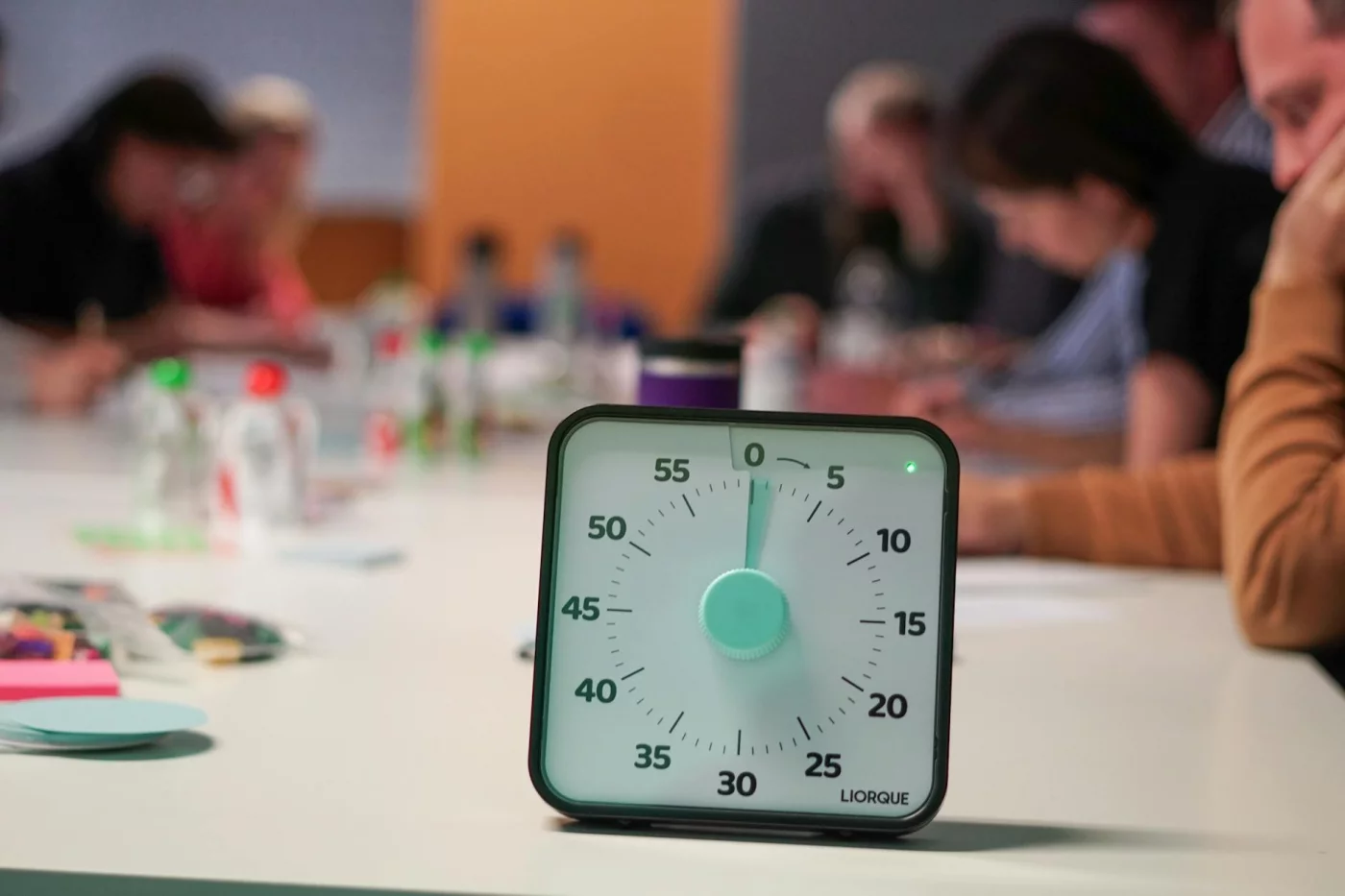
But wait. It’s not universal. Some people with ADHD do better with flexible “menu blocks” than rigid schedules, and this section is educational, not medical advice; for diagnosis or treatment decisions, check plain-language guidance from NIMH or a qualified clinician.
📋 Quick Reference
Best default: try one 60-minute block with a defined output, a visual timer, and a 5-10 minute reset. If that feels too long, drop to 25 or 50. If it feels easy and your energy is stable, test 90.
When time blocking helps ADHD
So here’s the deal. Time blocking can help when your main problem is drift — not knowing what to start, when to stop, or how long to stay with one task. That’s why shorter starter blocks, body doubling, visual timers, and environmental cues often work better than copying someone else’s calendar.
Personally, I think the sweet spot for many people is a flexible 60 minute deep work block for adhd: long enough to get past setup friction, short enough to feel survivable. And if distraction is your weak point, learning how attention systems affect better focus and attention makes the logic behind buffers and clean starts a lot clearer.
25 vs 50 vs 60 vs 90 minutes
- 25 minutes: best for starting, low motivation, or admin days; weak for complex tasks with heavy setup.
- 50 minutes: solid for class-style work; can feel cramped once reorientation is counted.
- 60 minutes: best deep work session length for many students and knowledge workers; good middle ground.
- 90 minutes: useful for flow work and a classic Pomodoro alternative, but harder when energy drops.
Real-world applications
Study block: 5 minutes preview goals, 35 minutes active reading, 10 minutes retrieval practice, 10 minutes error log. Writing block: 5 minutes outline, 40 minutes draft one subsection, 15 minutes revise and leave a next-sentence cue.
Coding or analysis block: 5 minutes define the bug or question, 40 minutes execution, 15 minutes test, document, and queue the next action. One block, one output. That’s the part most people get wrong.
What breaks the block
Three things matter: too many goals, message-checking, and skipping the reset. Pack four tasks into one hour and you create hidden context switching, attention residue, and more brain fatigue than the clock suggests.
Quick comparison: the 3 3 3 rule vs time blocking isn’t really either-or. The 3-3-3 rule helps you choose the day’s priorities; time blocking decides when focused work happens. Try one 60-minute block this week, adjust to 25 or 50 if needed, review what actually worked, and the FAQ will help you fine-tune the rest.
Frequently Asked Questions
What is a 60-minute deep work block?
A 60-minute deep work block is one scheduled hour reserved for a single demanding task, with a clear beginning, focused middle, and short wrap-up at the end. In practice, what is a 60 minute deep work block? It’s a session that includes setup, uninterrupted concentration, and a quick review so you don’t lose momentum later. It works best for things like writing, coding, studying, problem-solving, or exam prep—not inbox clearing, routine admin, or low-effort chores.
How should you structure a 60-minute deep work block?
The simplest answer to how to structure a 60 minute deep work block is a 5/45/10 split: 5 minutes to prepare, 45 minutes to focus, and 10 minutes to review and reset. Before you start the timer, define one visible outcome, like “finish the outline,” “solve 8 practice problems,” or “debug the login flow.” That part matters more than people think, because a vague block like “work on project” makes it much easier to drift.
Is a 60-minute deep work block enough for serious work?
Yes—is a 60 minute deep work block enough? For many medium-complexity tasks, absolutely. One solid hour is often enough to make meaningful progress, especially if you repeat it consistently across the week. But wait, some work is heavier: advanced writing, research synthesis, or complex technical problem-solving may need two back-to-back blocks or a longer 90-minute session.
How do you block time for deep work on a calendar?
If you’re wondering how to block time for deep work, start by putting it in your highest-energy window, not wherever there’s leftover space. Label the block with a concrete outcome—“draft section 2” beats “deep work”—and keep meetings, messages, and admin outside that time when possible. And yes, add a 5- to 15-minute buffer before or after the block, because transitions are where schedules usually break; if you want a practical planning system, FreeBrain’s study and focus resources can help you turn that into a repeatable routine.
Is time blocking good for ADHD?
Is time blocking good for adhd? It can be, especially because it reduces decision fatigue and makes your work visible on the calendar instead of leaving everything in your head. But this is the part most people get wrong: rigid blocks often backfire, so it usually works better with flexible block lengths, timers, realistic task scope, and extra transition space. This content is educational, not medical advice, and if you want treatment guidance or help tailoring strategies to ADHD symptoms, consult a qualified clinician; the CDC’s ADHD resources are a solid starting point.
What is the 3-3-3 rule and how is it different from time blocking?
The 3 3 3 rule vs time blocking question comes down to prioritization versus scheduling. The 3-3-3 rule helps you choose what matters first, while time blocking tells you when each task will happen. Personally, I think they work best together: pick your top priorities with the 3-3-3 rule, then assign them to actual focus blocks on your calendar. And if you’re still asking, is time blocking good for adhd, this combo can be especially useful because it cuts both overwhelm and planning friction.
Conclusion
A solid 60-minute deep work block is simpler than most people think. Pick one clearly defined task, spend the first few minutes getting your materials and next action ready, work in a focused sprint, and protect the block from avoidable distractions. If you have ADHD, the answer to “is time blocking good for adhd” is often yes—when the block is flexible, realistic, and built around your attention patterns instead of some perfect planner fantasy. And this is the part most people get wrong: session length matters. For some people, 60 minutes feels ideal. For others, it works better as 45 minutes of focus plus a short reset.
You don’t need a flawless routine to make this work. You just need one block that’s clear enough to start and small enough to finish. Missed a day? Fine. Had to shorten the session? Still counts. Personally, I think that’s what makes this approach useful for real life: it gives your brain structure without turning your schedule into a punishment. Start with one focused hour today, notice what helps, and then adjust from there.
If you want help building a study system that actually fits your brain, explore more on FreeBrain.net. You might start with How to Time Block for Studying and Deep Work for Students. Speaking of which—if you’re still wondering whether is time blocking good for adhd, test it with one simple 60-minute block this week and use the results to shape your next one. Try it, refine it, and make focused work easier to repeat.