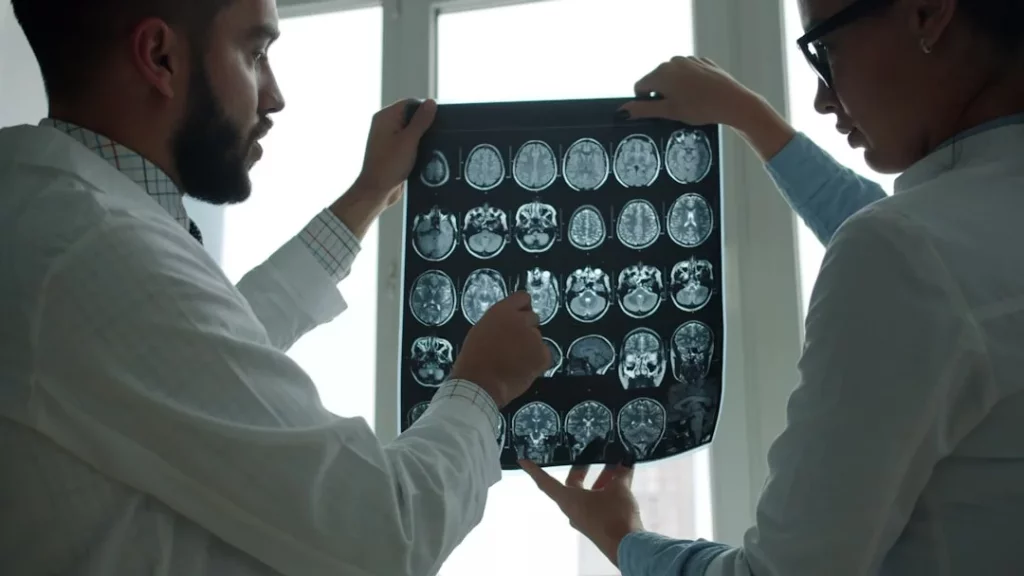

What is active recall? It’s the practice of forcing yourself to pull information out of memory instead of re-reading your notes, highlighting slides, or passively watching lectures again. If you’ve been asking what is the fastest way to study more effectively in med school, this is the core idea: retrieval beats review when your goal is durable memory.
And in medical school, that matters a lot. You’re expected to hold onto anatomy pathways, physiology mechanisms, pathology patterns, and drug facts at a pace that can feel ridiculous. One day you know cranial nerves cold; three days later, half of it is gone. Sound familiar?
Research backs the method. A widely cited review on retrieval practice published in cognitive psychology literature and indexed by the NIH shows that testing yourself improves long-term retention better than passive review in many learning settings; if you want the research base, start with this NIH-indexed review on retrieval practice and learning. So when you ask what is active recall really doing, the short answer is this: it makes forgetting visible early, while you still have time to fix it.
This guide will show you exactly how to use it in medical school without turning your life into one giant Anki session. You’ll get a 7-step workflow, subject-specific active recall studying examples for anatomy, physiology, pathology, and pharmacology, plus a realistic weekly routine for both preclinical blocks and clinical rotations. I’ll also show you how to turn lectures into better prompts so you can make a smarter study guide, and how to run focused recall blocks using principles from our guide to flow state for studying.
Personally, I think this is the part most med students miss: what is active recall matters less than how you fit it into the chaos of lectures, labs, question banks, and clerkships. I’m a software engineer, not a neuroscientist, but I spend a lot of time translating learning research into practical systems that actually survive real study weeks. This article is educational only, not medical or mental health advice; if stress, sleep, or anxiety are seriously affecting your functioning, talk with a qualified professional.
📑 Table of Contents
- What is active recall in medical school? A practical definition that actually helps
- Why active recall works and is active recall the best way to study?
- How to use active recall for medical school: the 7-step workflow
- Active recall studying examples for anatomy, physiology, pathology, and pharmacology
- How to combine Anki, question banks, and a weekly active recall schedule for medical school
- Common active recall mistakes in medical school, what the evidence supports, and your next steps
- Frequently Asked Questions
- Conclusion
What is active recall in medical school? A practical definition that actually helps
So here’s the deal. If you’re wondering what is active recall in medical school, the short answer is this: it’s studying by pulling information out of memory instead of putting your eyes back on the same page. In practice, that means turning lectures, slides, and cases into questions you answer without looking. For more on memory and brain health, see our memory and brain health guide.
That sounds simple. But in med school, where you might face 200-400 slides in a week across multiple organ-system blocks, knowing what is worth memorizing isn’t enough; you need a way to keep it accessible under pressure.
A simple definition for medical students
So, what is active recall in medical school in plain English? It’s the habit of testing yourself before your notes test you. Anatomy becomes “Name the branches of the external carotid artery.” Physiology becomes “What increases cardiac output?” Pathology becomes “What are the classic findings in nephrotic syndrome?” Pharmacology becomes “Which beta-blockers are cardioselective, and what are the major adverse effects?”
This is what is active recall studying at its core: converting content into prompts, then answering from memory. If your lecture deck is a wall of facts, use it to make a smarter study guide with question-based notes, then do short, focused retrieval blocks. And yes, your environment matters — a clean setup and flow state for studying can make recall sessions far more accurate.
Active recall vs passive review
Here’s the contrast most students feel but don’t name. Passive review is rereading glycolysis notes, highlighting a pathology handout, or rewatching a pharm lecture at 1.25x. Active recall is answering, from memory, “What are the 3 irreversible steps of glycolysis and their enzymes?” or “What are the first-line antihypertensives and their major adverse effects?”
- Passive: reread, highlight, rewatch
- Active: blurt, self-quiz, oral recall, flashcards, question banks
Now, what is active recall learning really better for? Long-term retention. Passive review can help with first exposure, sure, but not as your main strategy if you want durable recall on exams, wards, and boards. Research from Roediger, Karpicke, Bjork, and Cepeda suggests retrieval practice plus spacing beats passive review alone for long-term memory, as summarized in an NIH-hosted review on retrieval practice and a review of spaced learning and memory.
Quick sidebar: this is educational, not medical or mental health advice. If severe burnout, anxiety, sleep problems, or health concerns are hurting your studying, talk with a qualified clinician or your school’s academic support staff. And if you want recall to become automatic, attaching it to an existing routine with a habit stacking template helps more than relying on motivation.
Which brings us to the next question: why does this work so well, and is active recall the best way to study?
Why active recall works and is active recall the best way to study?
Now that we’ve defined active recall in practical med-school terms, the next question is obvious: what is happening in your brain when you do it, and is active recall the best way to study? Short answer: active recall is one of the best-supported study methods, but it’s not enough by itself. It works best with understanding, spaced repetition, sleep, and application through practice questions.

If you want cleaner recall prompts from lectures, start by learning how to make a smarter study guide. And if your recall sessions keep turning into distracted rereading, building a real flow state for studying matters more than most students think.
How retrieval strengthens memory
Here’s the plain-English version of retrieval practice: every time you successfully pull information out of memory, you strengthen your ability to access it again later. And when you fail to retrieve, then check the answer, you expose the exact gap that needs work. That’s why what is hard often becomes what sticks.
This is tied to memory consolidation. Newly learned material is fragile, especially after a dense lecture block. But effortful recall acts like a signal that says, “keep this one available.” Researchers often describe this as increasing retrieval strength, and the broader idea fits with “desirable difficulties” — learning tasks that feel harder in the moment but improve long-term retention.
Take a med-school example. You finish a physiology lecture on Starling forces. You can either reread the slide deck and feel familiar with hydrostatic and oncotic pressure, or close the laptop and write the equation, the direction of fluid movement, and one edema example from memory. Which one feels smoother? Rereading. Which one usually builds recall you can use on an exam? Retrieval practice.
And here’s the kicker — active recall also pairs well with spacing. Research on distributed practice, including work summarized by Cepeda and colleagues, shows that same-day review plus later spaced retrieval beats massed cramming for durable retention. That’s basically the forgetting curve problem: if you wait too long, memory drops fast; if you review too often in one sitting, you get fluency without staying power.
- Same-day recall helps stabilize new material.
- Spaced recall days later interrupts forgetting.
- Practice questions test whether you can use the knowledge, not just recognize it.
What research says about self-testing
The classic evidence comes from Roediger and Karpicke’s work on test-enhanced learning: students who practiced retrieval often retained more over time than students who spent that time restudying. Karpicke and Blunt later found that retrieval practice could outperform elaborative studying for later recall in some contexts. If you want a readable overview of the testing effect, Wikipedia’s summary of the testing effect is a useful starting point, and PubMed-indexed medical education studies have generally pointed in the same direction.
But wait. What is the catch? Effect sizes vary. Feedback quality matters, timing matters, and the task matters. Self-testing is especially strong for retention, but it’s not magic if your questions are vague, your feedback is delayed, or you’re memorizing facts you never understood in the first place.
That’s why evidence based learning isn’t just “do more flashcards.” Personally, I think this is where students oversimplify active recall research paper headlines. What is supported by the evidence is retrieval plus correction, not blind guessing forever. For a deeper research trail, PubMed’s medical education and retrieval practice index is the place to verify claims and compare studies.
When active recall works best — and when it doesn’t
So, is active recall the best way to study? For memorization-heavy content, often yes. It’s especially good for studying factual recall, mechanism chains, drug side effects, anatomy labeling, differential diagnosis frameworks, and board-style review where rapid retrieval matters.
What is less effective is using active recall as pure brute-force memorization. If you never build conceptual understanding, you’ll recall isolated facts but miss the case. If you never sleep enough, encoding suffers before retrieval even begins. And if you never apply ideas to questions, your knowledge stays inert.
Three things matter: understanding first, retrieval second, application third. You can even use a habit stacking template to attach 20-minute recall blocks to lectures, rounds, or your evening review so the system actually happens.
Quick sidebar: active recall medical school reddit threads can be useful for workflow ideas, especially around Anki settings or question-bank timing. But students should treat those threads as anecdotes, not proof. What is reliable is adapting evidence-based methods to your curriculum, your phase of training, and your energy limits.
Next, I’ll show you exactly how to run active recall in medical school with a practical 7-step workflow you can use this week.
How to use active recall for medical school: the 7-step workflow
So now that we’ve covered why retrieval beats passive review, the practical question is what is the best way to run it inside a packed med-school week. And, honestly, what is useful here isn’t a theory-heavy system — it’s a repeatable lecture-to-retention pipeline you can use tomorrow.
If you want this section to match how students actually study, I’d strongly recommend embedding a short explainer video near this workflow. That tends to fit search intent well, and it helps when what is being taught is procedural rather than conceptual.
Step 1-3: Preview, convert, and recall before re-reading
Here’s the first half of the system: preview fast, turn content into questions, then force recall before you look back. Three things matter: a 5-10 minute preview, a focused 20-30 minute retrieval block, and zero multitasking. If your phone keeps pulling you out, read FreeBrain’s attention residue explained because fragmented studying wrecks recall accuracy.
How to run the 7 steps
- Step 1: Preview the learning objectives before lecture or before opening the slide deck. Spend 5-10 minutes asking, “What will I need to explain from memory?” Example: before a physiology lecture, skim objectives like “regulate cardiac output” and predict the mechanisms you’ll be tested on.
- Step 2: Convert notes into questions, not prettier notes. Use one card or prompt per testable idea, not one card per sentence. After a renal lecture, write: “What causes high anion gap metabolic acidosis?” If you need help structuring prompts, use FreeBrain to make a smarter study guide.
- Step 3: Recall before re-reading. Close the deck and do blurting, a closed-book summary, or oral quizzing. Example: after anatomy lab, point to a brachial plexus diagram and name branches out loud before checking. This is how to active recall without hiding behind recognition.
- Step 4: Check gaps and correct errors immediately. Give yourself about 10 minutes for error review. Example: if you mixed up nephritic and nephrotic features in pathology, rewrite the exact contrast and test yourself again once.
- Step 5: Repeat with spaced repetition. The retrieval event is the act of pulling from memory; the review schedule is when you return to it. Do a 15-20 minute spaced review the next day, then again later in the week. Research on the forgetting curve explains why timing matters so much.
- Step 6: Apply with question banks. Later in the week, do 20-40 practice questions to test whether recall transfers to clinical reasoning. Example: in pharmacology, don’t just recall “beta-blockers decrease heart rate”; answer a vignette about which drug worsens acute decompensated heart failure.
- Step 7: Review weak areas weekly. Keep a running “missed or shaky” list and consolidate it on the weekend. Example: if endocrine feedback loops, murmurs, and autonomic drugs keep slipping, those become your Sunday review targets.
This is the part most people get wrong: they spend hours building beautiful decks they never review. Personally, I think the better rule is brutally simple — one prompt per testable idea, then move on.
Step 4-5: Correct errors and space your reviews
Immediate feedback is non-negotiable. If you retrieve the wrong fact and leave it uncorrected, you risk strengthening the error instead of the answer. Evidence from retrieval practice research indexed by the National Library of Medicine supports this pattern: testing helps most when learners get feedback and repeat retrieval over time.
And what is the difference between active recall and spaced repetition? Active recall is the memory pull. Spaced repetition is the calendar. You need both if you want durable retention in a medical school study routine.
For preclinical blocks, this usually means lecture-based prompts, Anki, and next-day reviews. In clinical phases, the same workflow shifts toward patient problems: “What is the differential for ascites?” or “What is first-line management for community-acquired pneumonia in this setting?” Same engine, different material.
Step 6-7: Apply with question banks and review weak areas weekly
Question banks expose shallow learning fast. You may feel solid recalling a list, but board-style stems ask whether you can recognize patterns, rule out distractors, and choose the best next step. That’s why how to use active recall in medical school has to include application, not just flashcards.
- Use recall blocks early in the day when possible.
- Batch question-bank review later in the week.
- Track weak topics in one running note, not five scattered apps.
Want this to stick? Attach your weekly review to an existing routine with a habit stacking template. And if you’re trying to protect a deep 20-30 minute recall block, FreeBrain’s guide to flow state for studying can help you set that up.
So, what is the practical takeaway? Preview, questionize, retrieve, correct, space, apply, then audit weak spots weekly. In the next section, I’ll show exactly how these active recall studying methods look in anatomy, physiology, pathology, and pharmacology so you can see the workflow in action.
Active recall studying examples for anatomy, physiology, pathology, and pharmacology
Now let’s make the 7-step workflow concrete. The fastest way to understand what is working in active recall is to look at how strong students turn messy lecture content into sharp prompts they can actually answer under pressure.

From building study tools, one pattern keeps showing up: students improve when they stop “reviewing” and start asking better questions. If you need help turning lecture slides into prompts first, this guide on make a smarter study guide is a good place to tighten your notes before you test yourself.
From experience: what good recall prompts look like
Good prompts are specific, answerable, and clinically meaningful. Bad prompts are vague. “Brachial plexus?” is weak; “Draw the cords and terminal branches of the brachial plexus from memory, then name the motor deficit from radial nerve injury” is much better.
That’s the difference between exposure and self testing. And yes, this is the part most people get wrong. They think an active recall app will save them, but Anki is just a container; retrieval is the method, and what is retrieved matters more than where the prompt lives.
A 2011 review in cognitive psychology found that practice testing reliably improves long-term retention across materials and settings, which is why retrieval practice research summarized in the NIH’s National Library of Medicine still maps well onto medical study workflows. But wait. Strong prompts don’t just ask for a fact; they ask for mechanism, comparison, and consequence.
- Vague: “What is RAAS?”
- Better: “Explain RAAS step by step without notes, then predict what happens if ACE is blocked.”
- Best: “In heart failure with low renal perfusion, walk through RAAS activation and predict effects on preload, afterload, and symptoms.”
If you want recall blocks to work, protect them. Trying to quiz yourself while checking messages kills accuracy, which is why single-tasking explained matters so much for medical school retrieval sessions.
📋 Quick Reference
Use this recall prompt framework:
- Cue: “Radial nerve injury at spiral groove”
- Answer: Wrist drop, weak finger extension, dorsal hand sensory loss pattern
- Common trap: Mixing radial findings with median or ulnar deficits
- Clinical tie-in: Humeral shaft fracture patient can’t extend wrist
Anatomy and physiology recall practice
For anatomy, blank-page recall beats passive atlas rereading. Try this: label the brachial plexus on a blank diagram, then explain which muscles and sensory territories fail after radial, median, or ulnar nerve injury. That’s how to active recall anatomy in medical school without hiding behind recognition.
Physiology works best as chains and predictions. Ask yourself, “What is the sequence from low blood pressure to aldosterone release?” Then do it again on a whiteboard from memory. No notes, no peeking, no half-credit.
Three formats work especially well during focused blocks: closed-book blurting, whiteboard pathways, and oral quizzing with a partner. If you’re struggling to stay locked in during those blocks, I’d pair them with ideas from flow state for studying so recall feels harder in the good way, not just scattered.
For nephron physiology, write prompts like: “Predict urine sodium, renin, and aldosterone changes after loop diuretic use.” For acid-base, don’t just memorize tables. Ask, “A COPD patient with chronic CO2 retention presents with vomiting—what mixed disorder should I expect, and why?”
Preclinical students usually need pathway recall and table discrimination. Clinical students need the same physiology attached to patients. So instead of “What is metabolic acidosis,” try “Septic patient with low bicarbonate and tachypnea: explain the mechanism and expected compensation.”
Pathology and pharmacology recall practice
Pathology recall should connect pattern to mechanism to presentation. For nephritic vs nephrotic syndromes, don’t stop at definitions. Build one-minute disease scripts: key histology pattern, underlying injury, urine findings, edema or hypertension pattern, and the classic vignette clue.
Here are strong active recall studying examples for pathology study tips and pharmacology memorization:
- Pathology: “Identify crescent formation on histology, explain what is being damaged, and predict the patient’s urine findings.”
- Pharmacology: “Recall mechanism, indication, major adverse effects, contraindications, and one comparison drug for propranolol.”
- Comparison card: “Beta-blockers vs calcium channel blockers: when would each lower heart rate, blood pressure, or angina symptoms, and what is the main contraindication?”
And for how to active recall pharmacology in medical school, I like self-made question stems more than endless recognition cards. “Asthmatic patient with hypertension—why might propranolol be a bad choice, and what alternative class could fit better?” That tests use, not just memory.
Preclinical learners often recall mechanisms and adverse-effect clusters. Clinical learners should use patient encounters as prompts: illness scripts, first-line management, monitoring, and what is different when comorbidities change the choice.
Next, I’ll show you how to combine Anki, question banks, and a weekly active recall schedule so these subject-specific prompts become a repeatable system instead of random effort.
How to combine Anki, question banks, and a weekly active recall schedule for medical school
The last section covered subject-specific examples. Now the practical question is what is the best way to turn those examples into a repeatable system you can actually sustain in medical school.
Short answer: use Anki for repeated factual retrieval, question banks for applied reasoning, and a weekly active recall schedule so both happen on time instead of “whenever you get around to it.”
Active recall vs spaced repetition for medical school
If you’re still fuzzy on active recall vs spaced repetition for medical school, here’s the clean distinction. Active recall is the act of pulling information out of memory without looking, while spaced repetition is the timing system that tells you when to review again.
So what is Anki doing here? It’s one tool that can combine both: Anki flashcards force retrieval, and the algorithm spaces reviews over time. But wait. Anki isn’t the whole study plan, because not every medical school task is a flashcard problem.
Best use cases for Anki flashcards are recurring facts you must retrieve fast and often:
- drug mechanisms and side effects
- anatomy structures and innervations
- microbiology bugs, toxins, and associations
- physiology formulas and normal values
- pathology buzzwords that keep repeating
Question banks are better when the task is choosing, prioritizing, or integrating. Think next-best-step management, interpreting a vignette, sorting similar diagnoses, or deciding what matters first in a board-style stem.
Research supports the retrieval side of this. A review in Trends in Cognitive Sciences described retrieval practice as a reliable way to improve long-term retention, especially when practice is repeated over time. Which brings us to what is usually missing: students use spaced repetition software, but they don’t always pair it with higher-level reasoning practice.
Personally, I think this is the part most people get wrong. They ask what is better, Anki or question banks, when the real answer is that each trains a different layer of competence.
Preclinical vs clinical: different workflows, same principle
For active recall for preclinical medical school, your workflow should start close to lectures and labs. After class, turn the material into recall prompts the same day, especially for anatomy, physiology, pathology, and pharmacology; if you need help structuring that, this guide on make a smarter study guide is useful.
What is the goal in preclinical blocks? Build fast access to core facts, then test whether you can connect them across a system. A simple pattern works well: lecture or lab first, 15 minutes of closed-book recall after, then Anki later for spaced repetition, with question-bank sets added once the unit has enough content to integrate.
For active recall for clinical rotations, the prompts change. Your patients become the cue: before reading the assessment, ask yourself for the differential, likely management, contraindications, and the one complication you can’t miss.
Then do short shelf exam study sessions after rounds or after sign-out. Not heroic sessions. Just targeted review of missed questions, one or two disease scripts, and a brief Anki pass on recurring weak areas.
That’s what is sustainable on clerkships. After a full hospital day, trying to brute-force six hours of pure retrieval is usually a bad plan.
A weekly active recall schedule you can actually follow
A weekly active recall schedule for medical students should be boringly realistic. Thing is, consistency beats intensity when your days are already packed.
Here’s a workable active recall study routine for medical school:
- Weekdays: 25-minute morning Anki review
- After lectures: 15-minute closed-book recall on that day’s material
- Evenings: 30-minute weak-topic review
- Three days per week: 20-40 question bank items with review
- Weekend: 60-90 minute consolidation block, error log review, and next-week planning
And yes, the timing matters. If you want to make it automatic, attach each block to an existing cue using a habit stacking template: Anki after coffee, post-lecture recall before lunch, question banks after dinner on Tuesday, Thursday, and Saturday.
What is the catch-up rule if you miss a day? Don’t double everything the next day. Clear overdue Anki in a capped session, do one short recall block on the highest-yield topic, and resume the schedule instead of trying to “win back” the whole week.
Three fatigue rules matter:
- Do hard retrieval when you’re most alert.
- Take short resets between blocks, even five minutes.
- Reduce friction: phone away, tabs closed, one task only.
That structure works in both lecture blocks and clerkships because the principle stays the same even when the content changes. Next, we’ll cover the common active recall mistakes medical students make, what the evidence supports, and what to do next.
Common active recall mistakes in medical school, what the evidence supports, and your next steps
If the last section was about building a system, this part is about protecting it. The biggest reason active recall fails in med school usually isn’t effort; it’s doing the wrong version of it and forgetting what is actually worth repeating.
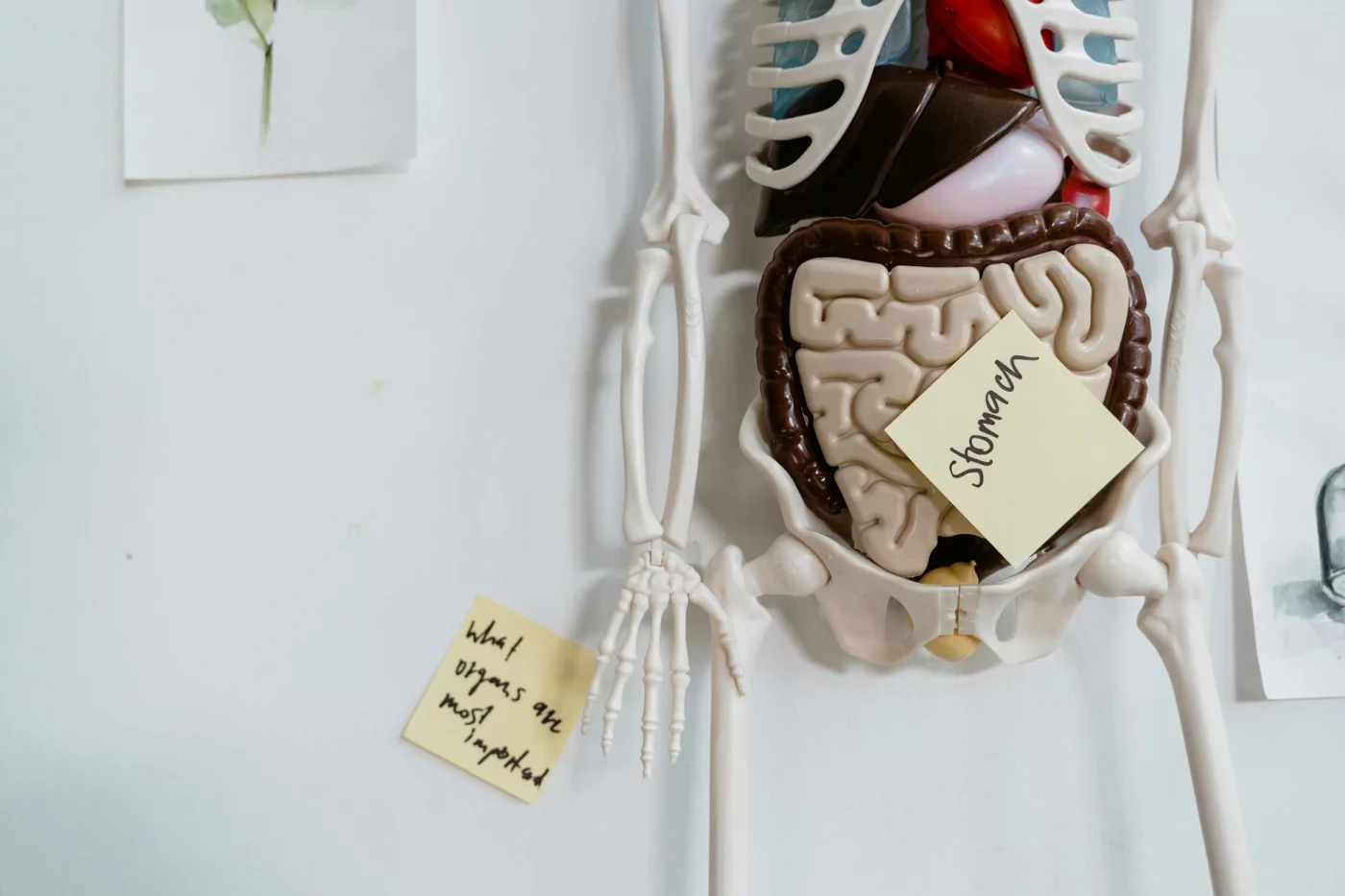
Mistakes that waste time
The most common active recall mistakes in medical school are predictable. And expensive.
- Making too many flashcards. More cards isn’t more learning; it’s often more maintenance.
- Writing recognition cards instead of recall prompts. “Which drug is this?” is weaker than “First-line drug, mechanism, and major adverse effect?”
- Rereading before every attempt. That turns retrieval into passive review vs active recall.
- Skipping feedback, question-bank transfer, spacing, or focused attention.
Personally, I think this is the part most students get wrong: they copy an active recall medical school reddit workflow without adapting it to anatomy, pathology, or clerkship demands. Use fewer, better prompts, review answers immediately, and turn lecture notes into questions with make a smarter study guide. Also, stop multitasking. If you’re checking messages between cards, what is being trained isn’t memory; it’s task-switching.
What the evidence actually supports
Research suggests retrieval practice works. A widely cited review by Dunlosky and colleagues in Psychological Science in the Public Interest found practice testing and distributed practice among the most effective study strategies, and Roediger and Karpicke’s work showed delayed retention benefits from retrieval over rereading. Bjork’s desirable difficulties research points the same way: harder recall can improve long-term learning.
But wait. What is supported by the evidence is not “just do flashcards.” Studies indicate active recall is highly effective when paired with understanding, spacing, feedback, sleep, and repeated application through questions or cases. What is not supported is cramming exhausted, anxious, and distracted. For severe burnout, anxiety, sleep problems, or health concerns, consult academic support staff or a qualified healthcare professional.
Quick start plan for this week
What is the minimum effective routine? Simple and sustainable.
- Today: convert one lecture into 10 short recall questions.
- This week: run 3 focused retrieval blocks and set measurable targets using SMART goals for students.
- Before the next exam: review your error log, weak-topic list, and missed question-bank patterns.
For preclinical blocks, prioritize mechanisms, pathways, and comparisons. For clinical rotations, prioritize illness scripts, management steps, and application. That’s usually what is most testable and most useful. Next, we’ll wrap up with quick answers and final takeaways, and if you want more structure, explore the FreeBrain study, focus, and productivity resources linked throughout this guide.
Frequently Asked Questions
What is active recall in medical school?
What is active recall in medical school? It’s the process of pulling information out of memory instead of passively re-reading notes, slides, or highlighted textbooks. In practice, that means closing your lecture notes and explaining glycolysis from memory, using Anki cards to retrieve facts, doing oral quizzing with a study partner, or reviewing a question bank by answering before you look at the explanation. In med school, active recall works best when you use it on lecture content, clinical concepts, and exam-style prompts rather than just memorizing isolated facts.
What is active recall studying?
What is active recall studying? It means you study by using questions, prompts, and self-testing to force your brain to retrieve information, which strengthens memory more than passive review. Flashcards are one useful tool, but they are not the whole method — you can also use practice questions, blank-page summaries, verbal teaching, and recall sheets. If you want a practical system, FreeBrain’s study method resources can help you match active recall formats to the kind of material you’re learning.
How to active recall for anatomy and pharmacology?
If you’re wondering what is the most practical way to do this, the best answer is to make retrieval match the subject. For what are examples of active recall for anatomy and pharmacology, use blank diagrams, structure labeling, origin-insertion-action prompts, and nerve lesion questions for anatomy; for pharmacology, quiz yourself on mechanism, indication, side effects, contraindications, and drug-to-drug comparisons. A good rule is simple: if you can say it, label it, compare it, or apply it without looking, you’re doing real active recall.
Is active recall the best way to study in medical school?
What is the short answer? For long-term retention, is active recall the best way to study is usually answered with “it’s one of the best-supported methods,” especially when exams require you to retrieve information under pressure. But wait — it works best when you pair retrieval with understanding, spaced review, enough sleep, and application through question banks or clinical cases. Research summarized by PubMed supports retrieval practice as a strong learning strategy, not a magic trick on its own.
What is the difference between active recall and spaced repetition?
What is the difference between active recall and spaced repetition? Active recall is the act of retrieving information from memory, while spaced repetition is the schedule that tells you when to review that information again. Anki often combines both by showing you prompts at increasing intervals, but you can also use active recall in question banks, oral quizzes, and written self-tests without a flashcard app. So here’s the deal: one is the mental action, the other is the timing system.
How often should medical students use active recall?
What is a realistic frequency? For most students, how often should medical students use active recall comes down to daily or near-daily retrieval for current material, plus one weekly consolidation session to reconnect older topics. The exact amount should match your course load, your energy, and how close you are to the exam — because a sustainable 30 to 60 minutes of focused recall usually beats a huge session you can’t repeat.
Is active recall good for studying if you are short on time?
Yes — and what is especially useful here is that short retrieval sessions often outperform long passive rereading blocks. If you’re asking is active recall good for studying when your schedule is packed, try 10- to 20-minute recall bursts built around high-yield objectives, missed questions, or lecture learning goals. Personally, I think this is where most students waste time: they review everything instead of testing the few things they actually need to remember.
What is a simple weekly active recall schedule for medical students?
What is a simple plan that actually works? A solid weekly active recall schedule for medical students can look like this: morning review of old cards or missed concepts, a short post-lecture recall block the same day, and three question-bank sessions across the week. Then use one weekend consolidation block to revisit weak systems, update your error log, and test yourself again without notes; if you want to build the habit, pairing this with a planning tool like FreeBrain’s study resources makes the schedule easier to stick to.
Conclusion
If you remember just four things, make them these: first, active recall works best when you turn notes into questions instead of rereading; second, your medical school workflow should mix recall, feedback, and spaced review; third, each subject needs its own format, whether that’s image-based prompts for anatomy or mechanism-first questions for pharmacology; and fourth, consistency beats marathon sessions every time. So if you’ve been asking what is the most effective way to study dense material, this is the practical answer: retrieve, check, refine, repeat.
And yes, this can feel messy at first. That’s normal. Medical school gives you too much information, too little time, and constant pressure to keep up. But wait — you do not need a perfect system on day one. You need a system you’ll actually use this week. Start small, test one lecture block, build a question set, and review it on schedule. Personally, I think that’s the part most students miss when they ask what is wrong with their studying: usually, it’s not effort. It’s using low-return methods for high-volume material.
Which brings us to your next step: don’t stop at understanding what is active recall — build it into your routine. If you want help turning this into a repeatable study system, read Spaced Repetition: How to Remember More With Less Review and Best Study Methods: What Actually Works Based on Cognitive Science. Then pick one class, create your first recall set today, and prove to yourself that better studying is trainable.