
You don’t need to pick just one goal system. If you’re searching for smart goals examples for students, the short answer is this: SMART goals help you define a clear target, OKRs help you choose the right priorities, and implementation intentions help you actually follow through. That’s why the best smart goals examples for students don’t stop at “what” you want to do — they also spell out “when,” “where,” and “what I’ll do if I get distracted.”
A quick comparison helps:
SMART goals = clear, measurable task goals.
OKRs = bigger direction plus measurable results.
Implementation intentions = if-then plans that turn intention into action.
Best use together = OKRs set the direction, SMART goals define the plan, implementation intentions make the plan happen.
Sound familiar? You start the semester motivated, write a few goals, maybe even find some smart goals examples for students — and then real life hits. Classes pile up, deadlines overlap, your phone wins, and the plan quietly falls apart. Research on implementation intentions has been influential because it helps explain the execution gap between intention and behavior; even the overview of implementation intentions captures why specific if-then planning matters.
So here’s the deal. This article will show you smart goals examples for students, OKR examples for teams and personal projects, and practical implementation intentions examples for studying. You’ll see when to use each framework, what is the difference between smart goals and okrs, and how to combine them into one system you can run with a 30-minute weekly review and cue-based plans like this habit stacking template.
I’m a software engineer, not a psychologist. But after building learning tools and studying the research behind follow-through, I’ve found that the most useful smart goals examples for students are the ones that connect ambition to behavior — not just motivation to wishful thinking.
📑 Table of Contents
- Quick answer: smart goals examples for students, OKRs, and implementation intentions
- Why goals fail: the execution gap behind smart goals vs OKRs
- What SMART goals, OKRs, and implementation intentions each do best
- How to use SMART goals and OKRs together with if-then plans
- 7 practical smart goals examples for students, personal productivity, and teams
- Quick reference: common mistakes, weekly review, FAQ, and best framework by situation
- Frequently Asked Questions
- Conclusion
Quick answer: smart goals examples for students, OKRs, and implementation intentions
So here’s the short version from the introduction: most students shouldn’t choose one framework and ignore the rest. The best smart goals examples for students usually combine SMART goals for a clear target, OKRs for bigger priorities, and implementation intentions to close the gap between planning and doing. For more on learning and study skills, see our learning and study skills guide.
That mix works because each tool solves a different problem. SMART goals examples for students define the finish line, OKRs organize direction across a term, and if-then plans make action easier when real life gets messy.
Definition snapshot
SMART means specific, measurable, achievable, relevant, and time-bound. In plain English, smart goals examples for students answer five questions: what exactly are you doing, how will you measure it, is it realistic, why does it matter, and by when?
OKRs, or objective and key results, are simpler than they sound. You set one objective, then attach 2-5 measurable key results that show progress. That’s the core difference in what is the difference between smart goals and okrs: SMART is usually one defined goal, while OKRs connect a bigger aim to measurable outcomes.
And what are implementation intentions? They’re if-then plans: “If it’s 7:00 p.m. and I sit at my desk, then I’ll do 25 minutes of biology review.” Research on implementation intentions in behavioral science suggests this cue-response structure improves follow-through. If you want a cue-based version, our habit stacking template helps turn vague plans into triggers you can actually notice.
At-a-glance comparison table
| Framework | Best for | Time horizon | Measurement style | Common failure mode |
|---|---|---|---|---|
| SMART goal | Clear academic or personal targets | 2 weeks to 1 semester | Single defined outcome | Too specific, but not reviewed |
| OKR | Big priorities across classes, projects, or teams | Quarter or term | Objective + 2-5 key results | Ambitious goals without weekly execution |
| Implementation intention | Starting and repeating actions | Immediate to daily | Cue-response plan | Weak or unrealistic cue |
Use SMART for target-setting, OKRs for direction, and implementation intentions for execution. KPIs are different: KPI tracks status or health, while OKR drives change. That’s why smart goals vs okrs for students isn’t really a fight; it’s a stack.
For maintenance, I’d pair any of these smart goals examples for students with a weekly reset like FreeBrain’s 30-minute weekly review. And yes, this is the part most people skip.
📋 Quick Reference
SMART: best for one clear target.
OKRs: best for aligning bigger priorities.
Implementation intentions: best for follow-through in the moment.
Strong systems also depend on workload, sleep, stress, and review habits. For execution examples, pair smart goals examples for students with active recall studying and regular check-ins. Research indexed by PubMed’s behavioral and health literature database keeps pointing to the same idea: planning helps, but conditions matter too.
Educational note: this section is for learning, not medical advice. If stress, anxiety, burnout, or sleep problems keep disrupting your goals, talk with a qualified healthcare or mental health professional.
Which brings us to the harder question: if these frameworks are so useful, why do goals still fail so often? The next section gets into the execution gap.
Why goals fail: the execution gap behind smart goals vs OKRs
So here’s the deal. The problem with many smart goals examples for students isn’t the goal itself; it’s the gap between deciding and actually doing. That’s why a weekly reset like a 30-minute weekly review matters so much: it keeps plans connected to real time, real energy, and real constraints.

Planning fallacy and the intention-behavior gap
Deciding is not the same as doing. And that’s where smart goals examples for students often break down.
The planning fallacy is simple: you assume future-you will have more time, more focus, and less friction than present-you. But wait. Future-you still gets tired, distracted, and pulled into context switching. A goal like “study biology this week” sounds reasonable, yet it fails because it has no cue, no place, no duration, and no method.
A stronger version looks like this: “If it is 7:00 PM on Monday, then I will do one 25-minute active recall block for chapter 3 at my desk.” That’s an implementation intention. Research on implementation intentions summarized in PubMed Central suggests that if-then planning helps people act when the right cue appears, instead of renegotiating the task in the moment.
Personally, I think this is the missing layer in most smart goals examples for students. The goal gives direction, but the if-then plan gives a launch point. If you want a simple cue-based structure, a habit stacking template can help you attach study actions to something that already happens, like finishing dinner or opening your laptop after class.
It also helps to separate four things people constantly mix together:
- Outcome goal: raise your exam score from 72% to 85%
- Process goal: complete 4 active recall sessions per week
- Task: create 20 flashcards tonight
- KPI: weekly class attendance rate
OK wait, let me back up. If you confuse these, your system gets messy fast. You start tracking attendance like it’s progress on mastery, or treating one flashcard session like it guarantees the outcome.
Why motivation is unreliable
Motivation feels powerful. It’s also unstable.
Your energy changes by hour, not just by week. Emotional resistance shows up when the task feels unclear, the phone is nearby, your notes are scattered, or you don’t know how to start. And here’s the kicker — vague next actions create procrastination even when you care deeply about the goal.
One overloaded student with five active goals is usually less likely to follow through than a student with one or two active priorities. Why? Attention residue. When you bounce between chemistry notes, essay planning, internship applications, gym targets, and club work, part of your mind stays stuck on the previous task. If you want the deeper explanation, read attention residue explained; it’s one of the biggest hidden reasons execution collapses.
This is why motivation alone fails in both personal systems and team systems. APA’s overview of self-control and self-regulation from the American Psychological Association is useful here: behavior change depends less on hype and more on structure, cues, and monitoring. Single-tasking, focus blocks, and accountability all reduce the number of decisions you have to make when your energy is low.
From experience: what FreeBrain readers usually get wrong
From building planning tools, I’ve noticed the same pattern again and again. Readers usually don’t fail because they lack ambition; they fail because their next action is fuzzy and their review cadence is missing.
Three things matter: fewer active priorities, clearer execution triggers, and a weekly reset. Most people set a big target, maybe even good smart goals examples for students, then never translate them into cue-based actions. No trigger. No review. No adjustment when the week gets messy.
The fix is boring, which is probably why it works. Narrow to one major objective, add two or three key results, then write a few if-then plans for the week. Speaking of which — if follow-through keeps slipping, the difference between ownership and external pressure matters more than people think, and accountability vs responsibility is a useful lens for building a system that actually sticks.
So yes, smart goals examples for students can look excellent on paper and still fail in practice. Without cue-based execution and weekly review, they stay aspirational. Which brings us to what each framework actually does best — and how SMART goals, OKRs, and implementation intentions can work together instead of competing.
What SMART goals, OKRs, and implementation intentions each do best
The execution gap usually shows up because one tool is being asked to do three jobs. That’s where smart goals examples for students help: they clarify the target, while OKRs set direction and implementation intentions make action happen in real life.
So here’s the deal. If you review your goals weekly with a 30-minute weekly review, the differences become obvious fast: SMART goals track clear commitments, OKRs organize priorities, and if-then plans reduce friction at the moment you need to act.
SMART goals explained simply
SMART works best when you need one person, one target, and one deadline. The classic formula is specific, measurable, achievable, relevant, and time bound — and yes, those last two words matter because feedback loops break without a clear finish line.
A weak example: “Study calculus more.” A strong example from real smart goals examples for students: “Score 85% or higher on the next calculus exam by May 20 by completing four 45-minute practice sessions each week.”
Why is that better? Because measurable and time-bound goals tell you whether your plan is working before the exam arrives. And “achievable” doesn’t mean easy. It means realistic under your current classes, job hours, sleep, and energy — not fantasy scheduling.
Personally, I think this is the part most people get wrong. smart goals examples for students work best when paired with realistic workload planning, not wishful calendar stuffing. If your exam plan depends on six perfect mornings in a row, it’s probably not achievable.
Here’s a clean smart goals vs objectives distinction:
- Objective: Become a stronger calculus student.
- SMART goal: Score 85% or higher on the next calculus exam by May 20.
- Process metric: Complete 8 timed problem sets.
- Outcome metric: Reach at least 80% average accuracy.
For exam prep, smart goals examples for students become much stronger when tied to active recall studying instead of passive rereading. That shift alone changes the work from “hours spent” to “retrieval reps completed.”
OKRs explained simply
OKRs are different. They’re best when multiple people need to align around a few stretch priorities, not just finish isolated tasks. That’s the real answer to what is the difference between smart goals and okrs.
An objective is directional and motivating. A key result is measurable evidence that the objective is becoming real. For a team onboarding example, the objective might be “Create a smoother new-hire ramp,” while key results could be “Reduce time to first independent task from 14 days to 7” and “Raise onboarding satisfaction from 72% to 90%.”
Notice what key results are not: task lists. “Write handbook,” “book meetings,” and “make videos” are tasks. Key results are outcomes. That’s also why the okr vs kpi distinction matters: KPIs usually track ongoing health, while OKRs focus attention on change.
Now this is where it gets interesting. OKRs beat SMART when you need alignment across people and priorities. But they can also get bloated or vague. If an OKR has ten key results and twenty tasks, it’s not focus anymore.
Three examples, same aim, different formats:
- Exam goal: Objective = become a stronger calculus student; Key Result = complete 8 timed sets at 80%+ accuracy.
- Writing goal: Objective = publish consistently; Key Result = finish 4 essays this month with 2 revisions each.
- Team onboarding goal: Objective = improve ramp-up; Key Result = cut first-week confusion scores by 30%.
Research on goal setting and self-regulation summarized in the American Psychological Association’s overview of self-regulation supports the basic idea: clear standards and feedback improve follow-through. But wait. Clear standards still aren’t enough if nobody knows what to do in the moment.
Implementation intentions explained simply
That’s the job of implementation intentions. If X happens, then I will do Y. Simple format, big effect. A broad review of evidence available through research on implementation intentions in PubMed Central suggests this cue-response structure can improve follow-through by reducing hesitation at the point of action.
Examples help. If it is 7:00 p.m. and I sit at my desk, then I will do one 25-minute calculus recall session. If I finish lunch on weekdays, then I will walk for 15 minutes. If I open email at 4:30 p.m., then I will answer only messages that take under 2 minutes first.
This is where cue-based planning gets practical. You can build these around an existing routine with a habit stacking template, which makes the trigger visible instead of vague. And yes, that sounds small. But small beats imaginary.
The limitation? Implementation intentions can become brittle if the cue is unrealistic. “If I wake up at 5 a.m.” fails if you never wake up at 5. Follow-through also depends on ownership, which is why understanding accountability vs responsibility matters when goals rely on other people, shared deadlines, or team support.
So, smart goals examples for students are best for precision, OKRs are best for alignment, and implementation intentions are best for execution under real constraints. Which brings us to the useful part next: how to combine all three into one system that works day to day.
How to use SMART goals and OKRs together with if-then plans
Now we can put the pieces together. This is where smart goals examples for students stop being nice ideas and start becoming a system you can actually run every week.
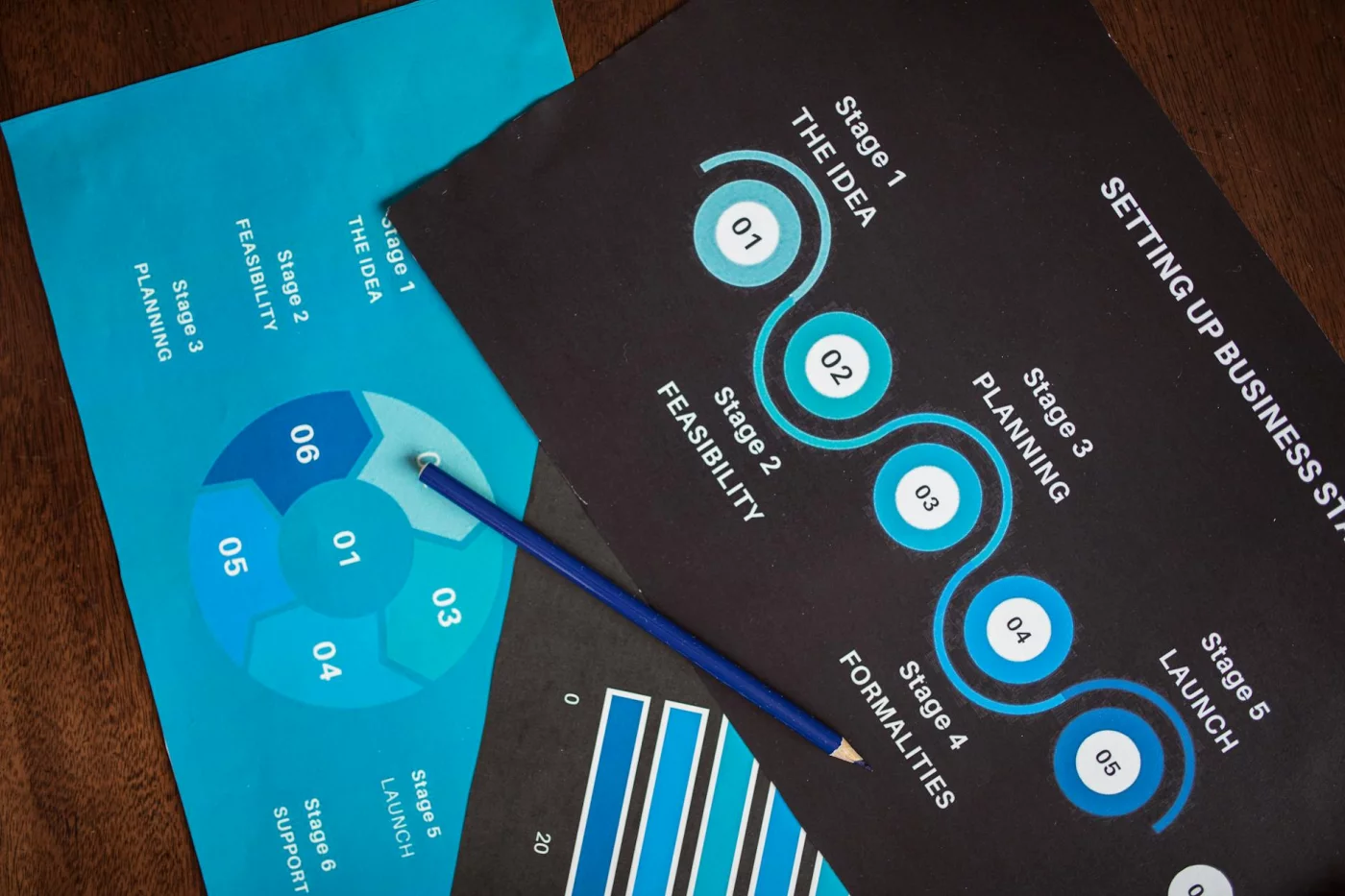
The hybrid workflow is simple: Objective → Key Result → SMART task → if-then plan → review. And yes, a short weekly reset matters, which is why I like pairing this with a 30-minute weekly review so your goals don’t drift by week two.
How to build the full execution chain
- Step 1: Pick one objective and 2-4 measurable key results.
- Step 2: Turn each key result into weekly SMART tasks with a time, place, and method.
- Step 3: Add 1-3 if-then plans, including a backup plan for disruptions, then review weekly.
Step 1: Set the objective and key results
Start with one meaningful objective, not five. That’s the part most people get wrong. If your attention is split across too many priorities, execution usually collapses.
Your objective should be directional and motivating. Your key results should be numeric and outcome-based. For smart OKR examples, think “raise quiz average from 74% to 84%,” not “study harder.” For OKR examples for teams, think “reduce support response time from 18 hours to 8 hours,” not “improve customer service.”
- Objective: Finish the semester strong in chemistry
- Key Result 1: Raise quiz average from 74% to 84%
- Key Result 2: Complete 10 retrieval practice sessions before the midterm
Why this works? OKRs define what success looks like, while SMART planning defines what you’ll actually do on Tuesday at 7 PM. Research on implementation intentions has repeatedly found that specifying cues for action improves follow-through, as summarized in the evidence overview on implementation intentions.
Step 2: Convert each key result into SMART tasks
Next, turn each outcome into behavior. This is where smart goals examples for students become useful instead of vague. A SMART task needs a clear action, schedule, context, and method.
For the chemistry example, one SMART task is: “Study chemistry for 30 minutes on Mon/Wed/Fri at 7 PM for 4 weeks using active recall.” That beats “work on chemistry” by a mile. If you want better smart goals examples for students, swap weak verbs like improve, try, or work on for visible actions like solve, recall, summarize, or quiz.
And be realistic. If you have labs, a part-time job, and low energy after 9 PM, don’t pretend you’ll do 90-minute sessions every night. Personally, I think the best goal setting framework for execution respects your actual week, not your fantasy week.
Here’s a personal productivity example. Objective: “Get my admin under control.” Key Results: “Reach inbox zero twice per week” and “submit all invoices within 24 hours.” SMART task: “Process email for 20 minutes at 8:40 AM on weekdays at my desk using a reply-file-delete workflow.”
Here’s the team version. Objective: “Improve onboarding for new customers.” Key Results: “Raise activation from 52% to 68%” and “cut time-to-first-value from 10 days to 6 days.” Then assign owner-level SMART tasks: the product manager runs a 30-minute onboarding audit every Tuesday, and the customer success lead reviews the top 10 stuck accounts every Thursday.
For students, this is why good smart goals examples for students include method, not just time. In chemistry, “using active recall studying” is more useful than “review notes,” because the method matches the result you want.
Step 3: Add if-then plans and review weekly
Now add the missing layer competitors usually skip: the trigger. If-then plans tell your brain when to start. They reduce hesitation, which is often the real bottleneck.
For the student example, the if-then plan is: “If it is 7 PM and I am at home, then I will start a 25-minute chemistry recall session before opening any messaging apps.” A backup plan could be: “If I miss the 7 PM block, then I will do a 15-minute catch-up at 8:30 PM.” That’s how to turn SMART goals into if-then plans without overcomplicating things.
You can also stack cues. OK wait, let me back up. If the cue is fuzzy, the plan fails. That’s why using a cue-based structure like a habit stacking template works so well: “If I finish dinner, then I start my recall block.”
For execution, keep 1-3 implementation intentions per SMART task. And if the task needs focused work, run it as a short block using the Pomodoro technique for studying. Simple beats elaborate.
Review cadence matters too. Individuals should review weekly: wins, misses, blockers, and next week’s schedule. Teams should do a weekly check-in plus a monthly or quarterly review, especially when ownership gets blurry — which is exactly where accountability vs activity gets confused.
So that’s the full operating system: outcomes from OKRs, clarity from SMART tasks, and action triggers from implementation intentions. In the next section, I’ll show 7 practical smart goals examples for students, personal productivity, and teams so you can copy the structure fast.
7 practical smart goals examples for students, personal productivity, and teams
Now we move from theory to execution. If you want smart goals examples for students that actually hold up in real life, the missing piece is usually this four-layer stack: objective, key result, SMART task, and implementation intention.
That stack matters because goals fail at different levels. You can have a good objective and still miss because the task wasn’t specific enough, or because the if-then cue never got built into your week.
Student examples
These are the most practical smart goals examples for students because they connect grades and outcomes to actual study behavior. And yes, that sounds obvious, but this is the part most people get wrong.
- Example 1: Chemistry exam prep. Objective: improve chemistry performance before the next exam. Key result: raise average quiz score from 68% to 82% in 6 weeks. SMART goal/task: complete 12 active recall sessions, 2 timed problem sets per week, and attend 4 office hours or peer review sessions. Implementation intention: if it’s Monday, Wednesday, or Saturday at 7:00 p.m., then I’ll do a 40-minute recall session using flash questions and error review. If I miss one session, then I’ll reschedule it within 24 hours. Research on implementation intentions, including work summarized by Peter Gollwitzer, suggests that linking behavior to a cue improves follow-through because you decide once, not every day.
- Example 2: Research paper drafting. Objective: submit a stronger paper with less last-minute stress. Key result: finish a 2,500-word research paper 48 hours before the deadline with at least 8 credible sources and one revision pass. SMART goal/task: complete topic approval by Tuesday, source collection by Friday, outline by day 7, rough draft by day 12, and revision by day 14. Implementation intention: if I finish my 10:00 a.m. class, then I’ll spend 25 minutes on the next paper milestone before checking messages. For smart goals examples for students, this one works because writing is easier to manage as milestones, not as one vague task called “write essay.”
- Example 3: Attendance and participation. Objective: become more engaged in class and reduce avoidable grade loss. Key result: attend 95% of classes this month and contribute at least once in 8 of the next 10 sessions. SMART goal/task: pack materials the night before, leave home by 8:10 a.m., and write one discussion question before each class. Implementation intention: if I zip my backpack at night, then I’ll put it by the door with my water bottle and notes. If the professor asks for comments and I have a prepared question, then I’ll raise my hand within 10 seconds. Cue-based routines like this pair well with make a smarter study guide systems because they reduce friction before motivation drops.
Why does framework fit matter here? Because smart goals examples for students fail when the measure is clear but the environment isn’t. No review, no calendar block, no visible cue — and the plan stays theoretical.
Personal productivity examples
Personally, I think this is where people confuse SMART goals with OKRs. For individual work, OKRs can set direction, but SMART tasks and if-then planning usually do the heavy lifting day to day.
- Example 4: Deep work for a side project. Objective: ship a portfolio project in 8 weeks. Key result: complete 3 core features and publish one usable version by the deadline. SMART goal/task: do four 60-minute deep work blocks each week, with one feature milestone completed every 2 weeks. Implementation intention: if it’s 6:30 a.m. on Tuesday, Thursday, Saturday, or Sunday, then I’ll start a single-task work block before opening email. This works because the outcome is ambitious, but the action is scheduled and measurable.
- Example 5: Email and admin control. Objective: protect focused work time. Key result: reduce average daily inbox processing time from 90 minutes to 30 minutes within 4 weeks. SMART goal/task: batch email at 11:30 a.m. and 4:30 p.m. for 15 minutes each, archive low-value threads, and use templates for repeated replies. Implementation intention: if a message takes under 2 minutes, then I’ll answer it during the batch; if it needs real thought, then I’ll convert it into a task and leave the inbox. In smart goals vs okrs examples, this is a classic case where a SMART behavior target beats a broad OKR alone.
Team and manager examples
Teams need all four layers even more than individuals do. Why? Because coordination breaks when objectives are shared but daily ownership isn’t.
- Example 6: New-hire onboarding. Objective: get new hires productive faster. Key result: reduce time-to-first-independent-task from 14 days to 7 days and raise new-hire confidence from 3.1/5 to 4.2/5. SMART goal/task: managers assign a day-1 checklist, a day-3 shadow session, and a day-5 independent task with feedback. Implementation intention: if a new hire completes the checklist by noon, then the manager schedules the first real task that same day. Among OKR examples for teams, this works because the key result is shared, but each owner still has a clear task.
- Example 7: Content or product delivery. Objective: improve output reliability without burning out the team. Key result: publish 8 high-quality articles this month or ship 2 planned product releases with under 10% schedule drift. SMART goal/task: define weekly deliverables, assign one owner per deliverable, and review blockers every Friday. Implementation intention: if a task is off track by Wednesday, then the owner flags scope, support, or deadline risk in the team review. In okr vs smart goals examples, this is the hybrid model that usually works best: OKRs align the team, SMART tasks drive execution, and if-then rules catch slippage early.
Well, actually, that’s the hidden pattern across all seven examples. The best smart goals examples for students and teams don’t just name a target; they decide when action starts, what success looks like, and what happens when the plan gets interrupted.
Next, I’ll condense this into a quick reference so you can spot common mistakes, run a weekly review, and choose the right framework for your situation.
Quick reference: common mistakes, weekly review, FAQ, and best framework by situation
You’ve seen the patterns and the practical smart goals examples for students. Now let’s tighten the system so your goals survive real life, not just a planning session.

Thing is, most goal failures aren’t about motivation. They’re about using the wrong framework, tracking too much, or never reviewing what happened.
📋 Quick Reference
Use SMART for clear short-term targets. Use OKRs for direction across a team or project. Use implementation intentions for daily follow-through. For most serious goals, combine all three: objective → measurable result → scheduled action → if-then backup plan.
Common mistakes and what to avoid
The biggest mistake? Confusing key results with tasks. “Attend three study sessions” is a task. “Raise my chemistry quiz average from 72% to 82% by May” is a result.
That’s where people mix up smart goals vs objectives. A SMART goal is usually a specific target you can own directly, while an objective is broader and often points to a bigger outcome. And in the okr vs kpi debate, here’s the simple version: OKRs are for change and direction; KPIs are for ongoing health metrics like attendance rate or average response time.
Another common problem is writing goals that are measurable but irrelevant. You can track “study 20 hours this week” perfectly and still prepare badly if those hours are low-quality, distracted, or focused on the wrong material. Personally, I think this is why many smart goals examples for students look good on paper but fail in practice.
And yes, overcomplication kills follow-through. Research on goal pursuit and implementation intentions, including work summarized by psychologist Peter Gollwitzer, suggests that specific cue-action plans improve execution because they reduce decision friction. But vague cues like “If I have time later, I’ll review notes” don’t work well. The cue has to be concrete: time, place, and action.
- Don’t run 6 active goals at once; keep 1-3 real priorities.
- Don’t use KPIs as if they were strategic objectives.
- Don’t track more metrics than you’ll actually review.
- Don’t write if-then plans with fuzzy triggers.
- Don’t skip the weekly adjustment loop.
Weekly review questions that keep the system running
If you only keep one habit from this article, make it a 20-30 minute weekly review. OK wait, let me back up. Goal setting is front-end planning; goal tracking is the maintenance system that keeps plans honest.
I’d block the same time every week, then pair it with calendar planning for the next seven days. If you want a simple structure, use FreeBrain’s 30-minute weekly review as your accountability system and reset point.
- What moved this week, and what evidence shows progress?
- What stalled, exactly?
- What blocked execution: time, energy, confusion, or distraction?
- Which if-then plans actually worked?
- What should be dropped, delayed, delegated, or simplified?
- What is the single most important action next week?
That last question matters most. A 2015 review in Current Directions in Psychological Science highlighted that planning works better when people connect goals to concrete actions and contexts. So don’t end your review with “study more.” End with “Tuesday at 7 p.m., complete 25 active-recall questions for biology.”
Best framework by situation
So what goal setting framework is best for students? For most students, the answer isn’t one framework. It’s SMART goals plus implementation intentions.
Use SMART when you need a clear short-term target. Use implementation intentions when you need daily execution. That pairing is why the best smart goals examples for students include both a measurable outcome and a cue-based action plan.
For teams, use OKRs for shared direction, then assign SMART owner tasks under each key result, reviewed weekly. For personal productivity, keep one objective, two or three SMART actions, and one backup if-then plan for low-energy days. Can smart goals and OKRs be used together? Absolutely. In fact, that hybrid setup is usually the most practical.
Three fast recommendations:
- Students: SMART + implementation intentions + weekly review.
- Teams: OKRs + SMART owner tasks + review cadence.
- Personal productivity: one objective, few actions, clear triggers.
And here’s the kicker — smart goals examples for students only help if they become scheduled behavior. Keep the system light, review it weekly, and adjust fast when reality changes.
Up next, I’ll wrap this up with final FAQs and a simple conclusion so you know exactly what to do first.
Frequently Asked Questions
What is the difference between SMART goals and OKRs?
If you’re wondering what is the difference between SMART goals and OKRs, the short version is this: SMART goals are usually one clearly defined target with a deadline and a way to measure success, while OKRs use one broader objective supported by several measurable key results. For students, that means SMART goals are often easier for personal study planning, especially when you’re using smart goals examples for students like “score 85% or higher on my biology exam in 6 weeks.” OKRs work better when the goal is bigger and shared, such as a club, lab group, or team project trying to improve performance together.
When should you use OKRs instead of SMART goals?
When should you use OKRs instead of SMART goals? Use OKRs when several people need to stay aligned around one shared priority and track progress from different angles. Use SMART goals when you need one concrete individual target, such as finishing 20 practice problems per day or raising your grade by a specific date. In practice, most smart goals examples for students fit personal academic work, while OKRs make more sense for group projects, student organizations, or research teams.
Can SMART goals and OKRs be used together?
Yes — and honestly, can smart goals and OKRs be used together is one of the most useful questions students can ask. A strong setup is to use OKRs for direction, SMART goals for planning, and implementation intentions for execution, so each framework handles a different part of the process. For example, a student team might set an OKR for a semester project, while each member uses smart goals examples for students to define their own deadlines, study blocks, or deliverables.
What are implementation intentions?
What are implementation intentions? They’re simple if-then plans that connect a cue to a specific action: “If it’s 7:00 PM and I sit at my desk, then I’ll review flashcards for 20 minutes.” Research summarized in sources like PubMed suggests these plans help reduce hesitation because you decide in advance what you’ll do instead of negotiating with yourself in the moment. When paired with smart goals examples for students, implementation intentions turn good intentions into actions you can actually repeat.
How do implementation intentions improve goal follow through?
If you’re asking how do implementation intentions improve goal follow through, the main reason is that they make action more automatic by linking behavior to a cue like a time, place, or event. They also cut decision fatigue right when procrastination usually shows up, because the choice has already been made. That’s why smart goals examples for students work better when you add a line like, “If I finish lunch, then I’ll spend 25 minutes reviewing lecture notes before checking my phone.”
How do you write an if-then plan?
How do you write an if then plan? Start with one clear cue, then attach one realistic action you can do immediately. A simple formula is:
If [time, place, or trigger], then I will [specific action].
For example: “If I arrive at the library at 4 PM, then I will complete 10 calculus problems before opening social media.” This works especially well with smart goals examples for students because it translates a big goal into a behavior you can actually start.
Are OKRs better than SMART goals?
Are OKRs better than smart goals? Not across the board. They solve different problems: OKRs are better for alignment and strategic focus, while SMART goals are better for concrete execution targets with clear deadlines. So if you’re studying on your own, most smart goals examples for students will be more practical day to day, but if you’re coordinating with others, OKRs can give everyone a shared direction.
What goal-setting framework is best for students?
If you want to know what goal setting framework is best for students, the best answer for most people is SMART goals plus implementation intentions. SMART goals help you define what success looks like, and implementation intentions help you follow through consistently when motivation dips. If you’re leading a team, club, or group assignment, adding OKRs can help align priorities too — and if you want more practical smart goals examples for students, check FreeBrain’s study skills resources for templates you can adapt to your classes.
Conclusion
Here’s the practical version. Use SMART goals to define one clear outcome, use OKRs to connect that outcome to a bigger academic priority, and use implementation intentions to decide exactly what you’ll do when real life gets messy. Three things matter most: make your goal measurable, keep your weekly review short and consistent, and write 2-3 if-then plans for the moments you usually slip. That’s what turns smart goals examples for students from nice ideas into actions you can actually repeat on a Monday night, before an exam, or during a chaotic semester.
And if you’ve struggled with consistency before, you’re not behind. You’re normal. Most students don’t fail because they lack ambition; they fail because the system is vague or too hard to follow under stress. Personally, I think this is the part most people get wrong. Start smaller than you want, review more often than you think you need, and let your process carry you on low-motivation days. A few well-built smart goals examples for students can create real momentum faster than an overcomplicated plan ever will.
Want help turning this into a study system you’ll actually use? Explore more on FreeBrain.net, starting with How to Set SMART Goals for Studying and Spaced Repetition Guide. If this article helped, save your favorite smart goals examples for students, build one weekly review around them, and put your first if-then plan in writing today. Small plan. Clear trigger. Immediate action.