
Yes, Flow Neuroscience is a real home-use tDCS headset and app for depression — but the hard part is figuring out what the flow neuroscience clinical trials actually tested, what comes from broader tDCS research, and what that means for you. This guide separates those pieces in plain English, so you can judge the evidence without getting lost in marketing, and it’s educational only, not medical advice.
If you’re here, you’re probably asking a very practical question: does this thing actually help, or is it just another shiny mental health gadget? Fair question. Consumer neurotechnology sits in a weird space between promising science and overblown hype, and that’s exactly why I think it helps to understand the difference between depression devices and broader topics like brain-computer interfaces and attention.
And here’s the kicker — depression is common, treatment response is messy, and many people don’t get full relief from the first option they try. So when you see claims around flow neuroscience clinical trials, a Flow headset review, or home brain stimulation for depression, you need more than a star rating. You need to know what the trials measured, who was included, how side effects were tracked, and how this compares with established options discussed by the National Institute of Mental Health’s depression overview.
That’s what you’ll get here. I’ll walk you through the Flow-specific evidence, explain how home based tDCS works for depression, cover safety, side effects, cost, NHS and USA access, and show how Flow stacks up against antidepressants, therapy, TMS, and ketamine. I’ll also break down week-by-week expectations, who may or may not be a good candidate, and how to sanity-check the research yourself with this short guide on how to read scientific papers.
I’m a software engineer, not a neuroscientist. But I build evidence-based learning tools for FreeBrain, spend a lot of time translating research into practical decisions, and I care a lot about one thing: helping you read flow neuroscience clinical trials with clearer eyes before you spend money, time, or hope.
📑 Table of Contents
- Start Here: What Flow Is
- How Home tDCS May Help
- Flow Neuroscience Clinical Trials
- How to Evaluate and Use It Safely
- Cost, Access, and Alternatives
- Frequently Asked Questions
- What is Flow Neuroscience for depression?
- Does Flow Neuroscience work for depression?
- What do Flow Neuroscience clinical trials show?
- What are the side effects of Flow Neuroscience?
- Is Flow Neuroscience FDA approved?
- Is Flow Neuroscience available in the USA?
- Can you get Flow Neuroscience on the NHS?
- How often do you use Flow Neuroscience for depression?
- Conclusion
Start Here: What Flow Is
So here’s the direct answer. Flow is a home-use transcranial direct current stimulation, or tDCS, headset paired with an app that aims to support depression treatment through brief stimulation sessions plus behavior coaching. But the key distinction in any discussion of flow neuroscience clinical trials is this: evidence on Flow itself is not the same thing as evidence on all tDCS devices or all brain stimulation research. Curious about memory and brain health beyond this article? Our memory and brain health guide goes deeper.
This article is educational, not medical advice. If you’re making decisions about depression treatment, medication, or whether a device is appropriate for you, talk with a qualified clinician first. If you want a better framework for judging claims, FreeBrain’s guide on how to read scientific papers can help you assess the evidence yourself.
If you’re researching non-drug options, comparing Flow with antidepressants, therapy, TMS, or ketamine, or helping a family member sort through choices, you’re in the right place. As a software engineer who builds evidence-based learning tools, not a clinician, my job here is translating the neuroscience into practical guidance you can actually use. For a broader look at neurotech claims versus reality, see our piece on brain-computer interfaces and attention.
- How effective it may be
- Common side effects and safety limits
- Cost, access, and approval questions
- What week-by-week use actually looks like
And if stress, sleep, and routine are part of the picture, FreeBrain’s focus and stress guides can be useful complements to care, not replacements for it.
What the headset and app actually do
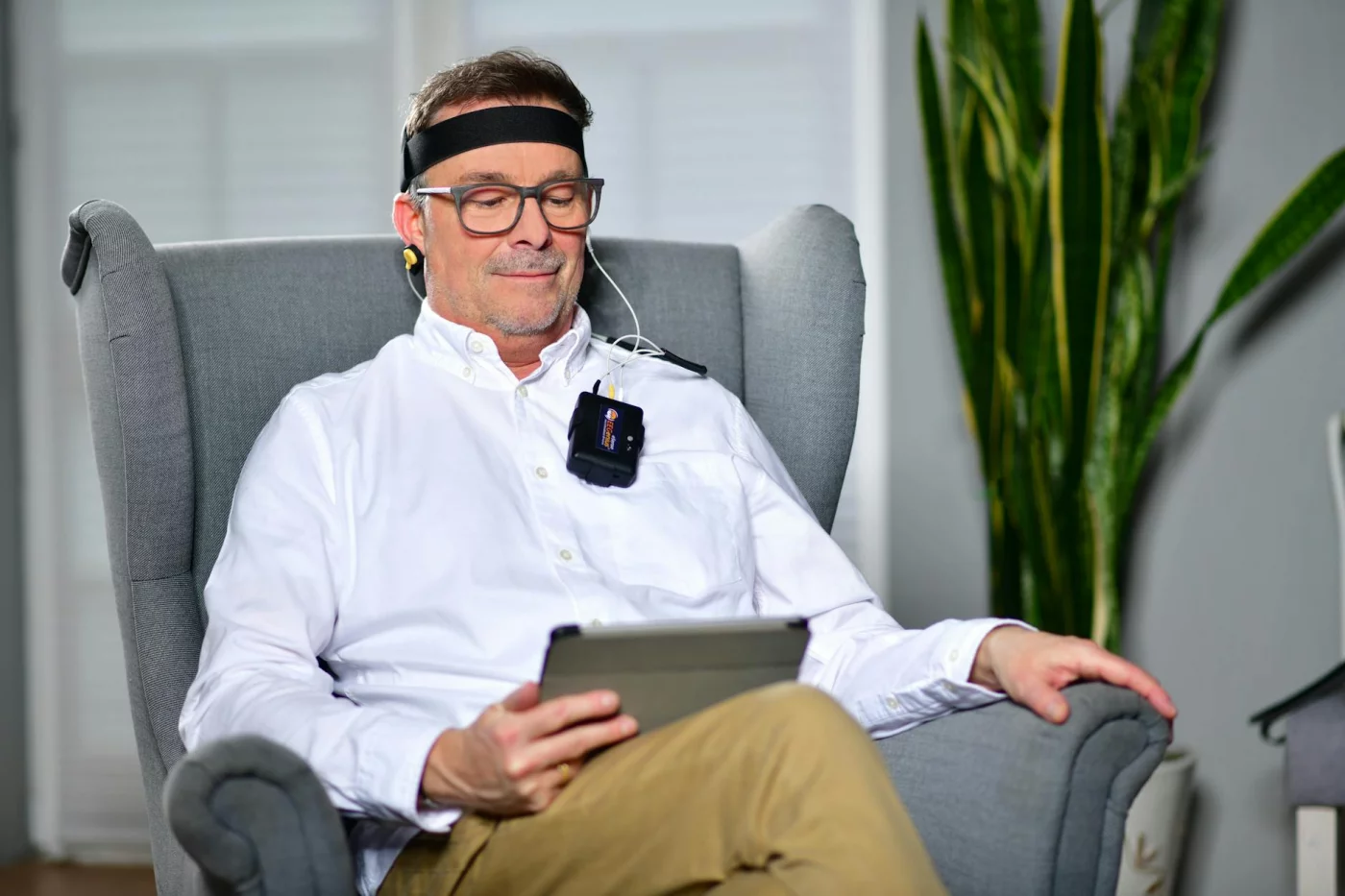
tDCS is a form of noninvasive brain stimulation that sends a very low electrical current through scalp electrodes to influence activity in targeted brain areas. In plain English, the headset handles the stimulation, while the flow neuroscience app guides you through setup, session timing, and behavior support around sleep, exercise, and daily routines.
That app piece matters more than many buyers expect. Research on depression consistently points to sleep, movement, and routine stability as relevant supports, and those habits may also help increase neuroplasticity in adulthood. But wait — mechanism, evidence, and marketing are three different things, and you should keep them separate.
For context, standard symptom information and treatment pathways from the National Institute of Mental Health’s depression overview and broad background on transcranial direct current stimulation are useful starting points. An at home brain stimulation device for depression may appeal if you want a non-drug option, but suitability still depends on diagnosis, severity, and safety factors.
Who may consider it — and who shouldn’t self-diagnose
Low mood isn’t always major depressive disorder. Burnout, grief, bipolar symptoms, chronic stress, and depression can overlap on the surface, but they are not interchangeable — and that’s exactly why “what is flow neuroscience for depression” needs a careful answer, not a sales pitch.
Some adults exploring home depression treatment may reasonably ask whether Flow fits their situation before spending money or booking an appointment. Still, if you have severe symptoms, suicidal thoughts, a seizure history, implanted electronic devices, or an uncertain diagnosis, get clinician guidance before considering home brain stimulation.
Next, we’ll look at how home tDCS may help, what researchers think the brain effects might be, and where the limits of the evidence still are — especially in flow neuroscience clinical trials.
How Home tDCS May Help
So now we can get more specific. In the flow neuroscience clinical trials conversation, the key question isn’t just what the headset is, but how home use is supposed to affect mood-related brain networks.

What tDCS does in plain English
Transcranial direct current stimulation uses a very weak electrical current through scalp electrodes. It doesn’t flip neurons on like a light switch. Instead, it may make certain networks slightly more or less likely to activate, often around the dorsolateral prefrontal cortex, a region commonly discussed in depression research.
That subtlety matters. If you’re comparing consumer neurotech claims, it helps to separate plausible mechanisms from hype, especially if you’ve read about brain-computer interfaces and attention and noticed how easily different tools get lumped together.
And here’s the kicker — a plausible mechanism is not the same as proven benefit for every device or every person. Depression also isn’t just a “low serotonin” issue; evidence points to broader brain-network, behavior, sleep, and stress factors, which is why readers who want to judge evidence carefully should know how to read scientific papers. For background on the method itself, see Wikipedia’s overview of transcranial direct-current stimulation.
Why schedule and adherence matter
Most home protocols aren’t one-and-done. They usually involve repeated sessions over several weeks, so if you miss sessions, it gets much harder to tell whether the treatment schedule is helping or whether nothing changed at all.
- Symptom score changes
- Response and remission rates
- Dropout rates
- Side effects like headache, scalp tingling, or skin irritation
Personally, I think this is the part most people get wrong. When we translate neuroscience into practical systems at FreeBrain, the biggest gap usually isn’t understanding the mechanism — it’s following the protocol consistently enough to judge whether something is helping.
Real-world application: building a routine you can stick to
A workable routine is boring on purpose: same chair, same time, app open, 2-minute check-in, short note after. App-guided lifestyle support may help adherence, and habits that increase neuroplasticity in adulthood may support the bigger picture, but you shouldn’t assume the app alone explains outcomes or that all benefit comes from stimulation.
Quick example:
- Set a fixed daily session time.
- Prepare electrodes the same way each session.
- Rate mood and sleep before starting.
- Log side effects and functioning after.
But wait. This section is about mechanism and use, not proof. Next, we’ll look directly at the flow neuroscience clinical trials and what they actually show.
Flow Neuroscience Clinical Trials
How home tDCS may help is one question. Whether flow neuroscience clinical trials actually support this specific headset and app is a narrower one — and that’s where many reviews get sloppy.
If you want to judge the evidence yourself, start with our guide on how to read scientific papers. And yes, that matters because consumer neurotechnology can sound impressive long before the data are strong, much like hype around brain-computer interfaces and attention.
Flow-specific studies vs general tDCS studies
| Evidence type | What was tested | Strengths | Limitations | What you can conclude |
|---|---|---|---|---|
| Flow-specific studies | One branded headset, app, and protocol | Directly relevant to buyers | Often smaller, may lack independent replication | Answers a product-specific question |
| General tDCS research | Multiple devices and protocols in major depressive disorder | Broader clinical evidence, including some randomized controlled trial data | Does not automatically validate Flow | Suggests whether tDCS as a category may help |
So here’s the deal: a positive meta-analysis on depression and tDCS from PubMed-indexed depression research is useful, but it doesn’t prove one commercial setup works the same way. Check current studies and regulatory details directly, and remember lifestyle factors that increase neuroplasticity in adulthood still matter.
What outcomes actually matter
Look for validated depression scales, not testimonials. Response usually means a meaningful symptom drop; remission means symptoms fall low enough that depression is no longer clearly present.
- Symptom reduction on standard scales
- Response and remission rates
- How long benefits lasted
- Dropout rates, adherence, and adverse events
Common mistakes when reading the evidence
Big ones? Treating all tDCS studies as Flow studies, assuming availability equals proof, and trusting before-and-after stories over blinded trials. Also check who was studied: mild depression is not treatment-resistant depression. For broader context on depression treatment evidence, the National Institute of Mental Health overview of depression is a solid starting point.
📋 Quick Reference
Stronger evidence means: sham control, adequate sample size, blinding, independent replication, clinically meaningful outcomes, and transparent adverse-event reporting.
That’s the core of flow neuroscience clinical trials explained: promising, but still separate from the broader tDCS literature. Next, let’s look at how to evaluate and use it safely.
How to Evaluate and Use It Safely
The flow neuroscience clinical trials section tells you whether the device has some evidence behind it. This section is about something more practical: whether it makes sense for you, and how to use it without guessing.
Step-by-step: before you start
How to evaluate Flow before your first session
- Step 1: Confirm what problem you’re treating. Depression, burnout, anxiety, bipolar symptoms, and sleep deprivation can look similar, but they don’t call for the same plan.
- Step 2: Review contraindications and current treatments with clinician oversight. Ask about seizure history, implanted devices, pregnancy, skin sensitivity, worsening symptoms, and whether tDCS fits with your current meds or therapy.
- Step 3: Verify the current protocol, app support, and return policy before buying. If you want to judge the evidence yourself, our guide on how to read scientific papers helps you separate headset-specific evidence from general tDCS claims.
- Step 4: Set up tracking before session one: weekly PHQ-style ratings, sleep notes, adherence, side-effect notes, and whether work or study function is changing.
Home neurotechnology can sound simple, but it isn’t the same thing as consumer focus gadgets discussed in brain-computer interfaces and attention. And yes, that distinction matters. Evidence from NCBI’s overview of transcranial direct current stimulation also highlights standard safety screening before use.
- Common mild effects: tingling, itching, scalp redness, headache, fatigue
- What usually matters most: whether effects fade quickly and stay mild
- What needs action: severe headache, strong agitation, marked skin reaction, or clear mood worsening
Week-by-week expectations
Week 1 is mostly about tolerability and routine. First sessions may feel odd, but not dramatic. If you’re wondering how often do you use Flow Neuroscience for depression, follow the current treatment schedule exactly rather than improvising.
Weeks 2-3 are where small shifts may show up. Look for steadier energy, slightly better concentration, improved sleep timing, or fewer bad dips across several days. Personally, I think this is where people get misled by one good day or one rough day.
By week 4 and beyond, ask a harder question: is there meaningful functional improvement? Are you studying better, working more consistently, or handling stress with less friction? Low-friction supports like one-minute mindfulness breaks can help adherence, and lifestyle basics still matter if you’re trying to increase neuroplasticity in adulthood.
When to stop and get help
Flow neuroscience clinical trials don’t mean the device is right for everyone. Home devices shouldn’t replace urgent care or standard treatment when symptoms are severe, and you shouldn’t change prescribed medication on your own because of a device trial.
This section is educational, not medical advice. Next, let’s look at the buyer questions most people actually have: cost, access, and how Flow compares with other options.
Cost, Access, and Alternatives
Safety is only half the decision. The other half is practical: can you actually get it, afford it, and compare it fairly with other options?
What buyers should verify first
With flow neuroscience clinical trials, the evidence question and the access question aren’t the same. Check the device’s current status in your country: FDA approval is not the same as FDA clearance, and neither is the same as CE marking in Europe. Prescription rules, clinician oversight, and market availability can also change, so verify directly with the company and your healthcare provider.
For flow neuroscience cost, don’t stop at the headline price. Ask about app or subscription fees, shipping to the USA, replacement sponges or electrodes, clinician support, and the refund policy if you stop because of side effects or no benefit. If you’re comparing flow neuroscience usa and flow neuroscience nhs access, treat them as separate pathways, not assumptions. And yes, non-device supports still matter; exercise has solid evidence for mood, so pairing treatment discussions with best exercise for stress and focus makes sense.
Flow vs other depression treatments
| Option | Setting | Evidence strength | Common side effects | Speed | Access | Discuss with |
|---|---|---|---|---|---|---|
| Flow/tDCS | Home | Mixed, device-specific evidence matters | Scalp tingling, redness, headache | Usually gradual | Country-dependent | GP or psychiatrist |
| TMS | Clinic | Stronger in some treatment settings | Scalp discomfort, headache | Often weeks | More limited, higher cost | Psychiatrist |
| Antidepressants | Home with prescribing | Broad clinical use | GI upset, sleep or sexual side effects | Often weeks | Common prescribing pathway | GP or psychiatrist |
| Psychotherapy | Clinic/online | Strong for many people | Emotional effort, time | Variable | Therapist availability varies | Therapist or GP |
| Ketamine | Medical setting | Useful for some cases | Dissociation, BP changes, nausea | Can be faster | Specialized access | Psychiatrist |
Flow neuroscience vs TMS? Home convenience is the obvious advantage, but TMS is clinic-based, more supervised, and often backed by a stronger evidence base in specific populations. Flow neuroscience vs antidepressants for depression is also not a winner-take-all question; meds fit established prescribing pathways, while a non drug depression treatment may appeal if you want to avoid medication side effects or use it as an adjunct.
Bottom line: who should discuss it with a clinician
Best fit: adults with diagnosed depression who want a structured, non-drug adjunct and can stick to a schedule. Poor fit: severe or rapidly worsening symptoms, suicidal thinking, unclear diagnosis, or situations needing urgent care. That’s where a flow neuroscience headset review should end: with judgment, not hype.
- Is this device legally marketed where I live?
- Do I need a prescription or monitoring?
- How does it compare with therapy, medication, TMS, or ketamine for my case?
- What side effects should make me stop and call?
- What total cost will I pay over 1-3 months?
- What if I don’t respond?
If you’re wondering whether flow neuroscience clinical trials make it worth trying, the honest answer is: maybe, for the right person and with the right expectations. Next, let’s answer the most common questions and wrap this up clearly.
Frequently Asked Questions
What is Flow Neuroscience for depression?
What is Flow Neuroscience for depression? It’s a home-use tDCS headset paired with an app, designed to support depression treatment through guided sessions and behavior-change prompts. But wait — it’s not the same as all brain stimulation devices, and it shouldn’t be treated as a stand-in for the entire tDCS research field. Whether it’s suitable for you depends on your diagnosis, safety factors, and clinician input, especially if you have other mental or neurological health concerns.

Does Flow Neuroscience work for depression?
Does Flow Neuroscience work for depression? The careful answer is: research suggests tDCS may help some people with depression, but Flow-specific evidence needs to be judged separately from the broader literature. Results can vary based on study quality, how consistently the device is used, symptom severity, and whether the treatment fits your situation in the first place. And here’s the kicker — no home device should be treated as a guaranteed fix, so it makes sense to review the evidence with a qualified clinician before relying on it.
What do Flow Neuroscience clinical trials show?
If you’re asking what do Flow Neuroscience clinical trials show, focus on three things: randomization, sham control, and independent replication. That helps you separate branded-device findings from the wider tDCS evidence base, which matters because not all positive results in brain stimulation research apply directly to one product. The most useful outcomes to compare are symptom reduction, response rates, remission rates, side effects, and dropout rates — and if you want to verify trial details yourself, start with PubMed and the company’s current evidence page.
What are the side effects of Flow Neuroscience?
What are the side effects of Flow Neuroscience? Commonly reported effects with tDCS-style devices include tingling, itching, mild scalp irritation, temporary redness, and headache. Those are often mild and short-lived, but if you get worsening pain, severe skin irritation, unusual neurological symptoms, or anything that feels clearly wrong, stop using it and contact a clinician. People with certain risk factors — such as a complex psychiatric history, neurological conditions, or implanted medical devices — should get professional guidance before use.
Is Flow Neuroscience FDA approved?
Is Flow Neuroscience FDA approved? Don’t assume “approved” is the right regulatory term, because the FDA uses different pathways such as approval, clearance, and other classifications depending on the product type and evidence submitted. The smart move is to verify the current status on official FDA pages and the company’s latest regulatory information, since device regulation can change over time. And yes, marketing language can sound more definitive than the actual regulatory category, so check the source rather than the ad.
Is Flow Neuroscience available in the USA?
Is Flow Neuroscience available in the USA? Availability can change by market, shipping policy, regulatory status, and support coverage, so you’ll want to confirm current U.S. access directly before ordering. That means checking whether the company ships to your location, what customer support is offered, and whether the device is being marketed under the relevant rules at that time. Access, though, is not the same as clinical suitability — just because you can buy something doesn’t mean it’s the right option for your case.
Can you get Flow Neuroscience on the NHS?
Can you get Flow Neuroscience on the NHS? Maybe, maybe not — NHS access pathways can differ by service, region, commissioning decisions, and current policy. Old blog posts go stale fast, so it’s better to verify directly with NHS sources or ask your GP or mental health clinician what’s actually available now; for broader depression treatment guidance, you can also review NHS depression information. Public-system availability also doesn’t automatically mean the device is appropriate for every person with depression.
How often do you use Flow Neuroscience for depression?
How often do you use Flow Neuroscience for depression? Follow the current official protocol and any clinician guidance instead of improvising your own schedule, because structured treatments only make sense when they’re used as intended. Consistency matters more than random sessions here — if you’re trying to judge benefit, week-by-week adherence is a big deal in both real-world use and in interpreting flow neuroscience clinical trials. Personally, I’d track sessions, mood changes, sleep, and side effects together, and if you want a simple system for that, use a structured symptom log or a planner like the tools on FreeBrain.
Conclusion
Here’s the practical bottom line: if you’re weighing Flow, focus on four things first. One, check what the evidence actually supports — the flow neuroscience clinical trials suggest potential benefit for some people with depression, but they don’t mean the device works equally well for everyone. Two, treat safety as non-negotiable: read the screening criteria carefully, follow the device instructions exactly, and talk with a qualified clinician if you have any medical or mental health concerns. Three, look at the full cost, not just the headline price, including app access, replacement parts, and whether a lower-cost option might fit your situation better. And four, compare Flow against alternatives like therapy, medication, behavioral strategies, or clinician-guided brain stimulation instead of viewing it as your only path forward.
That might sound like a lot. But wait — this is actually good news. You don’t need perfect certainty before taking the next sensible step. You just need a clear way to evaluate the evidence, your budget, and your own needs. Personally, I think that’s the part most people miss: progress usually comes from steady, informed decisions, not from chasing a single “best” tool. If you’ve been feeling stuck, you’re not behind. You’re gathering better information, and that matters.
If you want help making that next move, explore more practical, evidence-based resources on FreeBrain. You might start with How to Study Effectively for building sustainable routines, or Stress Management Techniques for non-device strategies that can support recovery and daily functioning. Keep asking better questions, keep comparing options carefully, and use the evidence from Flow Neuroscience clinical trials as one input — not the whole decision. Then choose your next step and act on it.