If you’re wondering how to read scientific papers quickly, the short answer is this: don’t read them front to back like a textbook. Scientific papers feel slow because they’re written for specialists, not for busy students, self-learners, or curious readers trying to get the main point fast. This guide will show you how to read scientific papers quickly by skimming first, reading key sections selectively, and judging whether the paper is actually worth your time.
📋 Quick Reference
This article will help you do three things: find the research question, inspect the evidence, and extract the real takeaway without getting lost in jargon.
You’ve probably done this before. You open a paper, hit the abstract, make it halfway through the introduction, then crash into dense methods, statistics, and words that seem designed to slow you down. And if you’ve ever searched things like “how to read scientific papers reddit” or wondered whether there’s a better system, you’re not the problem—the format is.
So here’s the deal. You don’t need to read every sentence with equal attention. You need a triage workflow: decide what the paper is asking, check whether the evidence supports the claim, then pull out the one or two ideas that matter for your work, class, or project. That’s the 3-pass paper reading method in spirit, and it pairs well with knowing when to use skimming vs deep reading instead of forcing full concentration on every page.
By the end, you’ll know the best way to read scientific papers when you’re short on time, how to read scientific papers effectively as a beginner, and how to read scientific papers critically without turning every article into a 90-minute slog. I’ll also cover ADHD-friendly adjustments, what to do with PDFs, and where AI tools can help—or mislead.
Why trust this approach? I’m a software engineer, not a neuroscientist, and I built FreeBrain tools after running into these exact problems as a self-taught learner. The workflow here is shaped by real study and work use, and it lines up with evidence-based reading principles, including research on how readers process scientific articles in PubMed Central.
📑 Table of Contents
- Start Here: Read for the point, not every word
- How to read scientific papers quickly
- Read each section without getting lost
- Think critically and avoid common traps
- Your paper summary system and quick recap
- Frequently Asked Questions
- How do you read scientific papers as a beginner?
- How can I read scientific papers quickly without missing important details?
- How do you read scientific papers critically?
- How can I read academic papers with ADHD?
- Can ChatGPT read scientific papers?
- Can I use ChatGPT for research?
- How do PhD students read papers?
- Are scientific papers hard to read?
- Conclusion
Start Here: Read for the point, not every word
Now that you know why this skill matters, here’s the mindset shift that saves the most time. If you’re trying to learn how to read scientific papers quickly, stop treating a paper like a textbook chapter.
Beginners often read a journal article from page 1 straight through the references, then wonder why they’re exhausted and still confused. That’s normal. Papers are written for specialists, so the real goal is simpler: find the question, inspect the evidence, and extract the takeaway you can trust.
That’s also why I usually point readers to FreeBrain’s 3-pass paper reading method early. It matches how self-taught learners actually work: first orient, then evaluate, then decide what deserves deep attention.
A basic scientific paper structure usually includes the abstract, introduction, methods, results, discussion, figures, tables, and sometimes supplementary material. Personally, I think this is the part most people get wrong: those sections do not deserve equal reading time.
This approach comes from self-taught learning workflows, FreeBrain reading systems, and evidence-based study principles—not formal lab training. I’m a software engineer, not a scientist, but after building study tools and analyzing how learners handle dense material, the pattern is consistent: selective reading beats linear reading.
Why papers feel harder than books
Textbooks explain. Research papers persuade and document. That difference changes everything.
A textbook is designed to teach you step by step, but a journal article often assumes you already know the field, the methods, and half the jargon. So when the skimming vs deep reading decision feels hard, it’s usually because the format is doing something different, not because you’re “bad at science.”
Confusion usually comes from format mismatch, not lack of intelligence. And yes, that matters whether you’re a high school student, an undergrad, or a non-scientist reading outside your field.
- Abstract: what they claim
- Methods and results: what they actually did and found
- Discussion: how they interpret it
The 3-part promise of this guide
So here’s the deal. This guide will show you how to read scientific papers effectively by using a selective system, not a speed-reading trick.
If you’re short on time, aim to read faster without losing comprehension by slowing down only on the parts that carry the real weight: figures, results, and limits. That’s the best way to read scientific papers when you have 20 minutes, not two hours.
And one more thing. Understanding one paper is not the same as making health decisions from it. For medical topics, rely on systematic reviews, clinical guidelines, and qualified professionals; resources from the National Institutes of Health and the PubMed research database can help you verify whether a finding fits the broader evidence.
Next, we’ll turn this into a fast workflow and walk through exactly what to read first, what to skim, and what to ignore.
How to read scientific papers quickly
Now turn that idea into a workflow. If you want to learn how to read scientific papers quickly, don’t read line by line first; use a 10-minute triage, then decide what deserves real attention, much like the 3-pass paper reading method.
How to triage a paper in 10 minutes
- Step 1: 30 seconds for the title and source.
- Step 2: 2 minutes for the abstract.
- Step 3: 1 minute for the conclusion.
- Step 4: 3 minutes for figures and tables.
- Step 5: 2 minutes scanning the introduction and discussion.
- Step 6: 1-2 minutes to decide: skim more, save, or deep read.
Step 1: Title, abstract, and conclusion
Ask three questions right away: What is the paper asking? What did they claim to find? Why should you care? Pull out 3-5 key terms for later searches in PubMed or your library database.
But wait. Abstracts often smooth over messy results, so check whether the conclusion matches the evidence standard described in PubMed research indexing. If you’re short on time, this is the best way to read scientific papers without pretending every paper deserves equal effort.
Step 2: Scan figures before methods
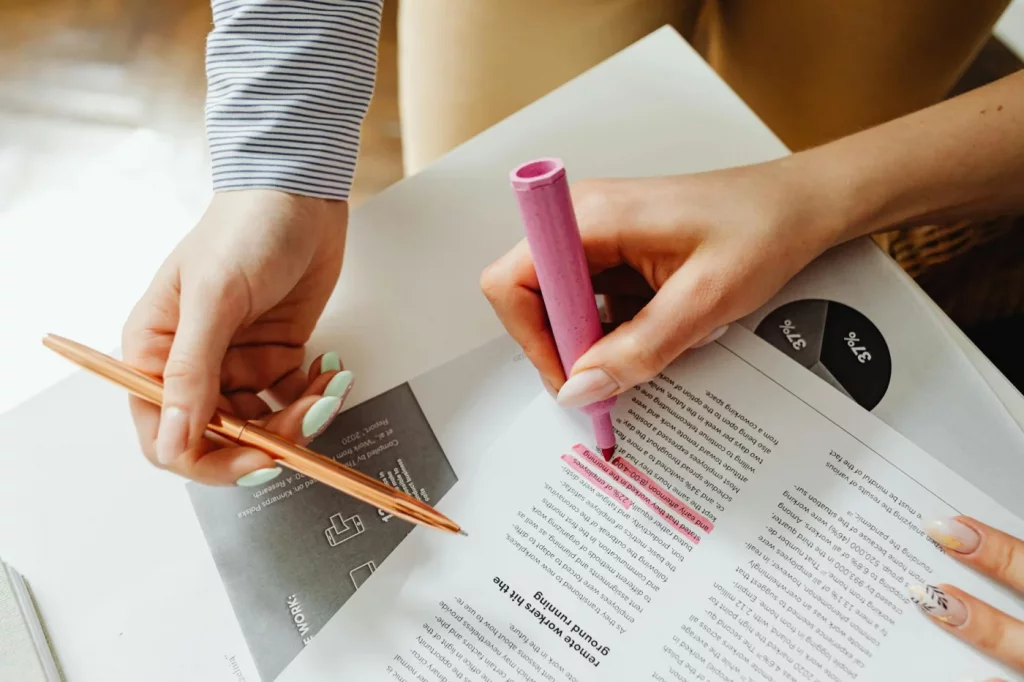
Figures usually reveal the real story faster than prose. Look at axes, sample sizes, error bars, group labels, and whether the visual actually supports the headline claim.
A paper might say an intervention improved memory, yet the results section figure shows tiny differences and overlapping groups. That’s why many readers benefit from skimming vs deep reading as a deliberate choice, not a bad habit.
Step 3: Decide if it deserves a deep read
Use a simple filter: relevance, credibility, novelty, and actionability. Deep read if the paper is central to your project, repeatedly cited, methodologically relevant, or directly changes your understanding.
- Ignore dense methods details on pass one
- Skip every citation unless it looks foundational
- Leave supplementary material for later
- Don’t stop for unfamiliar statistics unless they affect the main claim
This isn’t magical speed reading; it’s selective depth. Research on reading comprehension summarized by the American Psychological Association’s memory overview fits the same idea, and if you want a practical companion, see how to read faster without losing comprehension. Which brings us to the next challenge: reading each section without getting lost.
Read each section without getting lost
You don’t need to read a paper line by line. If you’re learning how to read scientific papers quickly, the goal is selective depth, not perfect coverage.
What to pull from the abstract and intro
Start with the abstract, then the introduction. Your job is simple: find the problem, the gap in knowledge, and the exact question being tested.
A hypothesis is just the authors’ prediction in plain English. So ask: what do they think will happen, and why? Once you’ve got that, long background paragraphs can be skimmed. That’s the practical version of skimming vs deep reading.
How to handle methods as a non-specialist
The methods section matters, but not every detail matters equally. Non-scientists usually need four checks:
- Who was studied? Look at participants and sample size.
- What was the design? Randomized trial, observational study, review, meta-analysis, or lab experiment?
- What was measured? Behavior, symptoms, test scores, biomarkers?
- What was the comparison? Control group, placebo, baseline, or another condition?
That’s enough to judge whether the design can support the claim. And yes, evidence-based medicine frameworks like NCBI’s overview of study designs make the same basic distinction between stronger and weaker evidence.
Results, discussion, and the final takeaway
Now check the results section before trusting the discussion section. Ask: what actually happened, how big was the effect, and do the figures and tables match the authors’ wording?
Quick workflow: title → abstract claim → figure scan → methods check → limitations → takeaway. Personally, I think this is the fastest way to read faster without losing comprehension when time is tight.
For a real paper format, compare the authors’ conclusion against the charts, then note limits like small samples or observational data. Resources like the NIH’s guide to understanding clinical studies are useful here.
That one-line summary keeps you grounded in data, not spin. Which brings us to the next skill: thinking critically and avoiding common traps.
Think critically and avoid common traps
Once you can move through a paper section by section, the next skill is judgment. If you want to learn how to read scientific papers quickly, this is the real shortcut: decide early which papers deserve deep attention.
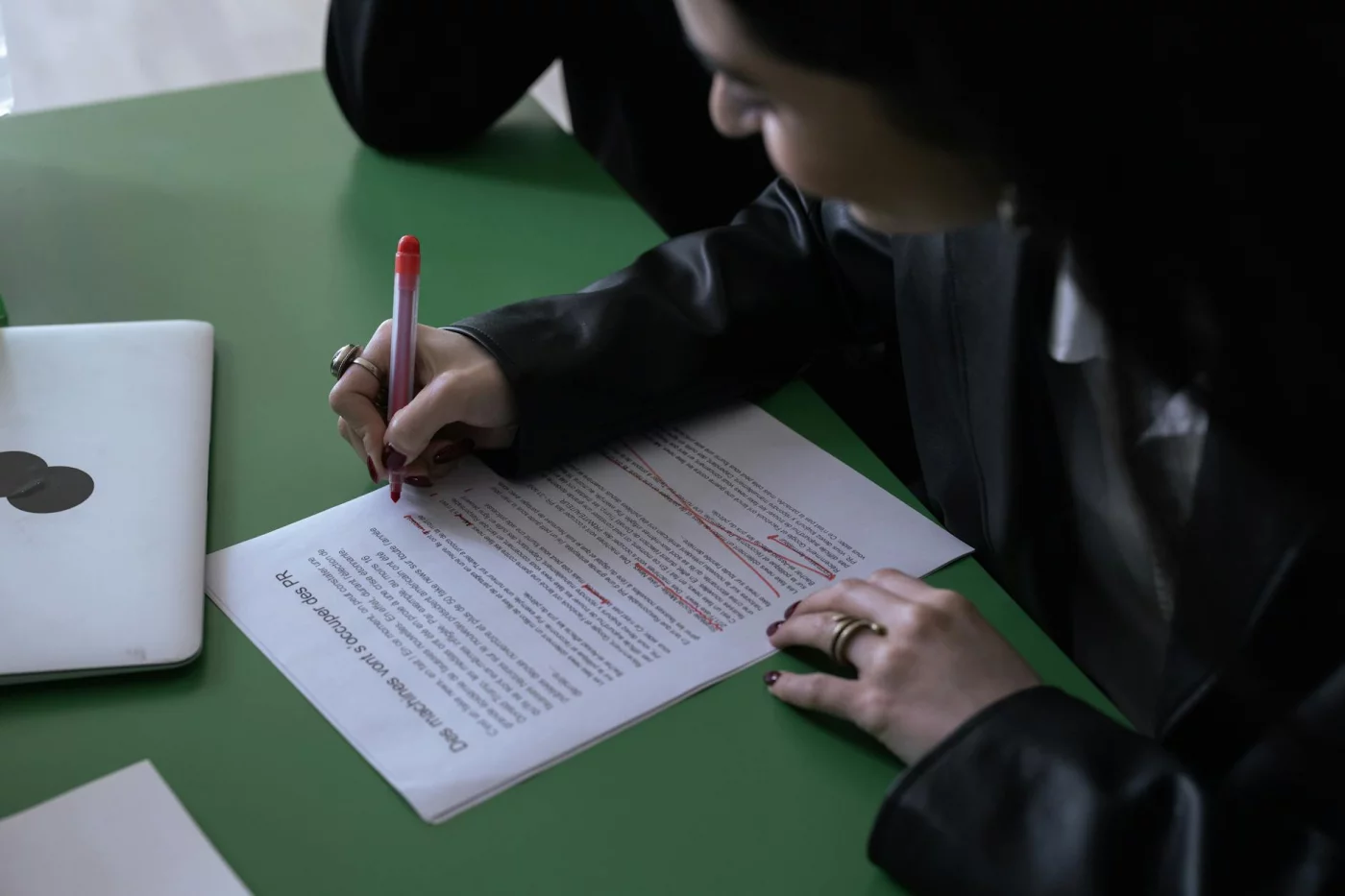
As a self-taught learner and tool builder, that’s been the biggest time saver I’ve found. Not reading faster in a magical way — just filtering better, then using skimming vs deep reading on purpose.
Questions to ask about design and bias
Start with four questions: who was studied, compared to what, for how long, and with what outcome? That quick critical appraisal tells you more than a polished abstract.
- Was there a control group or at least a baseline comparison?
- Is the sample size large enough to trust the pattern?
- Could bias, confounding, or weak measurement explain the result?
A mouse study isn’t a human treatment. And a correlation between sleep and grades doesn’t prove sleep caused the grade change.
What significance does and doesn’t tell you
Statistical significance usually means the result would be unlikely if there were no real effect, often summarized with a small p-value. But wait — that does not tell you the effect is large, useful, or likely to replicate; effect size, confidence intervals, and absolute differences matter for evidence quality.
Large samples can make tiny effects look impressive. So if you’re trying to read faster without losing comprehension, train yourself to scan for practical importance, not just stars and p-values.
Common mistakes and what to do instead
Three beginner mistakes show up again and again. Reading methods first, trusting the abstract alone, and treating one study as final truth.
Better approach? Triage first, verify claims against figures and methods, then look for reviews, replications, and expert consensus. That’s how to read scientific papers critically, and honestly, it’s also how to read scientific papers quickly without fooling yourself.
Next, I’ll show you a simple paper summary system so what you read actually sticks.
Your paper summary system and quick recap
You’ve spotted the common traps. Now you need a repeatable system, because how to read scientific papers quickly isn’t about rushing every line; it’s about capturing the few details you’ll actually use later.
A 6-line template you can reuse
Here’s the simplest paper summary template I know. Copy it into Notes, Notion, or a plain text file, then tag each paper by topic, method, or confidence level using ideas like tags in study notes.
- Question:
- Method:
- Sample:
- Key result:
- Main limitation:
- Bottom-line takeaway:
Add an annotation system too: mark sentences as claim, method, result, limitation, or follow-up question. That becomes your how to read a scientific paper worksheet and the bridge between reading and remembering.
ADHD-friendly and time-limited reading
If you’re figuring out how to read academic papers with ADHD, lower startup friction first. Open the PDF, notebook, and timer before you begin, do one 10-15 minute pass, set a visible stopping point, and summarize before switching tasks.
High school student? Read abstract and one figure. Undergrad? Add methods and limitations. Busy professional? Do two short rounds instead of one long, draining session. Personally, I think this is the most realistic way to read scientific papers efficiently.
Using AI and apps without outsourcing judgment
Can ChatGPT read scientific papers? Sort of. AI can define terms, turn jargon into plain language, extract keywords, and organize notes. But you still need to verify study design, numbers, limitations, and whether the conclusion really matches the evidence. For more on using tools carefully, see AI homework help for students.
Use PDF readers, annotation apps, citation managers, and PubMed for abstracts and metadata. Best app to read scientific papers? The one you’ll actually use consistently.
📋 Quick Reference
Workflow: skim abstract, figures, and conclusion; do a 6-line summary; tag claims/methods/results/limits; read in 10-15 minute passes; use AI for support, never final judgment; save your notes in one searchable place.
Save this workflow, test it on one paper this week, and keep your summary beside the PDF. That’s how to read scientific papers quickly without fooling yourself — which sets up the final FAQ and wrap-up.
Frequently Asked Questions
How do you read scientific papers as a beginner?
If you’re learning how to read a research paper as a beginner, don’t start with the methods section line by line. Start with the title, abstract, conclusion, and figures so you can quickly answer four things: What question did they ask? What did they do? What did they find? What are the limits? Then use a simple note template like “question, method, result, limitation, takeaway” so every paper ends with one clear summary instead of a pile of half-remembered details.
How can I read scientific papers quickly without missing important details?
The best way to learn how to read scientific papers quickly is to use a triage workflow, not speed-read every sentence. Read the abstract, jump to the conclusion, inspect the figures and tables, and only go into the methods if the paper looks relevant, credible, and worth your time. And here’s the kicker — the goal isn’t rushing; it’s selective depth, which means spending more time only on papers that actually matter to your question.
How do you read scientific papers critically?
To understand how to read scientific papers critically, check the study design before you trust the headline conclusion. Look at the sample size, control group, outcome measures, and stated limitations, then ask whether the data really support the claim or whether the authors are stretching beyond what they showed. This is the part most people miss: correlation often gets written as if it were causation, so separate what the data show from what the discussion suggests.
How can I read academic papers with ADHD?
If you’re figuring out how to read academic papers with ADHD, reduce friction before you begin: open the PDF, your note template, and a 10-15 minute timer first. Read in short passes with one goal per pass, like “find the research question” or “understand Figure 2,” then write a 1-2 sentence summary immediately so the main point doesn’t vanish when your attention shifts. For planning short focus blocks, a simple study timer or session planner on FreeBrain can help turn reading into a sequence of small wins instead of one overwhelming task.
Can ChatGPT read scientific papers?
Yes, can chatgpt read scientific papers is a fair question — and the practical answer is that it can help summarize text, explain unfamiliar terms, and organize your notes. But wait. It can also flatten nuance, miss limitations, or misstate findings, so you still need to verify every important claim against the original paper and its figures. Use it as a reading assistant, not as the final judge of evidence.
Can I use ChatGPT for research?
Yes, can I use ChatGPT for research has a nuanced answer: it’s useful for brainstorming search terms, translating jargon into plain English, and drafting a note structure before you read. No, it shouldn’t replace reading the source, checking citations, or judging evidence quality for yourself. For health or clinical topics, stick closely to the original literature and trusted sources like PubMed, and consult a qualified professional for decisions that affect your care.
How do PhD students read papers?
If you’ve wondered how do PhD students read papers, most don’t read every paper from top to bottom in order. They triage hard, scan figures early, and only read the methods deeply when the study is central to their project, which is basically the same logic behind how to read scientific papers quickly without getting buried. Personally, I think beginners should copy that selective approach instead of assuming “serious reading” means reading everything.
Are scientific papers hard to read?
Yes, are scientific papers hard to read is an easy one: often they are, because they’re written for specialists and compressed into a format that assumes background knowledge. The difficulty usually comes from jargon, dense structure, and missing context rather than from your ability. A repeatable workflow makes a huge difference, and if you want a broader system for active reading and note-taking, see FreeBrain’s related guide on reading research efficiently or this overview from the NIH for finding reliable scientific sources.
Conclusion
If you want to know how to read scientific papers quickly, the core move is simple: stop reading like it’s a textbook. Start with the title, abstract, figures, and conclusion to find the main claim fast. Then read the methods and results with a purpose, not line by line, and write a short summary in your own words: the question, the method, the finding, and the biggest limitation. And yes, this is the part most people miss — always check whether the paper actually supports the headline claim you took from it.
You don’t need to become a domain expert overnight. You just need a repeatable system. At first, papers can feel dense, slow, and honestly a little hostile. But wait — once you stop trying to understand every sentence on the first pass, things get easier fast. Personally, I think this shift changes everything. You’ll spend less time getting stuck and more time spotting what matters, which means better notes, better decisions, and way less mental fatigue.
Want to keep building that skill? Head over to FreeBrain.net and keep going with How to Study Effectively and Active Recall Study Method. Both pair well with how to read scientific papers quickly because reading is only half the job — remembering and using what you read is where the payoff shows up. Pick one paper today, use the system, and prove to yourself you can read smarter starting now.