You’re probably here for one thing: how brain computer interfaces improve attention in real life, not in sci-fi demos. Short answer? Some can help you train focus, notice mental drift, or build better study habits — but most consumer devices are really EEG-based feedback tools, not mind-reading machines, and the gains are usually modest. If you’ve been wondering how brain computer interfaces improve attention for studying, exams, or deep work, this guide will help you separate useful tools from hype.
That matters because noninvasive BCI and wearable EEG devices are everywhere now. Headbands, focus apps, “brain training” dashboards — and all of them seem to promise more concentration. But what happens when you’re tired, stressed, and staring at the same paragraph for the fourth time? That’s where understanding how attention affects learning becomes more useful than flashy marketing.
So here’s the deal. A brain–computer interface is any system that reads brain signals and turns them into feedback or control, and in consumer products that usually means EEG: sensors on your scalp picking up electrical patterns, then feeding you scores, prompts, or training tasks. If you want a quick primer on how brain waves are measured, start there — it makes the rest of this topic much easier to judge. And if you’re curious how researchers define these systems more broadly, the overview of brain–computer interfaces is a useful baseline.
In this article, you’ll get a practical decision guide. We’ll cover what the evidence actually says about attention training, whether can brain computer interfaces improve memory has a meaningful answer, which consumer devices are relevant, how to test one safely at home, and when simpler options will probably work better. Because, honestly, sometimes better sleep, lower stress, and smarter study design beat expensive hardware.
I’m approaching this as a software engineer and self-directed learner who builds FreeBrain tools and tests evidence-based methods against actual use, not as a neuroscientist. Which is exactly why this article stays grounded: what these devices can do, what they probably can’t, and whether they’re worth your time.
📑 Table of Contents
- What BCI means for learning
- How brain computer interfaces improve attention
- Memory, learning, and who benefits most
- How to test one at home
- Limits, mistakes, and the real verdict
- Frequently Asked Questions
- How do brain computer interfaces improve attention?
- Can brain computer interfaces improve memory?
- Do EEG headbands help with studying?
- What is the difference between BCI and neurofeedback?
- How does EEG neurofeedback improve focus?
- How long does attention neurofeedback take to work?
- Are brain computer interfaces safe for home use?
- Which consumer BCI devices are best for attention?
- Conclusion
What BCI means for learning
So now that the basics are on the table, here’s the practical version. A brain-computer interface uses measured brain signals—usually EEG from scalp sensors—to detect patterns and turn them into feedback or simple control signals, which is the starting point for understanding how brain computer interfaces improve attention in real study settings. Curious about productivity and focus beyond this article? Our productivity and focus guide goes deeper.
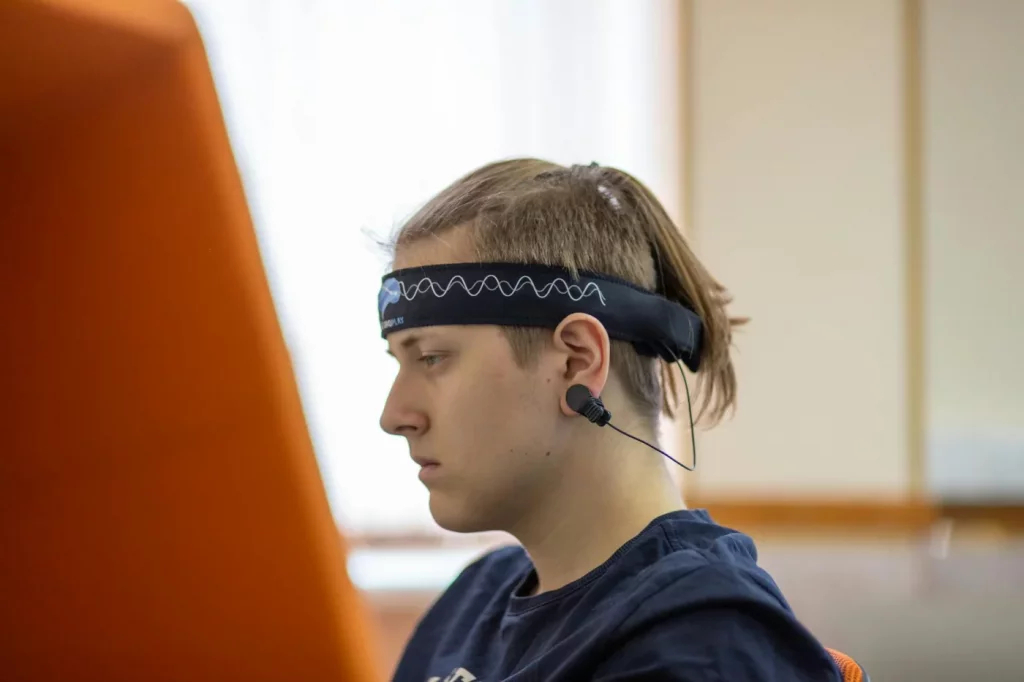
For learning, that usually means a noninvasive BCI headband or wearable EEG that tracks broad attention-related patterns, then shows scores, adapts a task, or feeds data into training. If you need a primer on how brain waves are measured, that helps here. And no, most consumer tools aren’t mind-reading systems or surgical implants.
| Use case | Likely benefit | Evidence strength | Realistic expectation |
|---|---|---|---|
| Attention monitoring | Better self-awareness | Moderate | Spot drift during study sessions |
| Neurofeedback for focus | Improved regulation | Mixed to moderate | Gradual gains with practice |
| Working memory practice | Task-specific improvement | Mixed | Better on trained tasks, limited transfer |
| Adaptive study tasks | Less overload | Early but promising | Smarter pacing, not magic learning |
A simple definition you can actually use
A brain-computer interface reads brain activity patterns and turns them into feedback, commands, or adjustments in software. In home devices, that usually means wearable EEG picking up electrical activity from groups of neurons—not thoughts in sentence form.
That’s the key expectation reset. Consumer systems can be useful for state tracking and training, but they’re limited when it comes to precise decoding. Research summaries on brain-computer interfaces and electroencephalography make that distinction pretty clear.
BCI vs neurofeedback vs brain training
This is the part most people get wrong. A headband that detects attention-related patterns and changes app difficulty is closer to BCI; a dashboard that rewards steadier patterns is neurofeedback; a memory app with no EEG is just brain training.
Marketers blur these categories all the time. But wait—why does that matter? Because your expectations should match the mechanism, especially when thinking about attention and working memory and whether a tool is actually reading signals or just serving exercises.
- BCI reads signals and uses them in real time.
- Neurofeedback gives feedback on those signals.
- Brain training may not use brain data at all.
What current consumer tools can really do
Realistic functions include session feedback, focus or meditation scores, simple attention decoding with wearable EEG, task adaptation, and trend tracking over time. That’s useful, especially when you understand how attention affects learning. Personally, I think that’s where most of the real value lives.
What can’t they reliably do? Guarantee IQ gains, instantly boost memory, or accurately read complex emotions from a few dry electrodes. I’m a software engineer and self-taught learner, not a clinician, so I look at this through research plus practical testing: consumer BCI devices for concentration can help some learners build awareness and consistency, but they aren’t medical devices unless explicitly cleared for that purpose.
📋 Quick Reference
BCI: reads brain signals and uses them to control or adapt something.
Neurofeedback: shows you real-time feedback so you can learn self-regulation.
Brain training: cognitive exercises that may not read brain signals at all.
Bottom line: how brain computer interfaces improve attention is less about mind reading and more about feedback, adaptation, and better study-state awareness.
Which brings us to the next question: if these tools are limited but useful, how exactly do they help attention in practice?
How brain computer interfaces improve attention
If the last section was about what BCIs can mean for learning, this is the practical mechanism. How brain computer interfaces improve attention is usually pretty simple: they detect rough markers of engagement or drift, then respond fast enough for you to correct course.
That matters because attention is the gateway to encoding. If you want the learning angle, FreeBrain has a useful explainer on how attention affects learning and another on attention and working memory.
What signals these systems try to detect
Most noninvasive BCI for cognitive training uses EEG, which records electrical activity from the scalp rather than reading exact thoughts. Consumer devices usually estimate broad states like sustained attention, engagement, or relaxation — not precise mental content. If you want the basics, here’s how brain waves are measured.
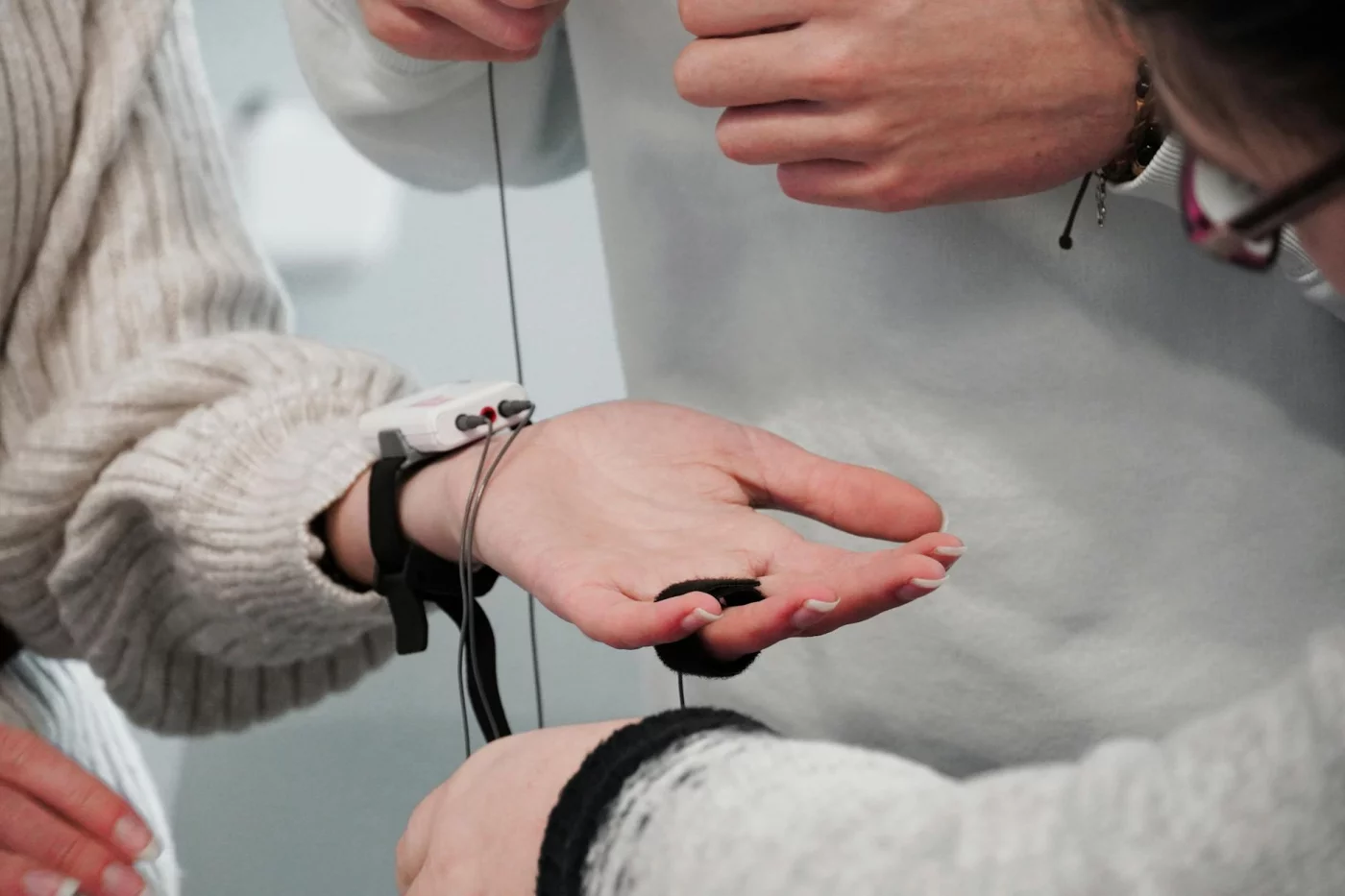
And this is where people get confused. Attention decoding with wearable EEG is noisy. Motion artifacts, weak sensor contact, dry scalp, thick hair, and a loud home environment can all distort the signal.
Research reviews indexed on PubMed suggest EEG neurofeedback for attention improvement can help some users, but results depend heavily on protocol, population, and device quality.
Why feedback can change your behavior
Closed-loop feedback means the system measures your state, changes the task or gives a cue, you adjust, and the loop repeats. So when your focus dips, you might sit still, mute notifications, slow your breathing, or re-read the last paragraph.
- Measure attention-related patterns
- Flag a likely lapse in real time
- Prompt a behavioral correction
- Repeat until focus stabilizes
Think of it like a heart-rate monitor during exercise. The value is often awareness plus adjustment, not magic mind control. A broad overview of neurofeedback captures that idea well.
What this means for studying
How does EEG neurofeedback improve focus during real work? Usually by helping you catch drift sooner. That can mean fewer off-task moments while reading dense chapters, cleaner notes in a lecture replay, better debugging during coding practice, or more quiz answers recalled from memory instead of guessed.
Personally, I think this is the realistic frame: brain computer interface for attention training may improve study sessions, but transfer to grades or long-term learning isn’t guaranteed. Better signal processing, AI-assisted pattern detection, and adaptive interfaces are improving usability, but home systems still face real interpretation limits. Which brings us to memory, learning, and who tends to benefit most.
Memory, learning, and who benefits most
Attention is the entry point. But it isn’t the whole learning system, which is why understanding attention and working memory matters before you assume one device fixes everything.
Working memory is not the same as memory
Working memory is your mental scratchpad: holding steps in a math problem or a sentence while reading. Episodic memory is different. That’s the later recall of what happened during a lecture or study session.
So, can brain computer interfaces improve memory? Sometimes indirectly. If EEG-based feedback helps you stay on task, encoding may improve because your brain actually processes the material more deeply. But how brain waves are measured in consumer EEG systems doesn’t mean the device is directly upgrading long-term memory circuits. And if you’re wondering can working memory be improved, research suggests training can help near-task performance more than broad intelligence or grades.
What research suggests for study performance
Here’s the realistic version of how brain computer interfaces improve attention and learning:
- fewer attention lapses
- longer sustained work blocks
- slightly better task accuracy
- more consistent sessions
Evidence for broad brain computer interface learning outcomes is mixed, especially when studies use weak comparison groups. Reviews indexed on PubMed’s neurofeedback literature suggest protocol quality and adherence matter a lot, while definitions of working memory in cognitive science help explain why transfer is often limited.
From experience: where this fits in a real routine
From building learning tools, I’ve found the best interventions usually change daily behavior, not just screen metrics. For a brain computer interface for students, that means pairing it with active recall, timed focus blocks, and a pre-study ritual.
Who benefits most? Usually motivated users who like quantified feedback, students in exam prep, and people willing to repeat sessions for weeks. ADHD, older adults, and neurorehab are more complicated; evidence exists in some cases, but strength varies, so this is educational only and you should consult a qualified clinician rather than self-treat. And yes, people often overestimate devices and underestimate sleep debt, stress, and how attention affects learning.
Next, let’s make this practical and look at how to test one at home.
How to test one at home
If you’re curious about how brain computer interfaces improve attention, don’t start with a pricey gadget and vague hopes. Start with a small, testable routine that connects focus training to attention and working memory in real study sessions.
How to run a simple at-home test
- Step 1: Pick one measurable goal.
- Step 2: Choose a device based on signal, comfort, and cost.
- Step 3: Follow a 4- to 6-week schedule.
- Step 4: Track app data and real study outcomes.
- Step 5: Review at week 2 and week 6.
Step 1: Pick a goal you can measure
Bad goal: “get smarter.” Better? Complete four 25-minute focus blocks this week, cut phone checks from 12 to 6, or raise quiz recall from 60% to 70%. If you’re testing a brain computer interface for attention training at home, single-variable goals matter because they show whether does neurofeedback help studying for you, not for marketing copy.
Step 2: Choose a device without falling for hype
Check electrode type, fit, battery life, app quality, export options, subscription fees, and the privacy policy. And yes, comfort matters a lot. The best wearable EEG devices for focus are the ones you’ll actually wear 3 to 5 times per week; many consumer BCI devices for concentration fail right there. If you need a quick primer on EEG basics, read how brain waves are measured, and compare claims against research indexed by the National Library of Medicine.
Step 3: Run a 4- to 6-week protocol
A realistic schedule is 3 to 5 sessions per week, 10 to 20 minutes each, at roughly the same time of day. Short and repeatable beats one huge weekend session. Personally, I’d pair it with a pre-study cue like this deep work warm-up ritual so your brain gets the same “focus starts now” signal every time.
Step 4: Track outcomes that matter
Track both device scores and real-world results. Use a simple list:
- focus score trend
- completed sessions
- uninterrupted study blocks
- quiz recall score
- mental fatigue, stress, and sleep hours
That’s how brain computer interfaces improve attention in practice: not by flashy dashboards, but by better pages read, better notes retained, and fewer distracted resets. Review at week 2 and week 6, then keep, adjust, or stop based on outcomes. Which brings us to the harder part — limits, mistakes, and the real verdict.
Limits, mistakes, and the real verdict
Testing at home gives you useful signals. But it also shows the limits fast. If you’re wondering how brain computer interfaces improve attention, the honest answer is: sometimes modestly, under the right conditions, and rarely in the dramatic way marketing implies.
Common mistakes that waste time and money
- Expecting instant gains. Fix: judge trends over 2-4 weeks, not one session.
- Using app scores as the only outcome. Fix: track reading stamina, distraction rate, and task completion too.
- Changing too many variables at once. Fix: keep caffeine, study block length, and time of day stable.
- Ignoring sleep, stress, and mental fatigue. Fix: if you’re fried, start with ways to improve focus while stressed.
- Buying for features instead of comfort. Fix: a headset you won’t wear is a bad deal.
- Treating consumer EEG as medical-grade. Fix: ask how accurate are consumer BCI devices, and read the privacy policy before sharing brain data and app analytics.
When to talk to a clinician
Quick sidebar: this is educational, not medical advice. If you have ADHD, anxiety, a seizure history, persistent memory concerns, or other cognitive symptoms, consult a qualified clinician before using EEG neurofeedback for attention improvement as self-treatment. And don’t change medication or use home devices as diagnosis tools.
Quick verdict: try it, skip it, or wait
Personally, I think consumer BCI devices for concentration are worth trying if you’re curious, data-oriented, and already have decent sleep and study habits. But wait—if you’re sleep-deprived, overwhelmed, or hoping for dramatic memory enhancement, skip or delay. Does brain training with EEG actually work? Sometimes, for narrow attention skills. For bci for learning and memory improvement, transfer is still limited.
Simple rule: if a $0-$20 habit change would likely help more, start there first. Pair any experiment in how brain computer interfaces improve attention with mindfulness breaks, active recall, and brain exercises for concentration. Which brings us to the questions most readers still have.
Frequently Asked Questions
How do brain computer interfaces improve attention?
How brain computer interfaces improve attention usually comes down to a closed-loop system: the device detects broad attention-related brain activity patterns, then gives feedback or changes the task in response. That can help you notice when your focus is drifting and practice getting back on track. But wait — the real benefit isn’t mind reading or instant cognitive enhancement. In most cases, it’s better self-regulation during work, study, or training sessions.

Can brain computer interfaces improve memory?
Can brain computer interfaces improve memory? Sometimes indirectly, yes. Evidence suggests the more realistic effect is better attention and task engagement, which can support learning and make information easier to encode in the moment. Personally, I think this is the part most people get wrong: working memory improvements may be more plausible than broad long-term memory gains across every context.
Do EEG headbands help with studying?
Do EEG headbands help with studying? They may help some users become more aware of focus lapses, reduce mindless multitasking, and build a more consistent study routine. And here’s the kicker — results depend a lot on the device, the training protocol, and whether your study methods are already solid. If your note-taking, retrieval practice, and review schedule are weak, a headband won’t fix the foundation; pairing it with tools like FreeBrain’s learning tools tends to make the feedback more useful.
What is the difference between BCI and neurofeedback?
What is the difference between BCI and neurofeedback? BCI is the broader category: systems that use brain signals to produce an output, control something, or adapt a task. Neurofeedback is one specific use case where those signals are shown back to you so you can learn self-regulation over time. So here’s the deal: all neurofeedback systems can fit under the BCI umbrella, but not every BCI is neurofeedback.
How does EEG neurofeedback improve focus?
How does EEG neurofeedback improve focus? It gives immediate feedback when your brain activity shifts away from the target state, which can help you catch attention drift in real time and correct it faster. Over repeated sessions, some users get more consistent at sustaining effort — though the effects are usually modest, not dramatic. If you want the research background, the National Institute of Mental Health is a better place to start than product marketing pages.
How long does attention neurofeedback take to work?
How long does attention neurofeedback take to work? Some people notice session-level effects quickly, like feeling more settled or more aware of distraction, but meaningful testing usually needs 4 to 6 weeks of consistent use. OK wait, let me back up: don’t judge it by app scores alone. Track real outcomes such as minutes on task, number of study blocks completed, reading retention, or how often you switch tabs.
Are brain computer interfaces safe for home use?
Are brain computer interfaces safe for home use? Noninvasive wearable EEG devices are generally low risk for many users, but low risk doesn’t mean risk-free or appropriate for everyone. Skin irritation, frustration, false confidence, or overinterpreting noisy data can still be problems. This is educational, not medical advice — if you have seizures, ADHD, anxiety, or memory concerns, consult a qualified healthcare professional before using home neurotechnology.
Which consumer BCI devices are best for attention?
Which consumer BCI devices are best for attention depends less on flashy claims and more on five things: comfort, signal quality, software quality, privacy practices, and total cost over time. Speaking of which — the best device is usually the one you’ll actually wear consistently and compare against real outcomes like completed deep-work sessions or fewer focus lapses. If you’re trying to understand how brain computer interfaces improve attention, judge any device by whether it helps you regulate behavior better, not whether it promises superhuman concentration.
Conclusion
If you want the practical version, here it is. First, treat a BCI as a feedback tool, not a magic fix: it can help you notice when your focus drops and train steadier attention over time. Second, keep sessions short and specific — 10 to 20 minutes tied to one task usually beats long, unfocused experiments. Third, measure something real, like reading recall, quiz scores, or distraction rate, so you can tell whether the device is actually helping your learning. And fourth, start simple at home: one device, one protocol, one study goal. That’s the clearest way to understand how brain computer interfaces improve attention without getting lost in hype.
Personally, I think that’s the exciting part. You don’t need a lab, a huge budget, or perfect concentration to start learning from your own data. If you’ve struggled with drifting focus, inconsistent study sessions, or remembering what you just reviewed, you’re not behind — you’re dealing with a very human problem. BCIs won’t replace good sleep, active recall, or spaced repetition. But they may become a useful layer on top of those habits, especially for learners who do better with immediate feedback and structured experiments.
Want to go deeper? Explore more evidence-based strategies on FreeBrain.net, starting with Active Recall: The Study Method That Actually Works and Spaced Repetition: How to Remember More in Less Time. If you’re curious about how brain computer interfaces improve attention, pair that curiosity with methods that already have strong support. Test carefully, track results, and build a study system that works in the real world. Start small, stay consistent, and make your next session count.