

If you’re wondering why pomodoro technique doesn’t work, the short answer is this: fixed 25-minute work blocks don’t fit every brain or every task. For a lot of people, why pomodoro technique doesn’t work comes down to broken flow, higher switching costs, and a mismatch between the timer and the kind of work you’re actually doing. That doesn’t mean you’re lazy or bad at focus. It usually means the system is a poor fit.
Maybe you’ve tried a pomodoro timer, started getting into deep work at minute 22, and then got yanked out just as your brain finally clicked. Or maybe the opposite happened: you spent half the session fighting distraction, then felt weirdly guilty when the break arrived. That’s more common than productivity gurus make it sound. Research on attention and task switching, including task switching in psychology, helps explain why pomodoro technique doesn’t work for some people, especially when interruptions already eat up your day.
So here’s the deal. This article will help you diagnose why pomodoro technique doesn’t work based on four things that actually matter: your work type, your attention style, your interruption level, and your task complexity. You’ll see when Pomodoro can help, when it backfires, and what to try instead — like Flowtime, time blocking, task batching, or longer focus cycles. And if timer-based work keeps breaking your concentration, it helps to understand single-tasking explained and practice mindful transitions for focus between sessions.
I’m a software engineer, not a neuroscientist, but I’ve spent years building learning and focus tools at FreeBrain and digging through the evidence behind what actually helps people concentrate. Personally, I think this is the part most people get wrong: when Pomodoro fails, they blame themselves instead of asking a better question — what kind of focus system does your work actually need?
📑 Table of Contents
- Why pomodoro technique doesn't work for some people
- What the Pomodoro Technique is supposed to do — and where it breaks
- 7 reasons why pomodoro technique doesn't work
- When Pomodoro works best vs when it fails: real-world application
- What to do if Pomodoro doesn’t work: a 5-step focus diagnosis
- Best alternatives to Pomodoro technique: quick reference and comparison
- Frequently Asked Questions
- Conclusion
Why pomodoro technique doesn’t work for some people
So here’s the deal. If you’ve tried Pomodoro and felt worse, why pomodoro technique doesn’t work is usually about mismatch, not laziness or weak discipline. For more on productivity and focus, see our productivity and focus guide.
Short answer: fixed 25-minute intervals can interrupt flow, clash with ramp-up time, and create extra switching costs. That’s often why pomodoro technique doesn’t work for deep thinking, dense reading, coding, or creative work that needs momentum before it pays off.
Before you blame yourself, check your setup. If frequent resets already break your concentration, our guides on single-tasking explained and mindful transitions for focus can help you test whether the problem is the timer, the task, or the transition itself.
Many readers say, “pomodoro technique doesn’t work for me,” because they run one rigid cycle for every kind of work. Personally, I think that’s the core mistake. This article uses a simple diagnostic model built around four variables: task type, attention style, interruption level, and energy state. Which brings us to when Pomodoro helps, when it fails, and what to use instead.
Quick answer: the timer can interrupt focus instead of protecting it
The timer is often useful for initiation. But wait—once you’re fully engaged, it can become the interruption.
A student solving calculus may need 35 minutes just to hold the whole problem in working memory. A developer debugging a nasty issue may finally spot the pattern at minute 28. A writer outlining an argument may need uninterrupted time to connect ideas. That’s one practical reason why pomodoro technique doesn’t work for some people.
Complaints about this are everywhere, including pomodoro technique reddit threads. Still, forum posts are anecdotes, not evidence. Research on attention and task switching from the American Psychological Association on multitasking and broader summaries of task switching in psychology point in the same direction: switching has a cost, even when the switch seems small.
The 4-factor diagnosis: task, attention, interruptions, energy
Four things matter:
- Task: shallow admin work and email often fit short blocks; deep analysis often doesn’t.
- Attention: some people focus best with external structure, others with fewer breaks and stronger single-tasking.
- Interruptions: meetings, Slack, noise, and context switching can matter more than the pomodoro timer itself.
- Energy: low sleep, stress, or mental fatigue can make any method feel broken.
Well, actually, that’s the useful frame for why doesn’t the pomodoro technique work in real life. Each later section maps one failure mode to a better-fit method, so you can stop forcing a system that fights your brain instead of helping it.
What the Pomodoro Technique is supposed to do — and where it breaks
So far, we’ve looked at why pomodoro technique doesn’t work for some people in practice. Now let’s get more precise: the method has a clear purpose, but understanding why pomodoro technique doesn’t work starts with understanding what it’s actually trying to fix.

The classic 25/5 method and its intended benefits
The classic Pomodoro setup is simple: work for 25 minutes, take a 5-minute break, and after 4 rounds, take a longer break of about 15 to 30 minutes. That structure is supposed to lower the friction of starting, because “just 25 minutes” feels smaller and less threatening than “finish the whole project.”
And that part can work. If you procrastinate because a task feels vague or emotionally heavy, a pomodoro timer gives you a clean start line and a clean stop line. Personally, I think that’s the real benefit of pomodoro technique — not magic focus, just reduced resistance.
It also pairs well with routine tasks that don’t need long immersion. Think email cleanup, flashcard review, reading lecture notes, or repetitive admin. For those kinds of tasks, the answer to why pomodoro technique doesn’t work is often “it actually does work — just not for everything,” especially when you combine it with single-tasking explained so each 25-minute block has one clear target.
Here’s a practical example. A student might use two Pomodoros — 50 minutes total with a 5-minute break in the middle — to review lecture slides before switching to a harder problem set. That works because review is bounded, familiar, and easy to restart after interruption.
- 25 minutes of focused work
- 5 minutes of rest
- After 4 cycles, a 15-30 minute longer break
- Common alternatives: 45/10 or 52/17 for longer-focus tasks
What research suggests about breaks, attention, and fatigue
Here’s where things get interesting. Pomodoro is widely recommended, but pomodoro technique research doesn’t show that 25/5 is the universally best rhythm for every brain and every task.
What the broader evidence does suggest is more modest: attention declines over time, mental fatigue is real, and breaks can help sustain performance. Research discussed by the American Psychological Association on multitasking and task switching shows that shifting attention carries a cost, which matters because every timer break can either refresh you or fragment your concentration.
And vigilance drops when work is prolonged and monotonous. Reviews indexed in PubMed’s attention and mental fatigue literature point in the same direction: breaks may support sustained performance, but the ideal timing depends on task demands, motivation, and cognitive load. So if you’re asking how effective is pomodoro technique, the honest answer is “sometimes helpful, not inherently superior.”
But wait. Breaks don’t fix everything. Sleep debt, stress, and burnout can crush focus no matter how neatly you divide the hour, and Harvard Health has repeatedly emphasized that poor sleep hurts attention, working memory, and cognitive performance. A timer can organize effort, but it can’t replace recovery.
Why the same method can help one person and frustrate another
This is the part most people get wrong: does the pomodoro technique actually work is the wrong question unless you ask for whom, for what task, and under what conditions. A meeting-heavy manager may love 25-minute blocks between calls, while a researcher reading dense papers may need 60 to 90 uninterrupted minutes just to get fully oriented.
Same with motivation style. Someone who struggles to start may benefit from the small commitment of one Pomodoro. But someone who finally reaches deep focus at minute 22 may see exactly why pomodoro technique doesn’t work for their coding, writing, design, or analysis work.
So, is pomodoro method effective? For low-resistance tasks, often yes. For deep work, creative work, and interruption-heavy roles, the answer gets messy fast.
That’s also why alternatives like 45/10, 52/17, time blocking, or flowtime often feel better for knowledge workers. The method isn’t broken in a universal sense. The mismatch is the problem.
Which brings us to the next section: the seven most common reasons why pomodoro technique doesn’t work, and how to tell which one is affecting you.
7 reasons why pomodoro technique doesn’t work
Now we can get practical. If you’re wondering why pomodoro technique doesn’t work, the answer usually isn’t “you lack discipline” — it’s that the method clashes with the kind of work, energy, or environment you’re dealing with.
Reason 1-3: flow interruption, long ramp-up, and switching costs
The biggest issue is simple: some work gets better after minute 25, not before it. That’s why single-tasking explained often beats fixed timers for deep work that needs uninterrupted context.
Think about a developer debugging a production bug. They may spend 10 to 20 minutes rebuilding the mental model, checking logs, tracing dependencies, and testing assumptions. Then the timer rings. If you’ve ever thought, “pomodoro technique doesn’t work for me,” this is one of the most common reasons.
Writers hit the same wall. Drafting usually feels clumsy at first, then the structure clicks, and stopping right there can break flow state instead of protecting it.
Research on task switching helps explain this. The American Psychological Association’s overview of multitasking research notes that switching between tasks carries a measurable mental cost, and those small losses add up. In practice, a break isn’t always restorative if your brain has to reload the whole problem afterward.
And here’s the kicker — breaks can create attentional residue. You stop thinking about the essay, codebase, or design system, glance at messages, and part of your attention stays there. If you need help resetting between work blocks, mindful transitions for focus are often more useful than just obeying the timer.
- Best replacement for debugging, drafting, synthesis: flowtime or 45-90 minute deep work blocks
- Best replacement for context-heavy work: task batching plus one clear stopping point
- Best replacement for creative work: stop at a natural breakpoint, not an arbitrary minute mark
Reason 4-5: interruption-heavy days and rigid attention rules
Sometimes why pomodoro technique doesn’t work has nothing to do with focus skill. It’s your job design. If you work in customer support, operations, teaching, management, or any Slack-heavy role, your day is already fragmented, so 25/5 cycles become meaningless theater.
Meetings cut across timers. Chat pings restart them. Urgent requests blow them up. In that kind of environment, time blocking communication windows or batching shallow tasks usually works better than pretending you control every 25 minutes.
Rigid timing also ignores attention variation. Some people lock in for 40 minutes. Others do their best thinking in 70- to 90-minute windows that line up more closely with ultradian rhythm research from sleep and performance science, as discussed by researchers at institutions like NINDS. And yes, chronotype matters too: your best focus at 9 a.m. may not exist at 3 p.m.
For people with ADHD, structure can help — but rigid timers can also backfire when they interrupt momentum or trigger timer anxiety. If that’s you, I’d look at work with ADHD strategies built around external cues, lower-friction starts, and flexible focus windows instead of one fixed rule.
Reason 6-7: wrong task type and using Pomodoro as a cure-all
Not every task deserves the same method. Admin work, inbox cleanup, flashcard review, and routine reading often fit Pomodoro well. But high-complexity synthesis, conceptual writing, visual design, and hard problem-solving often don’t.
That’s why questions like does pomodoro technique work for studying and does pomodoro technique work for math need a more precise answer: it depends on the study task. Review? Often yes. Hard proof-based math, dense reading, or connecting ideas across sources? Often no, because the ramp-up and cognitive load are too high.
There’s also a bigger mistake here. People use Pomodoro as if it can fix cognitive fatigue, chronic overload, or poor recovery. It can’t. If your brain is cooked, better breaks matter more than more frequent breaks, and sometimes you need to reset your brain without sleeping before another session will help at all.
Common mistakes to avoid when Pomodoro fails
This is the part most people get wrong. They assume why pomodoro technique doesn’t work means they failed, when often the real problem is bad fit or bad implementation.
- Don’t force 25/5 onto every task. Match the block length to the work.
- Don’t use breaks for doomscrolling. That often increases attentional residue.
- Don’t ignore sleep, workload, or environment. A timer won’t fix those.
- Don’t treat forum anecdotes as proof. Most claims about productivity methods are highly context-dependent.
So, why pomodoro technique doesn’t work often comes down to mismatch: wrong task, wrong timing, wrong environment, or wrong expectation. Which brings us to the next question — when does it actually work well, and when should you switch to something else?
When Pomodoro works best vs when it fails: real-world application
So far, we’ve covered the main reasons why pomodoro technique doesn’t work. Now the practical question: when does it actually help, and when does it make your work worse?
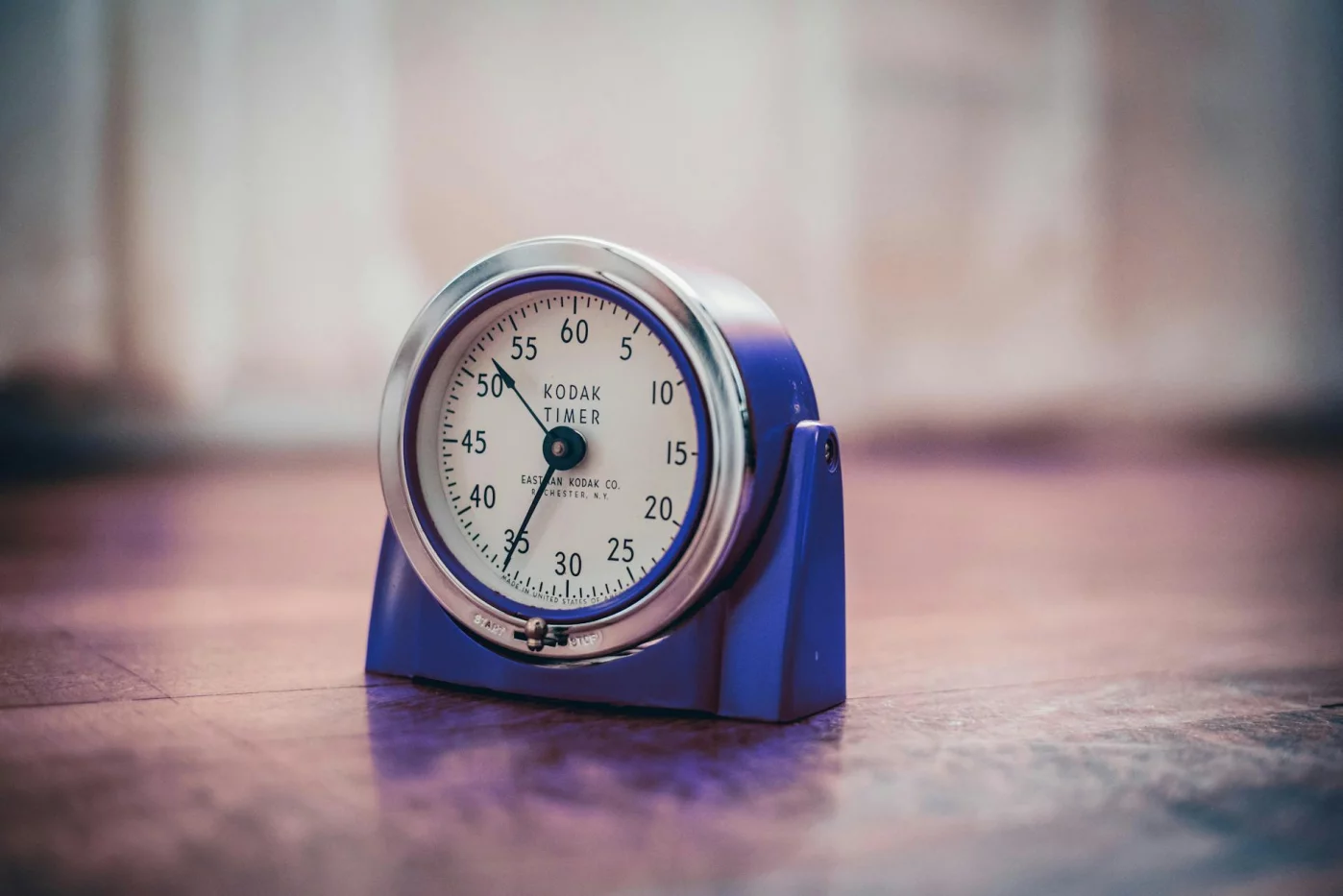
From building focus tools and watching how people use them, I keep seeing the same pattern. Short timers help people start and finish bounded tasks, but they’re often the wrong fit for deep knowledge work, which is a big part of why pomodoro technique doesn’t work for so many smart, motivated people.
Best-fit tasks: review, admin, and getting started
Pomodoro works best when the task has a clear edge. Think inbox cleanup, flashcard review, reading assigned pages, cleaning up notes, or outlining a report before the real writing starts.
Why? A visible finish line reduces friction. Research on implementation intentions and task initiation suggests that specific, bounded starts lower resistance, especially when you’re avoiding a task because it feels vague or too large. That’s one reason does pomodoro technique work for studying can be answered with: yes, sometimes — especially for review, recall practice, and reading goals with a defined endpoint.
In practice, the best-fit tasks usually look like this:
- Process 30 emails and archive what doesn’t matter
- Review 50 flashcards
- Read 12 pages of an assigned chapter
- Clean and tag lecture notes
- Draft a rough outline with 5 bullet points
And here’s the kicker — Pomodoro can be a starter engine even when it’s not your main system. If you’ve been procrastinating for two hours, a 25-minute timer can get you moving. Personally, I think this is where most of the benefits of pomodoro technique actually live: initiation, not sustained deep work.
For students, that means Pomodoro often helps with review sessions more than original thinking. For meeting-heavy professionals, it can create small islands of progress between calls. And for overloaded knowledge workers, it’s useful for task batching and single-tasking explained well enough to reduce low-value switching.
Poor-fit tasks: coding, writing, math, and creative problem-solving
This is the part most people get wrong. The tasks people care about most — coding, writing, design, research synthesis, hard analysis — are often the exact tasks where why pomodoro technique doesn’t work becomes obvious.
These jobs have long ramp-up curves. You spend 10 to 25 minutes loading context into working memory, and only then do you start producing useful output. A break right after ramp-up can kill momentum.
Examples make this clearer:
- Debugging a race condition in production code
- Writing a difficult paragraph that needs real synthesis
- Proving a theorem or checking each step in a derivation
- Designing a concept where incubation matters
- Comparing five research papers to build one coherent argument
Does pomodoro technique work for math? For drills, maybe. For proofs, derivations, and novel problem-solving, often no. Does pomodoro technique work for studying? For flashcards and review, often yes; for dense conceptual learning, longer blocks usually win.
There’s some evidence for this tradeoff. Attention residue research by Sophie Leroy, published in Organization Science, found that switching tasks leaves part of your attention stuck on the previous task. And work from the University of California, Irvine, on interruptions showed that regaining focus after disruption can take substantial time. For deep work and creative work, frequent timer breaks can create more restart cost than recovery benefit, which is another reason why pomodoro technique doesn’t work in real knowledge work settings.
ADHD, stress, sleep, and burnout: where caution matters
What about ADHD? Well, actually, does pomodoro technique work for adhd has no one-size-fits-all answer. Some people benefit from external structure, visible countdowns, and short commitments. Others find the timer irritating, shame-inducing, or too rigid to sustain, especially when hyperfocus or transition difficulty is part of the picture.
If ADHD is part of your picture, structured experiments help more than productivity dogma. You might do better with flexible blocks, body doubling, environmental changes, or these work with ADHD strategies instead of a fixed 25/5 cycle.
Same goes for stress and sleep debt. If you’re exhausted, the issue may not be your schedule but your physiology. That’s why pomodoro technique doesn’t work when the real bottleneck is cognitive fatigue, overload, or persistent impairment rather than poor time structure.
So what should you do when the timer keeps failing? Which signals tell you to adjust the method, and which tell you to drop it entirely? That’s exactly what the next section covers: a 5-step focus diagnosis.
What to do if Pomodoro doesn’t work: a 5-step focus diagnosis
So if the last section made you think, “OK, this explains why pomodoro technique doesn’t work for me,” don’t toss timed work out yet. The better move is to diagnose the mismatch first, because why pomodoro technique doesn’t work usually comes down to task type, interruption load, or a session length that fights your actual attention pattern.
How to diagnose why Pomodoro isn’t working
- Step 1: Identify the task type.
- Step 2: Track your natural focus window.
- Step 3: Audit interruptions and break quality.
- Step 4: Match the method to the problem.
- Step 5: Run a 1-week experiment and compare results.
Step 1: Identify the task type
Start here. If you’re asking what to do if pomodoro doesn’t work, the first question is simple: what kind of work are you doing?
Classify the task into three buckets:
- Shallow: inbox cleanup, admin, filing, simple replies
- Moderate: reading notes, reviewing slides, drafting an outline
- Deep: coding architecture, writing original analysis, solving proofs, designing systems
This matters because task type should shape work session length. A 25-minute timer can be great for shallow tasks, decent for moderate tasks, and terrible for deep work that needs 15 to 20 minutes just to get mentally loaded.
And yes, this is the part most people get wrong. They assume why pomodoro technique doesn’t work is about discipline, when it’s often about forcing one session length onto completely different cognitive demands. If timer interruptions are breaking concentration, you may need fewer switches and more single-tasking explained clearly.
Step 2: Track your natural focus window
Now test, don’t guess. Over 4 to 6 workdays, try 25, 40, 52, and 75-minute blocks and note two moments: when you actually enter flow, and when fatigue starts to bite.
A simple log is enough:
- start time
- task type
- planned session length
- interruptions
- focus score from 1 to 10
- time you felt “locked in”
Research on attention management suggests sustained focus varies a lot by task and person, which is one reason generic timers fail. If you consistently hit flow after 15 to 20 minutes, that’s a strong clue about why pomodoro technique doesn’t work: the bell rings right when your brain is finally warming up. In that case, lengthen sessions and test Flowtime, 52/17, or 75-minute deep-work blocks.
Step 3: Audit interruptions and break quality
But wait. Before changing systems, separate internal interruptions from external ones.
Internal interruptions are urges: checking email, opening a new tab, grabbing your phone. External interruptions are Slack pings, meetings, coworkers, family demands, and noisy spaces. If external interruptions dominate, fix the environment before blaming the timer. Your setup, notifications, and workspace design for focus often matter more than the method itself.
Break quality matters too. A short walk, water, or staring out a window can reduce mental residue. Scrolling social media during breaks often does the opposite, making restart harder. That’s a common answer to why pomodoro technique doesn’t work in distraction-heavy digital environments: the break isn’t recovery, it’s another attention hijack.
Step 4-5: Match the method and run a 1-week experiment
Here’s the practical mapping. If you procrastinate at the start, keep a short starter timer — 5 to 15 minutes — then continue if momentum builds. If deep work is the issue, the best alternative to pomodoro technique is usually Flowtime or longer flexible blocks. If your day is meeting-heavy, use time blocking and task batching so interruptions are contained instead of constantly reset.
Quick rules:
- If flow starts after 15–20 minutes, use 40–75 minute sessions.
- If interruptions are external, fix environment first.
- If you fatigue around 50 minutes, test 52/17.
- If energy rises and falls in bigger waves, try ultradian rhythm scheduling.
- If context switching is the real problem, batch similar tasks or use strict single-tasking.
Run your chosen method for one full week. Compare output, stress, and how easy it feels to restart after breaks. A 2021 review in Nature Reviews Psychology noted that attention control depends heavily on both internal goals and external distraction conditions, which fits what many knowledge workers, students, and developers experience in practice.
The success metric is simple: more meaningful work completed with less friction. And if you’re still stuck on why pomodoro technique doesn’t work, FreeBrain’s focus and productivity resources can help you test the variables instead of guessing. Which brings us to the next question: what’s the best alternative to Pomodoro technique for your specific work style?
Best alternatives to Pomodoro technique: quick reference and comparison
If the last section helped you diagnose the problem, this section helps you pick a replacement. A lot of the frustration behind why pomodoro technique doesn’t work comes down to mismatch: the timer, the task, and your attention style aren’t lining up.

Quick Reference: which method fits which kind of work
Here’s the short version. If you’re trying to understand why pomodoro technique doesn’t work for you, compare the shape of your work before you blame your discipline.
📋 Quick Reference
Pomodoro: Best for getting started, resisting procrastination, and short review tasks. Standard work session length: 25 minutes work, 5 minutes break.
Flowtime technique: Best alternative to pomodoro technique if you hate forced stops. Work until attention naturally dips, then log the session and take a break. Typical range: 30 to 90 minutes.
Time blocking: Best for calendar-driven professionals and students with fixed commitments. Reserve blocks for specific work types. Typical range: 30 to 120 minutes.
52/17 method: Best for moderate-focus work that benefits from longer momentum than Pomodoro but still needs recovery. Fixed cycle: 52 minutes work, 17 minutes break.
Ultradian rhythm scheduling: A looser, energy-aware idea based on working in roughly 90-minute waves, then resting. Useful as a guide, not a strict law.
Task batching: Best for interruption-heavy admin, email, and shallow work. Group similar tasks to reduce switching costs.
Research on task switching is pretty clear: every forced context change has a cost. That’s why methods built around fewer interruptions often feel better for deep work and why single-tasking explained matters more than the timer itself.
- If you struggle to start, use short timers.
- If you lose momentum once focused, use flexible or longer blocks.
- If your day is fragmented, batch and block.
Pomodoro vs Flowtime vs Time Blocking vs 52/17
No method wins universally. Personally, I think the useful question isn’t “What’s the best productivity system?” but “What kind of work am I trying to protect?”
| Method | Best use case | Strengths | Weaknesses | Ideal session length |
|---|---|---|---|---|
| Pomodoro | Student review, flashcards, starting avoided tasks | Low friction, easy to begin, clear stopping point | Interrupts flow, can feel artificial for writing or coding | 25/5 |
| Flowtime | Writer drafting, developer coding, dense reading | Protects momentum, adapts to real attention span | Needs self-awareness, easier to overwork without boundaries | Variable, usually 30–90 min |
| Time Blocking | Manager with meetings, student balancing classes, knowledge worker planning a week | Fits real calendars, reduces decision fatigue, works well with batching | Can collapse when schedules change, blocks may be overplanned | 30–120 min |
| 52/17 | Analyst doing reports, moderate-focus office work | Longer concentration window, built-in recovery time | Still rigid, break length may be too long or too short for some tasks | 52/17 |
Now this is where it gets interesting. Evidence from attention research suggests sustained focus depends on task difficulty, motivation, fatigue, and interruption load, not one magical work session length. That helps explain why pomodoro technique doesn’t work for deep work, creative work, and meetings-heavy roles even when it works fine for review drills.
And yes, ultradian rhythm ideas can help here. Roughly 90-minute blocks often fit writing, studying, and concept-heavy work better than 25-minute sprints, while task batching works better for email, approvals, scheduling, and other admin that gets shredded by constant context shifts.
Final takeaway: choose the method that fits the task and the person
So here’s the deal. Why pomodoro technique doesn’t work is often a fit problem, not a character problem. If you’re great once immersed, Flowtime or longer blocks may beat any “best pomodoro technique” tweak.
Try one alternative for a full week before switching again. Flowtime for forced-stop frustration, time blocking for calendar chaos, 52/17 for moderate-focus work, and task batching for interruption-heavy days. If you need a simpler reset, the 3 3 3 productivity rule is a useful fallback.
The best system is the one that matches both the task and the person. And if you’re still testing why pomodoro technique doesn’t work, the next FAQ and conclusion will help you turn that insight into a stable routine, plus point you to FreeBrain resources on ADHD, focus resets, and simpler productivity rules.
Frequently Asked Questions
Why doesn’t the Pomodoro Technique work for some people?
If you’re asking why doesn’t the pomodoro technique work, the short answer is fit. Fixed 25-minute intervals can interrupt flow, mismatch the real complexity of a task, and add switching costs right when your brain is finally warming up. In many cases, why pomodoro technique doesn’t work comes down to three things: task type, your attention style, and how often you’re already being interrupted.
Does the Pomodoro Technique actually work?
Does the pomodoro technique actually work? Yes, for some jobs it absolutely can — especially starting boring tasks, doing review work, clearing admin, or getting through low-resistance study sessions. But wait, the research base is broader on attention, effort, and rest breaks than on Pomodoro itself as a branded method, which helps explain why pomodoro technique doesn’t work equally well for deep, demanding work.
Does Pomodoro work for everyone?
Does pomodoro technique work for everyone? No productivity method does, and this is the part most people get wrong. Deep work, interruption-heavy roles, creative problem-solving, and different attention patterns all change whether short timed sprints help or hurt, which is a big reason why pomodoro technique doesn’t work as a universal rule.
Does Pomodoro work for ADHD?
Does pomodoro technique work for adhd? For some people, yes — the timer adds structure, lowers the pressure of “I have to do all of this,” and makes task initiation easier. But rigid timers can backfire for others by increasing stress or breaking concentration, so if attention problems are persistent and impairing daily life, consult a qualified professional; that context often explains why pomodoro technique doesn’t work in a one-size-fits-all way. For practical alternatives, you can also compare flexible focus systems on FreeBrain’s study and productivity tools.
Does Pomodoro work for studying?
Does pomodoro technique work for studying? Often, yes — especially for review sessions, flashcards, reading assignments, and simply getting started when you’re procrastinating. Well, actually, harder studying tasks like synthesis, concept integration, and writing from memory often need longer uninterrupted blocks, which is one reason why pomodoro technique doesn’t work for every kind of learning; if you want evidence-based study options, see FreeBrain for related tools and guides.
Does Pomodoro work for math?
Does pomodoro technique work for math? It can help with drills, homework setup, and routine practice, but it often disrupts the deeper kind of problem-solving that math demands. Math usually needs longer ramp-up time, working memory stability, and uninterrupted reasoning, so why pomodoro technique doesn’t work becomes pretty obvious when the timer goes off halfway through a proof, derivation, or multi-step solution.
How effective is the Pomodoro Technique compared with other methods?
How effective is pomodoro technique depends more on the use case than on the method “winning.” Short timers are often best for initiation and routine tasks, while Flowtime and time blocking are often better for deep work; the 52/17 style can suit people who like longer focus cycles, which helps explain why pomodoro technique doesn’t work for work that improves after the first 25 minutes. If you want the broader science on attention and mental fatigue, the NCBI research database is a solid place to start.
What is the 3-3-3 rule for productivity?
What is the 3-3-3 rule for productivity? Usually, it means choosing 3 hours for your most important work, 3 shorter priority tasks, and 3 maintenance tasks like email or admin — so it’s more of a prioritization system than a focus timer. Speaking of which, if why pomodoro technique doesn’t work for you comes down to too much rigidity, the 3-3-3 rule can feel simpler, lighter, and easier to stick with.
Conclusion: If Pomodoro Fights Your Brain, Change the System
If you’ve made it this far, here’s the practical bottom line on why pomodoro technique doesn’t work for some people: the fix usually isn’t “try harder.” It’s matching your focus system to the kind of work you’re doing. Start by checking four things: whether 25 minutes is too short for deep work, whether breaks are pulling you out of flow, whether task-switching is draining your attention, and whether your real problem is energy, clarity, or environment rather than time structure. Then test one change at a time — longer focus blocks, task-based sessions, fewer forced breaks, or a different method entirely — so you can see what actually helps.
And honestly, that’s good news. If Pomodoro has felt frustrating, inconsistent, or weirdly exhausting, you’re not broken. Your brain may just need a different rhythm. Personally, I think this is the part most people miss: understanding why pomodoro technique doesn’t work for you can save you months of guilt and wasted effort. A better system is usually simpler than people expect. Small adjustments can make focus feel smoother, more natural, and a lot more sustainable.
If you want to keep refining your study and focus system, explore more on FreeBrain.net. You might start with How to Focus Better While Studying or Spaced Repetition to build a method that fits how you actually learn. Keep testing, keep observing, and keep using what works — because once you understand why pomodoro technique doesn’t work, you can build something better and get back to doing meaningful work.