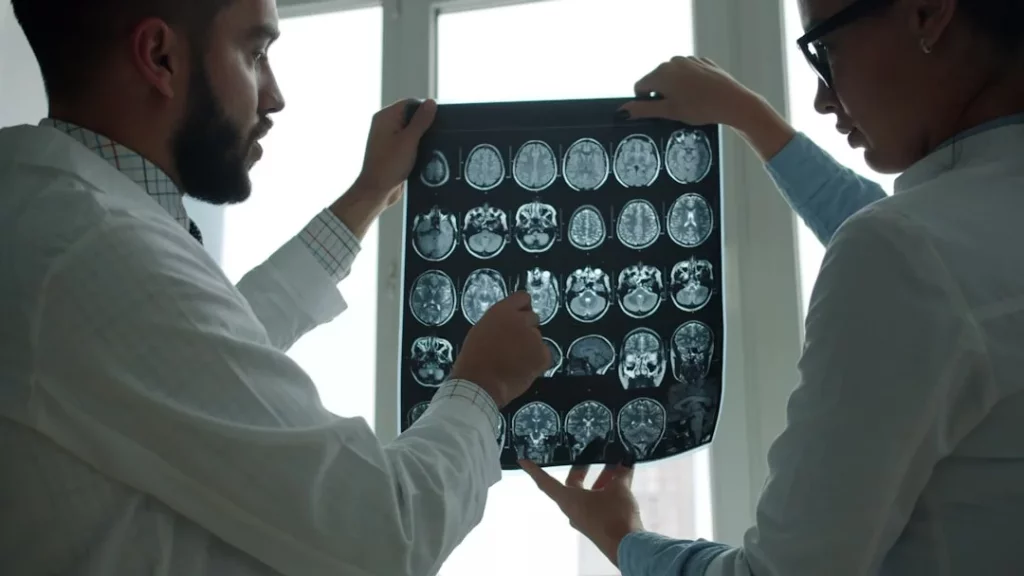

If you’re wondering how does the hippocampus affect memory, here’s the short answer: it helps your brain form, organize, and stabilize new memories so you can recall them later. It’s especially important for episodic memory, spatial memory, and the process of turning fresh experiences into more durable traces through memory consolidation explained. And no, it doesn’t work alone — it’s one part of a larger network of brain areas for memory that handle attention, emotion, storage, and retrieval.
Why do so many people care about this now? Because the hippocampus sits right at the center of questions you probably have already asked yourself: Why do some study sessions “stick” while others vanish by tomorrow? Why can you remember the route to your old school but blank on what you read an hour ago? Research summarized in the NCBI overview of hippocampal function points to the same basic idea: this structure is deeply involved in learning new information and linking it into usable memory.
So this article won’t give you a vague biology lecture. It’ll show you what role does the hippocampus play in learning and memory, how encoding, consolidation, and recall actually differ, which kinds of memory depend on the hippocampus most, and what changes when that system is disrupted. We’ll also cover hippocampus and memory consolidation during sleep, hippocampus vs amygdala memory, and hippocampus vs prefrontal cortex memory — because this is the part most people get wrong.
Our short-term and working memory guide explains how these systems contribute without treating either one as a single memory store.
I’m a software engineer, not a neuroscientist. But after years of self-directed learning and building FreeBrain tools around evidence-based study methods, I’ve spent a lot of time translating research into something you can actually use. If you want a practical answer to how does the hippocampus affect memory — and how to study in ways that work with your brain instead of against it — you’re in the right place.
📑 Table of Contents
- How does the hippocampus affect memory?
- What it does in plain English
- The 7-step memory process
- Common mistakes and brain-system mix-ups
- Use this to study better
- Frequently Asked Questions
- How does the hippocampus affect memory?
- What role does the hippocampus play in learning and memory?
- Does the hippocampus store memory?
- What is memory consolidation?
- What happens when the hippocampus is damaged?
- What is the difference between the hippocampus and amygdala?
- How does sleep affect the hippocampus?
- Can the hippocampus regenerate?
- Conclusion
How does the hippocampus affect memory?
So here’s the deal. If the introduction gave you the big picture, this section gives you the working model you can actually use while studying. For more on memory and brain health, see our memory and brain health guide.
The short answer
How does the hippocampus affect memory? It helps you form new memories, connect details into meaningful episodes, strengthen those memories over time, and cue recall when you only have part of the information. It matters most for episodic memory, spatial memory, and linking related details into one usable memory trace.
Three core jobs matter here: encoding, consolidation, and retrieval support. Encoding is the first “save” process. Consolidation is the stabilizing process that unfolds over time — especially with sleep and review — and if you want the plain-English version, here’s memory consolidation explained.
But wait. The hippocampus isn’t a lone memory vault. Memory is distributed across networks, and the hippocampus works with other regions involved in attention, emotion, and long-term storage; this overview of brain areas for memory helps put it in context.
- Encoding: turning an experience or fact into a memory pattern
- Consolidation: making that pattern more stable over hours and days
- Retrieval support: helping partial cues trigger the full memory
Why learners should care
What role does the hippocampus play in learning and memory when you’re cramming for an exam? A lot. It’s heavily involved when you forget yesterday’s lecture, confuse similar flashcards, blank on a test, or lose details after an all-nighter.
Research summarized by the NCBI overview of hippocampal function links this structure to forming new declarative memories, while classic and newer human studies show sleep helps stabilize newly learned material. That’s also why later sections will focus on spacing, context, sleep, and retrieval practice — the exact ideas we build into FreeBrain tools and our recommendations for spaced repetition apps.
A quick note on scope
This is a practical learning guide, not a medical lecture. And it’s definitely not medical advice.
If you’re wondering what happens when the hippocampus is damaged, the answer is usually difficulty forming new memories — but memory symptoms can also come from stress, sleep loss, medications, mood disorders, or neurological conditions. For a broad reference, the Wikipedia overview of the hippocampus is a decent starting point, but if you notice concerning changes, talk to a qualified clinician and review common main causes of memory problems.
Next, let’s make this even simpler and talk about what the hippocampus actually does in plain English.
What it does in plain English
So here’s the practical answer to how does the hippocampus affect memory: it helps turn new experiences into memories you can later find, connect, and use. It’s especially important for forming new facts and events, and for memory consolidation explained in plain English as the process of stabilizing new learning over time.

Where the hippocampus sits
The hippocampus sits deep in the brain’s medial temporal lobe, with one on the left and one on the right. It doesn’t work alone, either. It coordinates with nearby structures, including the amygdala, which helps tag emotionally important experiences — a big reason why emotional memories stick.
If you picture the brain as a team, the hippocampus is one specialist among several brain areas for memory. The prefrontal cortex helps with planning and retrieval, while sensory cortex stores details distributed across wider networks.
A hub, not the whole system
This is the part most people get wrong. Does the hippocampus store memory? Not exactly. A better analogy is an index or routing system, not a giant hard drive.
It helps bind together who, what, where, and when into a retrievable episode. Over time, long-term memories become more distributed across the cortex, which fits the broader picture described in the Wikipedia overview of the hippocampus.
Which memories depend on it most
The hippocampus role in learning and memory is strongest for declarative memory, especially:
- episodic memory: your last birthday dinner
- spatial memory: where you parked
- associative memory: linking a face with a name
- sequence memory: remembering steps in order
Semantic memory, like knowing Paris is in France, can become less dependent on it over time. But habits and motor skills — riding a bike, typing your password — rely more on other systems such as the basal ganglia and cerebellum.
What damage taught researchers
Classic patient evidence made this clear. After bilateral medial temporal lobe surgery, H.M. had profound trouble forming new declarative memories, a case that shaped modern memory science and is summarized in NCBI’s review of hippocampal function.
Anterograde amnesia means you can still remember much of your past, but you struggle to create lasting new memories after the injury. And here’s the kicker — hippocampal damage doesn’t erase every kind of learning, which is why memory is a network, not a single brain spot.
📋 Quick Reference
Location: medial temporal lobe, one on each side.
Main job: organize and index new declarative memories.
Most dependent memory types: episodic, spatial, associative, and sequence memory.
Less dependent: well-learned facts over time, plus habits and motor skills.
Which brings us to the next question: what actually happens between an experience and a lasting memory? That’s where the 7-step memory process helps.
The 7-step memory process
So here’s the practical version. If you’re wondering how does the hippocampus affect memory, think of it less like a storage box and more like a fast-learning indexer that helps new experiences get encoded, organized, replayed, and later found again within a wider network of brain areas for memory.
Step 1-2: Encode and link details
How to think about the 7 steps
- Step 1: Notice and attend. If you barely focus, memory encoding is weak from the start.
- Step 2: Link details into an episode. A chemistry idea tied to a worked problem, class story, and diagram sticks better than a lone definition.
- Step 3: Separate similar inputs. Two biology lectures on mitosis and meiosis blur unless you compare them side by side.
- Step 4: Strengthen with retrieval. Testing yourself on vocabulary pairs or formulas builds better access than rereading.
- Step 5: Replay during rest and sleep. That’s a big part of hippocampus and memory consolidation, and it’s why sleep and learning guide advice matters.
- Step 6: Build spatial and sequence structure. Routes, timelines, and lab procedures become easier when mapped in order.
- Step 7: Hand off stable knowledge. Over time, long-term memory depends less on the hippocampus alone; see memory consolidation explained.
Researchers describe the hippocampus as central for episodic and associative learning, especially when context matters; the overview on the hippocampus and its functions is a decent starting point. And yes, context matters more than most students think.
Step 3-4: Keep memories distinct, then retrieve
Now this is where it gets interesting. Pattern separation means the dentate gyrus helps keep similar inputs apart, so two nearly identical flashcards or formulas don’t collapse into one fuzzy memory. Pattern completion, linked partly to CA3, does the reverse: one exam cue can reactivate the fuller trace.
What should you do with that? Vary examples, shuffle practice, and self-test with partial cues. Evidence reviewed by the National Center for Biotechnology Information on memory consolidation supports retrieval as a powerful way to strengthen later memory retrieval.
Step 5-7: Sleep, structure, and stabilize
What is memory consolidation? It’s the process by which fragile new memories become more stable over time. Memory consolidation during sleep seems especially important, which is one reason all-nighters often feel productive but hurt recall the next day.
And here’s the kicker — the hippocampus role in learning and memory also includes building maps and sequences. That helps with route learning, historical timelines, code workflows, or solving a multi-step physics problem in order. Over time, stable knowledge gets distributed across wider cortical networks, which answers how does the hippocampus affect memory without pretending it works alone.
Next, let’s clear up the common mistakes people make when they mix up the hippocampus with other brain systems.
Common mistakes and brain-system mix-ups
Now that you’ve seen the 7-step memory process, here’s where people often simplify too much. If you’re asking how does the hippocampus affect memory, the short answer is: it helps bind experiences into retrievable episodes, but it doesn’t work alone.
That’s why brain areas for memory matter as a network, not a single “memory center.” And if you’re fuzzy on stabilization after learning, this guide to memory consolidation explained fills in that gap fast.
Mistake 1: Thinking one brain area does everything
The biggest misconception? Treating the hippocampus as the sole seat of memory. In reality, hippocampus vs amygdala memory and hippocampus vs prefrontal cortex memory are different jobs inside one system.
| Brain area | Main role |
|---|---|
| Hippocampus | Binds details, context, place, sequence |
| Amygdala | Tags emotional salience and threat/reward value |
| Prefrontal cortex | Controls attention, working memory, strategy, recall |
A car accident may feel unforgettable because emotion boosts salience. A lecture, by contrast, depends more on attention, structure, and later retrieval practice.
Mistake 2: Confusing emotion with accuracy
Emotion can make memories feel vivid. But vivid doesn’t always mean precise. Research on the amygdala’s role in emotional processing helps explain why emotional events stand out without meaning the amygdala stores the whole event.
Want the deeper version? Read why emotional memories stick.
Mistake 3: Assuming memory trouble has one cause
Memory problems don’t automatically answer what happens when the hippocampus is damaged. Yes, hippocampus damage can cause memory loss, especially for forming new episodic memories, but so can many other factors.
- Sleep deprivation
- Chronic stress
- Depression
- Some medications
- Distraction and overload
Quick sidebar: this is why “I’m forgetful” is a weak clue by itself. For a practical breakdown, see main causes of memory problems.
Which brings us to the useful question: how do you study in a way that actually works with these systems?
Use this to study better
So what do you do with all that? If you’ve been wondering how does the hippocampus affect memory in real study sessions, the answer is simple: it helps bind new information into usable memories, especially when you retrieve and revisit it.
From experience: what actually helps recall
After building FreeBrain tools around quizzes and review timing, I kept seeing the same pattern: people remember more when they generate answers, wait a bit, then try again. Passive rereading feels productive, but delayed retrieval usually wins. That fits what research suggests about synaptic plasticity and neuroplasticity — repeated, effortful use helps strengthen the networks involved.
And yes, examples matter. A formula tied to one worked problem sticks better than a naked symbol list. If you want a practical system, start with spaced repetition apps.
A 5-step study routine
- Encode with meaning: turn one chapter into 10 retrieval prompts.
- Retrieve without notes first.
- Space reviews at 1 day, 3 days, and 7 days.
- Sleep before heavy recall; memory consolidation depends on it.
- Use cues and mnemonics for weak spots.
📋 Quick Reference
Checklist: encode, retrieve, space, sleep, cue, repeat. Optional reading: Make It Stick, Why We Sleep, and The Art of Memory. Personally, I think that’s enough to act on today.
Quick reference and next steps
That’s the practical side of how does the hippocampus affect memory: not by magic, but by helping stabilize what you actively work with. Next up, I’ll answer the common questions people still have and wrap this into a clear takeaway.
Frequently Asked Questions
How does the hippocampus affect memory?
How does the hippocampus affect memory? It helps your brain form new memories by binding together details like place, time, people, and meaning into one usable record. It also supports memory consolidation, which is the process of making those new memories more stable over time, and it helps cue recall later when you need to bring the memory back. The hippocampus is especially central for new declarative memories, particularly episodic memories and spatial memory.

What role does the hippocampus play in learning and memory?
What role does the hippocampus play in learning and memory? It helps encode new information, organize related details, and stabilize what you’ve learned so it can be recalled later. In practical terms, this is why context, association, and retrieval matter so much: when you connect new ideas to prior knowledge and practice recalling them, you’re making it easier for the hippocampus and wider brain networks to work together. If you want a practical next step, try active recall and spaced review rather than rereading alone.
Does the hippocampus store memory?
Does the hippocampus store memory? Not exactly, or at least not as the brain’s only storage site. Research suggests the hippocampus is more like a fast-learning hub that helps create and index new memories, while long-term storage is distributed across broader cortical networks. So when people ask how does the hippocampus affect memory, part of the answer is that it helps build and access memories rather than acting as a single permanent vault.
What is memory consolidation?
What is memory consolidation? It’s the process that makes new memories more stable and durable over time after you first learn something. Sleep is strongly linked to this process, which is one reason researchers consistently find that sleep supports learning and later recall; for a solid overview, see this NCBI summary on memory consolidation. Short version: learning happens during study, but stabilization keeps happening afterward.
What happens when the hippocampus is damaged?
What happens when the hippocampus is damaged? People may have trouble forming new memories, especially new episodic memories about events and experiences, even if older memories or other thinking skills are partly preserved. The exact symptoms vary by cause, severity, and which brain regions are involved, so memory problems should never be self-diagnosed from one article. If memory changes are affecting daily life, a qualified healthcare professional should evaluate them because many different conditions can contribute.
What is the difference between the hippocampus and amygdala?
When people compare hippocampus vs amygdala memory, the simplest answer is this: the hippocampus helps organize context, sequences, and events, while the amygdala helps tag experiences with emotional significance. They often work together, not against each other, which is why emotionally intense events can feel easier to remember. One system helps map the episode; the other helps mark how important or threatening it felt.
How does sleep affect the hippocampus?
How does sleep affect the hippocampus? Sleep supports the consolidation of newly learned information, helping the hippocampus replay and strengthen memory traces so recall is better later. That’s why all-nighters often backfire: you may spend more hours studying, but you undercut the brain processes that help learning stick. If you’re trying to remember more with less stress, protecting sleep is usually a higher-return move than squeezing in one more exhausted study session; you can also pair that with retrieval practice strategies from FreeBrain’s learning tools and study resources.
Can the hippocampus regenerate?
Can the hippocampus regenerate? The careful answer is: adult neurogenesis is still an active research area, and the hippocampus is one of the main regions scientists study in that context. But wait — this is where people overstate things. Evidence in humans is still debated, so it’s better to keep claims modest and educational rather than treating this as a proven self-repair shortcut or therapy.
Conclusion
If you remember just a few things, make them these: the hippocampus helps turn new experiences into usable memories, retrieval gets stronger when you practice recalling instead of rereading, spacing your study sessions beats cramming, and memory works best when you connect new ideas to meaning, structure, and prior knowledge. That’s the practical answer to how does the hippocampus affect memory: it doesn’t work like a storage bin, but more like a fast-learning index that helps your brain encode, organize, and later find what matters.
And honestly, that should be encouraging. If you’ve ever felt like you “just have a bad memory,” well, actually, most people are dealing with weak study methods more than weak brains. Your memory can improve when you give it the right conditions: attention, repetition over time, sleep, and active recall. Small changes add up. One better study session today can start changing what sticks tomorrow.
Which brings us to the next step: don’t stop at understanding the concept — use it. Explore more practical, research-based strategies on FreeBrain.net, including Active Recall: The Study Method That Actually Builds Memory and Spaced Repetition: How to Remember More With Less Review. If you’ve been wondering how does the hippocampus affect memory in real life, the answer shows up in your habits. Build better ones, test yourself often, and make your brain work for you.