
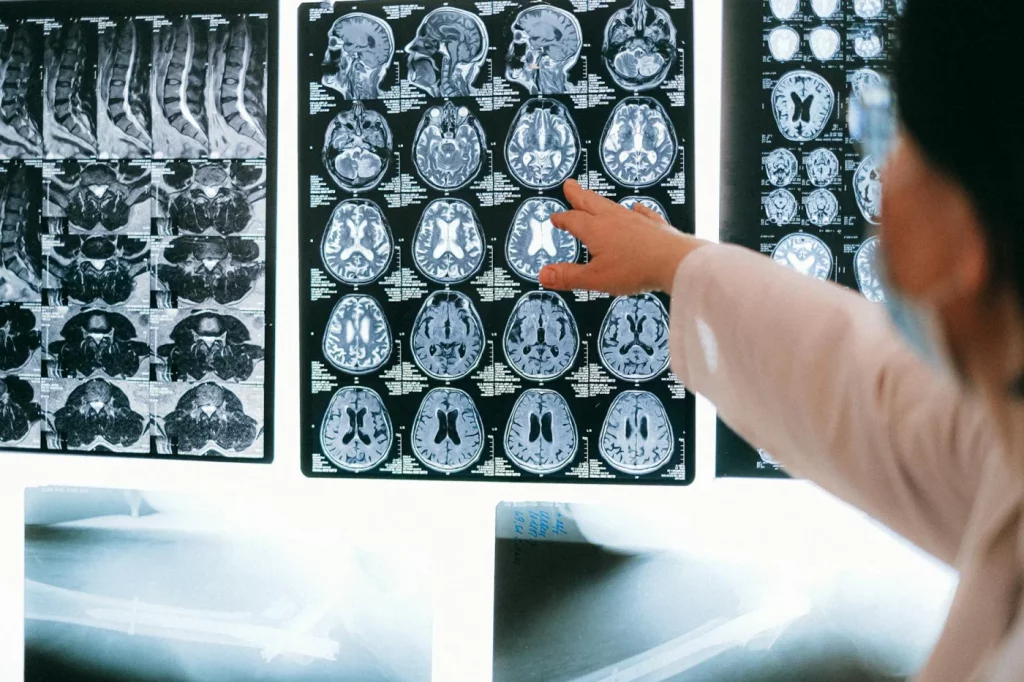
How does anterograde amnesia work? In plain English, it mostly breaks your brain’s ability to turn new experiences into lasting long-term memories after an injury, illness, or other brain disruption. If you’re asking how does anterograde amnesia work, the short answer is this: old memories may stay partly intact, but new facts, events, and conversations often fail to stick.
That’s what makes it so confusing. You might meet someone, talk for ten minutes, and then not remember the interaction later. And according to the National Center for Biotechnology Information’s overview of anterograde amnesia, this problem is usually tied to disrupted memory formation rather than a total wipe of everything you’ve ever known.
So here’s the deal. When people search how does anterograde amnesia work, they’re usually not looking for vague textbook language — they want to know what actually breaks: encoding, consolidation, storage, or retrieval? They also want to know what causes anterograde amnesia, whether it’s permanent, and why some skills can survive even when new episodic memories don’t.
In this article, I’ll walk you through that step by step. You’ll see how normal memory formation works, where improve brain memory strategies fit for healthy learners, why external supports matter in daily life, and how tools people use to build a second brain can help explain practical coping for memory loss. We’ll also cover the hippocampus and anterograde amnesia, retrograde amnesia vs anterograde amnesia, preserved memory systems, daily life examples, diagnosis, and what treatment or management can realistically do.
I’m a software engineer, not a neuroscientist — but I spend a lot of time translating peer-reviewed cognitive science into usable explanations. Personally, I think this topic gets oversimplified far too often. So if you want a patient-friendly, evidence-based answer to how does anterograde amnesia work, you’re in the right place.
This article is educational, not medical advice. If you’re worried about memory loss, sudden confusion, or possible neurological symptoms, please talk to a qualified clinician promptly.
📑 Table of Contents
- What Is Anterograde Amnesia? A Direct Answer to How Does Anterograde Amnesia Work
- How Does Anterograde Amnesia Work in the Memory Pipeline? Encoding, Consolidation, and Storage
- What Part of the Brain Is Affected in Anterograde Amnesia, and Which Memory Types Are Preserved?
- What Causes Anterograde Amnesia? Diagnosis, Prognosis, and Common Mistakes to Avoid
- Living With Anterograde Amnesia: Real-World Application, Daily Examples, and Management
- Retrograde Amnesia vs Anterograde Amnesia: Quick Reference, Key Takeaways, and FAQ
- Frequently Asked Questions
- Conclusion
What Is Anterograde Amnesia? A Direct Answer to How Does Anterograde Amnesia Work
Now we can get specific. If you’re wondering how does anterograde amnesia work, the short answer is this: it mainly disrupts the brain’s ability to turn new experiences into lasting long-term memories after a brain injury, illness, intoxication, or another neurological event. For more on memory and brain health, see our memory and brain health guide.
Snippet Answer: How does anterograde amnesia work?
How does anterograde amnesia work? It’s a disorder of new memory formation: a person can often stay aware in the moment, hold a brief conversation, and keep many older memories, but fail to store what happened well enough to remember it later. That’s the core anterograde amnesia definition in plain English.
So here’s the deal. The problem usually isn’t that every past memory disappears. Instead, the bottleneck is new long-term memory formation, often linked to the hippocampus and nearby medial temporal lobe systems that help encode and stabilize experience over time. If you want a clearer baseline for normal memory function, our guide on improve brain memory helps frame what healthy encoding and recall usually look like.
What people can usually remember — and what they often can’t
Personally, I think this is the part most people get wrong. Someone with anterograde amnesia may know their name, recognize family, speak normally, and follow a short exchange — then ask the same question again 10 minutes later. They might be introduced to you three times in one afternoon, miss a new appointment they just agreed to, or forget where they placed an item moments after setting it down.
But wait. That’s not the same as ordinary distraction, overload, poor sleep, or stress. Those can absolutely hurt recall — and I’ve written before about how fatigue can mimic memory trouble in guides like reset your brain — but clinically significant memory failure is more severe, persistent, and often tied to conditions such as concussion, dementia, seizures, intoxication, or psychiatric disorders.
- Often more preserved: older autobiographical memories, language, habits, and personality traits
- Often more impaired: new episodic memories, recent conversations, and newly learned facts
- Variable by cause: lesion location, severity, and whether other brain systems are also affected
And yes, variability matters. How does anterograde amnesia work in daily life? Differently across people, which is why external supports like notes, calendars, and systems to build a second brain can matter so much.
Why this article is educational, not a diagnosis
I’m a software engineer, not a neurologist. But evidence from clinical references such as MedlinePlus on amnesia symptoms and causes and Mayo Clinic’s overview of amnesia makes the same point: sudden or persistent memory symptoms need professional assessment, not self-diagnosis.
If memory loss appears abruptly, follows a head injury, or keeps interfering with daily life, see a neurologist or neuropsychologist. Self-checking online isn’t enough. Which brings us to the next question: how does anterograde amnesia work inside the memory pipeline itself — during encoding, consolidation, and storage?
How Does Anterograde Amnesia Work in the Memory Pipeline? Encoding, Consolidation, and Storage
The last section defined the condition. Now let’s answer the mechanism more directly: how does anterograde amnesia work inside the memory pipeline itself?

In simple terms, how does anterograde amnesia work? New information can reach awareness for a moment, but the brain often fails to turn that moment into a stable long term memory. If you want a refresher on how healthy memory systems usually work, our guide on improve brain memory gives the broader picture.
How to understand the memory pipeline in anterograde amnesia
- Step 1: Incoming information has to be encoded.
- Step 2: That information has to be consolidated into a more durable trace.
- Step 3: The trace has to be stored across brain networks and later retrieved.
Step 1: Encoding incoming information
Encoding is the brain’s first pass at registering and organizing what you just saw, heard, or thought. It’s the “this matters, tag it” stage of memory encoding. And yes, attention matters a lot — but it isn’t the whole story.
Say you meet a new classmate at 10:00 a.m. She says, “I’m Maya.” You repeat it back, make eye contact, and even think, “OK, remember Maya.” Yet at 10:20 a.m., you may not recall her name. That’s a clean example of encoding consolidation storage memory explained in real life.
This is where people often get confused. If someone can repeat a name right away, doesn’t that prove memory is fine? Not necessarily. Short-term memory and working memory can still function for seconds or minutes, even when long-term memory formation is badly impaired.
Here’s the quick breakdown:
- Short-term memory: brief holding space for a small amount of information
- Working memory: holding and mentally using that information, like repeating a phone number
- Long-term memory: information stored beyond the immediate moment
- Episodic memory: memory for events, like meeting Maya at 10:00 a.m.
- Semantic memory: facts and knowledge, like knowing Paris is in France
- Procedural memory: skills and habits, like typing or riding a bike
So how does anterograde amnesia work at this stage? Often the person is conscious, engaged, and briefly responsive, but the initial encoding may be shallow or unstable enough that later stages never get a fair chance. Which is exactly why many people rely on external supports to build a second brain when memory formation is unreliable.
Step 2: Consolidation into longer-lasting memory
Consolidation is the process that stabilizes a fresh memory after encoding. Personally, I think this is the clearest answer to how does anterograde amnesia work: the weak link is often not awareness itself, but the conversion of a fragile trace into durable long-term memory.
This stage depends heavily on medial temporal lobe structures, especially the hippocampal system. Research summarized in the NCBI overview of anterograde amnesia describes how damage in these regions disrupts new declarative memory formation.
And here’s the kicker — sleep normally supports memory consolidation in healthy brains, but sleep hacks are not a treatment for neurological amnesia. If memory loss is persistent or sudden, consult a qualified clinician. This is educational content, not medical advice.
The classic historical case is Henry Molaison, known as H.M. After bilateral medial temporal lobe surgery, he could hold a conversation briefly but could not reliably form new declarative long-term memories. His case, documented in the historical record on Henry Molaison, helped researchers separate working memory from long-term memory formation.
Step 3: Storage and later retrieval
Storage is not a single shelf in one brain spot. Long-term storage is distributed across networks involved in perception, language, emotion, and meaning. The hippocampus and anterograde amnesia story makes more sense when you think of the hippocampus as a gateway, not a warehouse.
Well, actually, that distinction explains a lot. Older memories may survive because they were already consolidated and distributed before the injury. New memories fail because the gateway that helps bind them into a retrievable record is damaged.
So, how does anterograde amnesia work when someone seems normal in conversation? They may retrieve older semantic knowledge, use working memory for the current exchange, and still lose the episode minutes later. That’s how anterograde amnesia affects memory formation without wiping out every kind of memory.
Why repetition doesn’t always solve the problem
In healthy learners, repetition helps because encoding is intact and each review strengthens consolidation and retrieval. That’s why tools like the 2 7 30 memory rule can work well for studying. But wait — in encoding vs consolidation in anterograde amnesia, repetition may help far less because the memory trace never stabilizes properly.
Procedural learning can sometimes be relatively preserved even when episodic and other declarative long term memory formation is severely impaired. So a person may improve on a task through practice yet still not remember doing the practice before. Strange? Yes. But that pattern is one of the strongest clues for how does anterograde amnesia work.
If daily functioning is affected, digital prompts and note systems may help compensate, and some people explore the best second brain apps for reminders and external tracking. Just don’t confuse study methods or productivity tools with medical treatment for amnesia.
Which brings us to the next question: if this pipeline breaks down, what brain regions are usually involved, and which memory types are often preserved?
What Part of the Brain Is Affected in Anterograde Amnesia, and Which Memory Types Are Preserved?
In the previous section, we looked at where memory formation breaks down. Now we can answer the anatomy question directly: if you want to understand how does anterograde amnesia work, start with the hippocampus and the wider memory network around it.
That matters because anterograde amnesia usually isn’t a whole-brain shutdown. It’s more like damage to the systems that turn new experiences into lasting declarative memories. If you want a broader picture of normal memory formation first, see our guide on how to improve brain memory.
📋 Quick Reference
Main regions: the hippocampus, nearby medial temporal lobe structures, and connected diencephalic circuits are most often involved.
Usually impaired: new episodic memory, and often some forms of new semantic learning.
Often partly preserved: short-term working memory for a few seconds, procedural learning, and some habit learning.
Important catch: preserved does not mean normal. A person may improve on a task without remembering ever practicing it.
Hippocampus and medial temporal lobe explained simply
The hippocampus is often described as a relay or indexing system for new declarative memories. In plain English, it helps tag and bind the details of an event so your brain can store and later retrieve what happened, where, and when. That’s a core part of how does anterograde amnesia work.
The hippocampus sits in the medial temporal lobe alongside structures such as the entorhinal and parahippocampal cortices. Reference overviews from NCBI Bookshelf neuroscience texts and Britannica’s overview of the hippocampus both describe this region as central for forming new explicit memories.
And yes, this is why hippocampus and anterograde amnesia are so tightly linked. The classic historical case is H.M., who developed profound difficulty forming new long-term declarative memories after bilateral medial temporal lobe surgery. But wait, that doesn’t mean every patient looks like H.M. Lesion size, exact location, and cause all change the pattern.
One practical way to think about it: your working memory may still hold a phone number for a few seconds, but the handoff into durable memory fails. That’s also why external supports help. Some people function better when they build a second brain with notes, reminders, and routines that reduce dependence on fragile new memory formation.
Other brain structures involved
If you’re asking what part of the brain is affected in anterograde amnesia, the answer isn’t only the hippocampus. Damage to the diencephalon, especially the thalamus and mammillary bodies, can also disrupt memory circuits badly enough to produce major anterograde memory problems.
This shows up clearly in Wernicke-Korsakoff syndrome, which is associated with thiamine deficiency, often linked to severe alcohol misuse. In those cases, injury to diencephalic circuits can impair new learning, attention, and retrieval in a different mix than a more focal medial temporal lesion. So how does anterograde amnesia work when the cause changes? The symptoms shift with the network that’s injured.
Three things matter: location, severity, and cause. A stroke affecting thalamic pathways may look different from herpes encephalitis affecting medial temporal tissue. Traumatic brain injury can add attention and executive problems on top of memory loss, which makes daily life even messier.
Speaking of networks, memory isn’t isolated from other brain functions. Different regions specialize, interact, and compensate unevenly — which is also why our article on brain parts and motivation can be useful background if you’re mapping cognitive roles across the brain.
Table: affected vs preserved memory systems
Here’s the short answer to what type of memory is preserved in anterograde amnesia: procedural memory is often relatively preserved. That’s why some patients can people with anterograde amnesia learn new skills, at least to a degree, even when they can’t consciously remember training sessions. But preserved doesn’t mean untouched or fully normal.
| Memory system | Typical status | Practical example |
|---|---|---|
| Episodic memory | Often clearly impaired | You meet a nurse in the morning and don’t remember the meeting by lunch. |
| Semantic memory | New learning variably impaired | You may struggle to learn a new coworker’s name or a new fact reliably. |
| Working memory | Often partly preserved | You can repeat a short instruction right away, then lose it minutes later. |
| Procedural memory | Often relatively preserved | You improve on a mirror-tracing task without remembering prior practice. |
| Habit learning | Sometimes partly preserved | You become faster with a routine route or button sequence, but can’t explain when you learned it. |
- Declarative memory depends heavily on medial temporal and related diencephalic systems.
- Procedural memory relies more on circuits involving the basal ganglia and cerebellum.
- That split is a big part of how does anterograde amnesia work in daily life.
And here’s the kicker — how does anterograde amnesia work is really a network question, not just a single-structure question. Next, we’ll look at what causes these injuries, how diagnosis is made, and which common mistakes lead people to misunderstand prognosis.
What Causes Anterograde Amnesia? Diagnosis, Prognosis, and Common Mistakes to Avoid
In the last section, we looked at the brain systems behind new memory formation. Which brings us to the practical question: how does anterograde amnesia work when those systems are damaged, stressed, or temporarily disrupted?

At the simplest level, how does anterograde amnesia work? New experiences get noticed, but the brain struggles to encode and stabilize them into lasting memories. If you want a broader picture of how healthy memory normally works, see how to improve brain memory—because the contrast makes this disorder much easier to understand.
Major causes clinicians look for first
When doctors ask what causes anterograde amnesia, they start with the causes that can injure the hippocampus, medial temporal lobe, thalamus, or connected memory circuits. And yes, some of these are emergencies.
- Traumatic brain injury, including concussion, severe brain injury, and head trauma
- Stroke affecting memory-related regions
- Encephalitis and other brain infections
- Seizures, especially temporal lobe seizures
- Neurosurgery involving medial temporal structures
- Hypoxia, where the brain gets too little oxygen after overdose, cardiac arrest, or respiratory failure
- Drug intoxication or sedative medications, especially benzodiazepines
- Alcohol-related brain damage and thiamine deficiency, classically linked to Korsakoff syndrome
- Transient causes, including post-ictal states and some short-lived toxic or metabolic problems
But wait. Not every case is permanent structural damage. A person might seem fine socially, answer simple questions, and still fail to retain what happened five minutes earlier. That’s part of how does anterograde amnesia work: attention can look intact while memory consolidation is badly impaired.
Research summaries in NCBI’s overview of anterograde amnesia note that causes range from focal lesions to intoxication and nutritional deficiency. Personally, I think this is where many readers get tripped up—they assume “memory problem” means normal forgetfulness, not a neurological disorder.
How doctors diagnose anterograde amnesia
So how do doctors diagnose anterograde amnesia? First, they take a careful history: when the memory change started, whether it followed brain injury, seizure, intoxication, surgery, infection, or sudden neurological symptoms, and what medications or substances were involved.
Then comes the neurological exam and cognitive testing. A neurologist may check language, orientation, attention, eye movements, strength, and coordination, while a neuropsychologist uses structured memory tests to compare immediate recall, delayed recall, recognition, and learning across trials.
Imaging matters too. CT may be used first in emergencies, especially after head trauma, but MRI is often better for seeing hippocampal injury, stroke, inflammation, or surgical changes. Lab work can help uncover infection, metabolic problems, liver issues, vitamin deficiency, or toxic exposure.
Self-diagnosis isn’t enough. If memory problems are affecting daily life, external supports can help with functioning—I’m thinking note systems, reminders, and routines, similar to how people build a second brain—but those supports do not replace medical evaluation.
Is anterograde amnesia permanent or temporary?
Is anterograde amnesia permanent or temporary? Well, actually, it can be either. Prognosis depends on the cause, lesion location, severity, age, how quickly treatment starts, and whether the underlying problem is reversible or ongoing.
Some cases improve over time. Sedative-related memory impairment, post-seizure confusion, transient metabolic problems, and some inflammatory conditions may partly recover if the cause is treated. Structural injury from stroke, severe brain injury, prolonged hypoxia, or major medial temporal damage is more likely to leave lasting deficits.
That said, evidence for recovery is mixed and shouldn’t be oversold. If you’re wondering how does anterograde amnesia work over months or years, the honest answer is that outcomes vary widely, and your clinician is the right person to discuss prognosis and anterograde amnesia treatment options.
Common mistakes and what to avoid
This is the part most people get wrong. They assume every memory complaint is stress, poor sleep, distraction, or digital overload. Sometimes that’s true, but how does anterograde amnesia work in real clinical cases? The person repeatedly fails to form new lasting memories even when the information was just presented clearly.
A few mistakes to avoid:
- Don’t rely on internet self-diagnosis after sudden amnesia symptoms.
- Don’t treat supplements, alertness tricks, or productivity hacks as anterograde amnesia treatment.
- Don’t ignore abrupt memory loss after injury, seizure, intoxication, or stroke-like symptoms.
Speaking of which—articles about nootropics can be interesting, and I’ve reviewed topics like best brain supplements, but supplements are not proven fixes for true anterograde amnesia. For sudden or severe memory change, get urgent medical care instead of experimenting on yourself.
Next, we’ll shift from causes and diagnosis to daily life: what this condition looks like hour to hour, and how people manage it in the real world.
Living With Anterograde Amnesia: Real-World Application, Daily Examples, and Management
After causes, diagnosis, and prognosis, the practical question is simpler: how does anterograde amnesia work in ordinary life? The short answer is that the brain can still perceive, think, and often perform familiar routines, but it struggles to encode and consolidate new experiences into lasting memory, especially when the hippocampus and nearby medial temporal lobe structures are damaged.
What daily life can actually look like
If you want to understand how does anterograde amnesia work, look at the gap between the present moment and what survives a few minutes later. A person may have a normal conversation, ask your name, and seem fully engaged — then ask again 10 minutes later because the interaction never became a stable new memory.
At home, anterograde amnesia daily life examples often include missed appointments, repeated questions, and forgotten instructions like “take the folder to the car” or “the plumber is coming at 2.” But older habits may stay intact. Someone might still make tea the same way every morning, lock the front door automatically, or type a long-familiar password without being able to explain when they learned it.
At school or work, the effects of anterograde amnesia can be subtle at first. A student may follow a lecture in real time but forget the assignment details by afternoon. An employee may handle a well-practiced routine yet lose track when tasks change, meetings move, or verbal instructions come too quickly.
- Repeated introductions or repeated conversations
- Forgetting new names, schedules, or recent events
- Preserved older memories and overlearned routines
- Heavy reliance on notes, alarms, labels, and prompts
That pattern matters. It shows how does anterograde amnesia work step by step: attention may be present, but encoding is fragile, consolidation is disrupted, and storage of new episodic memories often fails.
What learning may still be possible
Here’s the part many people miss. Anterograde amnesia does not always erase all forms of new learning.
Research going back to classic patient studies, including work summarized by NCBI, shows that some people can improve on repeated tasks without consciously remembering prior practice. The famous mirror-tracing example is the usual one: performance gets better across sessions, even when the person insists they’ve never done the task before.
So can people with anterograde amnesia learn new skills? Sometimes, yes — especially habits, motor routines, and procedural skills. That’s because procedural memory often depends more on brain systems such as the basal ganglia and cerebellum than on the hippocampus alone.
Personally, I think this is one of the clearest ways to explain how does anterograde amnesia work. New explicit memories — “I remember doing this yesterday” — may be impaired, while gradual skill learning can still happen through repetition. That difference also explains why structured routines help so much.
From experience: why external memory systems matter
From building learning tools at FreeBrain, I’ve seen the same principle over and over: when memory is unreliable, the environment has to carry more of the load. For people living with anterograde amnesia, supports like calendars, checklists, pill organizers, labeled drawers, and one trusted capture system can make daily functioning far more stable.
And yes, this is where external systems shine. If you’re thinking about how to build a second brain, the useful idea here is not productivity for its own sake; it’s making important information visible, repeatable, and hard to lose.
But wait. These tools are supports, not treatment. They can improve daily functioning, reduce stress, and lower caregiver burden, but they do not repair damaged memory circuits or replace medical evaluation.
Caregiver, school, and workplace accommodations
The best accommodations are boring in the best possible way: consistent, visible, and predictable. For living with anterograde amnesia, that usually means fewer context switches, more written instructions, and repetition followed by verification — “Can you show me what the next step is?” rather than “Do you remember?”
Useful accommodations often include:
- Fixed daily routines and consistent locations for essential items
- Short written instructions instead of verbal-only directions
- Phone alarms for appointments, meals, and transitions
- Labeled storage and step-by-step checklists
- School disability services or workplace adjustments when needed
- Occupational therapy for practical compensatory strategies
Medication review also matters, especially if sedating drugs, alcohol use, sleep problems, or neurological injury may be contributing. This enters medical territory, so any medication concerns or treatment decisions should go through a qualified clinician. Anterograde amnesia treatment usually focuses on the underlying cause plus individualized supports, not a single fix.
So, how does anterograde amnesia work in the real world? It disrupts new memory formation while often sparing older knowledge and some procedural learning, which is exactly why routines and accommodations can help so much. Which brings us to the next question: how is that different from retrograde amnesia?
Retrograde Amnesia vs Anterograde Amnesia: Quick Reference, Key Takeaways, and FAQ
After the day-to-day examples, this is the fast summary most readers need. If you’re still asking how does anterograde amnesia work, the short answer is that it mainly disrupts forming new long-term declarative memories after the brain injury or illness.

Table: difference between anterograde and retrograde amnesia
| Feature | Retrograde amnesia | Anterograde amnesia |
|---|---|---|
| Timeline | Memory loss for events before injury | Trouble making new memories after injury |
| Main problem | Accessing stored past memories | Encoding and consolidating new information |
| Common symptoms | Missing autobiographical facts, patchy life history | Repeating questions, forgetting recent conversations |
| What may remain intact | Ability to learn new information may be partly preserved | Procedural learning, habits, and older memories may remain |
That’s the core of retrograde amnesia vs anterograde amnesia. The difference between anterograde and retrograde amnesia is really a before-versus-after timeline. Research tied to the famous patient H.M., summarized by PubMed, helped show how does anterograde amnesia work through damage involving the hippocampus and medial temporal lobe.
Quick Reference: what to remember
📋 Quick Reference
- Memory isn’t one system. Episodic and semantic memory are often hit harder than procedural memory.
- The hippocampus acts like a gateway for memory formation. That’s a big part of how does anterograde amnesia work.
- Cause matters: trauma, stroke, infection, and oxygen loss can produce different patterns.
- External supports can help daily function. For practical strategies, see our guide on improve brain memory.
- If sudden memory problems appear, seek medical evaluation promptly. This article is educational, not a diagnosis.
So, what type of memory is preserved in anterograde amnesia? Often skills and routines. And yes, that’s why someone may learn a motor task better over time while still not remembering practicing it. If you’ve been wondering how does anterograde amnesia work, think: impaired new memory formation, not total memory erasure.
Next, I’ll wrap up the most common questions and the practical bottom line.
Frequently Asked Questions
How does anterograde amnesia work?
If you’re asking how does anterograde amnesia work, the short answer is this: it mainly disrupts the brain’s ability to form new long-term memories after a brain event, even when short-term awareness still seems normal. A person may hold information in mind for seconds or minutes, then fail to recall it later because the hippocampus or related memory-network structures aren’t encoding and consolidating it properly.
What causes anterograde amnesia?
When people ask what causes anterograde amnesia, the list includes traumatic brain injury, stroke, brain infection, seizures, surgery, hypoxia, alcohol-related thiamine deficiency, and some drugs that impair memory formation. And here’s the key part: cause matters because prognosis and treatment depend on it. If memory loss starts suddenly, urgent medical evaluation is important. To understand the mechanism behind these causes, it also helps to ask how does anterograde amnesia work in the first place.
What part of the brain is affected in anterograde amnesia?
The main structures involved are the hippocampus and the medial temporal lobe, which help turn new experiences into lasting memories. In some cases, thalamic and other diencephalic circuits are also affected, especially in conditions like Korsakoff syndrome. So when you ask what part of the brain is affected in anterograde amnesia, the exact symptoms depend on where the damage sits within the broader memory network—and that’s central to understanding how does anterograde amnesia work.
What type of memory is preserved in anterograde amnesia?
If you’re wondering what type of memory is preserved in anterograde amnesia, procedural memory is often relatively preserved, and working memory may remain partly intact over short intervals. That means someone may still learn routines or motor patterns and briefly hold information in mind, even while struggling to store new long-term episodic memories. Preserved doesn’t mean fully normal, though, which is exactly why how does anterograde amnesia work has a more nuanced answer than most people expect.
What is the difference between retrograde and anterograde amnesia?
The difference between anterograde and retrograde amnesia comes down to when memory is affected. Retrograde amnesia disrupts access to memories formed before an injury or illness, while anterograde amnesia mainly disrupts the formation of new long-term memories after it. Some people have both at the same time, which can make the pattern look confusing unless you understand how does anterograde amnesia work alongside older-memory loss.
Is anterograde amnesia permanent or temporary?
Is anterograde amnesia permanent or temporary? It can be either. Reversible causes—such as medication effects, seizures, or some metabolic problems—may improve, while structural brain injury can leave lasting deficits. Outcomes vary a lot by cause, severity, and speed of treatment, so a specialist evaluation matters. For a broader overview of memory systems, you can read this NCBI overview of amnesia, and it also helps clarify how does anterograde amnesia work.
Can people with anterograde amnesia learn new skills?
Yes—can people with anterograde amnesia learn new skills? In some cases, they can still improve at habits, mirror-tracing tasks, or motor routines without consciously remembering the practice sessions. That happens because procedural learning relies on systems that can remain more intact than episodic memory networks, though this varies by cause and lesion location. Which brings us back to how does anterograde amnesia work: it often blocks conscious new-memory formation more than skill learning.
How do doctors diagnose anterograde amnesia?
How do doctors diagnose anterograde amnesia? Usually through a combination of medical history, neurological exam, cognitive testing, brain imaging, medication review, and lab work to look for reversible causes. Neurologists and neuropsychologists often help sort out the pattern, because self-diagnosis is unreliable and memory problems can have several explanations. If you want a practical way to think about memory performance day to day, FreeBrain’s memory content hub can help—but for symptoms, how does anterograde amnesia work should be assessed by a qualified clinician.
Conclusion
If you want the short version of how does anterograde amnesia work, here it is: the main problem usually isn’t old memories disappearing, but new long-term memories failing to stick after the brain’s encoding and consolidation process is disrupted. That means four practical takeaways matter most. First, separate preserved skills and habits from impaired new episodic memory, because people may still learn routines with repetition. Second, focus on external memory supports like written cues, alarms, checklists, and consistent environments. Third, don’t confuse anterograde amnesia with ordinary forgetfulness, distraction, or retrograde amnesia. And fourth, get a proper medical evaluation when symptoms appear suddenly or after injury, because the cause shapes prognosis and management.
And honestly, this is the part I think matters most: understanding how does anterograde amnesia work can make the condition feel less mysterious and less overwhelming. If you’re dealing with this yourself, or supporting someone who is, progress often comes from structure, patience, and small repeatable systems rather than willpower. Some days will be messy. That doesn’t mean nothing is working. With the right strategies, many people can reduce daily friction and build more stability than they first expect.
If you want to keep learning, explore more evidence-based guides on FreeBrain.net. You might start with Retrograde Amnesia vs Anterograde Amnesia for a clearer comparison, then read How Memory Consolidation Works to better understand the memory pipeline behind how does anterograde amnesia work. Read the next guide, apply one strategy today, and turn insight into action.