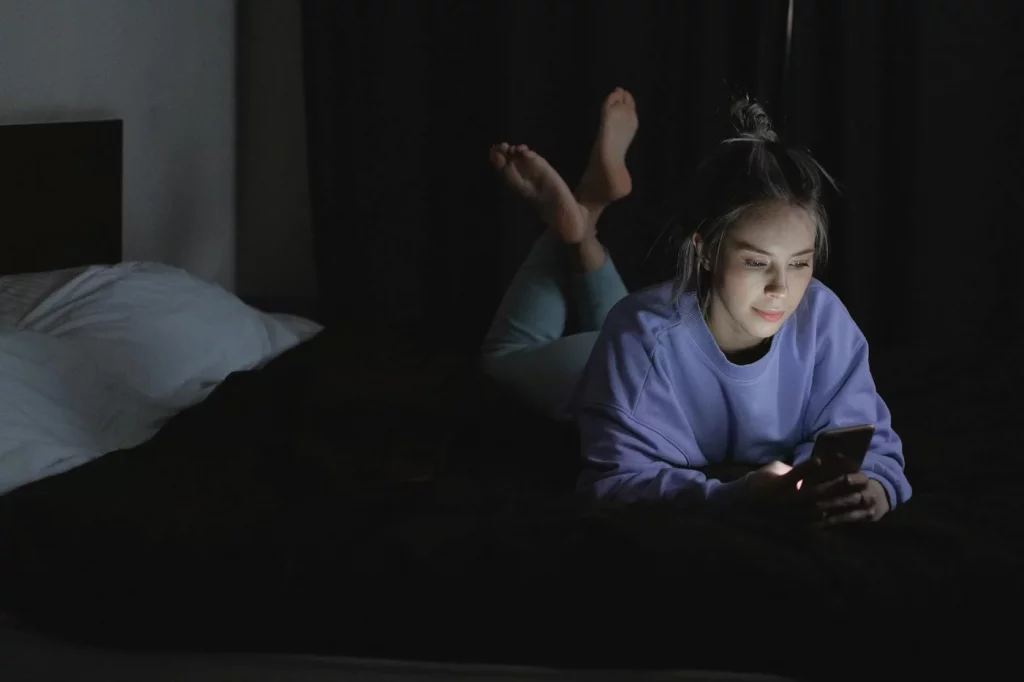
If you want to stop bedtime scrolling fast, start here: revenge bedtime procrastination usually isn’t a discipline problem. It’s what happens when your brain tries to reclaim free time late at night, even when you’re tired. The quickest fix for revenge bedtime procrastination is simple: set a phone cutoff, move your phone out of reach, and swap scrolling for a pre-decided, low-effort wind-down routine you can do half-awake.
You probably know the scene. You get in bed planning to sleep, open your phone for “just a minute,” and suddenly it’s 12:47 a.m., your eyes are tired, your mind is wired, and you’re still scrolling. And here’s the kicker — bedtime doomscrolling often feels like rest, but research on bedtime procrastination suggests it’s more tied to stress, self-control fatigue, and delayed autonomy than actual recovery; even background on bedtime procrastination and related sleep behavior helps explain why this pattern is so sticky.
In this article, you’ll learn what revenge bedtime procrastination actually is, why you doom scroll before bed, and how to stop doomscrolling before bed without turning your evenings into a willpower contest. I’ll walk you through a realistic 7-step shutdown routine, the 3:2:1 rule before bed, ADHD-aware adjustments, and better replacements for your nighttime scrolling habit based on whether you feel stressed, overstimulated, or mentally fried. If reducing screen time at night is part of the problem, this guide pairs well with our practical take on a digital detox for students.
You’ll also get clear answers to the questions people actually ask: how bad is scrolling before bed, what happens when you stop doomscrolling, and how to turn off your mind at bedtime without forcing it. Speaking of which — if you struggle to make a bedtime routine stick, I’ll show you how to attach it to an existing cue using this habit stacking template, which makes revenge bedtime procrastination much easier to interrupt.
I’m a software engineer, not a neuroscientist, but I spend a lot of time translating sleep and behavior research into practical systems people can actually use. This article is educational, not medical advice, and if your sleep problems feel severe, persistent, or tied to anxiety, ADHD, or another health issue, it’s worth talking to a qualified professional.
📑 Table of Contents
- Why revenge bedtime procrastination happens in the first place
- What revenge bedtime procrastination does to sleep quality and focus
- How to stop doomscrolling before bed: 7 proven steps
- A bedtime shutdown routine that works in real life
- Common mistakes that keep revenge bedtime procrastination going
- Quick reference: revenge bedtime procrastination fixes, ADHD notes, and FAQs
- Frequently Asked Questions
- Conclusion
Why revenge bedtime procrastination happens in the first place
Now that the basic idea is on the table, here’s the plain-English version. Revenge bedtime procrastination is delaying sleep to reclaim personal time after a day that felt controlled, draining, or unfinished. For more on productivity and focus, see our productivity and focus guide.
A simple definition that matches real life
That’s the core revenge bedtime procrastination pattern: “I finally get time to myself, so I don’t want the day to end.” If you’ve ever wondered about the late night scrolling meaning behind your habits, it’s usually less about laziness and more about delayed autonomy.
But wait. Revenge bedtime procrastination isn’t exactly the same as bedtime doomscrolling, and it’s not the same as choosing to stay up late on purpose. Watching one planned episode and going to bed at 11:30 is different from opening TikTok or Reddit at 10:35 “for five minutes” after work, then looking up at 11:50.
That second pattern is what many students and knowledge workers know too well. You finish tasks at 10:30 p.m., feel mentally wrung out, pick up your phone before sleep, and lose 45 to 90 minutes in bed without ever deciding to do it.
Research suggests bedtime screen use can hurt sleep through both mental arousal and light exposure. But personally, I think this is the part most people miss: behavior and stress are often the bigger driver than blue light alone, as explained in Sleep Foundation’s overview of revenge bedtime procrastination and broader PubMed research on screen use and sleep.
The fastest fix if you want results tonight
The fastest answer to how to stop doomscrolling before bed is simple: set a phone cutoff, move the phone out of reach, and replace scrolling with a pre-decided low-effort routine. So here’s the deal — make scrolling harder, make sleep easier, reduce decisions at night.
- Set a hard phone cutoff 30 to 60 minutes before bed
- Charge your phone across the room or outside the bedroom
- Pick 2 backup activities: shower, fiction, stretching, or music
- Attach the routine to an existing cue using this habit stacking template
- If your days feel constantly depleted, start with a realistic digital detox for students approach instead of an all-or-nothing ban
Quick disclaimer: this article is educational, not medical advice. If insomnia, anxiety, or compulsive phone use keeps showing up, talk with a qualified professional.
And that raises the next question: what does revenge bedtime procrastination actually do to your sleep quality, attention, and next-day focus?
What revenge bedtime procrastination does to sleep quality and focus
So now we know why it starts. The next question is what revenge bedtime procrastination actually does once it turns into a nightly pattern.
Short version: revenge bedtime procrastination often pushes sleep later, makes it harder to fall asleep, and leaves your attention worse the next day. And no, it’s not just about “too much screen time.” The mix of stress before bed, novelty, light, and emotional stimulation matters more than the device alone.
Why phones feel easier than sleep
When you’re depleted, your phone asks almost nothing from you. Sleep, weirdly, asks for a transition: stop working, tolerate unfinished tasks, sit with your thoughts, and let stimulation drop. That’s exactly why do we doom scroll before bed so often after demanding days.
This isn’t best explained as “dopamine addiction.” Well, actually, that’s too simplistic. A better frame is a dopamine loop and habit loop built on variable rewards: one funny clip, one upsetting headline, one message, one useful tip. You don’t know what’s next, so your brain keeps sampling.
And here’s the kicker — variable rewards are especially sticky when self-control is low. The American Psychological Association notes that stress changes behavior in ways that can push people toward short-term relief over long-term goals, which fits the late-night scrolling pattern well; see APA resources on stress and behavior.
Three things usually drive revenge bedtime procrastination at night:
- Stress relief: your brain wants a fast off-ramp from pressure.
- Unfinished tasks: you avoid sleep because tomorrow starts the obligation cycle again.
- Low-friction stimulation: scrolling is easier than choosing a real wind-down activity.
Personally, I think this is the part most people get wrong. They treat bedtime scrolling as a willpower issue, when it’s often an energy-management issue. If your evenings feel overcontrolled, a realistic phone boundary matters more than a perfect routine, which is why approaches like a digital detox for students can work better than just “trying harder.”
How bad is scrolling before bed, really?
It depends on what you’re doing, for how long, and how close it is to sleep. A planned 20 minutes of reading on an e-reader with dim warm light is very different from 60 minutes of algorithmic short-form video in bed. Same screen category, very different effect.
So, how bad is scrolling before bed? Moderate screen use isn’t automatically disastrous, but revenge bedtime procrastination tends to combine the worst ingredients: blue light exposure, emotional arousal, time loss, and constant novelty. That combo can increase sleep onset latency, which is just the time it takes you to fall asleep after lights out.
Research on bedtime media use has linked screen-based engagement with later sleep timing and shorter sleep duration; a useful overview is available through PubMed Central research on media use and sleep. CDC and Mayo Clinic sleep guidance also consistently recommend reducing stimulating screen use before bed because both light and mental activation can interfere with sleep quality.
But wait. Brightness isn’t the whole story. Even if you reduce blue light exposure, emotionally loaded content can keep your nervous system activated. That hyperarousal shows up as a racing mind, a “second wind,” or that annoying feeling of being tired but not sleepy.
In practical terms, revenge bedtime procrastination can lead to:
- Later melatonin suppression recovery if bright light is intense and prolonged
- Longer sleep onset latency
- More fragmented wind-down time
- Worse next-day attention, patience, and working memory
What changes when you stop bedtime doomscrolling
What happens when you stop doomscrolling? Many people notice benefits fast — often within 3 to 7 days. Shorter sleep onset latency, fewer “second wind” nights, and better morning focus are common, though results vary based on stress, caffeine, and overall sleep debt.
And yes, the next-day gains are real. Better sleep supports attention control, emotional regulation, and brain function and memory, so revenge bedtime procrastination doesn’t just steal time at night; it can quietly tax your learning and focus the next morning.
If sleep problems continue even after you reduce revenge bedtime procrastination, talk to a qualified healthcare professional. That’s especially important if you suspect insomnia, anxiety, ADHD-related sleep issues, or another condition affecting sleep quality.
Which brings us to the practical part: how to stop doomscrolling before bed without relying on motivation you won’t have at 11:47 p.m.
How to stop doomscrolling before bed: 7 proven steps
If the last section explained the damage, this is the fix. To break revenge bedtime procrastination, you need fewer decisions at night and more friction between you and the feed.
And yes, that matters because willpower is usually weakest right when revenge bedtime procrastination shows up. If you want a broader screen-boundary plan, start with this guide to digital detox for students, then use the seven steps below at bedtime.
How to stop revenge bedtime procrastination in 7 steps
- Step 1: Set a phone cutoff time 30-60 minutes before sleep.
- Step 2: Use the phone parking method.
- Step 3: Make your feed harder to access.
- Step 4: Replace scrolling with a low-friction wind-down activity.
- Step 5: Do a 15-minute brain dump.
- Step 6: Use an implementation intention.
- Step 7: Reduce notification and cue triggers.
Steps 1-3: Cut access before willpower runs out
Step 1: Set a cutoff time. For most people, 30-60 minutes before sleep is the sweet spot. It fits the spirit of the 3:2:1 rule, but your exact timing should match your chronotype and timing, not someone else’s ideal schedule.
Examples help. If you’re a student sleeping at 11:30 p.m., cutoff is 10:45 or 11:00. If you’re a remote worker aiming for midnight, cutoff is 11:00 to 11:30. Night owl? Fine — keep the same gap, just shift it later. That’s how to stop doomscrolling before bed without pretending you’ll suddenly become a 9:30 p.m. person.
Step 2: Use the phone parking method. Charge your phone across the room or, better, outside the bedroom. Replace it with a cheap alarm clock so your brain can’t argue, “But I need my phone for the morning.”
Step 3: Make feeds harder to access. Log out of your most tempting apps, remove them from the home screen, switch your phone to grayscale, and add app limits. A 2022 review in PubMed-indexed behavioral research supports a simple idea: small increases in friction can reduce automatic habits.
Quick sidebar: a lot of Reddit-style advice is right for the wrong reason. People report that charging the phone outside the bedroom or switching to grayscale helps because it adds friction, not because it’s magic. And friction is exactly what revenge bedtime procrastination needs.
Steps 4-5: Replace the habit, don’t just remove it
Step 4: Swap scrolling for a low-friction wind-down routine. Don’t remove a nighttime scrolling habit and leave a hole. Fill it with something easier than opening TikTok: paper fiction, light stretching, a warm shower, a crossword, two lines of journaling, or calming audio with the screen off.
Personally, I think this is the part most people get wrong. They ask how to stop doomscrolling in bed, but they don’t choose what happens instead. If you’re mentally fried, try one tiny replacement and attach it to an existing cue using this habit stacking template.
- Low energy: calming audio, shower, fiction
- Restless energy: stretching, short walk, crossword
- Busy mind: journaling, paper to-do list, brain dump
Step 5: Do a 15-minute brain dump. This helps if revenge bedtime procrastination is really unfinished-task rumination wearing a social media costume. Use three columns on paper: worries, tasks, next action.
Example: “Worry: I forgot something for class. Task: check assignment portal. Next action: do it at 9:30 a.m.” Research on expressive writing and pre-sleep planning suggests that getting pending concerns out of working memory can reduce bedtime cognitive arousal.
Steps 6-7: Use cues and environment design
Step 6: Write an implementation intention. Keep it stupidly specific: “If I get into bed and want to scroll, then I will plug in my phone and read 3 pages.” That’s how to stop revenge bedtime procrastination when your brain is bargaining.
Step 7: Cut notification triggers. Disable nonessential notifications after 9 p.m., turn on Focus mode, and remove visual cues like badges and lock-screen previews. Mindless scrolling is often cue-driven, not desire-driven.
So here’s the deal. The best fix for revenge bedtime procrastination is boring on purpose: fewer cues, less access, and a replacement routine you can do half-asleep. Next, I’ll show you how to turn those pieces into a bedtime shutdown routine that works in real life.
A bedtime shutdown routine that works in real life
If the last section helped you stop the scroll, this is the part that replaces it. To reduce revenge bedtime procrastination, you need a bedtime routine that works when you’re tired, annoyed, and running on low self-control.

From experience: why generic “just put your phone away” advice fails
After building learning tools for stressed students and knowledge workers, I kept seeing the same pattern. Revenge bedtime procrastination usually isn’t just a “bad habit.” It’s a collision between decision fatigue, unfinished work loops, and the phone becoming your default transition activity.
That’s why vague advice falls apart. “Just don’t use your phone” sounds simple, but at 11:47 p.m. your brain isn’t looking for discipline — it’s looking for relief, closure, or a tiny sense of control. And if you haven’t pre-decided what happens instead, your nighttime scrolling habit wins by default.
Personally, I think this is the part most people get wrong. They treat evenings like motivation problems when they’re really friction problems. A good bedtime routine removes choices, lowers stimulation, and gives your brain a clear off-ramp.
There’s also a stress angle. If your whole day felt controlled by deadlines, messages, or other people’s demands, late-night autonomy starts to feel rewarding. That’s one reason revenge bedtime procrastination often shows up alongside burnout; if that sounds familiar, it may help to also read how to recover from burnout.
📋 Quick Reference
A shutdown routine works best when it does three things: closes open loops, lowers stimulation, and removes decisions. Don’t rely on willpower at night. Pre-decide the sequence, keep it short, and make the first step easier than opening an app.
The 30-minute shutdown routine
Here’s a realistic 30-minute wind-down routine. It’s simple on purpose. Consistency matters more than perfection, especially if revenge bedtime procrastination has been your default for months.
- 0-5 minutes: Prep the environment. Plug your phone in across the room, dim lights, put water by the bed, and set out what you need for the morning. This is your digital detox before bed trigger.
- 5-10 minutes: Do a brain dump. Write down unfinished tasks, worries, and tomorrow’s top 1-3 priorities on paper. Research on expressive writing and worry scheduling suggests that externalizing concerns can reduce cognitive arousal before sleep; a commonly cited study from Baylor University found that writing a to-do list before bed helped people fall asleep faster.
- 10-20 minutes: Hygiene and light movement. Brush teeth, wash face, shower if needed, then do 3-5 minutes of easy stretching. Nothing intense. The goal is to shift state, not “work out.”
- 20-30 minutes: Low-stimulation activity. Read fiction, do a puzzle book, listen to calm audio with the screen off, or sit with soft music and low light. Think boring in the best possible way.
Want a timing rule? A solid pre-sleep routine usually means screens off about 30 minutes before bed, though some people need longer. And yes, if your mind is racing, the brain dump matters more than the perfect skincare sequence.
What if you miss a step? Fine. Do the next one anyway. Revenge bedtime procrastination gets weaker when your evenings become predictable, not when they become flawless.
A 15-minute version and replacement options by mood
Busy night? Then use the compressed version. A short routine you’ll actually do beats an ideal one you skip.
- 0-3 minutes: Phone away, lights dim, room reset.
- 3-6 minutes: Write down loose ends and tomorrow’s first task.
- 6-10 minutes: Brush teeth, wash up, quick stretch.
- 10-15 minutes: One calming activity, no switching.
Now this is where it gets interesting. The best replacement depends on your state, not your intentions. If you’re wondering how to turn off your mind at bedtime or how to stop stressing before bed, match the activity to the mood:
- Anxious: paper journal + slow breathing.
- Tired-but-wired: warm shower + easy fiction.
- Bored: puzzle book or simple coloring.
- Mentally fried: calming audio with the screen off, or try activities that reset your brain without sleeping earlier in the evening so stress before bed is lower.
- Emotionally activated: write one page uncensored, then switch to music or reading.
Quick sidebar: if you’re dealing with ADHD-like patterns, transition friction can be even stronger, because the phone offers instant novelty with almost no effort. That doesn’t mean revenge bedtime procrastination is inevitable. It means your routine needs clearer cues and fewer choices.
Next, let’s look at the common mistakes that quietly keep revenge bedtime procrastination going even when you’re trying to fix it.
Common mistakes that keep revenge bedtime procrastination going
A shutdown routine helps. But revenge bedtime procrastination usually sticks around when a few predictable mistakes keep undoing your effort at the exact wrong time.
This is the part most people get wrong. They try to fix revenge bedtime procrastination with motivation, when the real fix is usually friction, timing, and nervous-system load.
What to avoid if you want bedtime changes to stick
Mistake one is relying on willpower once you’re already in bed. If your phone before sleep is still in your hand, your tabs are open, and autoplay is running, you’re not making one decision. You’re making 20 tiny decisions while tired.
That’s a bad setup. Research on self-control and habit cues consistently suggests environment beats intention when you’re depleted, which is why better sleep hygiene starts before your head hits the pillow.
Mistake two is swapping doomscrolling for another stimulating screen activity and calling it rest. Streaming “just one episode,” checking sports highlights, gaming, or even answering low-stakes messages can keep screen time at night mentally active rather than restorative. Rest that still spikes emotion, novelty, or attention isn’t really rest.
And mistake three? Making the routine absurdly ambitious. If your wind-down takes 45 minutes, has 9 steps, and depends on perfect discipline, you’ll skip it on the exact nights revenge bedtime procrastination is strongest.
- Common failure pattern: “I’ll just finish this video first.”
- Common failure pattern: moving from social media to YouTube to “relax.”
- Common failure pattern: building a beautiful bedtime plan that only works on easy days.
Personally, I think the better test is simple: can you still do your routine when you’re annoyed, overstimulated, and running late? If not, it’s too complicated. A 5-minute routine done consistently beats a perfect one you avoid.
If you need ideas for reducing screen time at night without going full monk mode, FreeBrain’s guide to digital detox for students is useful even if you’re not a student, because the core idea is the same: lower cues, lower friction, lower relapse.
One more mistake: treating bedtime as the first honest moment you’ve had all day. After an overcontrolled day, revenge bedtime procrastination can become your only space for emotion, autonomy, and decompression. So you don’t just resist sleep. You defend your night.
What is the 3:2:1 rule before bed, and where people misuse it
Quick answer: what is the 3:2:1 rule before bed? It usually means no food 3 hours before bed, no work 2 hours before bed, and no screens 1 hour before bed. It’s a useful sleep hygiene framework, not a law of physics.
But wait. Mistake six is treating the rule as rigid instead of adapting it to your actual life.
If you work late, study at night, or naturally skew later, a strict 3:2:1 rule may fail because it ignores schedule reality. That doesn’t mean the rule is bad. It means you need a version that fits your workload and chronotype and timing.
For example, if a full hour without screens isn’t realistic, aim for 20-30 minutes of lower-stimulation input instead: audio, paper notes, light stretching, or tomorrow planning. If late coffee is part of the problem, fix that upstream; caffeine can still affect sleep latency hours later, especially in sensitive people, as evidence reviewed by Sleep has shown.
So yes, use the rule. Just don’t weaponize it against yourself. Revenge bedtime procrastination often gets worse when people fail one part of the routine and then give up on the whole night.
When stress, burnout, or hyperarousal are the real issue
Now this is where it gets interesting. Sometimes revenge bedtime procrastination isn’t mainly a bedtime habit problem at all. It’s a symptom of stress before bed, burnout, sleep anxiety, or hyperarousal carrying over from the day.
Mistake five is ignoring inputs that keep the brain activated: late work, unresolved conflict, caffeine timing, intense exercise too close to bed, or constant task-switching. If your body still feels “on,” your brain may use scrolling as a buffer between pressure and sleep.
And here’s the kicker — bad advice spreads fast in forums because anecdotal tricks can feel magical. Some do help. But they usually work because they reduce cues, effort, or stimulation, not because they “hack dopamine.”
If your nights feel wired rather than simply distracted, take that seriously. Research summarized by the American Psychological Association notes that stress and arousal can directly interfere with falling asleep, which means the fix may need to start well before bedtime.
Next, I’ll pull these patterns into a quick reference so you can see the main revenge bedtime procrastination fixes, ADHD notes, and FAQs at a glance.
Quick reference: revenge bedtime procrastination fixes, ADHD notes, and FAQs
If the last section felt uncomfortably familiar, good. That means you can fix revenge bedtime procrastination by changing a few high-friction moments, not by waiting for more willpower.

Here’s the short version: make scrolling harder, make sleep easier, and reduce night-time decisions. Research on bedtime media use consistently links later screen engagement with shorter sleep and delayed sleep onset, including evidence summarized by the Sleep Foundation.
📋 Quick Reference
- Set one phone cutoff time, ideally 30-60 minutes before bed.
- Charge your phone outside the bedroom or across the room.
- Use one prechosen replacement: fiction, low-stimulation audio, stretching, or journaling.
- For revenge bedtime procrastination, fewer choices at 11 p.m. usually means better follow-through.
ADHD-friendly adjustments that reduce friction
ADHD and scrolling can overlap because novelty seeking, time blindness, and transition difficulty make stopping harder. But wait: is doom scrolling an adhd thing by itself? No. Doomscrolling alone doesn’t mean ADHD, and diagnosis belongs with a qualified clinician.
Still, revenge bedtime procrastination can hit harder when attention regulation is already shaky. Personally, I’d keep this practical: stronger external cues, a visible checklist, a shorter shutdown routine, and preselected audio or reading options work better than vague rules. If that sounds familiar, our guide on work with ADHD strategies goes deeper on cue design and environment setup.
- Use one alarm for “start winding down” and one for “phone parked.”
- Charge the phone outside your room.
- Keep a 3-item bedtime checklist where you’ll see it.
Tonight’s 3-step reset
How to stop checking your phone at night? Decide before night. For revenge bedtime procrastination, pick one cutoff time, one phone parking spot, and one replacement activity now.
How long before bed should you stop using your phone? A solid starting point is 30-60 minutes. And if you’re wondering how to stop doomscrolling before bed, don’t just remove the phone; replace it with something easy enough to do when you’re tired.
- Choose your cutoff time.
- Park the phone in its spot.
- Pick tonight’s replacement: audiobook, paper book, or light stretching.
That’s your revenge bedtime procrastination reset for tonight. Next, I’ll wrap this up with the final FAQ and a simple plan you can keep using.
Frequently Asked Questions
What is revenge bedtime procrastination?
Revenge bedtime procrastination is when you delay sleep on purpose to reclaim personal time after a draining, busy, or overly controlled day. You know you should go to bed, but staying up feels like the only part of the day that belongs to you. It often overlaps with bedtime doomscrolling, but it’s not exactly the same thing: revenge bedtime procrastination is the motive, while doomscrolling is just one common behavior you might use to fill that time.
Why do we doom scroll before bed?
If you’re wondering why do we doom scroll before bed, the short answer is that it gives your brain easy stimulation when you’re tired, stressed, bored, or stuck replaying unfinished tasks. Feeds are built around habit loops: cue, scroll, emotional hit, repeat — and that makes revenge bedtime procrastination much easier to fall into at night. Personally, I think this is the part most people miss: it’s often less about “bad discipline” and more about trying to regulate stress with the lowest-friction option available.
How bad is scrolling before bed?
How bad is scrolling before bed? For most people, it can delay sleep by combining bright light exposure with mental arousal, especially if the content is upsetting, fast-moving, or emotionally loaded. Research from sleep experts suggests that stimulating screen use can push back sleep onset and reduce sleep quality, which makes revenge bedtime procrastination harder to break the next night too. Calm, intentional screen use is usually less disruptive than chaotic feed scrolling, but if sleep is suffering, it’s worth testing a phone cutoff window.
What happens when you stop doomscrolling?
What happens when you stop doomscrolling often includes falling asleep faster, feeling less wired at bedtime, and having better focus the next morning. But wait — results aren’t identical for everyone, because revenge bedtime procrastination is also shaped by stress, caffeine, work hours, and any underlying sleep problems. If you want a practical starting point, try replacing the last 20 to 30 minutes of scrolling with a low-effort wind-down routine like reading, stretching, or a quick brain dump.
What is the 3:2:1 rule before bed?
What is the 3:2:1 rule before bed? A common version means: 3 hours before bed, stop heavy meals and alcohol; 2 hours before bed, stop work; 1 hour before bed, stop screens. It’s a useful framework for reducing revenge bedtime procrastination, not a rigid law, so adapt it to real life — for example, start with 2 hours for work cutoff and 20 to 30 minutes for phone cutoff if a full hour feels unrealistic. And yes, imperfect consistency still helps.
Is doom scrolling an ADHD thing?
If you’re asking is doom scrolling an adhd thing, the evidence-based answer is that ADHD traits like novelty seeking, impulsivity, and difficulty switching tasks can make scrolling loops harder to stop. But revenge bedtime procrastination and doomscrolling alone do not mean someone has ADHD, because stress, habit, burnout, and poor boundaries can create the same pattern. For a plain-language overview of ADHD symptoms and diagnosis, the National Institute of Mental Health is a solid place to start.
How long before bed should you stop using your phone?
How long before bed should you stop using your phone depends on how sensitive you are to stimulation, but a practical target for most people is 30 to 60 minutes. If revenge bedtime procrastination is deeply ingrained, don’t make the plan so strict that you quit on day two — start with 20 minutes, then build up. Quick sidebar: a shorter cutoff you actually follow usually works better than an ideal routine you never do.
How do you turn off your mind at bedtime?
If you want to know how to turn off your mind at bedtime, start by getting thoughts out of your head and into a system: write a 2-minute brain dump, make tomorrow’s top 3 tasks, and switch to low-stimulation input. That helps because revenge bedtime procrastination often feeds on emotional activation, unfinished-task rumination, and one-more-scroll momentum. If racing thoughts, anxiety, or insomnia keep showing up despite better habits, check out our guide on how to stop overthinking at night and consider talking with a qualified healthcare professional or sleep specialist.
Conclusion
If you want to stop revenge bedtime procrastination, keep it simple. Pick one clear cutoff time for your phone, build a 10- to 20-minute shutdown routine you can actually repeat, reduce friction by charging your device outside the bedroom, and give your brain a better “reward” than endless scrolling — like light reading, music, stretching, or a short brain dump. And yes, this matters more than people think. The goal isn’t perfect discipline at night; it’s making the easier choice the one that protects your sleep, focus, and next-day energy.
Be patient with yourself. Really. Revenge bedtime procrastination usually isn’t laziness — it’s what happens when your day feels too controlled, too draining, or too full. So don’t try to win with willpower alone. Start smaller than you think you need to. One earlier bedtime this week, one less scroll spiral, one better evening cue. That counts. Personally, I think this is the part most people miss: your brain changes faster when the routine feels doable, not punishing.
If you want more practical help, explore FreeBrain’s guides on how to build a bedtime routine that actually sticks and how to stop procrastinating when you’re mentally tired. Which brings us to the real next step: don’t save this advice for “someday.” Tonight, choose one fix for your revenge bedtime procrastination, set it up before dinner, and make sleep the win.