If you want to know how to build a memory palace, start with a place you already know well: your room, kitchen, commute, classroom, or office. Then attach each thing you want to remember to a fixed stop on that route. The method is also called the method of loci, but the everyday version is simple: familiar location plus vivid image plus recall practice.
This guide shows you how to build one without turning it into a memory competition trick. You’ll learn when a memory palace is useful for grocery lists, names, presentations, routines, vocabulary, and study review, and when it is honestly the wrong tool. You’ll also see examples, reuse rules, common mistakes, and a short review workflow so your palace works when you actually need it.
Now that the basics are on the table, here’s the plain-English version. A memory palace, also called the method of loci or a mind palace, uses familiar places plus vivid images to help you remember information in order. For more on memory and brain health, see our memory and brain health guide.
So what can you use memory palace for? Grocery lists, names, short presentations, daily routines, vocabulary, and study review all fit well. Research suggests the method of loci is one of the best-studied mnemonic techniques, especially for ordered material you can turn into images and place along a route, as summarized in Wikipedia’s overview of the method of loci. But wait: it’s not magic. If you want it to stick, pair it with active recall explained instead of passive rereading.
Key Takeaway: A memory palace works best when the information is ordered, image-friendly, and worth reviewing more than once.
A quick definition that actually helps
Think of it as storing ideas on a route you already know. Your palace can be your home, commute, classroom, or office path: front door = milk, couch = bananas, sink = pasta. I’ve tested this as a software engineer and self-taught learner while building FreeBrain resources, and simple routes beat fancy ones almost every time.
Best everyday uses at a glance
Best for: 5-20 item lists, talking points, names tied to a feature, and vocabulary clusters
Useful for students and professionals: lectures, meeting points, errands, and language practice
Poor fit: facts you never review, material you don’t understand, or tasks better handled by a checklist
And yes, memory palace everyday uses for students are real. It’s especially handy for reviewing a sequence before an exam or speech, not for replacing understanding.
Why it works better than passive review
Three things matter: spatial memory gives structure, mental imagery makes abstract items concrete, and route order reduces the “what comes next?” problem. That fits what we know about working memory and recall, and broader evidence on memory systems, including NCBI’s overview of memory.
Personally, I think this is the part most people miss. The technique helps retrieval, but sleep, stress, and lack of review can still tank recall. Next, I’ll show you exactly how to build a memory palace without overcomplicating it.
How to build a memory palace
Now that you know when this method fits, here’s how to build a memory palace without overcomplicating it. For beginners, the sweet spot is 5-10 items, one image per stop, then test recall instead of rereading — that’s why pairing it with active recall explained works so well.
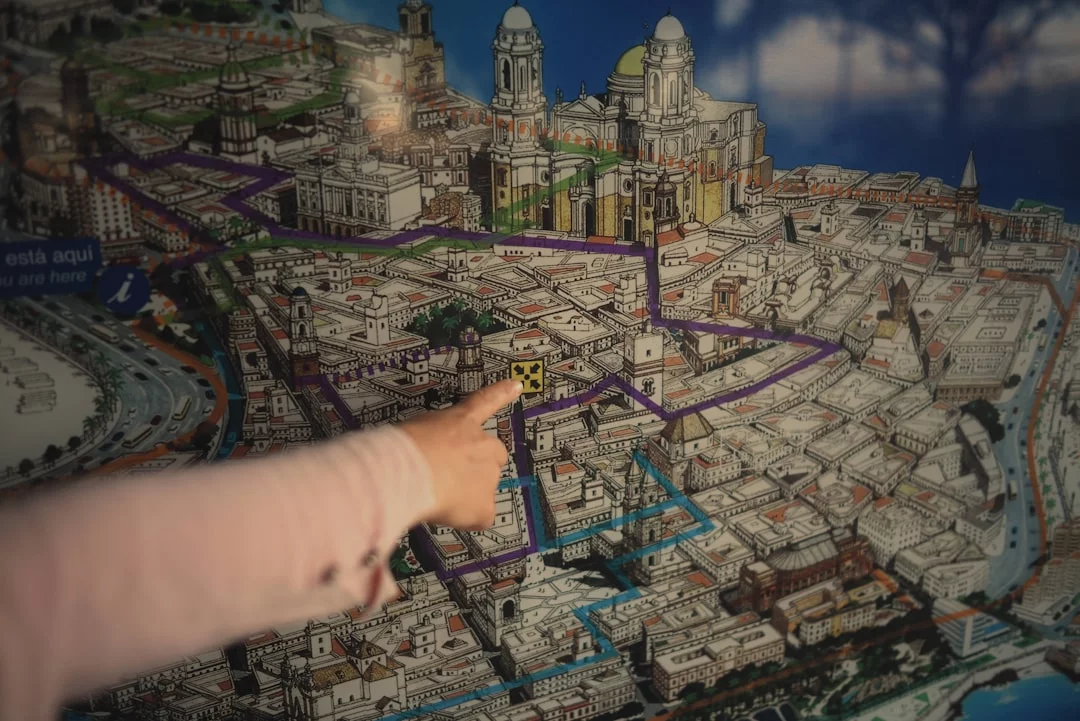
Using vivid visual cues and familiar objects can make it easier to build a strong memory palace. — Photo by Dani Guitarra / Unsplash
The 7-step memory palace checklist
Use this checklist before you build your first route. It keeps the technique small enough to test instead of turning it into a complicated project.
Choose one familiar place. Your bedroom, kitchen, walk to class, or office route is better than an imaginary castle.
Set a fixed direction. Always move the same way: door to desk to window, not whatever comes to mind.
Pick clear stops. Start with 5 to 10 locations. Each stop should be visually different from the next one.
Match one idea to one stop. Do not stack three unrelated facts on the same couch or desk.
Make the image hard to ignore. Use size, motion, sound, emotion, or absurd contrast. “Milk on the table” is weak; “milk flooding under the front door” is stronger.
Recall before you reread. Close the list and walk the route from memory after a few minutes.
Review only if the information matters. A grocery palace can disappear after one trip. Exam material, names, speeches, and vocabulary need later recall checks.
A good beginner test is simple: if you can walk the route forward, name each stop, and recall each image without looking, the palace is built well enough to use.
Build the route and place the images
Step 1: Choose a place you know cold: your bedroom, kitchen, or walk to class.
Step 2: Lock one fixed route. No branching.
Step 3: Pick 10-15 distinct loci like door, shoe rack, sink, couch, desk, bed, spaced about 1-2 body-lengths apart.
Step 4: Turn each item into vivid memory cues: huge, moving, emotional, absurd.
Step 5: Place one image at each stop.
Step 6: Walk the route slowly once, then faster.
Step 7: Test yourself after 5 minutes, later today, and tomorrow.
How do you make a memory palace for beginners? Keep it simple. Research on the method of loci, summarized in the method of loci overview, suggests spatial structure helps retrieval by giving ideas fixed locations, which connects nicely to working memory and recall. And yes, bland images fail fast.
Mini walkthroughs for real life
Grocery list: milk floods the front door, eggs crack on the shoe rack, giant spinach clogs the sink, bread bounces on the couch, coffee beans explode on the desk, apples roll on the bed.
Names: “Rose” becomes a rose growing from a red scarf on her face, placed at seat 1 in the meeting room.
Presentation: intro at the door, key stat on the whiteboard, case study on the desk, closing action on the exit sign.
Common mistakes and what to avoid
Most people go too big too soon. Try 30 items, change the route halfway, or use flat images, and recall gets muddy. But wait — the bigger mistake is using this for dense paragraphs you don’t understand; it works best for ordered frameworks, processes, categories, and cue words.
Review matters too. Recall the route forward, backward, and from random stops for better short term recall and long term retention. Next, I’ll show you examples, reuse rules, and study tips so your palaces don’t interfere with each other.
Examples, reuse, and study tips
Now you’ve seen how to build a memory palace. The next question is simpler: what should you actually use it for, and when does it stop helping?
6 everyday examples that actually fit
After building FreeBrain resources around evidence-based learning, I’ve noticed a consistent pattern: people do better when they use palaces for structured recall, not as a replacement for understanding. Good fits include:
grocery lists
names at an event
short presentations
daily routines and errands
exam review frameworks
language vocabulary
Use a short route for 4-8 errands like keys, charger, form, lunch, and package. For a memory palace for studying, store one process or framework, not every sentence. And for a memory palace for language learning, place 10-15 high-frequency words in themed rooms, then review them inside a broader daily language routine. Need ordered digits too? Same principle can help you remember long numbers.
Can you reuse the same palace?
Yes — but only sometimes. Reuse the same palace for temporary, low-stakes lists after the old images fade; build a new one for long-term topics, overlapping subjects, or anything you’ll review for weeks.
Why? Interference. If you use the same kitchen route for both a biology chapter and a recurring work presentation, those images can collide. My rule of thumb: keep temporary palaces, topic-based palaces, and one test palace just for practice.
Quick reference for students and professionals
Students usually get the most value from memory palaces when the material already has a structure. Use one for a biology process, a history timeline, a speech outline, a set of formulas, or a vocabulary group. Do not use it to avoid understanding the lesson. If you cannot explain the idea in plain language first, build that understanding before placing images on a route.
Professionals can use the same method for short, ordered recall: meeting points, client names, interview answers, presentation sections, onboarding steps, or a daily routine you do not want to check repeatedly. The key rule is to memorize cues, not full scripts. For example, place “problem,” “example,” “decision,” and “next step” on four stops instead of trying to store every sentence of a presentation.
If the task is tiny, use a checklist. If the task is long-term, add review. If the task is unordered, group it first. A memory palace is strongest when it gives you a path through information that would otherwise feel scattered.
Memory palace quick reference
Best for: 5-20 ordered items, cue words, names, frameworks, and short speaking outlines.
Usually overkill for: tiny to-do lists, simple notes, or ideas you don’t understand yet.
Practice plan: 10 minutes to build, 2 minutes to recall later, 2 minutes next day, then combine with flashcards, blurting, spaced review, and a weekly plan.
Reuse rule: reuse faded palaces for one-off lists; create fresh ones for stable, repeated material.
If you’re wondering whether how to build a memory palace is enough on its own, it usually isn’t. Pair it with retrieval practice and a revision system. And if memory problems are persistent, stress-related, sleep-related, or age-related, get qualified professional guidance. Next, let’s wrap up with the most common questions.
A 24-hour memory palace workflow for everyday recall
Here is a simple workflow you can use the next time you need to remember something real: a short talk, a list of errands, a set of names, or an exam framework. The goal is not to build the biggest palace. The goal is to build one route, test it quickly, and review it only as much as the situation deserves.
Minute 0-2: choose the job. Ask, “Is this ordered, image-friendly, and worth recalling without notes?” If yes, a memory palace is a good candidate. If the material is unordered or you are still trying to understand it, start with notes, examples, or the Study Method Picker first.
Minute 2-5: choose the route. Pick 5 to 10 stops in one familiar place. For example: front door, shoe rack, sofa, table, sink, fridge, stove, window, desk, bed. Do not add side rooms yet.
Minute 5-8: place the cues. Turn each item into one loud image. For a presentation, the front door might hold your opening story, the shoe rack might hold the main problem, the sofa might hold your first example, and the window might hold your closing action.
Minute 8-10: test once without looking. Close your list and walk the route. If you miss a stop, do not just reread it. Make the image stranger, larger, or more active.
Later the same day: retrieve again. Use the Active Recall Builder to turn each stop into a prompt, such as “What is at the sofa?” or “What point comes after the opening story?”
Tomorrow: schedule the next review. For anything you still need next week, add a review plan with the Spaced Repetition Generator. For a one-time errand list, let the palace fade after you use it.
Use this decision rule: build a new palace for important long-term topics, reuse an old route for disposable lists, and avoid mixing similar subjects in the same room. If you are preparing for an exam or talk, schedule one focused build session and one recall session with the Focus Session Planner. That keeps the method practical instead of turning it into another task to manage.
Frequently Asked Questions
What can you use a memory palace for?
If you’re wondering what can you use memory palace for, the best uses are concrete, ordered tasks: shopping lists, remembering names, presentation talking points, daily routines, vocabulary sets, and study review. It works especially well when the information can be turned into vivid mental pictures and placed in a clear sequence, like moving through rooms in your home. If the material is abstract, you can still use it — but you’ll usually need to convert it into visual cues first.
Wooden letter blocks spelling “memory” highlight the core idea behind building a memory palace for stronger recall. — Photo by Markus Winkler / Unsplash
How do you make a memory palace for beginners?
The simplest answer to how do you make a memory palace for beginners is this: pick a place you know well, choose one fixed route, and start with just 5-10 loci, or memory stops. Put one item per stop, and make each image exaggerated, strange, or emotional so it sticks. And here’s the part most people skip: test your recall the same day instead of only rereading your images, because active retrieval is what shows whether you’re actually learning how to build a memory palace that works.
Can you use the same memory palace for different things?
Yes — if you’re using it for short-term or temporary lists, you can use the same memory palace for different things after the old images fade and stop competing for attention. But for long-term topics, especially ones that overlap, reusing the same route can create interference and mix-ups. A good rule is simple: reuse palaces for disposable information, but give important subjects their own dedicated locations.
Are there any downsides to using a mind palace?
If you’re asking are there any downsides to using a mind palace, yes, there are a few. It takes setup time, feels slower at first than just writing things down, and it’s not the best fit for every kind of information — especially material you haven’t understood yet. Common failure points are weak images, a fuzzy route, and no follow-up review; if you want the method to hold up, pair it with recall practice and spaced repetition, or use a review tool like FreeBrain alongside your palace.
Is a memory palace good for studying?
Yes, is a memory palace good for studying has a pretty solid practical answer: it’s especially useful for ordered frameworks, cue words, key examples, and exam review. But wait — it shouldn’t be your only study method. You’ll get better results if you combine it with understanding the material, active recall, and spaced review; research on retrieval practice summarized by PubMed supports that idea, and it’s also why learning how to build a memory palace works best as part of a larger study system.
Does a memory palace work for language learning?
Yes, does a memory palace work for language learning is a fair question, and for many learners the answer is yes — especially for high-frequency vocabulary, themed word groups, and short phrases you want to retrieve quickly. Personally, I think it’s most useful when you need fast recall, not when you’re trying to learn grammar through memorization alone. Use it as one piece of a broader routine with speaking, reading, listening, and review, and you’ll get much more value than trying to make the palace do everything by itself.
Conclusion
If you remember just four things, make it these: pick a real place you know well, keep your route fixed and simple, turn each item into a vivid image with motion or emotion, and review the path before you need it. That’s the practical core of how to build a memory palace. And yes, reuse works best when each palace has a clear purpose, whether that’s groceries, talking points, vocabulary, or exam material.
Start small. Really small. A five-stop palace is enough to feel the method click, and that early win matters more than building something huge on day one. Personally, I think this is where most people get stuck—they try to memorize too much too fast. But once you’ve placed a few memorable images and walked the route a couple of times, your confidence grows fast. You don’t need a perfect system. You need one palace, one route, and one real use case this week.
If you want to keep improving, spend a few more minutes on FreeBrain.net and build from there. You can sharpen your recall with Spaced Repetition: What It Is and How to Use It and make your review sessions more effective with Active Recall: The Study Method That Actually Works. Learn how to build a memory palace, test it in everyday life, then pair it with better review habits. Pick your first route today and use it before the day ends.
⚠️ Educational Content Notice: This article is for educational and informational purposes only. It is not intended as medical, psychological, or professional advice. If you have concerns about your health or well-being, please consult a qualified healthcare professional. Always seek the guidance of your doctor or other qualified health provider with any questions you may have.