

Habit stacking is useful when you already know what you want to do but keep forgetting when to start. The simple formula is: after I [current habit], I will [new habit] for [time]. For example, after I open my laptop for class, I will review three flashcards for two minutes. After I pour coffee, I will write today’s top task on a sticky note.
The key decision is not “Am I motivated?” It is “What routine do I already repeat at the right moment?” A strong stack uses an anchor that happens almost every day, in the same place, right before the new action would make sense. In this guide, you’ll see habit stacking examples for studying, work, and daily routines, plus a template and a quick test for fixing stacks that do not stick.
I’m a software engineer, not a neuroscientist, but I build FreeBrain tools for self-learners and spend a lot of time testing what actually helps habits stick. Well, actually, that’s why I like this method so much: it’s simple, concrete, and far more useful than vague promises about “being more disciplined.”
📑 Table of Contents
What habit stacking is
Now let’s make the idea concrete. Habit stacking means attaching a new behavior to a reliable existing habit, often called an anchor habit. For more on productivity and focus, see our productivity and focus guide.
I’m a software engineer and builder of FreeBrain learning tools, not a clinician, and this section is based on behavior research plus practical testing with routines and study systems. If you want more practical methods to learn better right now, this is one of the simplest places to start.
A one-sentence definition
What is habit stacking? In plain English, it’s using one routine you already do to trigger a new one you want to repeat. The anchor habit is the stable action that comes first.
Use this formula: “After I [current habit], I will [new habit] for [time].” Example: “After I brush my teeth, I will floss for 30 seconds.” That’s why habit stacking examples work better than vague promises like “I’ll be healthier.”
A simple example
Personally, I think this is the part most people miss. Generic advice tells you to “try harder.” Habit stacking relies less on willpower and more on cues, repetition, and implementation intentions, which research suggests can make actions easier to repeat over time, as described in implementation intention research and behavior-change evidence indexed by PubMed habit formation studies.
- Personal routine: After I make coffee, I will read one page.
- Study routine: After I open my laptop, I will write one review question before checking messages.
See the difference? “Study more” is fuzzy. “After lunch, I will review flashcards for 3 minutes” is usable. And yes, these habit stacking examples look almost too small. That’s the point.
Why readers should care
For students and busy professionals, stable routines like sitting at your desk, shutting down work, or starting a lecture are easier to use than abstract goals. Which brings us to attention: cues matter because attention affects learning, and a good trigger reduces startup friction.
This helps with review, note-taking, reading, and even brief calming routines before study blocks. If you struggle to begin consistently, it’s also worth understanding executive dysfunction vs procrastination, because failed stacks aren’t always a discipline problem.
Habit stacking can support routines, but it isn’t a substitute for medical or mental health care. If you’re dealing with ADHD, anxiety, sleep problems, or compulsive behaviors, consult a qualified professional.
Next, I’ll break down how habit stacking works, where it differs from habit pairing, and why some stacks stick while others fail.
How habit stacking works
Now that you know what it is, here’s the mechanism. Habit stacking examples work because an existing routine becomes the cue for a new action, which means you spend less effort remembering and more effort doing—useful if you want to learn better right now.

Why old routines make strong cues
Cue based habit formation is simple: a cue triggers a behavior in a stable context. The best anchor isn’t just frequent. It’s consistent in timing, location, and setup.
So what makes a cue reliable?
- A clear trigger you can notice
- A context that repeats the same way
- An action small enough to start fast
“After lunch” can be weak if lunch moves around. “After I put my lunch container in the sink, I review one flashcard” is stronger. And when the cue is obvious, decision load drops, which matters because attention affects learning more than most people realize.
What research suggests
Implementation intention means planning in an if-then or when-then format: “When X happens, I will do Y.” Research summarized in PubMed’s free full-text archive and behavior guidance from NIH News in Health both point to the same pattern: cues matter, repetition builds automaticity, and small immediate rewards help the habit loop continue.
Stanford Behavior Design makes a similar point: make the behavior tiny. Personally, I think this is why many habit stacking examples fail—they’re too ambitious on day one.
Habit stacking vs habit pairing
Quick distinction: habit pairing often means one new habit attached to one old habit. Habit stacking vs habit pairing comes down to sequence; a true stack can be a short chain like “make coffee, open notes, answer one practice question.”
Beginners should start with one anchor and one tiny action. Worth it? Absolutely.
From experience: what usually works
After building FreeBrain learning systems, I keep seeing the same thing: visible cues and tiny actions beat motivation. Leave flashcards on your keyboard, or put a notebook on your desk before bed.
If you keep failing to start, the problem may be the cue, not your discipline—especially if you relate to executive dysfunction vs procrastination. Next, let’s turn that into a stack you can build in four steps.
Build your stack in 4 steps
Now you know why the cue matters. Here’s how to turn that into habit stacking examples you can actually use this week.
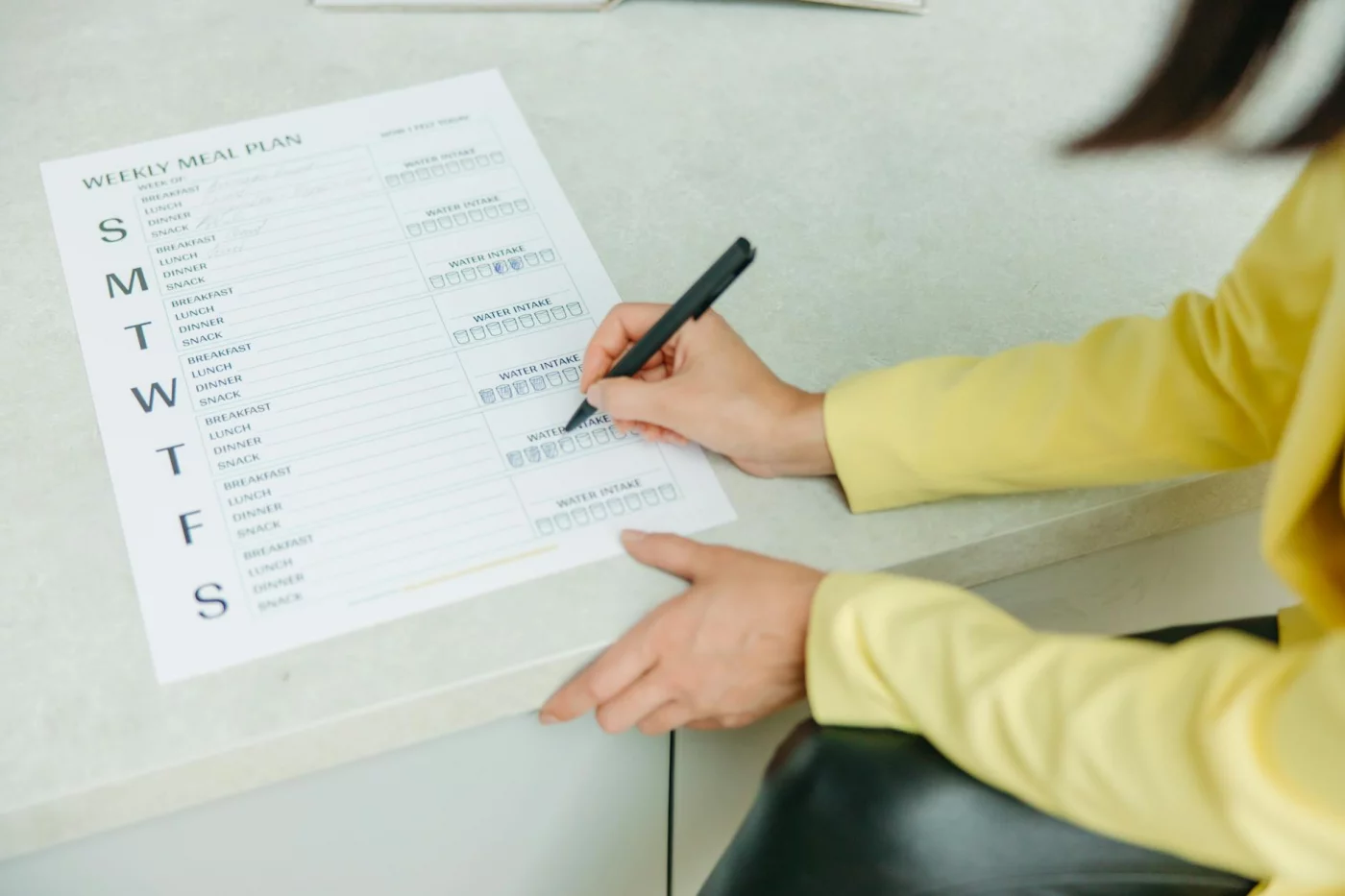
How to build a habit stack
Start by matching the new habit to a moment that already has a clear beginning and ending. A good anchor is specific enough that someone could watch it happen: “after I put my keys on the hook,” “after I sit at my desk,” or “after I close my last browser tab.” A weak anchor is vague: “after work,” “in the morning,” or “when I have time.”
Use this three-part filter before you write the stack:
- Anchor: Does it happen most days without needing a reminder?
- Action: Can the new habit be started in under two minutes?
- Fit: Does the action make sense immediately after the anchor?
Before: “After class, I’ll study more.” Better: “After I put my notebook on my desk, I’ll write one practice question from today’s lesson.” Before: “After work, I’ll plan tomorrow.” Better: “After I close my laptop, I’ll write the first task for tomorrow on one line.” The better version removes the hidden decisions, which makes the stack easier to repeat.
Step 1: Choose a stable anchor
Pick something you already do at the same time and place. Good anchors: brushing teeth, making coffee, opening your planner, sitting down for class, plugging in your phone, closing your last meeting. Bad anchors? “When I feel motivated” or “sometime after work.” Consistency beats frequency.
Step 2: Shrink the action
Make the new habit almost too easy: 30 seconds of flossing, 1 minute of stretching, 2 flashcards, 3 deep breaths, 1 sentence of journaling. Smaller is better at first. If you want to learn better right now, repetition matters more than intensity.
Step 3: Use the template
Write it like this: “After I [current habit], I will [new habit] for [time].” Examples: After I make coffee, I will read 1 page for 2 minutes. After I sit down for my first study block, I will review 3 flashcards. After I plug in my phone, I will journal 1 sentence.
- After I brush my teeth, I will floss for 30 seconds.
- After I open my laptop, I will write today’s top task.
- After I sit for class, I will take 3 bullet notes.
- After I start a study block, I will do 2 flashcards.
- After I close my last meeting, I will plan tomorrow.
- After I refill my water, I will take 3 deep breaths.
- After I heat lunch, I will stretch for 1 minute.
- After I get home, I will put my phone in another room.
- After I put on pajamas, I will read 1 page.
- After I plug in my phone, I will do 3 slow breaths.
If task initiation is the real problem, not laziness, read executive dysfunction vs procrastination. And yes, that difference matters.
Step 4: Make it easy to repeat
Reduce friction: put floss by the toothbrush, leave the book on the pillow, open the notes app before the meeting, keep bands near the desk. Track one stack for 7 days with simple checkmarks. If it fails for 3-4 days, the cue is weak, the action is too big, or the setup adds friction.
Habit stacking template at a glance
Formula: After I [current habit], I will [new habit] for [time].
Good anchor: specific, visible, repeatable, already automatic.
Reminder: Start with one stack for one week.
Those are the best habit stacking examples when you’re starting small. Next, let’s cover mistakes, quick fixes, and which stacks work best in real life.
Examples, mistakes, and quick fixes
Now you’ve got the 4-step formula. The next question is simple: what do good stacks actually look like, and why do some habit stacking examples stick while others fall apart?
📋 Quick Reference
- Morning: After pouring coffee, review 2 flashcards.
- Morning: After brushing teeth, floss 30 seconds.
- Morning: After plugging in phone, read one page.
- Study/work: After opening a lecture video, write 3 bullet notes.
- Study/work: After arriving at the library, set a 25-minute timer.
- Study/work: After checking email at 11 a.m., stand and stretch.
- Health: After lunch, take a 5-minute walk.
- Health: After dinner, prep water bottle for tomorrow.
- Evening: After shutting your laptop, plan tomorrow’s first task.
- Evening: After getting into bed, do 3 slow breaths.
Quick reference: 10 more examples
These are some of the best habit stacking examples because the cue is obvious and the action is tiny. Want student-friendly versions? Pair lecture watching with note-taking, or use take notes from video lectures as your next layer.
What makes stacks fail
Usually five things: weak cues, oversized actions, vague wording, inconsistent timing, and too much setup. And yes, stacking too many habits at once is a common mistake in habit stacking. Start with one new behavior per anchor, not three.
How to fix a stack that isn’t working
- Strengthen the cue: change “after lunch” to “after I put my lunch container away.”
- Shrink the action: 10 pages becomes 1 page.
- Reduce friction: put the book on your pillow, charger outside the bedroom.
- Track for 7 days: students and busy professionals both need proof, not guesses.
If starting still feels unusually hard, habit pairing may reduce friction, but it may also help to understand executive dysfunction vs procrastination. This is educational, not medical advice.
Your next step
Choose one anchor habit today. Test one tiny stack for a week, then add another only if it’s working. That’s how to make habits stick. Next, let’s wrap up with the key questions and the fastest way to pick your first stack.
A 7-day habit stacking test plan
If your stack works on Monday but disappears by Thursday, do not add three more habits. Test one stack for a week and adjust the anchor before you judge the whole method. Use this simple plan.
- Day 1: Pick one anchor. Choose a routine that already happens most days, such as opening your laptop, making tea, sitting on the bus, or closing your last work tab. Avoid anchors that depend on a perfect schedule.
- Day 2: Shrink the action. Make the new habit so small that it feels almost too easy. If you want better study habits, use the Study Method Picker to choose one action, then reduce it to the first step only.
- Day 3: Add the exact sentence. Write: “After I [anchor], I will [tiny action] for [time].” Example: “After I sit at my desk, I will open my notes and write one recall question.”
- Days 4 and 5: Track only completion. Do not rate quality yet. Mark whether the stack happened. For focused work blocks, pair the stack with the Focus Session Planner so the next step is already chosen.
- Day 6: Fix the weakest part. If you forgot, move the stack to a more visible anchor. If you resisted, make the action smaller. The 2-Minute Rule is useful here: your first version should be a start, not the full routine.
- Day 7: Keep, move, or cut. Keep it if it happened at least five times. Move it if the anchor was unreliable. Cut it if the habit does not matter enough right now.
For review habits, a good next stack is: “After I finish a study session, I will create my next review date.” The Spaced Repetition Generator can turn that into a simple follow-up plan.
Frequently Asked Questions
What is a good example of habit stacking?
If you’re asking what is a good example of habit stacking, start with something simple and concrete: “After I brush my teeth, I will floss for 30 seconds.” This works because the cue is stable, the action is tiny, and the wording is specific enough that you don’t have to think about what to do next. Among the best habit stacking examples, this kind of short, clear formula tends to beat ambitious plans like “After dinner, I’ll completely fix my health routine.”
How do you pair a new habit with an existing routine?
If you want to know how do you pair a new habit with an existing routine, pick a behavior you already do almost every day without fail, then attach one very small action to it. Use this template: “After I [current habit], I will [new habit] for [time].” For example, “After I make coffee, I will review flashcards for 2 minutes.” If you want more habit stacking examples you can actually use, build your stack around routines that already happen at the same time and place.
What is the difference between habit stacking and habit pairing?
What is the difference between habit stacking and habit pairing? In practice, habit pairing usually means linking one new habit to one existing habit, while habit stacking can also mean creating a short chain of behaviors that happen in sequence. But wait — this is the part most people get wrong. If you’re a beginner, keep it simple and start with one anchor and one new action, because long stacks often fall apart before they become automatic.
Why does habit stacking work?
If you’re wondering why does habit stacking work, the short answer is that clear cues make behavior easier to repeat. Research on implementation intentions suggests people follow through more often when they decide in advance exactly when and where they’ll act; you can read a useful overview from the PubMed database. Habit stacking helps because the old routine becomes the reminder, so you’re not starting from scratch or relying on motivation every time.
How many habits should you stack at once?
The best answer to how many habits should you stack at once is: one new habit attached to one stable cue. Personally, I think most people add too much too soon. Only layer in another action after the first stack feels easy and consistent for at least one to two weeks, otherwise even good habit stacking examples turn into overloaded routines you stop doing.
What are the common mistakes in habit stacking?
What are the common mistakes in habit stacking? Usually four things: weak cues, actions that are too big, vague wording, and too much friction. For example, “After work, I’ll get productive” is too fuzzy, while “After I sit at my desk at 7 PM, I will write for 5 minutes” gives your brain a clear next step. If a stack keeps failing, shrink the action, make the cue more specific, and review whether your trigger is actually consistent; for more practical behavior-change ideas, see FreeBrain’s habit and productivity content.
Conclusion
Habit stacking works best when you keep it simple: attach one new action to a habit you already do every day, make the cue obvious, shrink the new behavior until it feels almost too easy, and test the stack in real life instead of trying to design the “perfect” routine on paper. That’s the core idea. And if your stack keeps breaking? Usually the fix is small. Move it to a more reliable anchor, cut the habit down to 30 seconds, or remove extra steps that add friction. The most useful habit stacking examples aren’t flashy — they’re repeatable.
And here’s the good news — you don’t need more willpower to make this work. You need a setup your brain can follow when you’re busy, tired, or distracted. Personally, I think this is the part most people miss. Progress often looks boring at first. But boring is good when it’s consistent. So if your first stack feels tiny, that’s fine. Really. A two-minute routine you actually keep will beat an ambitious system you quit by Friday.
If you want to keep building from here, explore more practical guides on FreeBrain.net. Start with how to build better study habits if you want a stronger daily routine, or read how to stop procrastinating if friction keeps knocking your habits off track. Use these habit stacking examples as your starting point, pick one anchor you already trust, and build your next repeatable win today.