

If you’re trying to figure out how to use the 2 minute rule, here’s the clean version: you start something for two minutes so your brain stops treating it like a threat. And yes, how to use the 2 minute rule depends on which “2-minute rule” you mean—there are two popular ones, and mixing them up is where people get stuck. The fastest way to use it today is simple: pick one next action (not a whole project), set a 2-minute timer, and begin—then decide if you’ll climb the 2→5→15 ladder instead of quitting at minute two. If you want a quick structure for that, open the Focus Session Planner tool and plug in your “two-minute starter” plus a 15-minute follow-up block.
Because let’s be real: you don’t procrastinate because you’re lazy. You procrastinate because starting feels weirdly heavy, even when the task is small—replying to one email, opening the doc, pulling out the textbook. Ever notice how the first 30 seconds can feel harder than the next 30 minutes?
This article breaks down how to use the 2 minute rule in a way that actually creates momentum. You’ll see the difference between the David Allen two minute rule (GTD: if it takes <2 minutes, do it now) and the James Clear two minute rule (habits: scale it down to a 2-minute “gateway” behavior). Then we’ll add the 2 minute rule momentum method—2 minute rule 2 5 15 method—so you don’t stop too early, plus two minute rule examples list-style playbooks for studying, homework, ADHD procrastination, remote work, and creative projects. And to keep it from turning into busywork, you’ll track “starts” for 7 days using the Habit Streak Tracker.
Why does this work at all? Lower activation energy. Small starts reduce the mental load of initiation—something that maps neatly onto what we know about procrastination as emotion regulation, not time management, as summarized by the American Psychological Association’s overview of procrastination. Personally, I think this is the part most people get wrong: they try to “feel motivated” first, instead of making starting too easy to refuse.
📑 Table of Contents
- What is the 2-minute rule? (GTD vs habits) + how to use the 2 minute rule today
- Why small actions build momentum (science) and how to use the 2 minute rule without “dopamine hacks”
- How to use the 2 minute rule (step-by-step) to stop procrastinating
- The 2→5→15 momentum method + two minute rule examples list (40+ starters)
- Common mistakes to avoid + tracking & troubleshooting (Real-World Application)
- Quick Reference + conclusion: how to use the 2 minute rule every day (without busywork)
- Frequently Asked Questions
- Conclusion
What is the 2-minute rule? (GTD vs habits) + how to use the 2 minute rule today
In the intro, we talked about beating procrastination without waiting for motivation. Now we need a definition you can actually use today. For more on productivity and focus, see our productivity and focus guide.
What is the 2 minute rule? Two popular meanings exist: David Allen’s “if it takes under 2 minutes, do it now” (GTD), and James Clear’s “shrink the habit to a 2-minute starter” so starting is painless. If you want to how to use the 2 minute rule in one minute, pick one avoided task, define a 2-minute “next action,” set a timer, then choose your 2→5→15 escalation plan (and block the 15 with the Focus Session Planner tool).
📋 Quick Reference
Two meanings: (1) GTD: do quick admin now. (2) Habits: make the first rep tiny.
Decision rule: True 2-minute admin task → GTD. Meaningful task you avoid → 2-minute starter.
Momentum ladder: 2 minutes to start → 5 minutes to “get traction” → 15 minutes for real progress.
David Allen (GTD): If it takes <2 minutes, do it now
The david allen two minute rule is a backlog control rule. The intent is simple: don’t create “open loops” that cost you attention later just because you didn’t handle a tiny action when it appeared.
Examples that fit the GTD version: reply “yes/no” to an email, file a document, schedule an appointment, confirm a meeting time, or pay a bill you already have the info for. If you’re wondering how to use the 2 minute rule here, the test is: will tracking this task cost more time than doing it?
But wait—this is where people mess it up. The GTD rule is not for deep work, and it’s not a license to turn your day into reactive micro-tasks that constantly break your focus.
For context and attribution, this GTD framing comes from David Allen’s “Getting Things Done” approach (see the Wikipedia overview of Getting Things Done for a quick summary). The core idea is friction reduction: fewer tiny leftovers means fewer mental pings.
James Clear: Downshift any habit to a 2-minute starter
The james clear two minute rule solves a different problem: task initiation resistance. You’re not trying to finish; you’re trying to start, even when you don’t feel like it.
So how to use the 2 minute rule as a habit-starter? Downshift the behavior until it’s almost silly: “put on running shoes,” “open Anki,” “write one sentence,” “open the IDE and run tests,” “wash one dish.” Stopping is allowed, because the win is consistency and identity (“I’m the kind of person who starts”).
Here’s the micro-script I tell myself—well, actually, I repeat it like a mantra when I’m stuck: “I only have to do 2 minutes; stopping is allowed.” That single line is a legit 2 minute rule to stop procrastinating because it lowers the threat level of the task.
If you want a simple way to track whether you’re starting (not finishing), log just two things for 7 days: “2-minute start” and “escalated to 15.” The Habit Streak Tracker works well for that, because it rewards the start—where most procrastination lives.
Quick comparison table: when each version works best
| Version | Goal | Best for | Example | Common pitfall | Fix |
|---|---|---|---|---|---|
| GTD (David Allen) | Reduce backlog friction | Admin “open loops” | Send a 1-line reply | Reactive busywork | Capture + batch later |
| Habits (James Clear) | Reduce starting resistance | Meaningful tasks you avoid | Open doc + title | Stopping at 2 forever | Use 2→5→15 escalation |
Decision rule for the two minute rule gtd vs habits debate: if it’s truly a 2-minute admin action, do it now; if it’s a meaningful task you’re avoiding, shrink the start and earn momentum.
How to use the 2 minute rule today (2→5→15 momentum ladder)
- Step 1: Pick one task you’re avoiding and write a 2-minute “next action.” Example: “Open the doc, write a title, add 3 bullets.”
- Step 2: Set a 2-minute timer and do only that. No tabs. No research. Just the starter.
- Step 3: Decide your escalation plan before the timer ends: stop at 2 (allowed), continue to 5 (get traction), or jump to 15 (real progress).
- Step 4: If you escalate to 15, define the finish line: “draft the intro,” “solve 3 problems,” or “outline 5 slides.”
Quick niche playbooks—because context matters:
- Students: 2 minutes = open notes + write 3 practice questions; 5 minutes = answer one; 15 minutes = timed quiz.
- ADHD/neurodivergent: reduce friction first: put the materials in your line of sight, silence pings, and make the 2-minute action physical (“sit in chair + open app”). If attention or mood issues are severe, talk with a qualified clinician—this is education, not treatment.
- Remote workers: 2 minutes = write the first sentence of the update; 5 minutes = bullets; 15 minutes = send + schedule next task.
- Creators: 2 minutes = open project + write a rough hook; 5 minutes = ugly first paragraph; 15 minutes = one complete section.
And here’s the kicker—momentum has a biology angle. Research on procrastination and emotion regulation suggests avoidance often happens because tasks feel bad now, not because you’re lazy (see the American Psychological Association’s overview on procrastination). Which brings us to the next section: why tiny actions build momentum, and how to use the 2 minute rule without relying on “dopamine hacks.”
Why small actions build momentum (science) and how to use the 2 minute rule without “dopamine hacks”
You’ve already seen what the 2-minute rule is and how to use it today. Now let’s talk about why it works when motivation is low — and how to use the 2 minute rule without turning your life into a weird “dopamine hack” experiment.

Most procrastination isn’t laziness. It’s task initiation friction plus emotion avoidance — and once you cross the start line, everything changes. If you want a clean next step after your 2-minute start, plan a tiny escalation block in the Focus Session Planner tool so you don’t stop right when momentum begins.
Lowering activation energy: friction reduction that actually matters
“Activation energy” is a chemistry metaphor that fits behavior pretty well. The hardest part isn’t doing the work; it’s getting your brain to agree to begin. And that’s exactly why how to use the 2 minute rule is mostly about reducing friction, not “trying harder.”
Here are six friction levers that actually move the needle for task initiation:
- Reduce steps: keep the doc already open, tabs pinned, textbook on the right page.
- Reduce choices: decide one next action, not a whole plan.
- Reduce distance: put materials on your desk before you need them (charger, notebook, water).
- Reduce time uncertainty: set a 2-minute timer so your brain trusts there’s an exit.
- Reduce social friction: draft privately first, then share when it’s less fragile.
- Reduce perfection pressure: commit to an “ugly first pass” that’s allowed to be wrong.
Before/after for studying makes this obvious. “Study biology” is vague and heavy. But “open notes + write 3 questions” is concrete, small, and finishable — a perfect 2 minute rule for studying starter.
And here’s the kicker — this is why how to use the 2 minute rule works even when your motivation is trash. You’re not asking your brain to “do biology.” You’re asking it to do a tiny, low-negotiation action that gets you moving.
One caution, though. If you start 12 tiny tasks, you’ll pay task switching costs: every context change has a mental reload fee. So batch your 2-minute starts by theme (admin, study, creative), or you’ll accidentally create busywork momentum instead of real progress.
Reward prediction + starting as the reward (careful dopamine framing)
Motivation isn’t magic. Research suggests it’s strongly tied to expected value versus expected effort, and your brain updates those predictions based on experience. So when a task feels “painful,” the prediction is often worse than the reality.
This is where how to use the 2 minute rule gets practical: starting is the experiment. Two minutes gives your brain new data: “Oh, this is doable,” or “This is confusing, I need a smaller next action.” Either way, you’re out of the fog.
But wait. Don’t chase a rush. The goal isn’t to “hack dopamine and motivation,” it’s to design the first step to be immediate and low-effort so the reward is simply being in motion.
Use a consistent trigger to make starts automatic. After coffee, you do the 2-minute start. After opening your laptop, you do the 2-minute start. Track “starts” and “escalations” for 7 days in the Habit Streak Tracker so you’re rewarding the behavior you can control.
Quick momentum ladder (so you don’t quit at minute 2): go 2 minutes, then ask “Can I do 5?” If yes, go to 5. Then ask “Can I do 15?” That 2→5→15 rule is simple, and it protects you from stopping right when the task starts to feel easier.
Zeigarnik effect + implementation intentions (if–then) to automate starts
Two science-backed ideas help you break the cycle of procrastination: implementation intentions and the Zeigarnik effect. Implementation intentions are “if–then” plans that link a cue to an action, and a large research program by Peter Gollwitzer shows they can improve follow-through by making initiation more automatic; see a PubMed review on implementation intentions (Gollwitzer).
Template you can steal: “If it’s 7:30pm, then I open the doc and write the title.” Or: “If I sit at my desk, then I start a 2-minute timer and write one messy sentence.” That’s how to use the 2 minute rule with less willpower and more structure.
The Zeigarnik effect is the idea that unfinished tasks can stay mentally active, pulling your attention back. Used well, it’s momentum: start, then stop on purpose with a clear next action so re-entry is easy. (If you want the background, Wikipedia’s Zeigarnik effect overview is a solid starting point.)
One more reality check. Procrastination is multi-factor: sleep debt, stress, ADHD, anxiety, depression, and workload can all overwhelm any tactic. This section is educational, not medical advice, and if procrastination is causing serious impairment or distress, it’s worth talking to a qualified healthcare or mental health professional; you can also read why you procrastinate for the avoidance loop side of the story.
So yes — how to use the 2 minute rule is science-friendly: lower activation energy, automate the cue, and protect focus from task switching costs. Next, we’ll turn this into a step-by-step system you can run on bad days, not just good ones.
How to use the 2 minute rule (step-by-step) to stop procrastinating
The last section was about momentum: tiny actions change what your brain predicts will happen next. Now we’ll make it mechanical, so you can repeat it for studying, homework, admin, or creative work—even on low-motivation days.
If you’re learning how to use the 2 minute rule, treat it as a “starter script,” not a personality test. And if you want the fastest way to set the next action and a follow-up block, use the Focus Session Planner tool right after your first 2 minutes.
How to use the 2 minute rule
- Step 1: Pick a next action you can’t fail.
- Step 2: Start a 2-minute timer and remove one friction point.
- Step 3: Decide your stop/continue rule before you start.
- Step 4: Capture the next action to make restarting easy.
Step 1: Define the smallest next action you can’t fail
Here’s the core of how to use the 2 minute rule for procrastination: you’re not committing to “do the task,” you’re committing to the next action. That next action should be visible, physical, and specific.
Use this template: verb + object. Good next actions look like: “open LMS → click assignment → read prompt,” “open IDE → run tests,” or “open notes → write 3 questions.” Bad next actions sound like “work on project.” Too vague. Too easy to dodge.
- Student (2 minute rule for homework): “Open LMS, click Week 6, download the worksheet, read question 1.” Can you fail that? Not really.
- Professional: “Open the client doc, scroll to section 2, write one ugly bullet.” Not perfect. Just started.
OK wait, let me back up: if you’re asking “how do you use the 2 minute rule when I don’t even know where to start?” you shrink again. Replace “read chapter” with “open PDF and find the headings.” Replace “study” with “write one question you’d expect on a quiz.”
Tracking helps this click fast. For 7 days, log two numbers—starts and escalations—in the Habit Streak Tracker, so progress is visible even when results lag.
Step 2: Set a 2-minute timer + remove one friction point
The timer is doing more than “motivation.” It caps uncertainty. Research on task aversiveness and procrastination suggests we avoid tasks that feel unclear or emotionally unpleasant, and shrinking the time horizon reduces that threat signal (see Sirois & Pychyl’s review in Current Directions in Psychological Science).
Now remove one friction point before you press start. Think environment design, not willpower.
- Device: close extra tabs, open the exact file, full-screen the app.
- Desk: clear one square foot, put the book/notebook in the center.
- Notifications: Do Not Disturb, or phone in another room.
- Materials: pen, calculator, water—ready.
- Music/noise: pick one setting and stick to it (silence counts).
And yes, this is a starting ritual. Personally, I think rituals beat “pep talks” because they’re concrete. When you’re learning how to use the 2 minute rule, concrete wins.
Step 3: Decide your stop/continue rule before you start
This is the part most people get wrong. They start… then either quit too early and feel guilty, or spiral into busywork because “I guess I should keep going.” Fix it with a pre-decision.
Pick one option before the timer starts:
- A) Stop rule: after 2 minutes, you may stop only if you capture the next action in one line.
- B) Continue rule: if you feel stable, escalate to 5 minutes or 15 minutes (the 2 minute rule momentum method), but keep the same task.
Stopping is allowed. That’s not failure. The win is the start plus clarity—exactly what a 2 minute rule to stop procrastinating is designed to produce.
Add a “no switching” rule during the 2 minutes. No checking messages. No reorganizing tools. Switching tasks has measurable costs in time and accuracy, especially when you bounce between unrelated contexts (see Rubinstein, Meyer, & Evans, 2001 in Journal of Experimental Psychology: Human Perception and Performance).
Step 4: Capture the next action to reduce switching costs
At the end of your 2 minutes (or 5/15), write one line: “Next action: ____.” Make it stupidly specific. Tomorrow-you shouldn’t have to “re-figure out” anything.
If 2-minute admin tasks multiply, don’t let them eat your day. Batch them into one block later (email replies, form submissions, scheduling), and keep your starter sessions for the work that actually moves the needle.
If the rule isn’t working, diagnose the bottleneck: fear (evaluation), fatigue, unclear next action, or distraction. The Procrastination Trigger Quiz helps you label the real trigger so you can adjust the script instead of blaming yourself.
One quick sidebar: there are two popular “2-minute rules.” David Allen’s GTD version says “if it takes under 2 minutes, do it now” (great for admin). James Clear’s habit-starter version says “scale the habit down to a 2-minute start” (best for procrastination and identity habits). In the next section, we’ll use the starter version and build a 2→5→15 ladder with a big list of examples, so you always know what to do after the first 120 seconds.
The 2→5→15 momentum method + two minute rule examples list (40+ starters)
You’ve already got the basic steps for how to use the 2 minute rule to start. Now we’re going to make that start “stick” so you don’t bounce after two minutes and call it a win.

Think of this as a momentum ladder: 2 minutes to begin, 5 minutes to settle, 15 minutes to produce something real. If you want a fast way to pick the next action and lock a 15-minute sprint, use the Focus Session Planner tool.
The ladder: 2 minutes to start, 5 to stabilize, 15 to make progress
There are two popular “2-minute rules,” and mixing them up is where people get stuck. David Allen’s GTD version says: if a task takes under two minutes, do it now. James Clear’s habit version says: start a habit in two minutes to lower friction. Here we’re using the habit-starter to beat avoidance, then escalating so you actually finish.
So here’s the deal. The 2 minute rule 2 5 15 method is a 2 minute rule momentum method where each rung must create an outcome, not just motion. Two minutes is “minimum viable effort” (open the right file, write the first prompt). Five minutes is “stabilize” (a rough plan, the next actions, the first tiny solve). Fifteen minutes is “meaningful outcome” (a deliverable chunk you could submit, send, or build on).
- 2 minutes (start): remove friction + define the next micro-output (not the whole project).
- 5 minutes (stabilize): reduce confusion (quick outline, checklist, or first rep of practice).
- 15 minutes (progress): produce a visible chunk (one solved problem, one paragraph, one processed email batch).
Escalation rules matter. Climb from 2→5 when (a) you’ve found the file/materials, (b) you’re not confused about the next step, and (c) distractions aren’t actively winning. Stop (or reset) when confusion spikes, fatigue hits hard, or you notice you’re switching tasks every 30 seconds.
And here’s the kicker — a good 15-minute run should become a scheduled block later, not a one-off burst. If the task needs depth, convert your momentum into a 15–45 minute slot on your calendar using time blocking templates, then return to it while it’s still warm.
Two-minute rule examples list: Work/admin (10), Studying (10), Writing (10), Home/health (10)
Below is a two minute rule examples list built as chains: 2-minute starter → 5-minute stabilize → 15-minute focus. Use it exactly as written the first time. Then customize.
Work/Admin (10)
- Reply with one sentence → draft 3 bullet points → send final reply + add next task.
- Open invoice + mark due date → verify amount/vendor → schedule payment + file receipt.
- Create a 3-bullet meeting agenda → add owner/time per item → send agenda + prep one decision.
- File one document → rename + tag folder → clean 10 files using the same rule.
- Open task list → write “next action” for one item → do a 15-min batch on the top item.
- Start timesheet → fill yesterday only → complete the week + submit.
- Open CRM/client record → add one note → update next steps + set reminder.
- Check calendar → confirm today’s first event → prep 3 talking points → send one pre-read.
- Open spreadsheet/report → refresh data → note 2 anomalies → write a 5-line summary.
- Write a sticky-note next action → break into 3 steps → execute step 1 fully.
Studying (10) (yes, this is how to use the 2 minute rule for learning, not just chores)
- Open notes + write 3 questions → answer 1 from memory → 15-min active recall set (questions + check).
- Open textbook → skim headings → write 5 prompts → answer prompts without looking, then correct.
- Open flashcards → do 5 cards → mark “hard” ones → 15-min spaced session focused on hard cards.
- Open lecture video → jump to outline/chapters → list 3 key terms → watch 15 minutes with pause-and-summarize.
- Start homework doc → write the problem numbers → solve the easiest one → 15-min single-problem sprint.
- Open syllabus → highlight next deadline → list required deliverables → 15-min start on the first deliverable.
- Open past quiz → pick 1 missed item → redo without notes → 15-min error log + 3 similar practice items.
- Set a timer → clear desk → open only study tab → 15-min focused review with no switching.
- Write formula list title → add 3 formulas → do 2 quick plug-in examples → 15-min mixed practice.
- Open group project → write one update message → list blockers → 15-min contribution (slide, code, or summary).
Writing/Creative (10)
- Open draft → write an ugly first sentence → add 3 subheads → draft one subhead section.
- Write the audience + promise line → list 5 points → pick 1 point → write a concrete example for it.
- Collect 3 references → extract 3 quotes/claims → write 15 minutes of synthesis in your own words.
- Name the file properly → add a rough outline → write the intro hook + first paragraph.
- Open notes app → brain-dump 10 ideas → circle 1 → draft a 15-min “bad version.”
- Pick one scene/section → write 5 beats → draft beat #1 → continue until the mini-arc is complete.
- Open design canvas → duplicate template → set colors/type → build one full component.
- Open script doc → write 3 bullets → speak a rough take aloud → write a 15-min cleaned transcript.
- Find one example artifact → list what makes it work → outline your version → produce your first iteration.
- Write a title placeholder → write 5 alternates → choose the clearest → draft the next 15 minutes under it.
Home/Health (10)
- Fill water bottle → drink half → prep next drink/snack → 15-min meal prep starter (wash/cut/portion).
- Lay out gym clothes → pack keys/headphones → write workout plan → 15-min warm-up + first set.
- 2-minute tidy (one surface) → clear one drawer/bin → 15-min reset of the whole zone.
- Open laundry basket → start one load → set timer → 15-min fold + put away last load.
- Open grocery list → add missing staples → plan 3 meals → 15-min online order or route plan.
- Brush + floss start → rinse + reset sink → 15-min full bathroom quick clean.
- Schedule one appointment reminder → gather needed info → book it → 15-min paperwork/insurance prep.
- Prep one healthy snack → portion for tomorrow → 15-min simple meal assembly.
- Open budget app → log one expense → reconcile 5 items → 15-min categorize + set one limit.
- Make the bed → open windows → collect trash → 15-min room reset (floors + surfaces).
For each category: add the 5-minute follow-up + 15-minute focus block
Here’s the template you’re using, every time you practice how to use the 2 minute rule: Starter (remove friction) → Stabilize (reduce confusion) → Progress (ship a chunk). If your 2-minute action doesn’t point to a next chunk, it’s busywork. OK wait, let me back up: the whole point is to make “starting” lead somewhere.
Student homework chain: 2 min open notes + write 3 questions → 5 min answer 1 question from memory → 15 min active recall set (answer, check, fix). That’s how to build momentum when procrastinating on homework: one question becomes one solved chunk.
Remote work distraction reset: 2 min close tabs + open the task doc → 5 min write the next 3 actions (verbs only) → 15 min single-task sprint on action #1. This is how to use the 2 minute rule when your brain is scattered: you narrow the field, then you commit.
Creators/writers when stuck: 2 min write the worst possible sentence → 5 min outline 3 subheads → 15 min draft one subhead without editing. Editing comes later. Progress comes first.
Next up, we’ll get practical about what breaks this system in the real world—stopping at 2 minutes, choosing vague starters, and how to track and troubleshoot without turning it into another procrastination ritual.
Common mistakes to avoid + tracking & troubleshooting (Real-World Application)
You’ve got a big starter list now, which is great. But the real test is whether those 2-minute starts reliably turn into momentum instead of busywork.
This is where most people misread how to use the 2 minute rule: it’s not “do tiny things forever,” it’s “touch the real work fast, then climb the 2→5→15 ladder.” If you want a clean way to pick the next action and protect a 15-minute escalation block, use the Focus Session Planner tool right after your 2-minute start.
Mistakes: avoidance tasks, stopping at 2 minutes, perfectionism, too many starts
First mistake: “productive” avoidance. You answer emails, rename folders, or color-code notes… and call it progress. But how to use the 2 minute rule correctly means your starter must physically touch the deliverable (the doc, the code file, the problem set, the slide deck).
- Avoidance task: “organize sources.” Fix: open the draft and write one ugly sentence that cites one source.
- Avoidance task: “watch a tutorial.” Fix: write the 3 steps you’ll try, then run step 1 for two minutes.
Second mistake: stopping at 2 minutes every time. That trains your brain to expect relief after initiation, which keeps the habit loop stuck at “start → escape.” The fix is simple: on “good days,” pre-commit to 2→5→15; on “bad days,” do 2 minutes and write the next action before you stop.
Third mistake: perfection pressure. This is the part most people get wrong. If your inner voice is “do it right or don’t do it,” you’ll procrastinate to protect your identity.
Fourth mistake: too many starts. Task switching costs are real; research on attention and executive control shows switching adds time and errors, even when tasks feel “small” (see a review on task switching and cognitive control). Translation: if you do ten 2-minute starts across ten projects, you’ll feel busy and finish nothing.
The fix is consistency over intensity. Batch your 2-minute admin starts into one window (say, 20 minutes), and protect one deep-work block where you only escalate one starter to 15 minutes.
From experience: what actually predicts follow-through (and what doesn’t)
After building and testing FreeBrain tools, one pattern keeps showing up: unclear next action is the #1 failure mode. People think they lack motivation, but their brain is actually stuck in “decision mode.” And decision mode burns energy fast.
Here’s what predicts follow-through: you can write the next physical action in under 10 seconds. If you can’t, the task is still too big.
And yes, this changes how to use the 2 minute rule. The goal of the first 2 minutes isn’t “work hard,” it’s “make the next action obvious.” That lines up with implementation intentions (if–then plans), which research suggests can improve goal follow-through by linking a cue to a specific behavior (see Gollwitzer’s work on implementation intentions).
What doesn’t predict follow-through? Hype. New notebooks. Even “feeling ready.” Clarity beats motivation most days.
Tracking + troubleshooting: 7-day experiment + diagnose friction, fear, fatigue, distraction
If you want to learn how to use the 2 minute rule in the real world, track starts like a scientist for 7 days. Keep it tiny, or you’ll quit tracking.
Use three metrics:
- Starts/day: how many real deliverables you touched for 2 minutes
- Escalations/day: how many starts climbed to 5 or 15 minutes
- Meaningful outcome: one concrete result (a paragraph, a solved problem, a sent proposal)
Here’s a simple 7-day template (copy/paste into Notes): Date; Task; 2-min start (Y/N); escalated to 5/15 (Y/N); meaningful outcome; friction removed; trigger used (if–then); what blocked me. If you want a fast diagnosis of why you’re stuck (fear vs fatigue vs distraction vs unclear next action), run the Procrastination Trigger Quiz once, then re-check your log.
Troubleshooting map (use it like a checklist for daily routine):
- Unclear next action: rewrite as a verb + object + location (“write 3 bullet points in the intro doc”).
- Fear/avoidance: do a “worst first draft” for 2 minutes; you’re proving you can start, not proving you’re brilliant.
- Fatigue: drop the rung (2→2 only) and protect sleep basics; if fatigue is persistent, talk to a qualified professional.
- Distraction: phone out of room, site blocker on, and a visible timer; a Pomodoro timer works well for the 15-minute rung.
- Overload: time-block a single escalation and defer everything else; too many starts will recreate task switching costs.
Do this for a week and you’ll stop guessing. Which brings us to the final piece: a quick reference that keeps how to use the 2 minute rule consistent every day—without turning your schedule into busywork.
Quick Reference + conclusion: how to use the 2 minute rule every day (without busywork)
You’ve already seen the common traps: stopping at 2 minutes, picking vague tasks, and tracking “effort” instead of outcomes. Now you need a simple daily system for how to use the 2 minute rule without turning it into busywork.
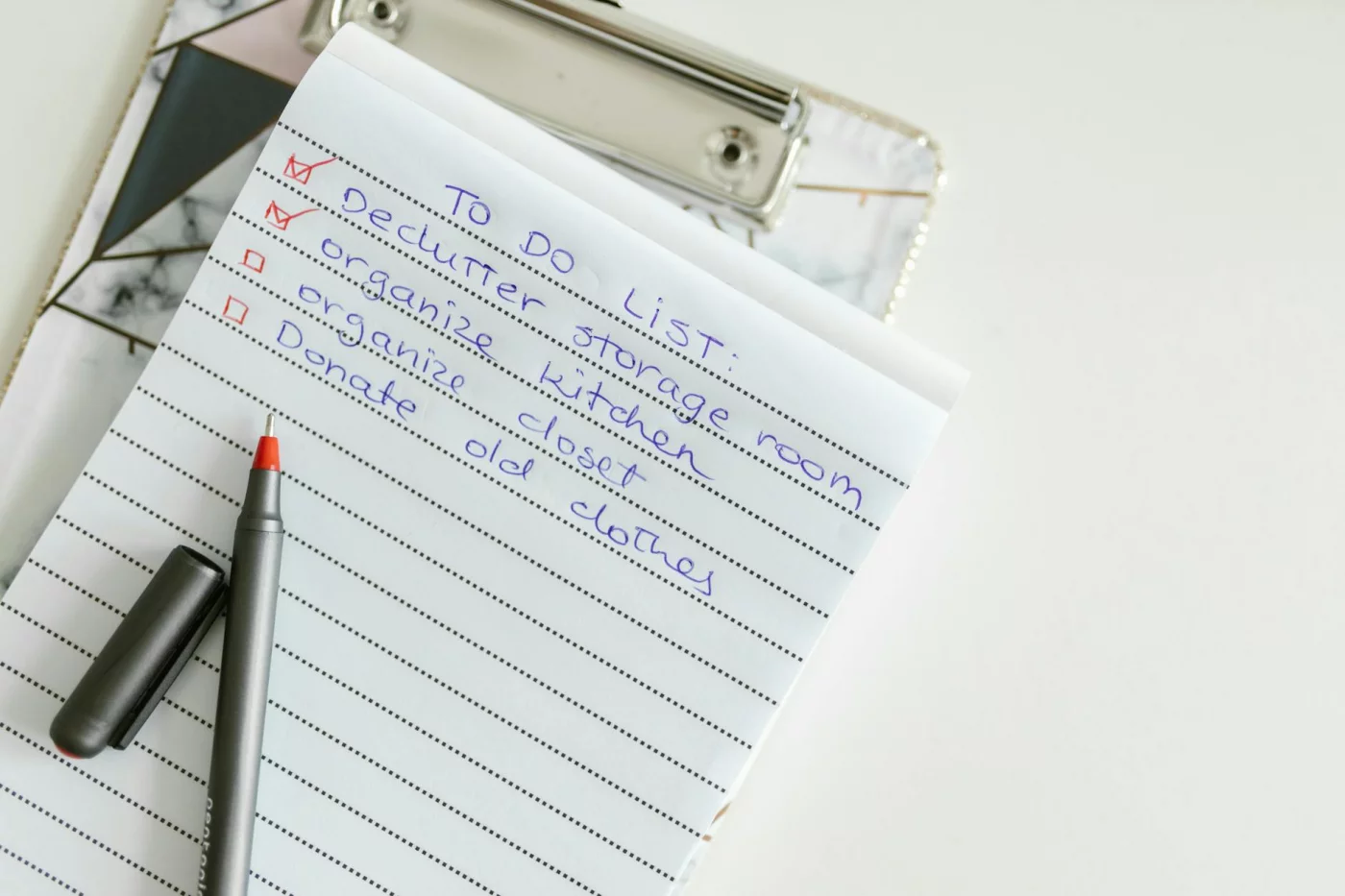
Think “start + escalate,” not “start + quit.” If you want a clean way to pick the next action and lock in the 15-minute follow-up, use the Focus Session Planner tool.
Quick Reference: the rule, the ladder, the script
📋 Quick Reference
- Two “2-minute rules” (use both): David Allen (GTD): if it takes <2 minutes, do it now. James Clear (habit-starter): make the first 2 minutes so easy you can’t say no. That’s the core of how to use the 2 minute rule on messy days.
- 2 minute rule momentum method (2→5→15 ladder): Start 2 minutes. If you’re clear and steady, climb to 5. If you’re still clear at 5, climb to 15. If you’re confused, write the next action and stop.
- 2 minute rule 2 5 15 method escalation rules: Only escalate when (1) next step is obvious, (2) tools are open, (3) no new decisions needed.
- “Next action” script: Verb + object + location. Example: “Draft 3 bullet points in Google Doc ‘Lab Report’.”
- 3 metrics to track: Starts (did you begin within 60 seconds?), Escalations (2→5 or 5→15), Meaningful minutes/outcome (a saved file, sent message, solved problems).
Your next 10 minutes (do this now)
- Pick one avoided task. Student: “open notes + write 3 practice questions.” Remote worker: “open inbox + reply to the oldest thread.” Creator: “open project + write one rough paragraph.”
- Write a 2-minute next action. This is how to use the 2 minute rule to break the cycle of procrastination: you remove decisions first.
- Set a 2-minute timer and start. At 2 minutes, either stop and capture the next action, or climb to 5/15 using the ladder.
- Schedule one 15-minute block today. That’s the “momentum system” most people skip.
If fatigue or stress is driving avoidance, don’t muscle through; prioritize recovery basics and consult a qualified professional if you’re struggling persistently. And yes, this still counts as how to use the 2 minute rule—you’re choosing the smallest safe step.
Next up, I’ll answer the most common questions people ask after trying how to use the 2 minute rule for a week.
Frequently Asked Questions
What is the 2-minute rule (and why are there two versions)?
What is the 2 minute rule? It usually means one of two things: David Allen’s GTD rule (“if it takes under 2 minutes, do it now”) or James Clear’s habit rule (“start the habit in 2 minutes”). To decide how to use the 2 minute rule, use Allen’s version when you’re processing small obligations fast, and Clear’s version when you’re struggling to start and need a tiny on-ramp.
Is the 2-minute rule from David Allen or James Clear?
Is the 2 minute rule from david allen or james clear? Both—people use the same name for two different frameworks: Allen’s is a do-now filter, while Clear’s is a start-small habit starter. If you’re learning how to use the 2 minute rule, ask: “Am I deciding what to do with an incoming task?” (Allen) or “Am I trying to begin a routine I avoid?” (Clear).
Does the 2-minute rule work for procrastination?
Does the 2 minute rule work for procrastination? Yes, especially for task initiation, because it cuts friction and reduces the uncertainty of “how hard will this feel?”—but it’s a start strategy, not a full productivity system. To learn how to use the 2 minute rule here, pick a concrete next action (open the file, write one line, solve one step), then decide whether to stop or scale. If procrastination is driven by fear, burnout, or mental health symptoms, pair this with troubleshooting and consider talking with a qualified professional for support.
What are the best 2-minute tasks to build momentum (without busywork)?
The best 2 minute tasks to build momentum are “real deliverable” starters, not fake progress:
- Writing: open the doc + write the first bullet
- Studying: open notes + write 3 test questions
- Coding/math: run the first example + solve the first sub-problem
That’s how to use the 2 minute rule without drifting into cleanup—avoid “organizing” unless organizing is the deliverable or it removes a specific friction point (like finding the right file).
How do I start studying when I don’t want to (or I’m tired)?
If you’re stuck, how to start studying when you don’t want to often comes down to reducing thinking: set a 2-minute timer, open your notes, and write three questions you want to be able to answer. That’s how to use the 2 minute rule as a decision ladder: after 2 minutes, choose 2→5→15 based on energy (continue 5 if you’re warming up, or 15 if you feel stable). If tiredness is chronic, prioritize sleep basics and consult a qualified healthcare professional if you suspect an underlying issue; the CDC’s sleep guidelines are a solid starting point.
How do I use the 2-minute rule for ADHD task initiation?
For 2 minute rule for ADHD procrastination, you’ll usually need stronger cues and a more aggressive “environment nudge” to make starting automatic. Try this combo (it’s simple, but it works):
- Visual prompt: put the first tool in sight (book open, IDE open)
- Novelty: set a tiny challenge (“find one mistake”)
- Environment: phone out of the room for 2 minutes
That’s how to use the 2 minute rule to get traction; if ADHD symptoms significantly impair daily life, work with a qualified clinician for personalized support.
What is the 2→5→15 momentum method and when should I stop?
The 2 minute rule 2 5 15 method is a ladder: do 2 minutes, then decide to continue for 5, then 15—only if the task is clear and distractions are controlled. The key to how to use the 2 minute rule is the decision point: after 2 minutes, either stop with a captured next action (“Next: outline section 2”) or escalate if you’ve found flow. Stop when confusion or fatigue spikes; escalate when the next step is obvious and you can protect the time.
How do I break the cycle of procrastination without relying on motivation?
How to break the cycle of procrastination is mostly about building reliable starts, not heroic willpower: use an if–then trigger (“If it’s 7:30, then I open the doc”) plus a 2-minute next action, and track starts vs escalations for 7 days to build consistency. To make how to use the 2 minute rule stick, batch micro-tasks (email/admin once) and protect one daily 15-minute focus block so you’re not constantly task-switching. If you want a structured way to pick a starter and escalate cleanly, use FreeBrain’s study tools and planners at FreeBrain.net to turn “I’ll do it later” into a repeatable routine.
Conclusion: Momentum Starts in Two Minutes
Here’s what to do next. First, pick one task and shrink it to a true two-minute “starter” (open the doc, write one sentence, put shoes on, wash one dish). Second, use the 2→5→15 momentum method: after your two minutes, continue for five if it feels easy, then fifteen if you’re rolling—stop on purpose if you need to, so it stays repeatable. Third, protect the rule from busywork by aiming the starter at the real goal (not organizing apps or making “perfect” plans). And fourth, track it lightly: one checkmark per day and a quick note when you miss, so you can troubleshoot the friction instead of blaming yourself. That’s the simplest way to learn how to use the 2 minute rule without turning it into another productivity project.
And if you’ve been stuck, you’re not broken. You’re just dealing with a brain that avoids unclear, heavy starts—same as everyone else. The win isn’t “feeling motivated.” It’s making starting so small you can’t argue with it. Do that consistently, and motivation shows up after action, not before. So yes, you can learn how to use the 2 minute rule even on low-energy days—especially on those days.
Want to keep building this into a system you’ll actually use? Browse more practical guides on FreeBrain.net, starting with Study Habits and Procrastination. Then pick one two-minute starter for tomorrow and schedule it like an appointment. Decide the time. Decide the place. Start—two minutes, no negotiation.