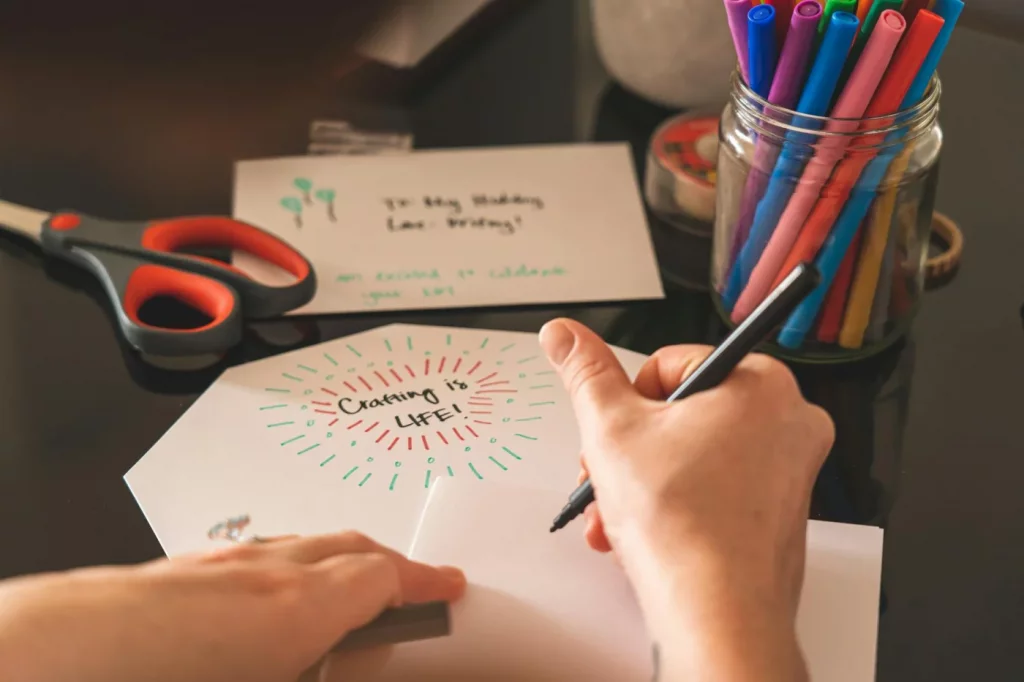
If you are trying to type with fewer errors, play cleaner piano scales, improve a sport movement, or keep your balance during a drill, the first choice is not “practice harder.” It is deciding whether the bottleneck is fine motor control, gross motor coordination, or both. Fine motor skills use small precise movements, such as fingers, grip, and eye-hand adjustments. Gross motor skills use larger movement patterns, such as posture, balance, force, and timing.
Use this article as a practice-design guide. First, identify the kind of movement you are improving. Then choose the right practice style: slower precision reps for fine skills, simplified whole-body reps for gross skills, and gradual variation once the movement is stable. If your sessions keep stretching too long, build a short block with the Focus Session Planner instead of relying on willpower.
Now let’s make the core idea simple. Motor skill learning is the process of improving movement through practice so your actions become more accurate, efficient, and reliable over time. For adults, that usually happens faster with short focused sessions, gradual variation, useful feedback, and sleep-based consolidation—not marathon repetition. For more on learning and study skills, see our learning and study skills guide.
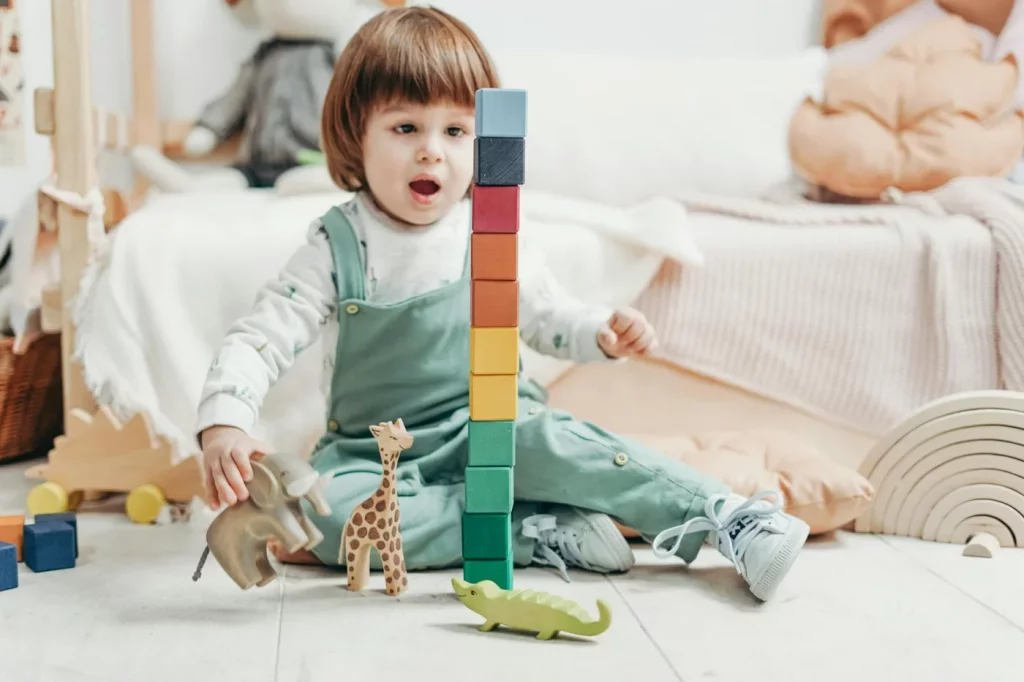
Stacking blocks helps toddlers build early coordination and shows how motor learning develops through play. — FreeBrain visual guide
If you want the brain-side explanation first, see our brain and concentration guide and memory consolidation explained. I’m a software engineer, not a neuroscientist, but I build FreeBrain tools and translate published research into practice systems that real self-learners can use.
Key Takeaway: When people search for fine motor skills vs gross motor skills, they often need this first: motor learning is not just doing a movement a lot. It’s the brain adapting through practice so the skill still works later, under pressure, and in slightly different conditions.
The one-minute definition
So what is motor skill learning, exactly? It’s skill acquisition through repeated practice that helps your brain build better movement patterns. Typing is one example: at first you hunt for keys, then your finger timing gets smoother. Tennis is another: a serve starts as awkward effort, then becomes coordinated sequencing.
People call this muscle memory, but that’s only part of the story. The muscles don’t “remember” on their own; your nervous system does, through neuroplastic change. Adult brains still change with practice, as explained in the NIH overview of neuroplasticity in the nervous system and the broader summary of motor learning. Progress can feel nonlinear, though. One bad day doesn’t mean no learning happened.
Performance now vs learning that sticks
This is the part most people get wrong. A great practice session can fool you if the skill falls apart tomorrow. Real learning shows up in retention and transfer.
Retention: can you still do it after 24 to 72 hours?
Transfer: can you do it at a new speed, tempo, or setting?
Performance now: how good you look today, under familiar conditions
Which test matters more? Usually the next-week test. And yes, sleep matters here—our guide on can you learn during sleep explains what sleep can and can’t do for lasting motor performance.
What adults usually get wrong
Adults often chase effort instead of improvement. Too much blocked repetition, too much feedback, and practicing while tired can make you feel productive while slowing learning. That’s especially true when you ignore coordination demands handled by the systems behind balance and coordination brain areas.
Three things usually work better:
Short sessions, often 15 to 30 minutes
Small variations instead of identical reps forever
Feedback that guides, then fades
And here’s the kicker—how to learn motor skills faster depends partly on the kind of movement you’re training. The next section breaks that down with the practical split most readers are really looking for: fine motor skills vs gross motor skills.
Fine motor skills vs gross motor skills
Now that motor learning is clear, here’s the practical split: fine motor skills vs gross motor skills comes down to small precise control versus large whole-body movement. And yes, attention matters for both, which is why your brain and concentration guide is part of the story.
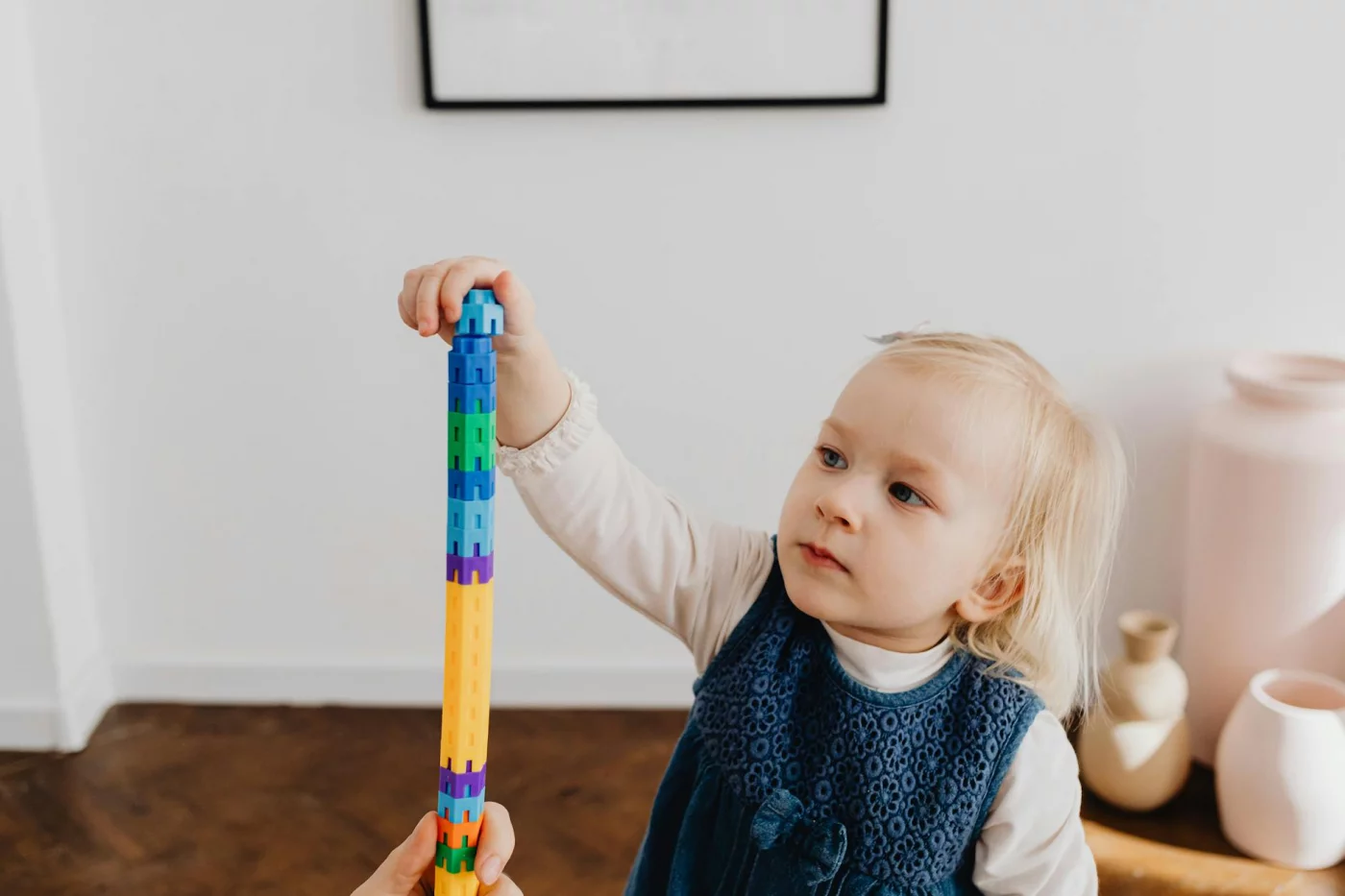
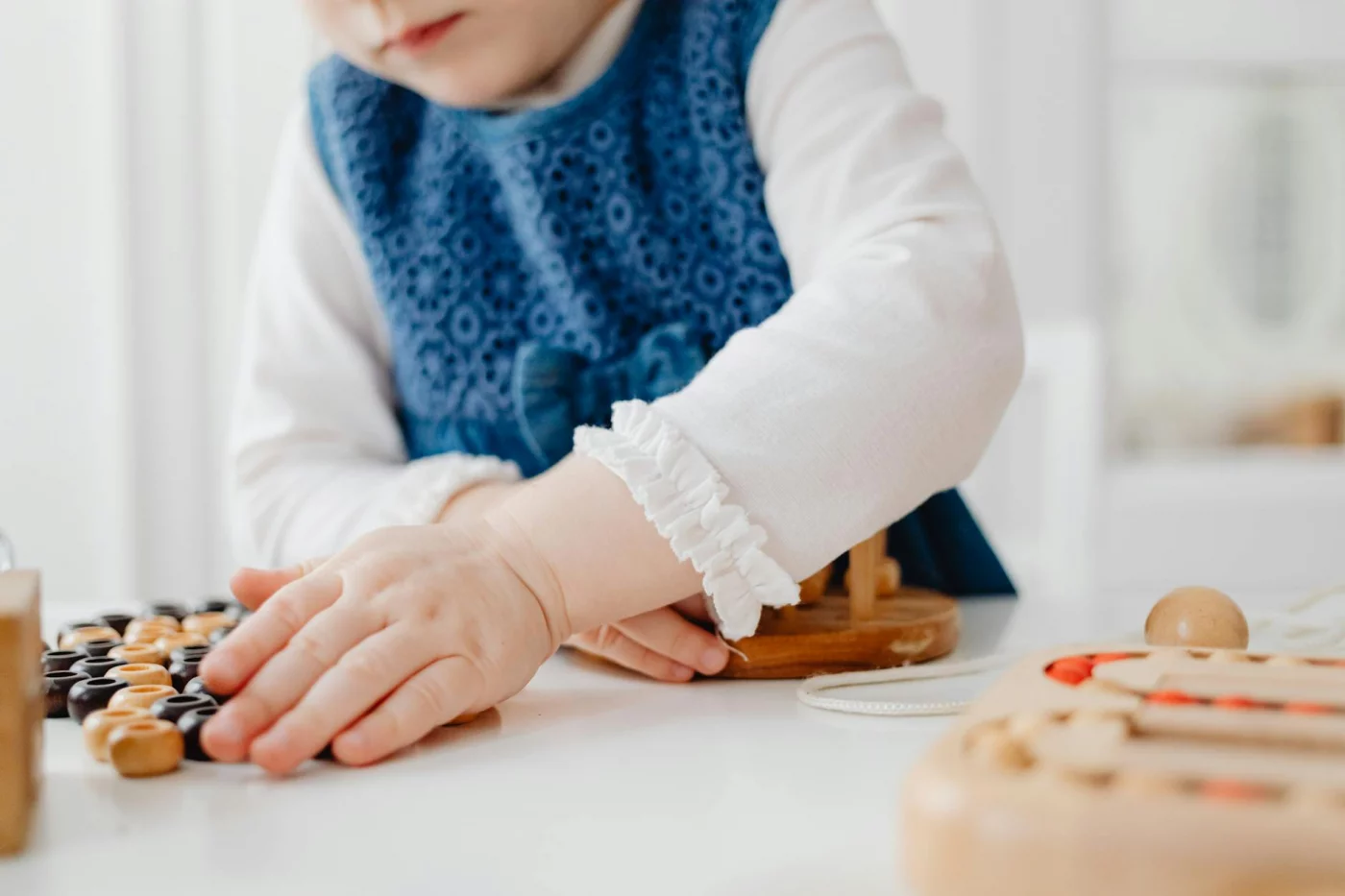
Wooden educational toys help children build coordination, creativity, and both fine and gross motor development. — FreeBrain visual guide
Fine skills: precision in small movements
Fine motor skills use the hands, fingers, and sometimes tiny eye-hand adjustments. Think typing with fewer errors, steadier handwriting, buttoning a shirt, drawing, piano fingering, chopsticks, suturing, or careful lab work.
Small misses matter here. A few millimeters can change a keyboard hit, a pen stroke, or the note you play. Personally, I think this is where adults rush too soon; slower, cleaner reps usually beat fast sloppy reps early, especially when memory consolidation explained becomes the goal.
Gross skills: bigger movements, bigger systems
Gross motor skills rely on larger muscle groups for posture, balance, gait, force, and locomotion. Running, jumping, lifting, throwing, sprint starts, squats, golf swings, sports footwork, and gait retraining all fit here.
What is the difference between fine and gross motor skills in training? Fine skills often improve by slowing down, shrinking the drill, and tightening precision. Gross skills often improve with rhythm, changing environments, and whole-movement practice once basic safety is solid.
Typing: practice letter clusters before full-speed paragraphs.
Tennis footwork: vary ball placement instead of repeating one static step.
Mixed tasks: guitar needs finger precision plus shoulder stability; basketball shooting needs hand accuracy plus whole-body timing.
Fine vs gross skill checkpoint
Main bottleneck first: precision, timing, balance, sequencing, or endurance. If you’re missing the target by inches, train control. If form falls apart late, train rhythm and fatigue resistance. Educational note: persistent tremor, sudden clumsiness, numbness, weakness, or worsening coordination should be checked by a qualified clinician, PT, or OT.
So before you pick drills, ask: is your limit finger accuracy, movement timing, balance, or staying stable under fatigue? Which brings us to the next section — how adults can learn physical skills faster.
7 ways adults learn physical skills faster
Now that the difference between fine motor skills vs gross motor skills is clear, the next question is practical: how do you improve them faster? For adults, the answer usually isn’t “practice more.” It’s practice smarter, with better attention, better recovery, and a better structure.
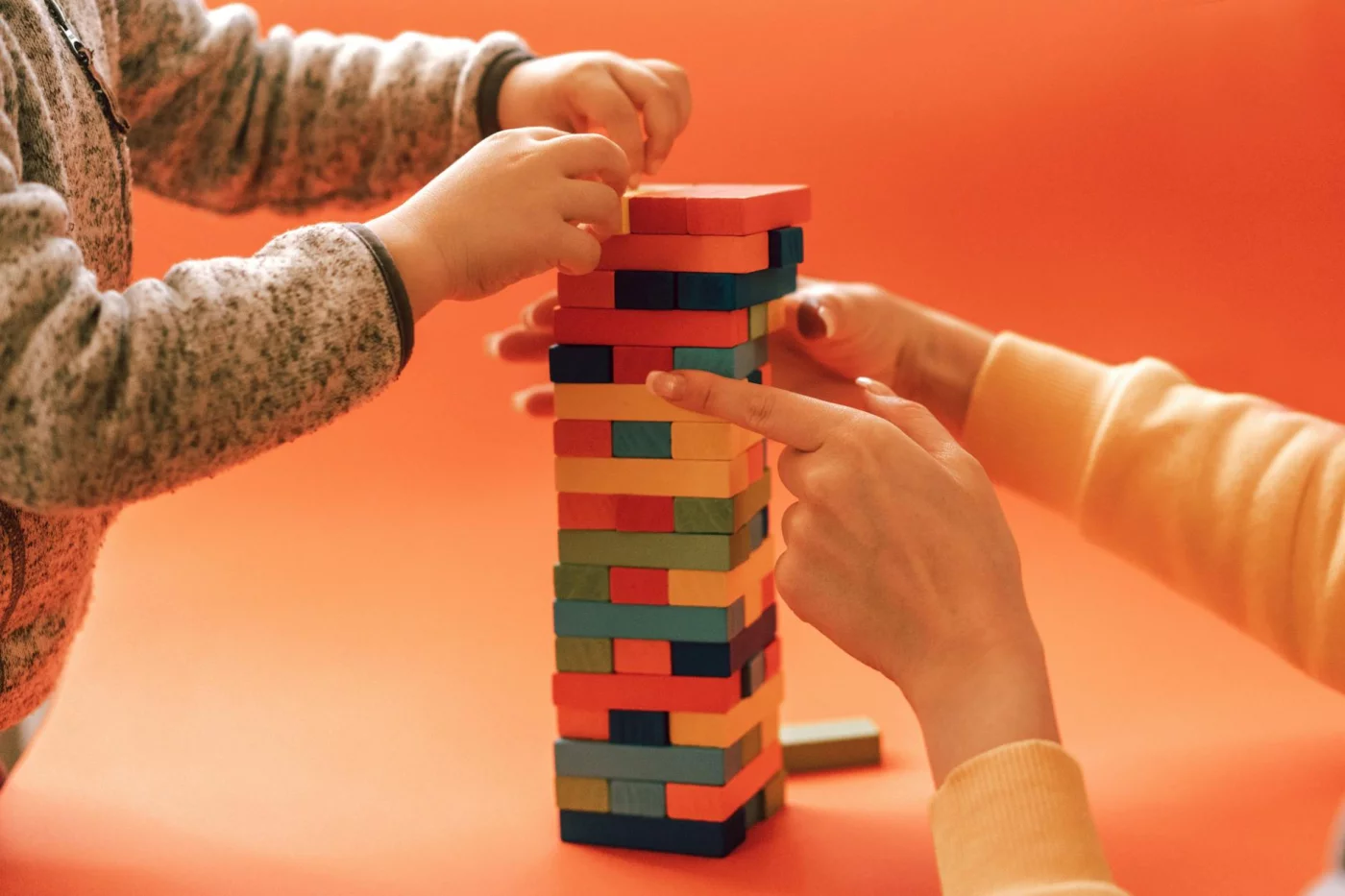
An adult and child use wooden blocks to build coordination, showing how physical skills develop through hands-on play. — Photo by Atlantic Ambience / Pexels
The 7-step practice framework
Use this as a repeatable practice loop, not a motivational checklist. The goal is to make each session small enough that you can see what changed.
Pick one target. Choose one chord change, one serve toss, one balance position, one handwriting shape, or one typing pattern.
Name the bottleneck. Is the problem precision, timing, balance, sequencing, force, or consistency under pressure?
Shrink the drill. For fine motor skills, slow the movement and reduce the range. For gross motor skills, simplify the body position or remove speed first.
Start blocked. Repeat the same version long enough to understand the pattern. Stop before the reps become automatic but sloppy.
Add one variation. Change only one variable: speed, target size, distance, rhythm, stance, or starting position.
Delay some feedback. Instead of correcting every rep, try a short set, make your own guess about what happened, then check the result.
Record the next cue. End with one sentence: “Next time I will keep my wrist quiet,” “start slower,” or “reset posture before adding speed.”
Progression rule: if you cannot repeat the easier version with attention left over, do not add speed or complexity yet. If you can repeat it twice and accurately describe what felt different, introduce one small variation in the next block.
How to practice motor skills more effectively
Step 1: Start with the smallest trainable unit: one chord change, one typing pattern, one swing phase, or one balance transition.
Step 2: Use blocked practice first, then shift to variable practice.
Step 3: Pick external cues when possible, not body-part overthinking.
Step 4: Use feedback less often and slightly later.
Step 5: Keep sessions to 15-30 minutes, with 3-6 reps before a reset.
Step 6: Track errors, cue used, and fatigue, not just minutes.
Step 7: Retest after 24 hours and protect sleep, because memory consolidation explained matters as much as the practice itself.
And yes, attention matters. If your focus is scattered, your reps get noisy fast, which is why I’d pair this with FreeBrain’s brain and concentration guide.
Blocked, variable, external, delayed
Blocked vs variable: blocked feels smoother early; variable usually transfers better later.
Internal vs external focus: “keep your elbow at 45 degrees” vs “send the ball high.” External cues often help performance.
Immediate vs delayed feedback: immediate helps setup and safety; delayed feedback builds self-correction.
From experience: what actually helps adults stick with it
From building learning tools, I’ve noticed adults overrate long sessions and underrate clean reps, visible error tracking, and consistency. Use a simple log: drill, reps, error count, cue, fatigue 1-5, next adjustment. And if you want a routine that sticks, attach a 15-minute block to an existing habit with habit stacking for practice.
That’s the real framework behind how to learn motor skills faster for adults, whether you’re training typing, piano, golf, or rehab-style balance work. Next, let’s look at the mistakes that slow progress — and a simple 7-day plan to fix them.
Mistakes, examples, and a 7-day plan
Those seven methods work best when you avoid the traps that make practice feel productive without making it stick. That’s the core problem in fine motor skills vs gross motor skills training: smooth performance today isn’t the same as durable learning tomorrow.
Common mistakes that slow progress
Too much blocked practice can create false confidence because nothing changes. If you hit the same piano bar, tennis serve, or pen stroke 40 times in one identical setup, you may look better fast but struggle later.
Too much feedback causes dependence. If you need a coach, mirror, or app after every rep, you won’t build your own error-detection system. And fatigue matters more than most people think. Poor sleep, stress, and overtraining reduce attention and consistency; if that sounds familiar, review these burnout warning signs.
Real-world application
Typing/handwriting: practice short letter clusters or stroke patterns, then vary speed, spacing, and context.
Guitar or piano: isolate one transition, then reinsert it into the phrase at slow, medium, and performance tempo.
Tennis or golf: use blocked setup reps first, then add variable targets, timing, or footwork.
Balance/gait rehab-style movement: use safe, supervised drills when needed, building quality before challenge.
That’s how to improve motor skills for adults without wasting reps. In fine motor skills vs gross motor skills work, the drill changes, but the learning logic stays the same.
Quick reference: a simple 7-day plan
📋 Quick Reference
Days 1-2: 15-20 minutes, blocked setup work, low fatigue, one main cue.
Days 3-4: 20-25 minutes, add light variation, track error rate and one transfer test.
Day 5: shorten the session or do active recovery if quality drops.
Day 6: variable practice under realistic conditions.
Day 7: retest after rest; review goal, drill, reps, error count, cue, fatigue, and next tweak.
If you’re wondering how often you should practice motor skills, daily short sessions usually beat rare marathons. Best results come from focused reps, gradual variability, useful feedback, and recovery.
This is educational, not medical advice. Persistent coordination problems, tremor, sudden decline, weakness, or other neurological symptoms should be assessed by a qualified professional. Next, let’s wrap up with the key questions people still ask.
July 2026 update: a two-minute drill chooser for adults
Before you practice, classify the mistake you are seeing, not only the skill label. The same activity can contain both fine and gross motor demands: a tennis serve uses legs, trunk, shoulder, wrist, timing, and grip pressure. Use this chooser for your next session.
Step 1: name the miss in plain language. “My notes are uneven after line three,” “my jump shot is short when I rush,” or “my typing errors happen on the left hand.” Step 2: pick the first bottleneck. If the miss is tiny but repeatable, treat it as fine-motor control and slow the movement down. If the miss appears when posture, balance, speed, or fatigue changes, treat it as gross-motor coordination and simplify the body position first. Step 3: choose the practice block. Use five to ten blocked reps when you cannot describe the movement yet; switch to variable reps once you can repeat it twice in a row.
A simple 20-minute loop works well: 3 minutes to warm up the pattern, 8 minutes on one narrowed drill, 6 minutes adding one variation, and 3 minutes writing one correction for next time. The Focus Session Planner can turn that loop into a timer with breaks. If the drill still feels too large, use the chunking approach from How to Chunk Study Material So It Feels Manageable: split the movement into start position, main action, and finish, then practice only the weakest chunk.
Decision rule: do not add speed, resistance, or a harder environment until the current version is accurate enough that you can notice the error without someone telling you. That self-check is what keeps adult practice from becoming a pile of tired repetitions.
Frequently Asked Questions
What is motor skill learning?
What is motor skill learning? It’s a lasting improvement in how you perform a movement because of practice, not just one unusually good session. The key test is whether the skill still holds up later (retention) and whether you can use it in a slightly different situation (transfer), not only whether you looked smooth on the same day. That matters whether you’re comparing fine motor skills vs gross motor skills or trying to improve one specific movement pattern.
How do adults learn motor skills faster?
If you’re wondering how to learn motor skills faster for adults, the best approach is usually simple: short focused sessions, gradual variability, external cues, and feedback you can actually use. In practice, that means 15-30 minutes of high-quality reps often beats a long, sloppy session, and changing speed, context, or task difficulty a little at a time helps the skill stick. And here’s the part most people miss: recovery matters too, so sleep well and stop before fatigue starts wrecking movement quality. For related learning strategies, you can also read FreeBrain’s study and learning resources.
Is blocked or variable practice better for motor learning?
If you’re asking is blocked or variable practice better for motor learning, the short answer is: both, but at different stages. Blocked practice is often useful early on because it helps you get the setup right, build confidence, and understand the basic pattern; once that pattern is reasonably stable, variable practice is usually better for long-term retention and transfer. So start predictable, then add smart variation — different speeds, targets, distances, or contexts — especially when training fine motor skills vs gross motor skills in real-world settings.
What is the best feedback for motor learning?
What is the best feedback for motor learning? Usually, it’s feedback that’s specific, limited, and well-timed so you still learn to notice and correct your own errors. Too much immediate feedback can make practice feel great in the moment, but it may weaken independent learning because you start relying on someone else to tell you what happened after every rep. A better pattern is often one clear cue, a few attempts to self-evaluate, then brief correction.
Does sleep improve motor learning?
Yes — if you’re asking does sleep improve motor learning, research suggests sleep helps with consolidation, which means practice becomes more stable and easier to reproduce later. Sleep won’t replace good practice, but poor sleep can make learning slower, less consistent, and more error-prone, especially for sequencing and timing tasks. For a research overview, see the National Center for Biotechnology Information, which hosts many papers on sleep and skill consolidation.
What causes slow motor skills in adults?
What causes slow motor skills in adults isn’t always a medical problem; common reasons include poor practice structure, fatigue, stress, low attention, and becoming too dependent on constant feedback. Sometimes the issue is simply that you’re practicing too long, too repetitively, or without enough recovery, whether the task involves hand control or larger whole-body movement. But if you notice persistent tremor, sudden decline, weakness, numbness, or other neurological symptoms, consult a qualified clinician promptly — that’s educational guidance, not a diagnosis.
Conclusion
If you want to learn physical skills faster, focus on four things first: break the skill into small parts, practice with immediate feedback, keep sessions short enough to stay sharp, and space your reps across several days instead of cramming. That matters whether you’re working on handwriting, typing, guitar, balance, or a sport. And yes, understanding fine motor skills vs gross motor skills helps, because precision-based movements usually need slower, cleaner reps, while larger full-body movements improve faster when you train timing, coordination, and rhythm.
Here’s the encouraging part: adults are not “bad” at motor learning. You’re just more likely to overthink, rush, or practice too long after your focus drops. But wait — that’s fixable. If you use the 7-day plan, track one or two clear performance markers, and aim for consistency over intensity, your brain and body will adapt. Personally, I think this is the part most people get wrong: progress often feels uneven right before it becomes obvious.
Ready to keep going? Explore more practical learning strategies on FreeBrain.net, including How to Learn Faster and Spaced Repetition. If this article helped you understand fine motor skills vs gross motor skills, the next step is simple: pick one skill, run the plan for 7 days, and measure what changes. Start small, practice on purpose, and give your brain something real to build on.