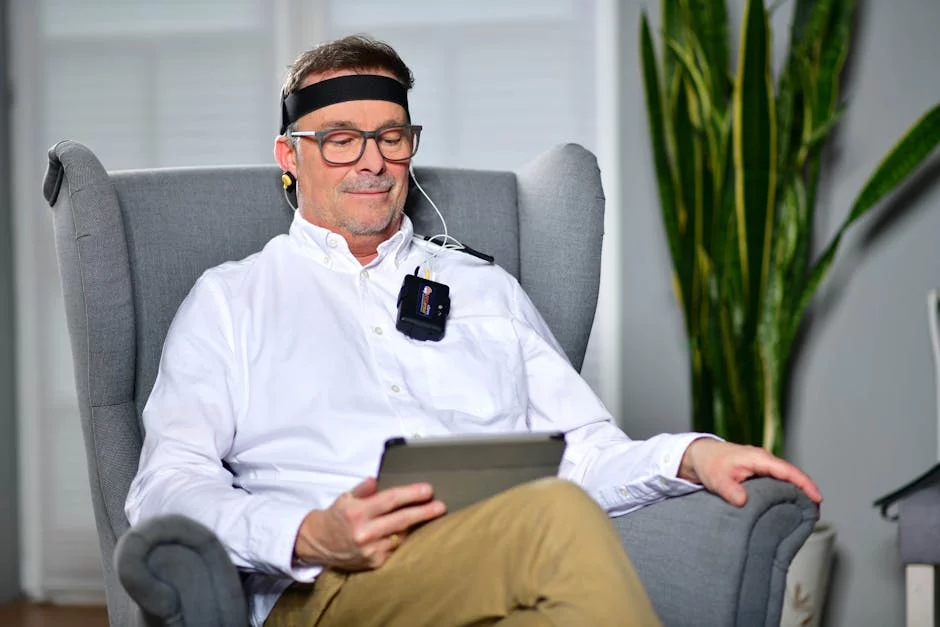
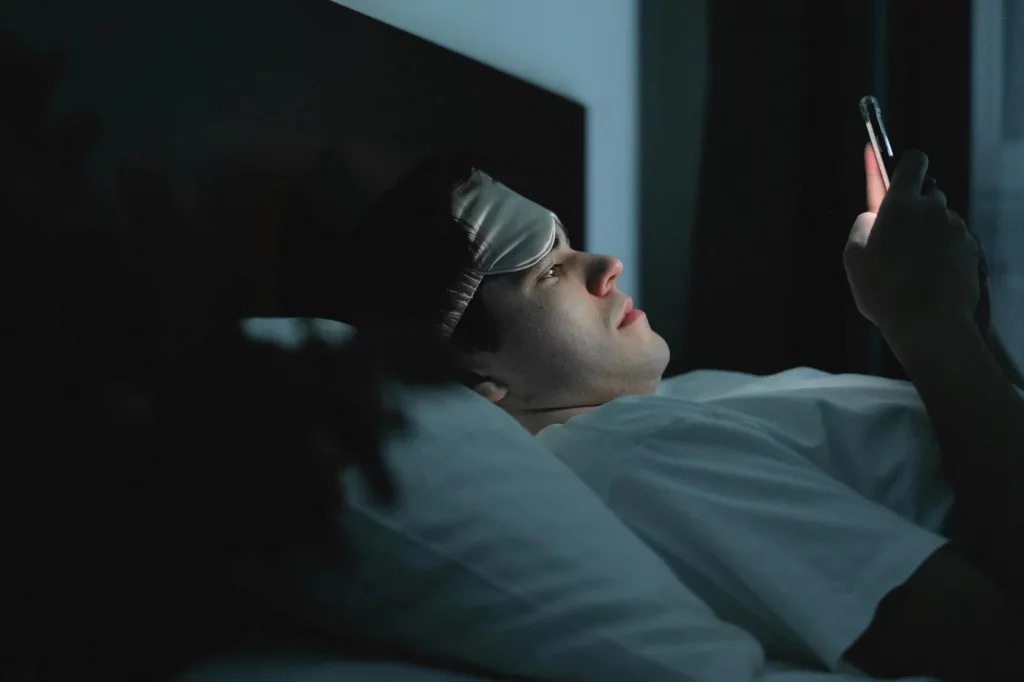
Yes — does blue light affect sleep quality? For most people, yes, especially when bright screens hit your eyes late in the evening and push your brain away from its normal wind-down mode. But wait. The real answer is more nuanced than “screens are bad,” because timing, brightness, distance, and what you’re doing on the device all matter.
You probably already know the scenario. You check one message, watch one video, answer one late email — and suddenly it’s 12:37 a.m., your brain feels oddly awake, and you’re wondering whether your phone is wrecking your sleep or whether the whole thing is a blue light sleep myth. Research on circadian timing and evening light exposure, including published evidence on light exposure, circadian rhythms, and melatonin, suggests the effect is real — but not identical for everyone.
So here’s the deal. This article will answer does blue light affect sleep quality, explain how blue light actually affects melatonin and your sleep cycle, and show you exactly what to do tonight: phone settings, laptop tweaks, room-light changes, realistic cutoff times, and what helps if you’ve already had too much late-night screen exposure. And yes, I’ll also cover what people get wrong — because sometimes poor sleep has as much to do with stress, habits, or bedtime procrastination as the screen itself.
If you’re staying up to study, work, or scroll, you’ll also get practical alternatives that don’t feel like punishment, including a quick body scan for sleep and broader help if your issue goes beyond screens, like this sleep restriction therapy guide. Which brings us to the useful part: not fear, not hacks, just a balanced plan you can use tonight.
I’m a software engineer, not a sleep clinician, and I’ve spent a lot of time testing screen settings, lighting changes, and bedtime routines while building learning tools at FreeBrain. Personally, I think that’s the missing piece in most advice: less moral panic, more evidence, and a clearer answer to does blue light affect sleep quality in real life.
📑 Table of Contents
- Does blue light affect sleep quality?
- Why your brain reacts to light at night
- What matters most—and what to avoid
- 7 steps to reduce blue light tonight
- Quick bedtime plan and when to get help
- Frequently Asked Questions
- Does blue light actually affect your sleep?
- How does blue light affect melatonin production?
- How long does blue light affect sleep?
- Does phone blue light affect sleep more than TV light?
- Does watching TV count as blue light?
- Can blue light affect deep sleep and REM sleep?
- How do you detox from blue light after a late night?
- What are the best blue light settings for sleep?
- Conclusion
Does blue light affect sleep quality?
So now we can get practical. If you’re wondering whether your evening screen habit really matters, the short answer is yes. For more on memory and brain health, see our memory and brain health guide.
Does blue light affect sleep quality? Yes—blue-rich light at night can delay sleep, reduce sleepiness, and shift your body clock later. But the size of the effect depends on timing, brightness, duration, distance from the screen, and what you’re actually doing on that device.
That’s the real-world problem, right? You use your phone, laptop, or TV at night to study, finish work, or just decompress, and you want useful guidance—not fear-based rules that fall apart in normal life. If you need a non-screen wind-down option tonight, try this body scan for sleep, and if sleep trouble goes beyond screens, this sleep restriction therapy guide can help you see the bigger picture.
Personally, I think this is the part most people get wrong. Blue light matters, but it’s only one piece of sleep quality alongside caffeine, stress, late meals, notifications, emotional arousal, and inconsistent bedtimes. While studying and building late, I’ve tested screen cutoffs, warm display settings, and wind-down routines a lot—and I rely on published sleep research, not hacks. Better sleep also helps you learn better right now, which is why this topic matters beyond just feeling tired.
The short answer in plain English
Evening light exposure can push your internal clock later and make you feel less sleepy. Research on light, circadian timing, and melatonin from NCBI helps explain why bright, short-wavelength light near bedtime can interfere with the normal rise in melatonin.
But wait. A bright phone 20 cm from your face isn’t the same as a dim TV across the room. Distance changes the amount of light reaching your eyes, and brightness matters too. A tablet at high brightness in a dark room usually has more impact than a television across the room with lamps on.
So, does blue light actually affect sleep for everyone the same way? Not really. Kids, teens, shift workers, and people already prone to insomnia often seem more sensitive, while other people notice only a mild effect unless screen time before bed is long and bright.
And here’s the kicker—content matters too. If you’re doomscrolling, gaming, arguing in group chats, or finishing stressful work, the alerting effect isn’t just about light. Mental stimulation can keep your nervous system switched on, which is one reason the Sleep Foundation’s overview of blue light and sleep emphasizes both screen exposure and bedtime habits.
What this guide will help you do tonight
Here’s what matters next: you’ll see device-specific settings, realistic cutoff windows, room-light fixes, and a simple recovery plan for nights when late exposure happens anyway. Well, actually, that’s what makes this useful—you don’t need a perfect digital detox, just better tradeoffs.
- Aim to dim phones and tablets 1-2 hours before bed, especially in a dark room.
- Use warmer display settings at night, but don’t assume they fully cancel the effect.
- Keep screens farther from your face when possible; closer, brighter devices tend to hit harder.
- Swap the last 5-10 minutes of scrolling for 5-minute muscle relaxation if your brain feels wired.
If your sleep problems are persistent, though, screen changes alone may not be enough. Which brings us to the deeper question: why does your brain react so strongly to light at night in the first place?
Why your brain reacts to light at night
So now we can answer the bigger question behind “does blue light affect sleep quality”: why does your brain care so much in the first place? Short version: your brain reads late bright light as a daytime signal, even when you’re trying to wind down with something calming like a body scan for sleep.
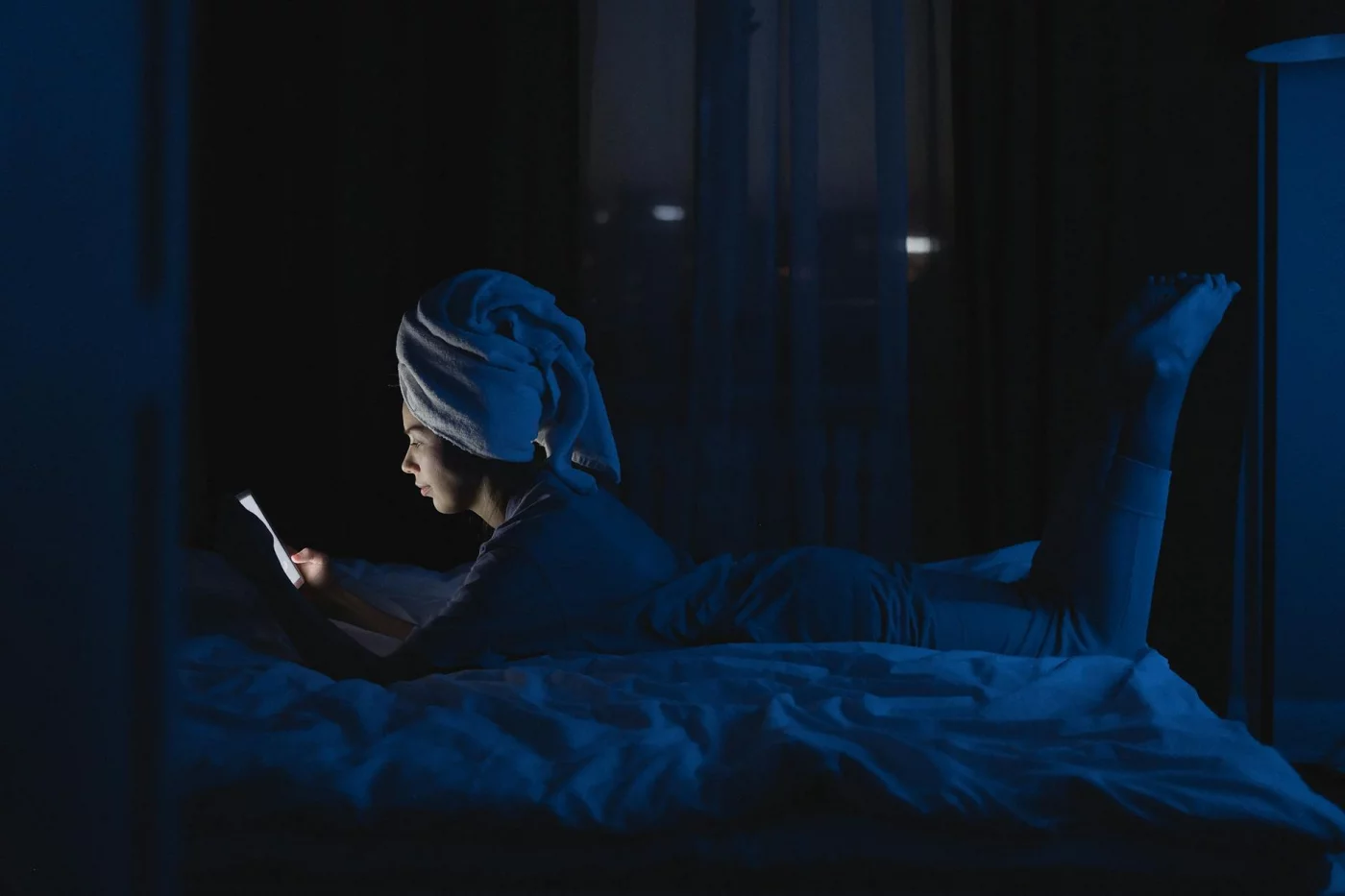
And that matters because screens are only one piece of the puzzle. If your sleep trouble is persistent, a broader plan like this sleep restriction therapy guide may help you look beyond devices alone.
The eye-to-brain pathway, minus the jargon
Light enters your eyes, but it doesn’t just help you see. Special retinal cells also send timing signals to your brain’s master clock, the suprachiasmatic nucleus, which helps control your circadian rhythm and alertness, as explained in NCBI’s overview of circadian rhythms.
OK wait, let me back up. Think of it like this: late bright light tells your brain, “Still daytime. Stay switched on.” That’s the core of how does blue light affect circadian rhythm—and why evening light exposure can push sleep later.
Melatonin is part of the story, not all of it
Melatonin is a darkness signal, not an off switch. When evening light is bright and blue-enriched, melatonin suppression can delay your internal night, but that’s only half the story.
The other half? Your brain gets activated by what you’re doing. Social feeds, work messages, gaming, and exam stress can keep you mentally alert even if you’ve turned on a warm screen filter. For students, that overlap between stimulation and stress is huge—especially if you’re also trying to reduce stress before a test.
And here’s the kicker — newer research and expert summaries from Harvard Health on blue light and sleep suggest brightness and total light exposure may matter nearly as much as spectrum alone. So if you only “remove blue” but keep the screen blazing, you may not get much benefit.
What changes in sleep architecture
What does blue light affect sleep quality look like in real life? Usually this:
- Longer sleep latency—you take longer to fall asleep
- Later sleep onset—you drift bedtime later than planned
- Lighter early-night sleep if exposure is bright and close to bed
- Possible REM and deep sleep changes, though evidence there is more mixed
The most consistent findings are delayed timing and higher alertness, not dramatic changes in every sleep stage. Still, even one shorter night can hurt next-day attention, learning, and working memory and performance.
From experience: what mattered most in practice
From testing late-night work setups, the biggest difference usually came from stacking three changes: warmer screens, lower brightness, and less stimulating tasks. Not one magic toggle. Personally, I think this is the part most people get wrong.
Which brings us to the practical question: if not every screen habit matters equally, what should you fix first—and what can you safely ignore?
What matters most—and what to avoid
So here’s the deal: once you understand why your brain reacts to light at night, the next question is obvious. Does blue light affect sleep quality more than anything else, or have headlines turned it into the only villain?
The balanced answer is this: the effect is real, but context matters. If your sleep problems are bigger than screen habits alone, you may need a broader plan like this sleep restriction therapy guide—and a non-screen wind-down such as a body scan for sleep can help replace late scrolling.
Why some studies find smaller effects
The blue light sleep myth debate started because newer studies often control brightness more carefully than older headline-making experiments did. When researchers compare two equally dim screens, spectrum-only differences can look smaller than popular articles implied, which is why research suggests the blue light effect on sleep is real but context-dependent.
OK wait, let me back up. Distance, duration, and total lux hitting your eyes matter a lot. A bright screen 10 inches from your face for 2 hours isn’t the same as a dim TV across the room for 30 minutes, and reviews in PubMed on evening light exposure and circadian timing make that broader point clearly.
Which screens and lights hit hardest
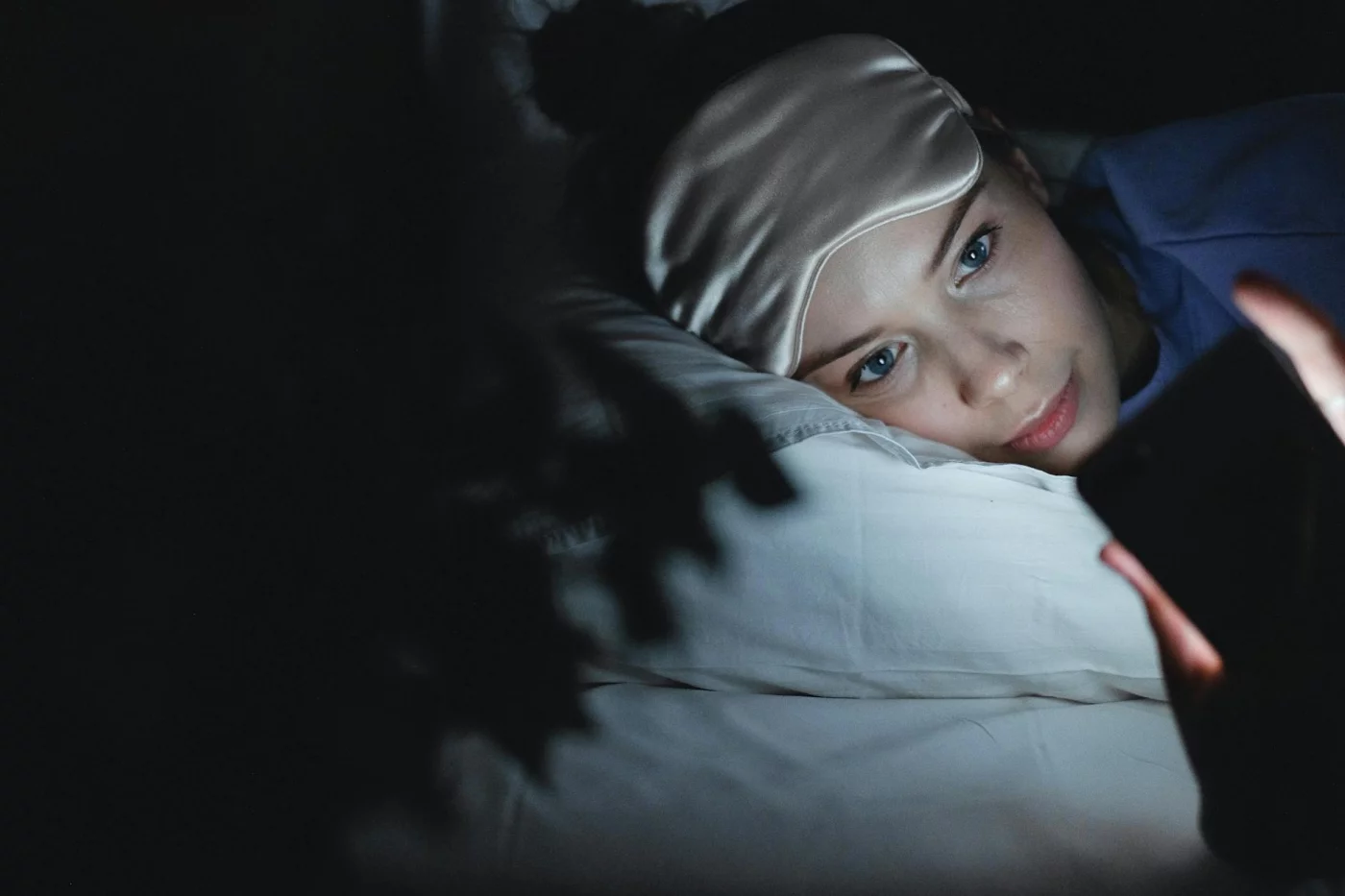
Does phone blue light affect sleep? Usually yes, because phones and tablets are held close, often at high brightness, and used in dark rooms where your pupils are more open. Laptops are often a moderate risk: brighter than people think, closer than TVs, and tied to mentally demanding work that keeps your brain alert.
Does watching TV count as blue light? Technically yes. But a dim warm TV 8 to 12 feet away may be less disruptive than strong overhead LED lighting in a kitchen or office-style room at 10 p.m. That’s the part most people miss.
- Highest likely impact: bright phone or tablet close to your face
- Moderate: bright laptop used for work or study
- Often overlooked: ceiling LEDs and room lighting
- Lower in many homes: dim TV viewed from farther away
Common mistakes that make sleep worse
Personally, I think this is where people waste effort. They turn on night mode, then keep brightness near maximum. Or they make the screen warmer while sitting under bright ceiling lights. And here’s the kicker—some people decide blue light does not affect sleep, then binge stimulating content until bed and wonder why they’re wired.
Avoid weak fixes. The best blue light settings for sleep are lower brightness, more distance, less time, and dimmer room lights—not just a warmer tint. Next, I’ll show you 7 practical steps to reduce blue light tonight.
7 steps to reduce blue light tonight
So now let’s make this practical. If you’re still wondering, “does blue light affect sleep quality,” the useful answer is yes, but timing, brightness, and what you do on the screen matter just as much.
How to reduce blue light tonight
Step 1-2: Cutoff time and warm settings
- Step 1: Pick a screen cutoff time you’ll actually follow: ideal is 2-3 hours before bed, good is 60 minutes, and 15 minutes is the bare-minimum rescue move. If your sleep issues go beyond screens, you may need a broader plan like this sleep restriction therapy guide.
- Step 2: Turn on Night Shift, Night Light, or the warmest equivalent automatically before sunset or at least 2 hours before bed. Warm settings help, but they work best when brightness also drops.
Step 3-5: Brightness, distance, and content
- Step 3: Lower phone brightness to the lowest comfortable level and hold it farther away when you can. Brighter, closer light hits harder.
- Step 4: Swap bright overhead LEDs for dim, warm lamps. And yes, TV blue light counts too, especially with high backlight and vivid mode.
- Step 5: Change the content. Reading something calm is very different from gaming, work email, or doomscrolling; research reviewed in the National Library of Medicine suggests evening light exposure can delay sleep timing.
Step 6-7: Wind down and recover
- Step 6: Replace scrolling with a short wind-down: stretching, journaling, a body scan for sleep, or 5-minute muscle relaxation. Last 15 minutes? Keep them dim and boring.
- Step 7: Used screens too late already? Don’t try to “detox” from blue light with gimmicks. Just dim everything, stop stimulating tasks, keep your wake time consistent, and get daylight plus light exercise tomorrow morning.
Device settings cheat sheet
- iPhone/iPad: Night Shift, warmer color temperature, Reduce White Point if needed.
- Android: Night Light or Eye Comfort Shield, plus Extra Dim where available.
- Windows/Mac: Night Light or Night Shift, lower brightness; dark mode is only a comfort add-on.
- TVs: Lower backlight, use warm/cinema mode, avoid vivid mode at night.
That’s the realistic version of how to reduce blue light at night. And if you’re asking how long does blue light affect sleep, think in terms of your pre-bed window: the closer and brighter the exposure, the more it can push sleep later. Next, I’ll give you a fast bedtime plan and the signs it’s time to get extra help.
Quick bedtime plan and when to get help
You don’t need a perfect digital sunset to sleep better tonight. If you’re still wondering, does blue light affect sleep quality, the practical answer is yes for many people—especially when light is bright, close to your eyes, and paired with mentally stimulating tasks.
Quick reference: use this tonight
📋 Quick Reference
- 2–3 hours before bed: dim room lights, skip bright overhead LEDs, and turn on warmer display settings.
- 1 hour before bed: stop gaming, doomscrolling, and intense work; cut brightness again and switch to audio or an offline bedtime routine.
- If you broke the plan: don’t panic. Lower light and stimulation fast, then do something simple like breathing or a body scan for sleep.
Who tends to feel the effects more
Teens, night owls, and shift workers often feel stronger effects because of circadian misalignment. Children and teens may also be more light-sensitive, and they tend to hold phones inches from the face. And yes, how long does blue light affect sleep depends on timing, brightness, and your chronotype.
People with insomnia symptoms, anxious students, and anyone working on screens at night can get hit by both light exposure and mental arousal. That’s why “blue light sleep myth” is too simple; does blue light affect sleep quality for everyone equally? Probably not.
When screens aren’t the whole problem
This article is educational, not medical advice. If you have persistent insomnia, loud snoring or gasping, severe daytime sleepiness, depression or anxiety symptoms, or broader sleep quality problems, talk with a qualified healthcare provider or sleep specialist.
Sometimes screens are only one piece. Research from the American Academy of Sleep Medicine and NIH-backed sources suggests sleep problems can also involve sleep apnea, stress, mood, schedule issues, or conditioned insomnia. Progress beats perfection, though. Reducing late bright light is still worth doing—even if you can’t eliminate screens—and the FAQ next will clear up the biggest edge cases.
Frequently Asked Questions
Does blue light actually affect your sleep?
Yes — research suggests evening blue-enriched light can delay sleepiness and shift your body clock later, especially when exposure happens close to bedtime. But if you’re wondering does blue light actually affect sleep, the real answer depends on brightness, timing, duration, distance from your eyes, and what you’re doing on the device. A bright phone 8 inches from your face while scrolling stressful content is very different from briefly checking a dim screen across the room. And yes, this is one reason does blue light affect sleep quality is such a common question: for many people, it can.
How does blue light affect melatonin production?
How does blue light affect melatonin production? Blue-enriched light reaching your eyes can signal to the brain that it’s still daytime, which can suppress or delay melatonin release and make it harder to feel sleepy on time. But wait — melatonin isn’t the whole story. Mental stimulation, emotional stress, gaming, work messages, and doomscrolling can also keep you alert even if your screen settings are warmer. For a practical reset, combine dimmer screens with a calmer wind-down routine.
How long does blue light affect sleep?
If you’re asking how long does blue light affect sleep, the strongest impact usually comes from exposure in the last few hours before bed. For most people, reducing bright screen and room light 1 to 3 hours before sleep is the most practical target, especially if you’ve noticed trouble falling asleep. Personally, I think this is the part most people miss: it’s not just the screen, it’s the whole light environment. A bright room at 11 p.m. can work against your sleep just as much as a bright device.
Does phone blue light affect sleep more than TV light?
Often, yes. If you’re wondering does phone blue light affect sleep more than TV light, phones usually have a bigger effect because they’re held much closer to your eyes and are often used for more stimulating activities like texting, short-form video, or social feeds. A bright phone in your face tends to matter more than a dim TV across the room, though room lighting still counts. So here’s the deal: distance and brightness change the dose.
Does watching TV count as blue light?
Yes, does watching tv count as blue light has a simple answer: TVs emit blue-enriched light too. Their impact may be lower than phones or tablets because they’re farther away, but a bright screen, vivid display mode, and intense content can still delay sleep and affect how sleepy you feel at night. If TV is part of your evening routine, lower the backlight, dim the room, and stop a bit earlier if you notice your sleep getting pushed later.
Can blue light affect deep sleep and REM sleep?
Can blue light affect deep sleep and REM? It may, especially if evening light exposure delays when you fall asleep or shifts your sleep timing later. The evidence is more consistent for increased alertness and later sleep onset than for large direct changes in deep sleep or REM themselves, which is why the bigger practical issue is often total sleep timing. And here’s the kicker — if blue light keeps you up later, your sleep quality can still suffer even without a dramatic change in sleep stages.
How do you detox from blue light after a late night?
There isn’t a special hacky answer to how to detox from blue light. What actually helps is a recovery routine: dim lights that night, stop stimulating input, keep your wake time steady the next morning, and get outdoor daylight early in the day. A calm reset works better than trying to “undo” the night with supplements or gadgets. If you’re working on a better evening routine, you can pair this with FreeBrain’s sleep content and evidence-based guidance from sources like the CDC’s sleep hygiene recommendations.
What are the best blue light settings for sleep?
The best blue light settings for sleep are usually the warmest comfortable night mode, very low brightness, and avoiding vivid color or high-backlight display settings after dark. But well, actually, filters alone usually aren’t enough — pair them with dim room lighting, shorter screen sessions, and less stimulating content if you’re trying to improve whether does blue light affect sleep quality in your case. If you want a stronger evidence-based baseline, the Sleep Foundation’s sleep hygiene guide is a useful place to start.
Conclusion
If you want better sleep tonight, keep the plan simple. Dim your lights 1 to 2 hours before bed, move bright screens farther from bedtime, turn on night mode or warmer color settings, and swap late scrolling for a low-light routine like reading, stretching, or planning tomorrow on paper. And yes, if you’ve been wondering, does blue light affect sleep quality — the practical answer is that nighttime light exposure can make it harder for your brain to wind down, especially when it’s bright, close to your face, and paired with stimulating content.
But don’t overthink it. You don’t need a perfect setup, expensive glasses, or a total tech ban to help your brain sleep better. Small changes work. Personally, I think this is the part most people miss: consistency matters more than doing everything at once. If tonight goes badly, fine. Reset tomorrow. A slightly darker room, a slightly earlier screen cutoff, and a slightly calmer bedtime routine can add up faster than you’d expect.
Which brings us to your next step: keep building a sleep environment your brain can trust. For more practical strategies, read How to Sleep Better and How to Focus Better on FreeBrain.net. Better nights support better memory, attention, and learning the next day. Start with one change tonight, repeat it tomorrow, and make your evenings work for your brain—not against it.