
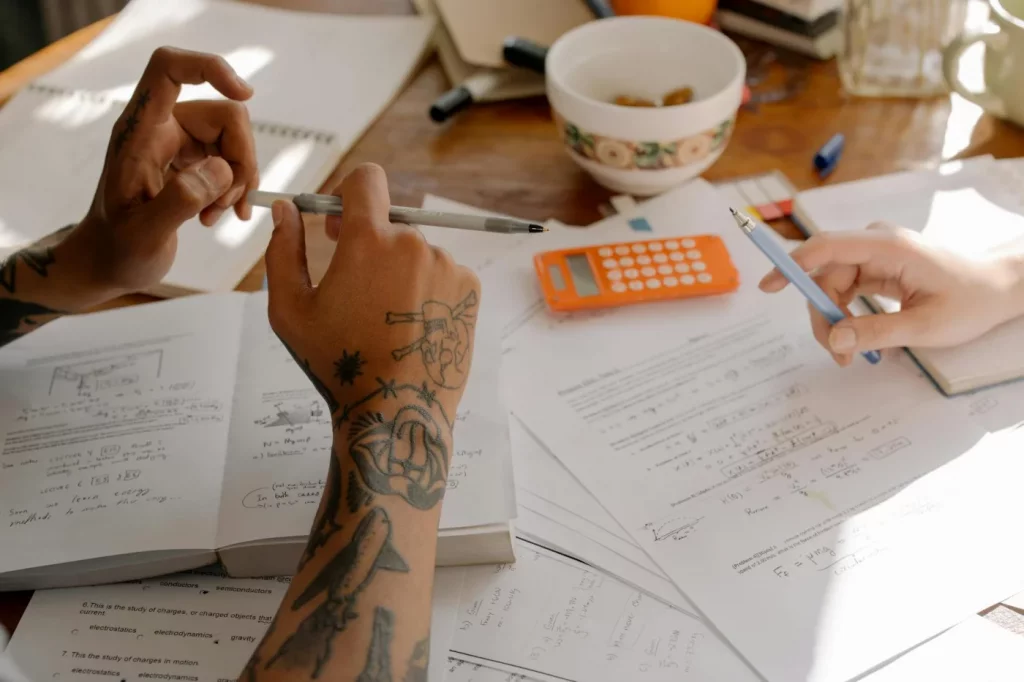
Yes — if you’re wondering how to study for finals in a week, one week can be enough to raise your score if you stop trying to review everything and focus on high-yield topics, active recall, and a tight schedule. That’s the real answer to how to study for finals in a week: prioritize what matters most, test yourself constantly, and study in the right order instead of just studying longer. If you need the methods first, start with these science-backed study methods.
You probably don’t need more advice like “start early.” Too late for that. Maybe you’ve got five classes, three weak subjects, a half-finished study guide, and that sinking feeling that one week isn’t enough — or you’re already googling how to study for finals in 2 days. Fair question, right? Research on retrieval practice, summarized in American Psychological Association guidance on memory strategies, points to self-testing as one of the most reliable ways to remember more in less time.
So here’s the deal. This article gives you a realistic plan, not fantasy productivity: a better 2-week intensive option, the full 1-week finals plan, and emergency 2-day and 1-day fallback versions. You’ll also get college vs. high school adjustments, ADHD-friendly tweaks, plain-English explanations of what actually works, and practical templates you can use today. And if you want a broader reset first, this companion guide can help you learn better right now.
I’m a software engineer, not a neuroscientist — but I’ve spent years building FreeBrain tools for self-learners and testing what helps under real time pressure. Personally, I think this is the part most finals advice gets wrong: your plan matters more than your motivation.
📑 Table of Contents
How to study for finals in a week
If the intro made this feel urgent, good. A week isn’t ideal, but it’s enough time to make real gains if you stop passively reviewing and start studying on purpose. For more on learning and study skills, see our learning and study skills guide.
The short answer
Yes, one week can be enough to improve your finals performance. If you’re wondering is one week enough to study for finals, the honest answer is yes for score improvement, no for mastering everything.
So here’s the deal: how to study for finals in a week comes down to three moves—prioritize high-weight topics, use retrieval-based methods, and cut rereading hard. If you want a practical evidence-based starting point, FreeBrain’s guide to science-backed study methods pairs well with this section, and our broader guide can help you learn better right now.
From building FreeBrain learning tools and testing study workflows as a self-directed technical learner, I’ve noticed the same pattern again and again: students don’t usually fail because they started one week out. They lose points because they spend that week organizing too late and reviewing too passively.
Your first hour matters most
Planning first feels slow, but it’s what prevents fake productivity. Well, actually, most last-minute studying fails before the first flashcard because there’s no triage.
- List every exam and date
- Rank each class by weight, difficulty, and readiness
- Block study time on your calendar
- Gather notes, slides, past quizzes, and practice problems
- Use recall-first methods, not rereading
- Practice under time pressure
- Protect sleep every night
Copy this first-hour routine into your notes: 0-15 minutes list exams and dates; 15-30 score each class from 1-5 for confidence; 30-45 choose your top 3 weak, high-value topics; 45-60 build tomorrow’s study blocks. That’s the best method to study for finals when time is tight.
Evidence note and limits
Research is pretty clear here. The influential review by Dunlosky and colleagues, available via PubMed on effective learning techniques, found that practice testing and distributed practice are more reliable than highlighting or rereading for most learners.
Which brings us to methods under pressure: self-testing, spaced review, and worked problems beat passive review. If you need examples, try these active recall flashcards, and remember that CDC sleep guidance lines up with what students feel in real life—sleep loss wrecks focus, memory, and error-checking.
If you have two weeks, that’s better. If you have less, don’t worry—we’ll also cover 2-day and 1-day finals prep. Quick note: if anxiety, sleep problems, ADHD treatment questions, or illness are affecting your studying, treat this as educational only and talk with a qualified professional. Next, let’s turn this into an actual plan and schedule.
Build your plan and schedule
You know the deadline. Now turn panic into a plan. If you’re figuring out how to study for finals in a week, don’t start with random notes—start with a priority map built from science-backed study methods and a realistic calendar.
Map every exam before you study
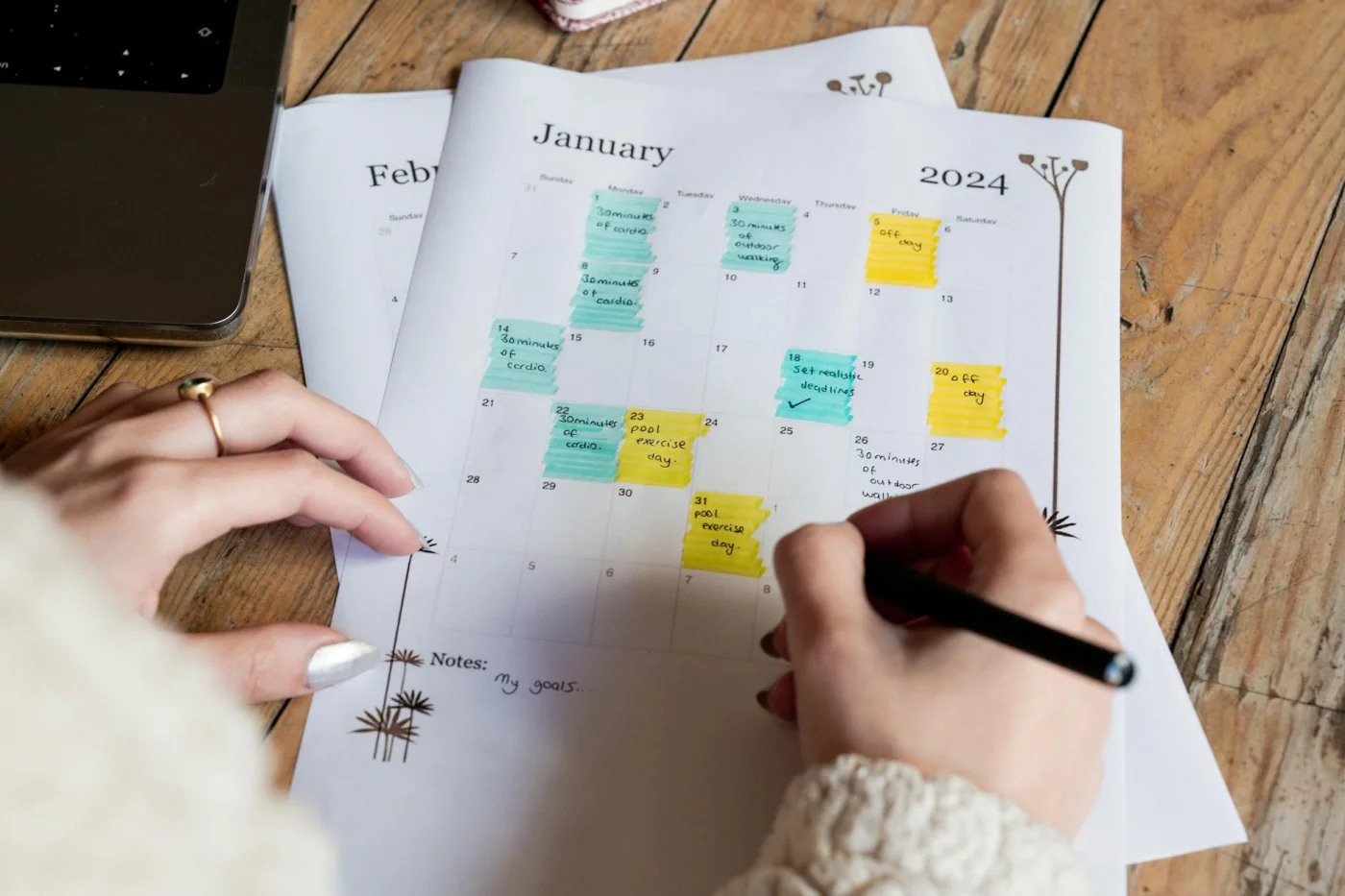
List each exam’s date, format, grade weight, and topic coverage first. Then score it: Priority Score = exam weight (1-5) + difficulty (1-5) + unreadiness (1-5). Chemistry final: 5 + 5 + 4 = 14, so it gets your first deep-work block.
The common mistake? Spending equal time on unequal classes. And that usually rewards the subjects you like, not the ones that threaten your grade, which is why a simple priority matrix beats vague motivation every time.
- Exam
- Date
- % of grade
- Top 3 topics
- Confidence score
- Practice resources
- Hours needed
A realistic 2-week intensive plan
If you have 14 days, use them differently. Days 14-8: organize notes, find gaps, make recall prompts, and gather practice sets. Days 7-3: switch hard into retrieval, timed questions, and error logs—an approach supported by APA guidance on effective studying.
Days 2-1 are for simulation, not new content. Review misses, taper intensity, and protect sleep; memory consolidation depends on it, as explained by the National Heart, Lung, and Blood Institute on sleep deprivation. If you want a broader system for planning and retention, read how to learn better right now.
A 1-week schedule you can actually follow
How to build a finals study schedule template
- Step 1: Plan 3-5 focused blocks a day, each 45-60 minutes.
- Step 2: Put 10-15 minute breaks between blocks and one light review block at night.
- Step 3: Protect 7-9 hours for sleep.
- Step 4: Rotate heavy and light subjects; keep one low-cognitive-load block for admin, emails, printing, or scheduling.
Sample day: 9:00-9:50 recall block, 10:05-10:55 problem set, 11:10-12:00 second subject, 2:00-2:50 timed practice, 8:00-8:30 light review. For 2 exams, alternate daily. For 4 or 6, pair one hard subject with one easier one and keep loose ends in a capture list using GTD for students.
If you work, have classes, or care for family, compress the plan to two anchor blocks minimum. That’s still enough to make how to study for finals in college or how to study for finals in high school far more manageable—especially once you add active recall flashcards, stress control, and better review methods. Which brings us to the part that matters most under pressure: what to actually do inside each block.
Study methods that work under pressure
Once your schedule exists, the next question is simple: what should fill those blocks? If you’re figuring out how to study for finals in a week, this is where evidence-based methods matter most.
Rereading feels smooth because the page looks familiar. But exam recall is harder; Harvard’s study tips emphasize retrieval and self-testing over passive review, and our science-backed study methods guide explains why that gap matters.
What to do instead of rereading
Use active recall: try to pull information out of memory before you look at your notes. For history, close the book and write the five causes of the French Revolution from memory, then check what you missed. That’s self testing, and it trains the exact skill finals demand.
For a broader walkthrough, see these active recall flashcards examples. Biology works well with flashcards, and language study works the same way: see “mitochondria” or “bonjour,” answer from memory, then verify.
Use flashcards, practice tests, and blurting
- Flashcards: best for facts, formulas, and vocabulary.
- Practice questions: best for calculus worked problems and exam realism.
- Blurting: best for history outlines, essays, and concept maps.
Try a simple spaced repetition rhythm: same day, 1 day later, 3 days later, then 5–7 days later. Keep one error-log page for repeated mistakes so weak spots get more attention than easy material.
From experience: what actually sticks
After building FreeBrain tools, the clearest pattern is this: students improve faster when they track misses and revisit weak questions 1 day, 3 days, and 5–7 days later instead of restudying everything. Personally, I think this is the part most people get wrong. They overestimate familiarity and underestimate timed recall.
If you want to know how to study for finals effectively, use one measurable rule: spend at least 60–70% of your study time on recall, problems, or self-testing.
Adjust for college, high school, and ADHD
College finals are usually more cumulative, so prioritize old quizzes, professor cues, and practice sets. High school review packets are often closely aligned to the exam, so convert each section into closed-book questions.
For how to study for finals with ADHD, reduce friction: use 25–40 minute blocks, a visible timer, body doubling, fewer task switches, a one-tab setup, and external reminders. Quick note: ADHD and anxiety are health-adjacent topics, so for treatment or accommodations, consult a qualified clinician or your school’s disability support office. Next, let’s cover emergency plans, common mistakes, and fast fixes.
Emergency plans, mistakes, and quick answers
If the pressure-study methods above are your engine, this is your emergency steering wheel. And if you’re wondering how to study for finals in a week when you’ve already lost time, here’s the damage-control version.
If you only have 2 days left
If you’re asking how to study for finals in 2 days, don’t review everything. Day 1 morning: build a priority map of chapters, formulas, definitions, and likely test topics. Spend 80% of your time on high-probability content and 20% on weak fringe areas.
Day 1 afternoon: do high-yield review. Day 1 evening: closed-book recall. Day 2: timed practice first, then error review, then a light recap. Can you study for finals in 3 days? Yes—but only if you stop pretending every topic matters equally.
If you only have 1 day left
If you need to know how to study for a final exam in one day, triage by exam format: multiple choice, problem-solving, or essay. Make one-page sheets for top concepts, formulas, definitions, and likely question types, then test yourself from memory. Don’t try to relearn the whole course.
Mistakes that waste your last week
- All-nighters
- Passive rereading
- Multitasking
- Switching subjects every 10 minutes
- Making pretty notes too late
- Using stimulants or supplements as shortcuts
Procrastination is usually avoidance of unclear or hard material, not laziness. Working memory is limited, so use checklists, timers, and simple review sheets; this is why external systems help. For stress, reduce stress before a test, and see guidance from the CDC on sleep and MedlinePlus on anxiety basics.
Quick reference and next steps
📋 Quick Reference
- Pick your timeline: 7 days, 2 days, or 1 day
- Build a priority map tonight
- Use recall before rereading
- Practice under exam conditions
- Stop heavy studying early enough to sleep
A focused week still counts. Pick your timeline, make the map tonight, and follow it calmly—that’s the real answer to what is a good way to study for finals and how to study for finals in a week. Next, let’s wrap this up with the most common final questions and clear next steps.
Frequently Asked Questions
Is one week enough to study for finals?
Yes — is one week enough to study for finals? For many students, yes, if you stop trying to cover everything and focus on the highest-weight topics, past-paper patterns, and weak areas first. One week is usually enough to raise your score with active recall, practice questions, and spaced review, but it usually isn’t enough to relearn an entire course from scratch, which is why prioritization matters more than sheer hours. If you’re figuring out how to study for finals in a week, start by ranking units by exam weight, difficulty, and likelihood of showing up.
How should I study for finals in 2 days?
If you’re wondering how to study for finals in 2 days, use triage, not perfectionism: rank topics, study the most tested material first, and spend most of your time answering questions from memory. Skip low-value work like rewriting notes or making pretty summaries, and protect your sleep because one exhausted extra hour usually hurts recall more than it helps. A simple split works well: Day 1 = highest-yield review and practice, Day 2 = weak spots, timed questions, and light recap.
How do I study for a final exam in one day?
How to study for a final exam in one day comes down to narrowing the target fast: focus on the exam format, top concepts, formulas, definitions, and likely question types instead of trying to cover every chapter. Use closed-book recall, create a one-page summary from memory, and do one short timed practice set if possible so you can spot gaps before the test. And yes, this overlaps with how to study for finals in a week — just compressed into a much stricter “most important first” version.
How should I study for finals with ADHD?
If you’re asking how to study for finals with adhd, reduce friction before you add effort: use 15-30 minute study blocks, a visible timer, body doubling, and one task at a time so your attention doesn’t get burned by constant switching. Many students do better with a short checklist, phone out of reach, and active methods like saying answers out loud or using flashcards rather than rereading. This is educational guidance, not medical advice, and if you have questions about treatment, diagnosis, or academic accommodations, consult a qualified healthcare professional or your school’s disability support office; the CDC’s ADHD resource page is a solid starting point.
What is the 1/3, 5/7 rule in studying?
What is the 1/3,5/7 rule in studying? Versions vary online, but most point to the same core idea: review material after a short gap, then again after a longer gap so you interrupt forgetting. Personally, I think the label matters less than the mechanism — spaced repetition is the useful part, not memorizing a branded rule. If you want a practical system, review once within a day, again a few days later, and then test yourself before the exam; FreeBrain’s study tools are built around that same spacing logic.
What is the 7-3-2-1 study method?
What is the 7 3 2 1 study method? There isn’t one universal, evidence-based version, so don’t treat it like a magic formula; in most cases, it’s just a planning shortcut for spreading review across several days. That’s fine as a simple heuristic, but the stronger foundation is still active recall, practice testing, and spaced review, which research in cognitive psychology consistently supports. For a more reliable approach to how to study for finals in a week, build your plan around retrieval practice and use a trusted overview like the testing effect as the principle behind your schedule.
Conclusion
If you remember four things, make them these: start by ranking your exams by difficulty and date, block your week into focused study sessions with clear goals, use active recall and practice questions instead of passive rereading, and build a backup plan for low-energy days. That’s really the core of how to study for finals in a week. And yes, it works better when you keep sessions short enough to stay sharp, review your weakest topics first, and stop trying to “cover everything” equally.
Now for the part you probably need to hear: one week is still enough to make a real difference. Not perfect. But meaningful. If you’ve been procrastinating, feeling behind, or panicking a little, you’re not the only one. Personally, I think this is where students waste the most energy — worrying about lost time instead of using the time they still have. A solid 7-day plan won’t magically erase the semester, but it can help you walk into finals more prepared, more focused, and a lot less overwhelmed.
If you want to keep improving your system after this, explore more study resources on FreeBrain.net. You might start with How to Study Effectively for a stronger day-to-day method, or read Active Recall Study Method if you want the fastest upgrade to your review sessions. Use this guide on how to study for finals in a week, make your first study block today, and turn the next seven days into real progress.