

Short answer: AI isn’t automatically bad for learning. But if you’re asking how does ai affect education negatively, the biggest risk is pretty simple: it can weaken memory and thinking when it replaces retrieval, problem solving, and the kind of mental effort your brain needs to learn. That’s why the real question isn’t just how does ai affect education negatively — it’s when AI helps, when it harms, and how you can use it without outsourcing your brain.
You’ve probably felt this already. You ask a chatbot to explain a reading, outline an essay, or solve a math problem, and suddenly your work feels easier — but later you can’t remember much of it. Not random. Research on retrieval practice and durable learning in the NIH’s PubMed Central archive keeps pointing to the same idea: memory gets stronger when you actively pull information out, not when you just recognize a polished answer on a screen.
So here’s the deal. This article will show you exactly how students can use AI responsibly, including when to ask for hints instead of answers, how to use AI for studying without cheating, and how to use AI for studying without hurting critical thinking. I’ll also break down task-by-task rules for essays, reading, math, and exam prep, so you can pair AI with proven systems like our best study methods by subject and stronger retrieval habits from this active study methods guide.
I’m a software engineer, not a neuroscientist. But I’ve built FreeBrain learning tools, tested AI-assisted study workflows myself, and spent a lot of time figuring out one practical question: how does ai affect education negatively only when students use it the wrong way — and what should you do instead?
📑 Table of Contents
AI helps or hurts based on use
So here’s the deal. AI isn’t automatically bad for learning, but it does hurt when it replaces retrieval practice, problem solving, and productive struggle instead of supporting them. That’s the real answer to how does ai affect education negatively: not by existing, but by making it easy to skip the mental work that builds memory. For more on learning and study skills, see our learning and study skills guide.
The short answer students actually need
Is it bad to use ai to help me learn? Not necessarily. AI helps most after you’ve tried first, and it hurts most when it becomes your first move for every summary, answer, or paragraph.
Personally, I think this is where people get too extreme. You don’t need to be anti-AI, but you also shouldn’t let it replace proven systems like these best study methods by subject. How is ai affecting students learning? Mostly through habits: active use can support learning, passive use can quietly weaken it.
Why the real risk is offloading thinking
The key term is cognitive offloading. That’s when you outsource recall, summarizing, or reasoning to a tool, then mistake that ease for actual learning.
OK wait, let me back up. Asking AI for 5 quiz questions after reading a chapter can strengthen retrieval practice and metacognition. Asking for a chapter summary, reading it once, and never testing yourself? That’s shallow processing, which usually means weaker encoding, worse transfer, and lower retention. If you want a better model, start with this active study methods guide.
- Helpful: explanation, feedback, planning, quiz generation
- Risky: instant answers, passive summaries, copy-paste writing
What the evidence suggests so far
Research on AI in education is still evolving, so broad claims deserve caution. But evidence from PubMed and NCBI learning research consistently supports active recall and feedback, while passive review is usually weaker than self-testing. And classroom guidance from Harvard Graduate School of Education also points toward task design and student habits mattering more than the tool alone.
From building FreeBrain tools and testing AI-assisted outlining, quiz generation, and feedback workflows, the biggest difference wasn’t the tool itself. It was whether the student attempted a 10-minute no-AI recall block first.
Which brings us to the practical part: a simple way to use AI safely without giving away the thinking that makes learning stick.
A simple way to use AI safely
So here’s the deal: how does ai affect education negatively depends a lot on whether AI replaces thinking or supports it. A safer default is simple: use it after your first effort, alongside proven methods like these best study methods by subject.
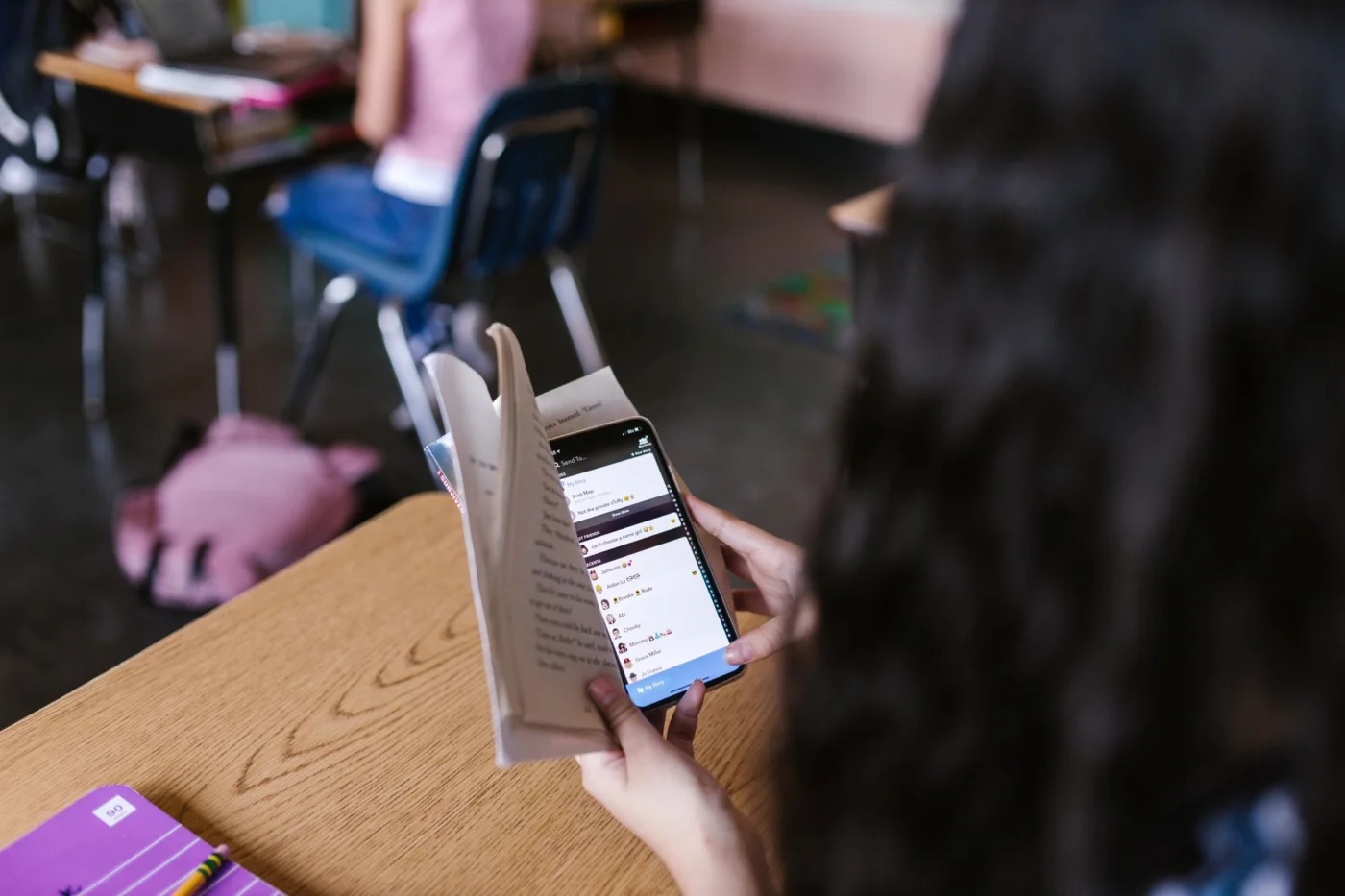
How to use AI without cheating or getting dependent
- Step 1: Try first for 5-15 minutes.
- Step 2: Ask for hints, feedback, or questions.
- Step 3: Compare your thinking to the response.
- Step 4: Finish with a no-AI retrieval check.
Step 1: Attempt before you ask
Spend 5-15 minutes struggling productively before opening a chatbot. Draft your thesis, solve the first math step, or summarize the reading from memory. That friction matters; research on retrieval practice and desirable difficulty, summarized in this review on active recall and learning, suggests manageable effort improves retention.
Step 2: Ask for targeted help, not answers
Best prompt angles? “Give me hints, not the full solution,” “quiz me on this topic,” or “show where my reasoning breaks.” That’s tutoring, not outsourcing. And if you want a stronger base for this, our active study methods guide explains why AI works best for feedback, examples, planning, and question generation.
Step 3: Compare and check your thinking
Put your answer beside the AI response and mark three things: what matched, what differed, and what still feels fuzzy. Do this for essays, reading notes, and worked problems. That’s metacognition — and it’s the part most students skip.
Step 4: Reflect without AI
End every session with 10-15 minutes of no-AI recall: explain it aloud, answer five questions, or redo one problem cold. If you can’t reproduce it without the tool, you probably haven’t learned it yet.
- Do: use AI for feedback, examples, quiz generation, and planning.
- Don’t: submit AI text unchanged, let it solve every step first, or replace retrieval practice.
- Always: follow school policy and disclose use when required.
That framework answers how does ai affect education negatively in a practical way: the harm grows when AI becomes a substitute for effort. Next, let’s make this concrete with examples, common mistakes, and quick rules.
Examples, mistakes, and quick rules
So here’s the practical part. If you’re wondering how does ai affect education negatively, the biggest risk isn’t the tool itself; it’s using it to skip the mental work that builds memory, judgment, and transfer.
Real-world application by task
Use AI after effort, not before. That’s the cleanest rule I know.
- Essays: Good use = feedback on structure, clarity, and missing counterarguments. Bad use = “write my paper.” Better prompt: “Critique my thesis and point out weak logic.” If you want proven alternatives, start with the best study methods by subject and add AI only for revision.
- Reading and notes: Read first, annotate, then ask for 5 self-test questions. That’s how to use ai for note taking and still remember.
- Math: Ask for one hint or error diagnosis, not a full solution before your first attempt.
- Exam prep: Use it for practice questions and spaced prompts, not passive summary rereading.
Common mistakes to avoid
This is where how does ai affect education negatively becomes obvious. Common errors: asking AI first, submitting unchanged text, skipping retrieval, trusting wrong answers, and using the tool as a comfort blanket when you’re stressed instead of fixing the study plan.
And yes, passive AI use can feel productive while weakening attention and encoding. For ongoing attention or mental health concerns, consult a qualified professional.
Quick rules for students, teachers, and parents
The “30% rule,” “10/20/70,” or “70/30 split”? Helpful heuristics sometimes, but not universal scientific laws. A safer boundary is simple: AI can support brainstorming, feedback, and quiz generation, but core learning and final graded work should stay human-led.
📋 Quick Reference
- Attempt first
- Ask for hints, not replacements
- Compare outputs with your notes
- Finish with retrieval from memory
- Never submit AI text as your own
- Require drafts, prompt logs, or oral explanation as proof of learning
Use AI as a coach, not a substitute for thinking. Next, let’s wrap this up with the most common questions and the bottom-line rules.
Frequently Asked Questions
Is it bad to use AI to help me learn?
No — is it bad to use ai to help me learn depends on how you use it. If AI supports your thinking by giving feedback, explaining a concept in simpler language, helping you plan a study session, or creating self-test questions after you’ve tried first, it can be useful. But if it replaces your effort and gives you finished reasoning before you’ve struggled with the material, you’re likely to learn less.
How does AI affect education negatively?
How does ai affect education negatively? The biggest risks are cognitive offloading, weaker retrieval practice, less productive struggle, and growing dependence on instant answers. And here’s the kicker — students can start to feel like they understand a topic because they recognize the explanation, even though they can’t recall it later or apply it on their own.
How do I use AI for studying without hurting critical thinking?
The safest method for how to use ai for studying without hurting critical thinking is simple: attempt the problem first, ask AI for a hint or feedback, compare that with your own reasoning, then self-test without the tool. If AI is doing the core analysis, drafting, or problem solving for you, your critical thinking practice drops fast. Personally, I think the best question to ask is, “Did this tool help me think, or did it think instead of me?”
How do I use AI for homework without cheating?
For how to use ai for studying without cheating, use AI to clarify directions, check your reasoning, summarize what the assignment is asking, or generate extra practice questions — not to produce the final work you submit. Always follow your school’s academic integrity policy, and never turn in AI-written answers as your own. If you want a safer workflow, try using AI only after you’ve made a real attempt and saved your draft first.
Can AI improve learning outcomes?
Can ai improve learning outcomes? Research suggests yes, but mostly when AI gives timely feedback, clearer explanations, and prompts for active recall rather than passive review. A good benchmark is whether the tool helps you retrieve, explain, and apply ideas yourself; if study time turns into answer copying, the upside shrinks fast. For the research side, the APA has covered both the promise and limits of AI in education.
What is the 30% rule for AI?
What is the 30% rule for ai is usually an informal online heuristic, not a universal scientific rule or official standard used everywhere. A better rule is functional: let AI support the process, but keep retrieval, drafting, and problem solving in your own hands. If you’re wondering how does ai affect education negatively, this is the core issue — once the tool takes over the hard thinking, learning quality often drops. For a more evidence-based study approach, see FreeBrain’s article on active recall.
Conclusion
So here’s the practical bottom line: AI helps your learning when it supports thinking instead of replacing it. Use it after you’ve tried the problem yourself, ask it for hints rather than final answers, turn its explanations into your own notes or flashcards, and always do a quick “memory check” by recalling the idea without looking. That’s the real answer to how does ai affect education negatively: it usually goes wrong when students outsource effort, skip retrieval, and confuse smooth explanations with actual understanding.
And if you’ve already leaned on AI too much, you’re not behind. Really. Most students are still figuring this out in real time, and small changes can fix a lot fast. Personally, I think this is the encouraging part: you don’t need to stop using new tools, you just need better rules for using them. Keep your brain in the loop, stay a little uncomfortable, and let AI make practice clearer—not easier to avoid.
Want help building that system? Explore more at FreeBrain.net, starting with Active Recall: The Study Method That Actually Builds Memory and Spaced Repetition: How to Remember What You Study. If you’re still wondering how AI affects learning in negative ways, those two strategies are your best protection. Use AI as a coach, not a crutch—and make your next study session one that strengthens memory, focus, and real understanding.