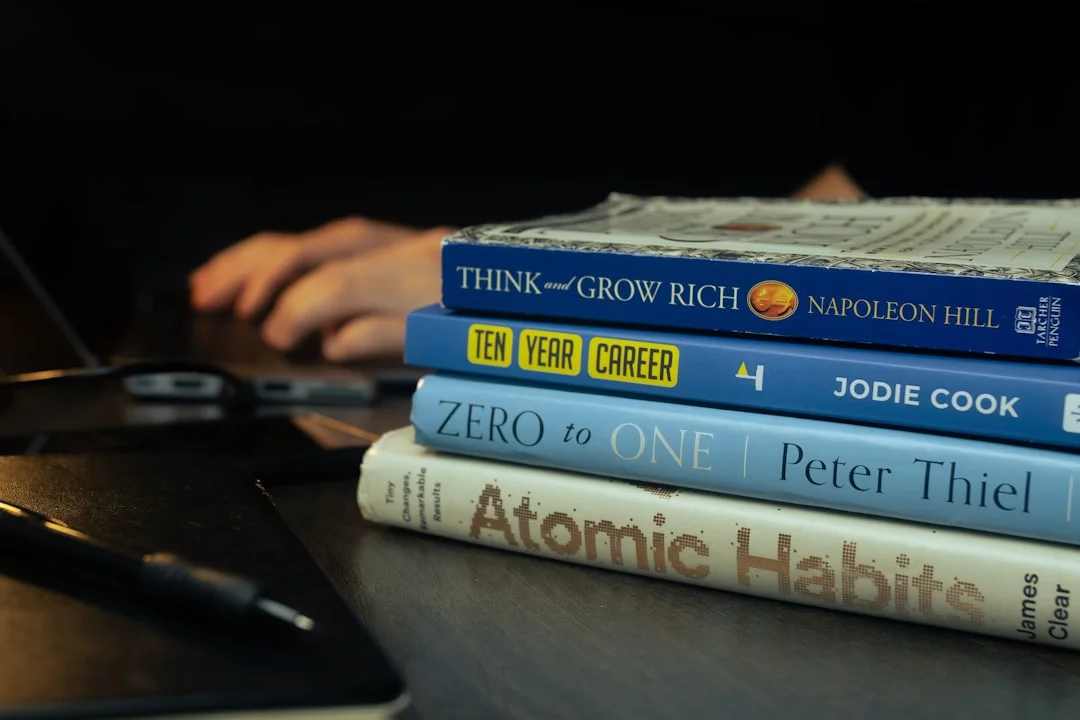
Atomic Habits is useful for students because it turns “study harder” into smaller behaviors you can repeat: opening notes after class, starting a problem set for five minutes, reviewing before you forget, and making distractions harder to reach.
This student-focused Atomic Habits summary by chapter explains James Clear’s main ideas, then translates them into homework routines, exam prep, phone boundaries, class review, and simple study systems. You’ll get the foundations, the 4 Laws of behavior change, student examples, a 5-step daily routine, and a printable-style checklist you can copy into a notebook.
The goal is not to overhaul your whole life in one night. It is to pick one habit loop that makes studying easier to start and easier to repeat. This guide is educational only, not medical or mental health advice; if focus, anxiety, sleep, or burnout are seriously affecting your life, speak with a qualified professional.
Personally, I think this is the part most summaries miss. I’m a software engineer who builds learning tools at FreeBrain, and I’ve spent a lot of time turning research-backed ideas into study systems that real students can stick with. Quick note: this article is educational, not medical or mental health advice, so if focus, anxiety, sleep, or burnout are seriously affecting your life, talk to a qualified professional.
📑 Table of Contents
- Atomic Habits Summary by Chapter in 60 Seconds for Students
- The 7 Best Atomic Habits Lessons Students Should Apply First
- Atomic Habits Summary by Chapter for Students: Foundations, 4 Laws, and Advanced Tactics
- What Are the 4 Laws of Atomic Habits? Student Examples and a Step-by-Step Study System
- Real-World Application: Atomic Habits for College Students, High School Students, and Exam Prep
- Quick Reference: Common Mistakes, Printable-Style Checklist, FAQ, and Next Steps
- Frequently Asked Questions
- Conclusion
Atomic Habits Summary by Chapter in 60 Seconds for Students
So here’s the fast version after the intro. This atomic habits summary by chapter for students is simple: tiny repeated actions shape your identity and long-term results far more than random bursts of motivation, which is why small study behaviors often beat heroic cram sessions. For more on productivity and focus, see our productivity and focus guide.
Think homework starts, 10-minute lecture reviews, spaced revision, showing up to class, and putting your phone out of reach. That’s the real value of an atomic habits summary by chapter when you’re trying to study better, not just admire the book’s ideas.
- Make it obvious.
- Make it attractive.
- Make it easy.
- Make it satisfying.
Atomic Habits in 3 Sentences
What is a short summary of Atomic Habits? James Clear’s core claim is that small improvements, repeated consistently, compound over time and gradually change both your results and your identity. For an atomic habits summary for students, that means one 10-minute review block repeated across five days usually helps more than one desperate three-hour session the night before.
Personally, I think this is where students get the most value from an atomic habits summary by chapter: it turns vague goals into repeatable systems. If you want a reliable study setup, pair habits with external supports like best note-taking systems and a plan to build a second brain so you’re not relying on memory alone.
Who This Student Summary Is For
This section is for high school students, college students, adult learners, and certification learners who want a practical atomic habits summary by chapter, not a generic book recap. You’ll get the chapter-by-chapter logic, the four laws, study routine examples, exam applications, and a checklist-style way to apply them.
But wait, one important distinction. Clear’s framework overlaps with broader behavioral science, and parts of it are supported by evidence on implementation intentions, self-monitoring, and environment design, including findings summarized in research on implementation intentions in health behavior and the well-established psychology of self-monitoring. Still, effective studying also depends on retrieval practice, spacing, and interleaving, not just consistency, which is why tools like active recall apps matter.
Educational note: this atomic habits summary by chapter is educational, not medical advice. If you’re dealing with ADHD, anxiety, depression, sleep disorders, or ongoing focus problems, consult a qualified professional. And if you want stronger external systems, our guide to best note-taking systems goes deeper on that side of the equation.
Now this is where it gets interesting: next, we’ll get specific about the seven best Atomic Habits lessons students should apply first.
The 7 Best Atomic Habits Lessons Students Should Apply First
That quick atomic habits summary by chapter gives you the map. Now you need the student version: the seven lessons that actually change grades, reduce stress, and make studying easier to repeat.

If you read any atomic habits summary by chapter and wonder, “OK, but what should I do today?” start here. Personally, I think these are the best atomic habits lessons for students because they work in normal school weeks, not just on your most motivated Sunday.
Here are the seven to apply first: identity before outcomes, start small, reduce friction, design your environment, stack habits, track consistently, and build systems not goals. After building FreeBrain study-system content, I keep seeing the same pattern — small setup changes beat motivation-heavy plans almost every time.
- Open your notes right after class.
- Place your textbook on your desk before dinner.
- Charge your phone outside your bedroom.
- Review flashcards for 5 minutes after breakfast.
And yes, those sound almost too simple. But that’s exactly why they survive busy weeks, which is the whole point of a useful atomic habits summary by chapter for students.
Identity Before Outcomes
This is the shift most students miss. Instead of “I want an A,” think, “I’m the kind of student who reviews within 24 hours.”
Why does that matter? Because outcomes wobble. You can study hard, get one bad quiz score, and suddenly feel like your plan failed. Identity based habits hold up better because one rough day doesn’t erase who you’re trying to become.
So what does that look like in school? Attendance becomes “I’m someone who shows up prepared.” Reading becomes “I read 3 pages before checking messages.” Assignment starts become “I begin the task the day it’s assigned, even if only for 2 minutes.” That’s one reason any good atomic habits summary by chapter should translate ideas into repeatable student behaviors, not just book quotes.
Quick example, in cue-action-reward form: after class ends, open notes for 2 minutes, then enjoy the relief of knowing review has already started. Another one: after breakfast, review one flashcard deck, then check off the session in one of these active recall apps. Self-monitoring like this is supported by behavioral research, and implementation intentions — the “when X happens, I do Y” format — have strong evidence behind them, including summaries from the American Psychological Association on behavior change.
Make Studying Easier to Start
Most procrastination isn’t laziness. It’s friction.
Well, actually, let me be more precise. Students usually delay work because the starting cost feels vague, annoying, or mentally expensive. So the fix is to make the first action tiny and obvious: read one page, solve one problem, or review one flashcard deck.
This is where the atomic habits summary by chapter becomes practical. Start small. Reduce friction. Define the first 2-minute action before you need willpower. Pre-open the tabs for your assignment, leave your notebook on the desk, and put the textbook out before dinner so the task is already half-started.
Three things matter: cue, action, reward. Cue: textbook waiting on desk. Action: read one page. Reward: you’re allowed to stop, but you usually keep going. Speaking of which — if your phone keeps hijacking that start, charge it outside the bedroom and away from your study chair. A lot of “discipline problems” are really environment problems.
Systems Beat Last-Minute Motivation
If you remember one line from this atomic habits summary by chapter, make it this: exam success usually comes from weekly review, not one heroic cram session. But wait. Students still plan as if motivation will magically appear the night before.
Goals matter, sure. Systems matter more. A goal says “get an A on the midterm.” A system says “review class notes within 24 hours, revisit flashcards after breakfast, and do one practice set every Thursday.”
That’s why I recommend using external systems instead of trusting memory alone. If you want a reliable setup, start with how to build a second brain and compare the best note-taking systems for capturing lectures, readings, and review prompts. Research on self-monitoring and planning supports this general approach, and habit repetition becomes easier when the system tells you what to do next instead of making you decide from scratch.
And here’s the kicker — this is also how can students apply atomic habits without burning out. You don’t need bigger promises. You need repeatable loops: attend class, open notes right after class, review flashcards for 5 minutes after breakfast, and log what happened. A solid atomic habits summary by chapter for students should lead you toward those loops.
Next, we’ll break these ideas into the full framework: foundations, the 4 Laws, and the advanced tactics students can use week after week.
Atomic Habits Summary by Chapter for Students: Foundations, 4 Laws, and Advanced Tactics
The lessons above are the fast wins. But if you want an atomic habits summary by chapter that actually helps with school, you need the book translated into student routines, not just chapter notes.
So here’s the deal. This atomic habits summary by chapter groups the book into the parts that matter most when you’re trying to study consistently, manage distractions, and keep going on ordinary weeks.
Chapter Parts at a Glance
Part 1: Tiny actions repeated daily shape identity and reduce friction.
Part 2: The 4 Laws help you make study habits obvious, attractive, easy, and satisfying.
Part 3: Advanced tactics matter during exam season: track habits, design your environment, recover fast after missed days, and learn to tolerate boredom.
Part 1: Foundations Students Shouldn’t Skip
The opening chapters matter because they explain why small actions beat occasional motivation. In student terms, the atomic habits chapter 1 summary for students is simple: attending every class, opening your notes the same day, and doing a 10-minute review within 24 hours can change your semester more than one heroic cram session.
And yes, that sounds almost too basic. But behavior research keeps pointing the same way: repeated cues and low-friction actions are easier to maintain than effort-heavy plans, which is why routines often beat willpower over time.
This is also where systems beat goals. A goal says “get an A,” but a system says “review lecture notes at 6 p.m., keep a running question list, and store everything in one reliable place.” If your notes are scattered, start with better best note-taking systems and learn how to build a second brain so your study process doesn’t depend on memory alone.
Personally, I think this is the part most students skip. They chase outcome goals, then wonder why nothing happens on a random Tuesday when they’re tired, busy, and not feeling inspired.
Part 2: The 4 Laws Applied to Schoolwork
If you want the practical core of an atomic habits summary by chapter, it’s the 4 Laws. What are the 4 laws of Atomic Habits for students? Make it obvious, make it attractive, make it easy, and make it satisfying.
- Obvious: Put your textbook on your desk before bed or set a calendar reminder for a 24-hour lecture review.
- Attractive: Pair revision with tea, a specific playlist, or a quiet library spot you like.
- Easy: Start with five flashcards, one practice problem, or a 5-minute recap.
- Satisfying: Track the session, check it off, or keep a visible streak.
Now this is where it gets interesting. The framework lines up well with what psychology calls cue-based behavior and reinforcement; the American Psychological Association’s overview of behavioral psychology explains why cues and consequences shape repeated actions.
For studying, consistency isn’t enough if the method is weak. A weekly revision block works far better when you combine it with retrieval practice, not rereading, which is why many students benefit from using active recall apps and understanding active recall vs passive review.
That’s the student version of the middle chapters. And the next section will break each law down into a full study system.
Part 3: Advanced Tactics for Exam Season
The best atomic habits summary by chapter should also cover what happens when life gets messy. During exam season, three things matter: your environment, your tracking, and your recovery after missed days.
Environment first. Keeping distracting apps off your home screen, charging your phone across the room, and leaving tomorrow’s revision sheet on your desk can remove friction before your brain starts bargaining.
Tracking next. A simple weekly grid for lecture review, problem sets, and revision blocks gives you feedback fast, and feedback is motivating because progress becomes visible. Research on habit formation and repetition, including work indexed by PubMed on habits and automaticity, supports the idea that repeated context-linked behavior becomes easier over time.
But wait. You will miss days. The useful rule here is never miss twice if you can help it; one skipped review is noise, two starts a new pattern.
Boredom tolerance matters too. Revision gets repetitive, especially for adult learners balancing work, family, and classes, but that repetition is often the price of mastery. Worth it? Absolutely.
There is one real limitation, though. Habit systems help, but low sleep, chronic stress, anxiety, or attention problems can still block follow-through, so this atomic habits summary by chapter isn’t a cure-all. If those issues are persistent or severe, consult a qualified healthcare or mental health professional.
So that’s the student-focused atomic habits summary by chapter: foundations first, then the 4 Laws, then advanced tactics for real academic life. Which brings us to the next question — how do you turn those 4 Laws into a step-by-step study system you can actually use this week?
What Are the 4 Laws of Atomic Habits? Student Examples and a Step-by-Step Study System
The last section covered the big picture. Now let’s turn that atomic habits summary by chapter into something you can actually use tonight at your desk.

If you’re wondering what are the 4 laws of atomic habits, the short answer is simple: make it obvious, attractive, easy, and satisfying. For students, that means building a study system you can repeat even when motivation is low, ideally with external support like best note-taking systems instead of relying on memory alone.
Make It Obvious, Attractive, Easy, and Satisfying
Here’s the direct answer PAA-style: the four laws of behavior change are make it obvious, make it attractive, make it easy, and make it satisfying. And the opposite pattern for breaking bad habits is make it invisible, unattractive, hard, and unsatisfying.
In plain English, obvious means your cue is hard to miss. Attractive means you want to start. Easy means the first step feels almost too small to resist. Satisfying means your brain gets a quick reward for finishing.
So what does that look like for school? Obvious: put your assignment list on your desk before dinner. Exam version: sit at your desk right after dinner with tomorrow’s revision sheet already open. If you want less doomscrolling, do the reverse and make your phone invisible by keeping it in a drawer or another room.
Attractive is about reducing friction and adding appeal. For homework, you might use your favorite playlist only during review blocks. For exams, pair practice questions with a good coffee or a study buddy. And for bad habits, make them unattractive: grayscale mode, no social apps on the home screen, no charger by the bed.
Easy matters more than people think. Personally, I think this is the part most students skip. Homework example: start with a 10-minute flashcard block, not a heroic two-hour session. Exam example: do five retrieval questions before opening your notes. If a bad habit keeps winning, make it harder by logging out, deleting shortcuts, or adding app limits.
Satisfying closes the loop. Check a habit tracker, mark an X on paper, then take a 5-minute break. Research on habit formation discussed in the NCBI Bookshelf overview of learning and habit mechanisms helps explain why immediate feedback strengthens repeated behavior.
And here’s the kicker — an atomic habits summary by chapter is useful only if you connect the laws to learning methods that actually improve memory. Consistency alone isn’t enough. You also need active recall, spacing, and interleaving if you want the routine to produce better retention, not just prettier checkmarks. That’s why many students also build a second brain for planning, capture, and review.
Student Examples: Homework, Reading, and Phone Control
| Law | Homework | Reading | Revision | Phone distraction control |
|---|---|---|---|---|
| Obvious | Leave assignment list on desk before dinner | Put book on pillow or keyboard | Open tomorrow’s quiz set in advance | Keep phone out of sight |
| Attractive | Start with your easiest subject | Read with tea or a favorite lamp | Use a playlist only during review | Use grayscale to make apps less tempting |
| Easy | Do one problem first | Read 3 pages before social apps | Begin with a 10-minute flashcard block | Remove apps from home screen |
| Satisfying | Check off the task | Log pages read | Track streaks and take a short break | Charge phone outside bedroom |
Well, actually, this is where student examples matter more than theory. A good atomic habits summary by chapter should show how the laws work in homework, reading, revision, and distraction control — not just repeat the book’s wording.
How to Build a Daily Study System in 5 Steps
Use this five-step system when you want a routine that works on normal school days, not just on perfect days. The rule is simple: make the first action small enough that you can do it even when you are tired.
- Pick one anchor. Choose a moment that already happens most days: after class, after dinner, after breakfast, or after you sit at your desk.
- Choose one subject. Do not build a system for every class at once. Start with the course where missed reviews hurt you most.
- Define the first five minutes. Write the first action clearly: “open chemistry notes and answer three recall questions,” not “study chemistry.”
- Remove one friction point. Put the notebook, textbook, calculator, or flashcards where you will see them before the anchor happens. Move your phone away from the study chair.
- End with the next cue. Before stopping, write the next tiny action: “tomorrow, redo questions 4–6” or “review chapter 3 flashcards.”
Example: after dinner, sit at your desk, put your phone across the room, open biology notes, answer three questions from memory, then mark the next review date. If you miss a day, do not rebuild the whole plan. Restart at the next anchor with the smallest version of the habit.
Daily Study System Example: Lecture Day
- Step 1: Choose one anchor habit, like sitting at your desk right after class or after dinner.
- Step 2: Define a 5-minute starter action, such as opening notes and doing one retrieval question.
- Step 3: Prepare the environment the night before: notebook out, flashcards ready, phone away.
- Step 4: Use active recall for the first review block instead of rereading. FreeBrain’s guide to active recall apps can help you make that review trackable and satisfying.
- Step 5: Track completion with a checkmark or streak, and if you miss a day, reset fast without turning one miss into a lost week.