

Accountability vs responsibility is the difference between owning a task and having a system that makes you more likely to finish it. Responsibility says, “This is on me.” Accountability adds outside expectations, visibility, deadlines, feedback, and a little social pressure — which is why accountability vs responsibility matters so much when you’re trying to actually follow through.
You’ve probably felt this. You fully intend to study tonight, do the workout, ship the side project, or finally start that report — and then somehow the day disappears. But when someone expects an update on Friday, or you’ve blocked time for a 30-minute weekly review, your odds of finishing suddenly go up. Why?
Part of the answer is behavioral science, not willpower. Research summarized by the American Psychological Association on willpower and self-control points to a simple truth: self-regulation works better when your environment supports it. And here’s the kicker — accountability vs responsibility changes your environment by making your intentions visible, time-bound, and harder to quietly ignore.
In this article, you’ll get a plain-English breakdown of accountability vs responsibility, the real reason accountability helps you follow through, and seven evidence-backed mechanisms behind it. You’ll also learn practical ways to use accountability for studying, workouts, habits, and personal projects — from partners and public commitments to progress tracking, weekly check-ins, and better how to set deadlines so your goals stop living only in your head.
I’m a software engineer, not a psychologist. But after building learning tools and studying what helps people stick with hard things, I’ve found that accountability vs responsibility is one of the most useful distinctions you can make if you want to follow through more consistently.
📑 Table of Contents
- What is accountability vs responsibility? The fast answer and why it matters
- Why does accountability help you follow through? 7 psychology-backed reasons
- Benefits of accountability for goals, studying, and productivity: real-world application
- How to build accountability for goals: a step-by-step system that actually works
- Common accountability mistakes to avoid if you want real follow-through
- Quick reference: the best accountability methods, next steps, and conclusion
- Frequently Asked Questions
- Conclusion
What is accountability vs responsibility? The fast answer and why it matters
Now we can make the key distinction. In accountability vs responsibility, responsibility means the task is yours, while accountability means you’re answerable for progress or results through visibility, check-ins, deadlines, and consequences. For more on productivity and focus, see our productivity and focus guide.
Snippet-ready definition of accountability vs responsibility
So here’s the deal. Accountability vs responsibility comes down to ownership versus answerability. Responsibility means you own the task. Accountability adds a system that makes someone, or something, track whether you actually followed through.
That’s why accountability helps before motivation fades. It increases self-monitoring, reduces ambiguity, and makes the next action harder to avoid. If you review your week every Friday using a 30-minute weekly review, you’re not just hoping to stay on track — you’re creating a visible checkpoint.
Example? You’re responsible for studying for an exam. But you become accountable when you report your completed active recall studying sessions to a friend every Friday. Same goal, different pressure.
A simple accountability vs responsibility table
Many people mix these up because both involve ownership. But wait — only one reliably adds external structure.
| Factor | Responsibility | Accountability |
|---|---|---|
| Who owns the task? | You | You |
| Who sees progress? | Maybe nobody | Someone or some system |
| Are deadlines explicit? | Often vague | Usually clear |
| Are there consequences? | Often weak | More likely |
| Is feedback built in? | Not always | Usually yes |
That’s the practical answer to what is the difference between accountability and responsibility. A Friday project deadline, a workout check-in, or a progress screenshot creates friction against avoidance — especially when you also know how to set deadlines clearly.
Why this difference matters for real life
If you keep missing goals, the missing piece is often not personal responsibility but accountability vs responsibility in action. You may fully intend to finish a side project, hit three workouts, or submit work by Friday, yet still drift when nobody checks progress.
Research on self-regulation and social support summarized by the American Psychological Association on willpower and self-control and the NCBI overview of self-regulation points in the same direction: monitoring, feedback, and clear standards improve follow-through.
- Studying: report completed sessions
- Workouts: log reps and show up at a set time
- Side projects: send a Friday update
Accountability vs responsibility isn’t a cure-all, though. If chronic procrastination seems tied to anxiety, burnout, ADHD, depression, or sleep problems, talk with a qualified professional. Next, I’ll break down why accountability helps you follow through with seven psychology-backed reasons.
Why does accountability help you follow through? 7 psychology-backed reasons
Now that the difference between accountability vs responsibility is clear, the next question is practical: why does accountability actually change what you do? Short version: accountability works because it turns a private intention into a visible system with expectations, review, and a higher chance that you’ll act before motivation fades.

The short answer: accountability changes behavior by changing the environment
If you’re wondering why does accountability help you follow through, it’s usually not because you suddenly become more disciplined. It’s because accountability adds external expectations, visibility, deadlines, and feedback that strengthen self-regulation.
Motivation is unstable. Systems are steadier. A weekly check-in, a shared workout log, or a study review using a 30-minute weekly review makes your actions visible, and visible actions are harder to ignore. That’s the real engine behind accountability vs responsibility: responsibility stays internal, while accountability changes the environment around the behavior.
The 7 reasons accountability improves follow-through
-
It creates clear expectations. Vague goals don’t survive contact with a busy day. “Study more” becomes “finish 3 Pomodoro blocks by 6 p.m.” or “send a workout screenshot by 7:30.”
This is close to implementation intentions, a behavior-change idea strongly associated with Peter Gollwitzer: deciding in advance what you’ll do, when, and where. In accountability vs responsibility, this matters because accountability forces specificity instead of wishful thinking.
-
It adds deadlines and consequences. Deadlines compress attention. Even mild consequences — like telling your writing partner you missed your 500-word sprint — increase completion odds because there’s now a cost to delay.
And yes, small consequences count. If you struggle with vague timelines, learning how to set deadlines helps turn “eventually” into a real commitment device.
-
It increases self-monitoring. People often improve a behavior simply by tracking it. Research indexed on PubMed’s behavior-change literature has repeatedly linked self-monitoring with better adherence across habits like exercise, diet, and medication routines.
Why? Because patterns show up fast. A workout log reveals skipped Tuesdays. A study check-in shows you keep overestimating evening focus. That’s one of the biggest benefits of accountability.
-
It uses social pressure and consistency bias. Once you tell another person, “I’m sending my draft by Friday,” you’re more likely to behave in line with that identity. The American Psychological Association’s resources on social influence in behavior help explain why social expectations shape choices so strongly.
This is why social accountability works. Not because your friend is magical, but because humans care about reputation, belonging, and appearing consistent.
-
It strengthens feedback loops. Quick review prevents long drift. If your accountability partner asks, “What worked? What failed? What changes this week?” you course-correct before losing seven unproductive days.
That feedback loop is huge for students, writers, and project work. A bad plan caught on Tuesday is fixable. A bad plan ignored for a month becomes “I fell off.”
-
It reduces decision fatigue and procrastination. This is the part most people miss. Accountability often pre-decides the next action, which lowers friction at the exact moment you’d normally stall.
If your rule is “text my study partner after two practice sets” or “upload the draft at 4 p.m.,” there’s less negotiating with yourself. That’s how accountability improves follow through: fewer choices, less delay, more action.
-
It boosts motivation through visible progress and reward anticipation. Checking off completed actions feels good because progress itself is rewarding. Well, actually, there’s a modest neuroscience angle here: accountability may support executive function by reducing decision load and increasing reward anticipation.
If you want the deeper mechanism, our piece on dopamine and motivation explains why visible progress can create momentum. In plain English, when effort clearly leads to a report, check mark, or positive response, your brain treats the task as more worth doing.
What the evidence suggests, and where accountability stops helping
So, what makes accountability effective for behavior change? Research suggests two tools show up again and again across contexts: self-monitoring and implementation intentions. And when you compare accountability vs responsibility, accountability usually wins on follow-through because it makes those tools harder to skip.
But wait. Accountability can backfire if it turns into shame, vague criticism, or constant surveillance. If someone already feels overloaded, harsh check-ins often increase avoidance instead of action.
The sweet spot is simple: clear expectations, small commitments, fast feedback, and supportive review. Which brings us to the next section — how to use those principles in real life for goals, studying, and productivity.
Benefits of accountability for goals, studying, and productivity: real-world application
So that’s the psychology. But what does accountability actually look like when you’re trying to study, build habits, or hit a deadline this week?
From building learning tools and watching where people stall, I keep seeing the same pattern: accountability vs responsibility isn’t about caring more. It’s usually about making progress visible, reviewing it on a rhythm, and defining the next action so clearly you can’t pretend you’re “working on it.” A simple 30-minute weekly review often fixes more follow-through problems than another motivation speech. And yes, this connects with reward anticipation too — progress you can see tends to feel better, which is part of why dopamine and motivation matter in the first place.
For students: accountability partner for studying
The best student accountability is specific. Not “study chemistry more.” Not “be productive tonight.” I mean: 50 minutes, chapter 4, 12 active recall questions, then compare misses.
This is where accountability vs responsibility becomes practical. Responsibility says you should study. Accountability says you text someone at 6:55, start at 7:00, and report one thing you recalled correctly plus one weak area at 7:50.
A strong accountability partner for studying can use a simple script. Two students text before the block: what they’ll study, how long, and what method they’ll use. After the block, they each send one active recall result and one concept that still feels shaky. If the task is tied to active recall studying and a timed session like Pomodoro for studying, follow-through gets much easier because the target is concrete.
- What did you plan?
- What did you finish?
- What got in the way?
- What’s your next scheduled session?
- What will you change this week?
Quick sidebar: this is the part most students get wrong. They use accountability to track time, but not learning. Personally, I think the better question is, “What can you now recall without notes?” That’s why accountability vs responsibility works best when paired with active recall studying, not vague effort.
For habits and behavior change
For habits, lighter systems usually win. Workouts, reading, sleep routines — they all improve when the cue is obvious and the proof is visible.
Three things matter: streaks, triggers, and low-friction check-ins. A visible streak calendar gives immediate feedback. Habit stacking attaches the behavior to something stable you already do. And preplanned cues — shoes by the door, book on the pillow, phone outside the bedroom — reduce the need for willpower.
That’s one of the clearest benefits of accountability. You stop asking, “Will I feel like it?” and start asking, “Did I do the thing after the cue?” Public commitment can help with follow through, sure. But wait, for people who hate performative posting, private check-ins often work better and last longer.
Want a self-accountability example without a partner? Try this: “After I brush my teeth, I’ll read 5 pages. Then I mark one box on a paper tracker.” That tiny loop answers how to stay accountable to yourself because it creates a cue, an action, and a visible record. And here again, accountability vs responsibility matters: responsibility is internal intention; accountability is externalized evidence.
For projects and deadline adherence: from experience
For deadline-driven work, people usually don’t miss because they’re lazy. Well, actually, they miss because the task is underspecified. “Work on presentation” is not a plan. “Draft slide 1-5 by Thursday 3 p.m.” is.
This is why accountability is important for goals that have moving parts. Writing one article draft, shipping one feature, sending one application, or finishing one presentation all get easier when you pair a weekly review with one visible metric: draft submitted, feature merged, application sent, slides complete. One metric beats vague ambition almost every time.
And here’s the kicker — accountability vs responsibility shows up most clearly with deadlines. Responsibility says the project matters. Accountability systems for productivity force you to define what “done” means, when it will happen, and what the next visible action is. If you struggle here, start with a better plan for how to set deadlines before adding more pressure.
So yes, accountability improves follow through. But it works best when it supports focus methods rather than replacing them. Which brings us to the next step: how to build an accountability system that actually works in real life.
How to build accountability for goals: a step-by-step system that actually works
The benefits are real. But accountability only works when you turn it into a simple system you can actually run every week.
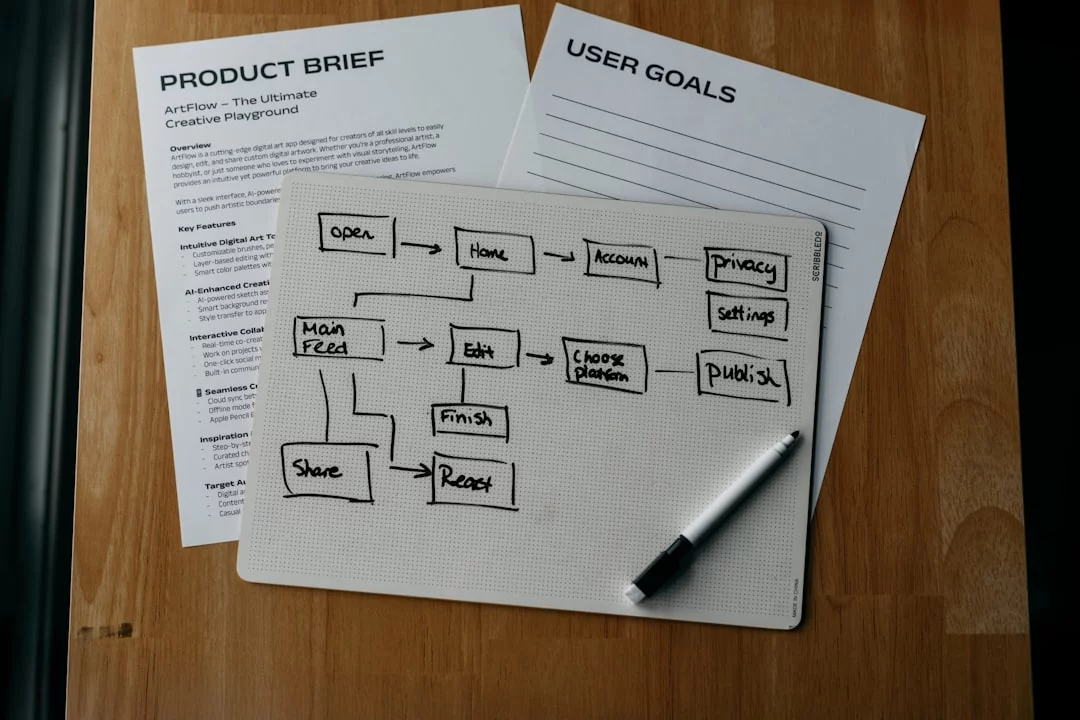
Here’s the practical version: one goal, one metric, one check-in rhythm, one consequence, and one review loop. That’s the core difference in accountability vs responsibility — responsibility says “I should do it,” while accountability vs responsibility becomes visible when someone or something checks whether you did it.
How to build your accountability system
- Step 1: Define one behavior, not a vague outcome.
- Step 2: Pick one accountability method that fits the goal.
- Step 3: Track one visible metric with weekly check-ins.
- Step 4: Review, adjust, and add a mild consequence if needed.
Step 1: Define the behavior clearly
Start with behavior. Not identity, not ambition, not a slogan.
“Get fit” isn’t actionable. “Walk 30 minutes after lunch on Monday, Wednesday, and Friday” is. If you want measurable goals, your plan should answer three things: what will you do, when will you do it, and how often?
This is where implementation intentions help. Research by psychologist Peter Gollwitzer found that “if-then” plans improve follow-through because they reduce decision friction at the moment of action. So instead of “study more,” write: “If it is 7 p.m., then I start a 25-minute review block.”
Bad goal: “I’ll work on my side project more.” Good goal: “At 8 a.m. on Saturday, I draft 300 words for my landing page.” That’s how to use accountability to build habits — define the behavior so clearly that missing it is obvious.
And yes, this is the part most people get wrong. In accountability vs responsibility, responsibility stays private and fuzzy; accountability vs responsibility becomes useful only when the target behavior is specific enough to observe.
Step 2: Choose the right accountability method
Not every goal needs the same system. Studying, workouts, and side projects fail for different reasons, so the method should match the failure point.
- Accountability partner: best when consistency drops without social pressure.
- Public commitment: useful for deadlines and visible deliverables.
- Habit tracker: great for repeatable daily or weekly habits.
- Scheduled check-ins: strong for studying and project progress.
- Commitment device: helpful when avoidance is predictable.
- Environmental friction: remove cues that make quitting easy.
Here’s the shortcut. The best accountability methods for habits are usually low-friction and repeatable, like a tracker on your desk or a Sunday text check-in. Public commitment and follow through work better for deadlines, launches, and deliverables because the social cost of not finishing is clearer.
Examples help. A student might send a friend three completed review sessions every Friday. A workout goal might use a calendar streak plus a class booking fee as a commitment device. A side-project builder might post a weekly build log every Sunday.
If you want a weekly structure, use FreeBrain’s 30-minute weekly review to choose one method, one metric, and one review rhythm. Personally, I think that’s the cleanest way to stop overbuilding the system.
Step 3: Set check-ins, metrics, and deadlines
Use one visible metric only, especially at the start. More metrics feel smart, but they usually create noise.
Good beginner metrics include number of study sessions, workouts completed, pages drafted, or days your bedtime target was met. Why one metric? Because self-monitoring works best when the signal is obvious. A 2019 review in Health Psychology Review found that self-monitoring is consistently linked with better behavior change outcomes.
Set weekly check-ins. Daily tracking can help, but weekly review is where patterns become visible. And deadlines matter because open-ended goals invite delay.
Try this:
- Studying: 4 review sessions per week, checked every Sunday
- Workouts: 3 gym visits per week, checked every Saturday
- Side project: 2 shipped tasks per week, checked every Friday
So here’s the deal: how to build accountability for goals is mostly about reducing ambiguity. In accountability vs responsibility, responsibility says “I care about this,” but accountability vs responsibility gets real when the metric and deadline make progress impossible to hide.
Step 4: Review and adjust weekly
Your review loop should be simple: keep, change, remove. Keep what worked, change what felt too hard or vague, and remove any step you keep ignoring because it adds friction without results.
If the system is too easy to ignore, add one mild consequence. Not punishment. Just a specific stake, like donating $10 if you miss two check-ins, or texting your partner that you skipped the session and when you’ll make it up.
Here’s a one-page checklist you can copy:
- One goal
- One behavior
- One metric
- One weekly check-in
- One deadline
- One mild consequence
- One keep/change/remove review
That’s how to create an accountability system for productivity without turning your life into a management dashboard. Choose one method, one metric, and one weekly review resource from FreeBrain, then run it for two weeks before changing anything.
Next, we need to talk about where this breaks. Because even a good accountability vs responsibility system can fail if you make a few common follow-through mistakes.
Common accountability mistakes to avoid if you want real follow-through
So you’ve got a system now. Good. But this is where accountability vs responsibility starts to matter, because a decent plan still falls apart if your accountability setup adds pressure without adding clarity.
That’s the failure point most people miss. Real follow-through improves when feedback is specific, visible, and easy to act on — not when you just feel more guilty every Sunday night.
Mistake 1: Vague goals and invisible progress
This is the biggest one. People say they want to “be productive,” “study harder,” or “work on my project,” then wonder why accountability doesn’t stick.
Thing is, vague goals create vague check-ins. And vague check-ins don’t change behavior. Research on implementation intentions, popularized by psychologist Peter Gollwitzer, suggests people follow through more often when they define exactly what they’ll do and when they’ll do it.
That also explains why accountability helps with procrastination: unclear tasks trigger avoidance because your brain can’t see a clean starting point. “Study chemistry” is fuzzy. “Do 15 active recall questions at 7:30 PM” is visible.
In practical terms, accountability vs responsibility means responsibility says, “I should make progress,” while accountability asks, “What exact action happened, and what evidence proves it?” For most goals, that proof should be binary or numeric.
- Bad: “Work on website”
- Better: “Write 300 words for the pricing page”
- Bad: “Study more”
- Better: “Complete 20 flashcards and score 80%+”
Fix this instead: Define one next visible action and one measurable sign that it happened.
Mistake 2: Too many metrics, too many check-ins
More tracking feels responsible. Well, actually, it usually creates noise. If you track five habits, three output metrics, and daily mood scores, you’ll probably manage none of them well.
For most readers, one lead metric and one weekly review are enough. If your goal is writing, track minutes spent writing or words drafted — then review it once a week in a 30-minute weekly review.
Why so simple? Decision fatigue builds when you keep choosing what to measure, and task switching leaves mental leftovers. If you want the deeper mechanics, FreeBrain has separate breakdowns of single-tasking and attention residue, but the short version is this: scattered tracking fragments attention.
And here’s the kicker — accountability vs responsibility isn’t about watching everything. It’s about watching the one behavior most likely to move the result.
Fix this instead: Pick one lead metric, log it fast, and review it weekly instead of constantly.
Mistake 3: Shame-based accountability and the wrong partner
Not all accountability partners help. Some make things worse. A supportive partner increases honest reporting; a judgment-heavy one increases hiding, excuse-making, and dropout.
What makes accountability effective for behavior change? Usually three things: consistency, specificity, and psychological safety. Research on supportive accountability in digital behavior-change programs, including work led by David Mohr at Northwestern, suggests adherence improves when people expect check-ins from someone seen as trustworthy and helpful.
The wrong partner is easy to spot:
- They cancel often
- They ask vague questions like “How’s it going?”
- They criticize without helping you adjust
- Or they’re so passive that nothing is actually expected
If you’ve ever wondered how accountability partners work, that’s the mechanism: social expectation plus fast feedback plus honest correction. In the real world, accountability vs responsibility means your partner shouldn’t replace your effort — they should sharpen your reporting.
Fix this instead: Choose someone reliable who asks specific questions and expects truthful updates, not perfect performance.
Mistake 4: No environment design, no backup plan
This is the part most people get wrong. They add check-ins but leave their environment untouched, so distractions still win by default.
Accountability systems for productivity work better when your space supports the behavior. If you want to stay accountable to yourself every day, reduce friction before motivation drops: block distracting sites, leave your materials ready, and make the cue visible. That’s also why the 2-minute rule explained works so well for procrastination — it lowers activation energy before resistance builds.
A simple self-accountability setup might look like this: laptop opens to the task document, phone stays in another room, and you keep a written fallback plan nearby. Example: “If I miss my 7 PM study block, then I do 10 minutes at 8:30 PM before showering.”
Personally, I think this is the cleanest way to understand accountability vs responsibility. Responsibility says the task matters. Accountability makes the task easier to start, easier to verify, and harder to avoid.
Fix this instead: Build your environment and write an if-then backup plan so accountability reduces friction, not just adds pressure.
Now we can simplify all of this. In the next section, I’ll pull these ideas into a quick reference you can use to choose the best accountability method and set your next move fast.
Quick reference: the best accountability methods, next steps, and conclusion
Now we can simplify it. After all those mistakes, the practical difference in accountability vs responsibility comes down to one thing: responsibility means the task is yours, while accountability means your progress is visible, reviewed, and tied to time.
That visibility matters because feedback changes behavior. Research on commitment devices and self-monitoring, including summaries from the American Psychological Association, suggests people follow through more when goals are measured and regularly checked.
📋 Quick Reference
Accountability vs responsibility: responsibility = you own the task; accountability = someone or something checks whether it happened, when, and how well.
- Exam prep: study partner + weekly quiz review | Check-in: weekly | Failure point: vague study sessions
- Writing project: public deadline + Friday review | Check-in: 1-2 times per week | Failure point: no visible deadline
- Exercise: habit tracker + preplanned cue | Check-in: daily | Failure point: relying on motivation
- Ongoing projects: weekly review | Check-in: every 7 days | Failure point: forgetting open loops
Quick Reference: choose the right accountability method
If your goal is studying, use a partner. If it has a deadline, use a public commitment. If it’s a habit, track streaks. And if it’s a longer project, use a 30-minute weekly review so unfinished work stays visible.
Personally, I think this is the part most people get wrong. They treat accountability vs responsibility like a personality trait, when it’s really a system design choice. The best accountability methods for habits are usually boring, repeatable, and easy to verify.
Your next 10 minutes
Don’t redesign your whole life. Pick one goal today and write down four things:
- One behavior: what you’ll actually do
- One metric: pages, minutes, reps, or sessions
- One deadline: the exact day and time
- One check-in question: “Did I do what I said I’d do?”
Simple systems beat ambitious but invisible goals. That’s why accountability helps follow through: it adds social pressure, feedback loops, and a consistency cue your brain can’t ignore as easily.
So here’s the move: build one small study or productivity routine, test it for a week, and adjust. That’s the real lesson from accountability vs responsibility — and it sets up the final FAQ nicely.
Frequently Asked Questions
What is the difference between accountability and responsibility?
What is the difference between accountability and responsibility? In simple terms, responsibility means the task belongs to you, while accountability means your progress or results are visible to someone, measured, and reviewed. That’s the real point in accountability vs responsibility: responsibility says, “I should do this,” but accountability adds structure like deadlines, check-ins, or scorecards that make follow-through much more likely.
Why does accountability help you follow through?
Why does accountability help you follow through? Because it adds three things most goals are missing: deadlines, visibility, and feedback. In the context of accountability vs responsibility, responsibility alone can stay private and fuzzy, but accountability pushes you to define what done looks like, notice when you’re slipping, and adjust before the goal quietly disappears. And yes, that mild social pressure often helps more than people expect.
Why is accountability important for goals?
Why is accountability important for goals? A lot of goals fail because they stay private, vague, or unmeasured for too long. With accountability vs responsibility, the difference is that accountability turns a goal into something concrete by attaching it to check-ins, metrics, and deadlines, which helps you keep acting even when motivation drops. If you want a practical way to make goals easier to track, FreeBrain’s study and productivity tools can help you build that structure into your week.
How do accountability partners work?
How do accountability partners work? They work by creating a regular rhythm where you report what you planned, what you finished, and what comes next. In accountability vs responsibility, a partner adds external review, which is why the best ones are consistent, specific, and supportive rather than judgmental. They work best when you agree on one clear goal, one metric, and one check-in schedule from the start.
How can I stay accountable to myself?
How can I stay accountable to yourself? Well, actually, the best self-accountability system is usually pretty boring: visible tracking, written if-then plans, and a weekly review. In accountability vs responsibility, self-accountability works when progress is easy to see, so try a simple habit tracker, prepare your environment in advance, and decide ahead of time what you’ll do if you miss a day. If you want the research side, implementation intentions have strong evidence behind them, including findings summarized by PubMed.
Why does social pressure improve follow through?
Why does social pressure improve follow through? People tend to act in ways that match what they’ve publicly said they’ll do, especially when expectations are clear. That’s a big part of accountability vs responsibility: responsibility stays internal, but accountability adds a consistency pressure that can increase effort and reduce avoidance, as long as the pressure stays supportive instead of shaming. Too much pressure backfires. A little often works.
What are the benefits of accountability?
What are the benefits of accountability? The main benefits are easier clarity, better consistency, and stronger deadline follow-through. In accountability vs responsibility, accountability also improves feedback loops, helps you catch problems earlier, and makes habits or study routines easier to maintain because you’re reviewing actual behavior instead of relying on memory. Speaking of which — if you’re building a learning routine, pairing accountability with spaced review tends to work especially well.
What are the best ways to build accountability?
What are the best ways to build accountability? Start small: one clear behavior, one metric, and one weekly check-in. In accountability vs responsibility, the most effective systems usually fit the goal itself, so you might use an accountability partner, a tracker, a public commitment, or a commitment device; the key is keeping the system simple enough to repeat. For behavior change basics, the American Psychological Association has useful background on how structured support can improve consistency.
Conclusion
The big lesson from this accountability vs responsibility breakdown is simple: responsibility gives you ownership, but accountability gives you follow-through. If you want better results, pick one visible goal, define the exact action you’ll complete, attach a deadline, and make it public to one real person. Then add a check-in rhythm, track proof of completion, and remove vague promises like “I’ll try” from your system. That combination works because it turns intention into commitment — and yes, this is the part most people skip.
And if you’ve struggled to stay consistent before, that doesn’t mean you’re lazy or bad at goals. Usually, it means your system relied too much on willpower and not enough on structure. Personally, I think that’s the most helpful way to understand accountability vs responsibility: one is internal ownership, the other is external reinforcement. You don’t need a perfect plan. You need a plan that makes the next action obvious, visible, and harder to avoid when motivation dips.
So here’s your move: don’t close this tab and “remember it later.” Use what you learned about accountability vs responsibility today by building a simple follow-through system, then keep going with more practical tools on FreeBrain. Start with How to Build Better Study Habits and Spaced Repetition Guide if you want more evidence-based ways to stay consistent. Pick one action, set one check-in, and make your next goal harder to quit.