
The best open book exam tips start with one rule: answer from memory first, then use your materials to verify details. That’s the open-book method that actually works. If you’re looking for open book exam tips that go beyond frantically searching a PDF, your goal isn’t to bring more pages — it’s to build faster recall, cleaner notes, and a simple system you can trust under time pressure.
Because open-book doesn’t mean easy. You’ve probably seen this already: the question looks familiar, you know the answer is “somewhere” in your notes, and then three minutes vanish while you scroll, scan, and second-guess yourself. Research on working memory helps explain why this happens — your brain handles only a limited amount at once, so messy materials can slow you down instead of helping.
So here’s the deal. This article gives you a practical open book exam strategy template you can reuse, a simple note index structure, and an exam-day workflow for different question types — multiple choice, essays, and problem-solving. You’ll see how to handle open note exam materials, organize a tabbed textbook, build quick lookup notes, and use retrieval practice instead of treating your notes like a search engine. And if you still need to build your core knowledge first, start with this 30-day exam study plan and pair it with blurting vs active recall so your prep actually sticks.
I’m a software engineer, not a neuroscientist — but I’ve spent years building FreeBrain study tools and testing study systems as a self-taught learner in technical subjects. Personally, I think this is the part most people get wrong: the best open book exam tips aren’t about having more notes. They’re about reducing search time, protecting your attention, and walking into the exam with a clear plan.
📑 Table of Contents
What actually works on open-book exams
So here’s the deal: open-book exams reward preparation, not frantic searching. Before you build a note system, you need the right mental model — and if you’re using a 30-day exam study plan, this is the principle that should guide it.
The short answer
The best open book exam strategy is simple: answer from memory first, then verify details with your notes. That’s the core of effective open book exam tips, and it’s the part most people get wrong.
Are open book exams easier? Usually not. Many instructors make them more application-heavy, so instead of asking for a definition, they ask you to compare cases, justify a method, or explain why one exception matters.
Why searching is the trap
Searching a PDF feels efficient. But wait — if you spend 90 seconds hunting through files for each of 20 questions, you’ve burned 30 minutes.
Messy notes also increase split attention. You remember the concept, but lose points because the one exception is buried on slide 47, and now your time management during exams collapses.
- Unstructured notes slow quick lookup
- No reference index increases search friction
- Too many tabs overload working memory
Why memory still matters
Research-based teaching guidance from American Psychological Association memory resources aligns with a practical rule: retrieval practice and active recall build stronger access than rereading alone. Personally, I think this matters even more in open-book settings, because recall gets you to the right section fast.
And cognitive load theory helps explain the rest. Cluttered materials eat up working memory, so your brain juggles searching, reading, and reasoning at the same time. I’ve tested this as a software engineer and self-taught learner building FreeBrain study systems — practical workflow beats theory-heavy note hoarding every time.
One caveat: strategy depends on your instructor’s rules, allowed materials, and exam format. And if exam anxiety is severe, treat tips like these as educational only and talk with a qualified professional or campus support service. Next, let’s build the prep and note system that makes this approach usable under real exam pressure.
Open book exam tips: prep and note system
So now that you know what actually works, the next move is building a system you can use under pressure. The best open book exam tips aren’t about bringing more paper; they’re about making answers easy to find fast.
Step-by-step prep that saves time
If you’re wondering how to prepare for an open book exam, start by learning before organizing. Use retrieval practice first, and if you need a refresher, compare blurting vs active recall so your notes support memory instead of replacing it.
How to build your system in 15–20 minutes
- Step 1: Study concepts first with active recall, not highlighting.
- Step 2: Build a one-page reference index: formulas, mixed-up definitions, cases, exceptions, page numbers.
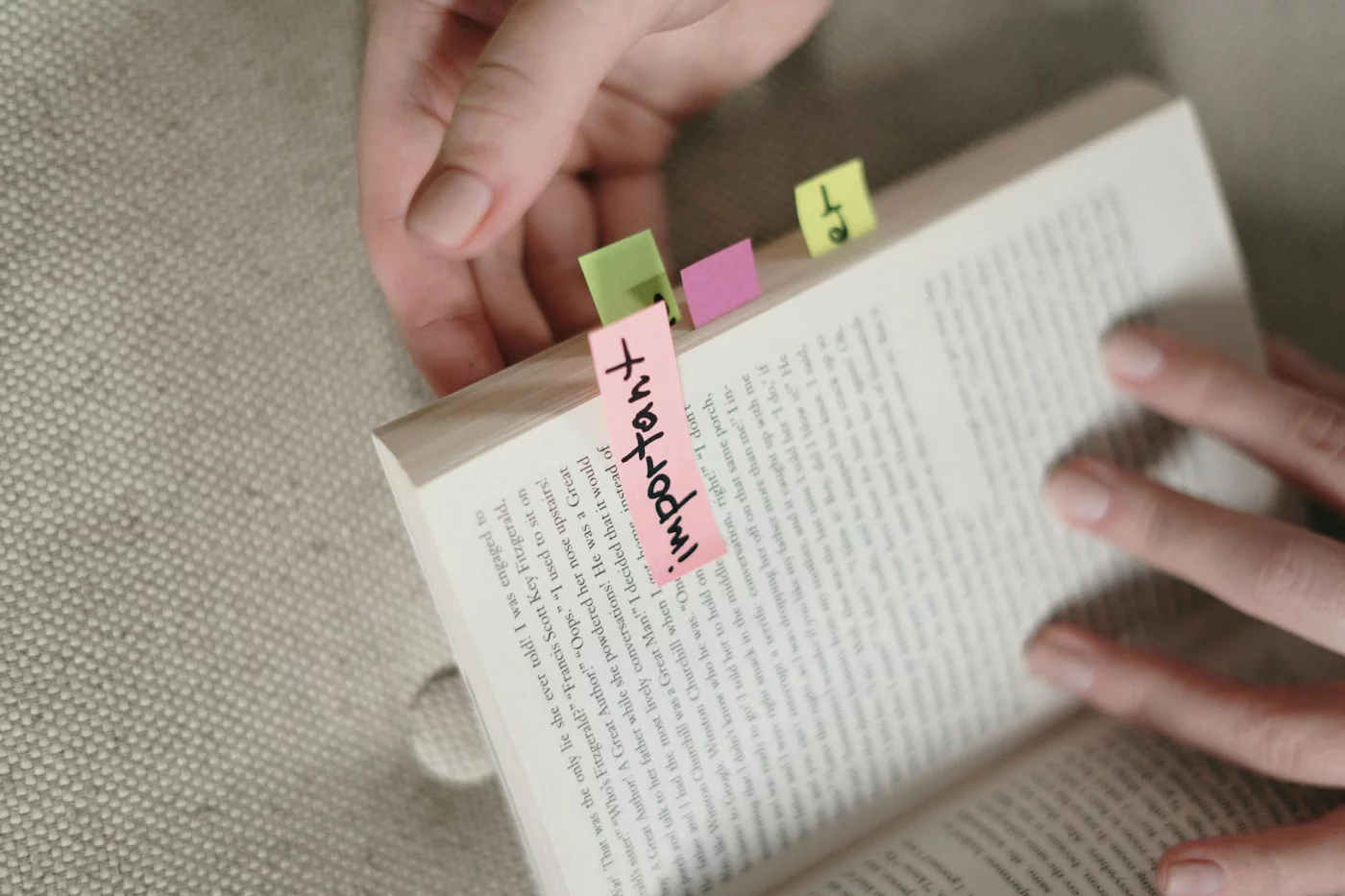
- Step 3: Tab sources by topic, not just chapter title.
- Step 4: Make one condensed formula, framework, or case sheet.
- Step 5: Do one timed rehearsal: answer first, then verify with your index.
A simple template you can copy
- Topic | Trigger word | Source | Page/tab | Key rule/formula | Common trap
- Confidence interval | interval estimate | formula sheet | green tab, p. 3 | use z or t by sample conditions | wrong critical value
- Offer vs invitation to treat | advertisement | case list | blue tab, p. 11 | cite 1 leading case | treating ad as offer
How to organize notes for fast lookup
Keep 3-5 colors max. More than that? You slow yourself down. Use page codes like U3-P12 or Case-B4, plus margin labels, starred exceptions, cross-references, and formula triggers only.
From experience: less is faster
After building study systems, I keep seeing the same pattern: students do better when their notes reduce decisions during the exam. A 1-page index plus a 1-2 page formula or case sheet usually beats a 40-page packet with too many tabs, highlights, and duplicate notes. Next, let’s turn that prep into an exam-day workflow that holds up under time pressure.
Exam-day workflow, mistakes, and quick reference
Your notes are ready. Now the real test is using them without wasting time. These open book exam tips work best when your workflow is simple, repeatable, and a little boring.
Use this workflow on exam day
Start with 2 minutes of triage: read instructions, mark high-value questions, confirm allowed materials, and spot items needing exact wording versus explanation. Then use a 60/25/15 split for time management during exams: 60% answering from memory, 25% verifying risky details, 15% for targeted lookup and final review.
First pass, answer what you know. Second pass, check formulas, definitions, case names, or precise terms. Third pass, use notes only for questions still blocking you. If you freeze, take a 30-second reset and calm test anxiety fast before you search.
Adjust by question type
- Multiple choice: predict first, then verify one risky detail.
- Essay/short answer: outline from memory; use notes for evidence or citations.
- Problem-solving: set up the method first, then check formulas and units.
- Law: organize by issues, elements, and leading cases.
- Online vs in-person: online exams tempt over-searching; in-person exams reward tabs and page codes.
Mistakes and integrity rules
This is the part most people get wrong. They open notes too early, bring too much material, trust Ctrl+F, or spend 5 minutes on a 2-point question. And yes, can you fail an open book exam? Absolutely, if you substitute searching for thinking.
Open-book isn’t cheating when you follow the rules. Cheating starts with banned sources, unauthorized collaboration, hidden messaging, or ignoring browser restrictions and citation expectations. There is no reliable way to pass without studying because these exams usually test application, not copying.
Quick reference before you start
📋 Quick Reference
- Index ready and tabs visible
- Formula sheet or case list ready
- Allowed materials confirmed
- Timer plan set: 60/25/15
- Water and charger packed if permitted
- Rule: answer first, verify second, search last
Personally, I think the best open book exam tips are the least flashy: know the material, control the clock, and treat notes like backup. Next, let’s answer the common questions students still have before exam week.
Frequently Asked Questions
How do open-book exams work?
If you’re wondering how do open book exams work, the short answer is this: you can use approved materials during the test, but the questions usually focus more on application, analysis, and problem-solving than basic memorization. In practice, that means flipping through a textbook won’t help much unless you already understand the topic and know where key ideas are. And rules vary a lot by instructor—some allow textbooks only, while others permit notes, formula sheets, or digital files—so one of the most useful open book exam tips is to check the exam policy carefully before test day.
How much should you study for an open-book exam?
For students asking how much should you study for an open book exam, the honest answer is: almost as seriously as you would for a closed-book test. You should know the core concepts, common question types, and high-yield frameworks well enough to explain them without looking down every 30 seconds. A good benchmark is simple: if you can’t teach the main ideas from memory, your notes probably won’t save you enough time during the exam.
How do you organize notes for an open-book exam?
If you want to know how do you organize notes for an open book exam, aim for speed, not volume. A solid setup usually includes: a one-page reference index, limited color tabs, page codes for major topics, and one condensed formula or case sheet for the material you use most. The goal isn’t to store every detail—it’s to retrieve the right detail fast, which is why many of the best open book exam tips focus on trimming and labeling rather than adding more pages. For broader study planning, you can also use FreeBrain’s study tools to build a cleaner review system before exam week.
What should you bring to an open-book exam?
If you’re asking what should you bring to an open book exam, bring only materials that are clearly approved by your instructor. That may include your textbook, annotated notes, a formula sheet, calculator, charger, or student ID—but only if the exam rules allow them. But wait: checking the policy first matters more than packing extra supplies, because bringing banned materials can turn into an academic integrity issue; if your school has a published policy, review it alongside your course instructions, and when in doubt, ask your instructor directly or check guidance from sources like APA academic integrity guidance.
Can you fail an open-book exam?
Yes—can you fail an open book exam is an easy question to answer, because plenty of students do. The usual reasons are over-relying on notes, mismanaging time, and misunderstanding application-based questions that require judgment rather than copying definitions. Open-book tests reward preparation and organization, not just access to information, which is why the most effective open book exam tips focus on knowing the material first and using your notes as backup, not as a substitute for studying.
Conclusion
The big idea is simple: open-book exams reward preparation, not frantic searching. Your best move is to build a lean note system before test day, organize formulas and key concepts by topic, and practice answering likely questions without relying on Ctrl+F as your main strategy. And on the day itself, start with a quick scan, answer what you know first, and use your materials to verify or extend your thinking—not replace it. If you remember only a few open book exam tips, make them these: prepare your references in advance, practice retrieval before the exam, use a clear workflow under time pressure, and avoid wasting minutes hunting through a giant PDF.
If you’ve struggled with open-book tests before, you’re not behind—you probably just used the wrong method. Thing is, most students assume access to notes makes the exam easier. Well, actually, it usually makes weak preparation more obvious. The good news? This is fixable. Once you start treating an open-book exam like a timed thinking test, your studying gets sharper, your notes get more useful, and your confidence goes up fast.
Want to keep improving? Explore more study systems on FreeBrain.net, including Active Recall: The Study Method That Actually Builds Memory and Spaced Repetition Study Guide. Those two methods pair especially well with smart open-book exam prep because they help you know the material before you ever open your notes. Build your system, test it before exam day, and walk in ready to think—not just search.