
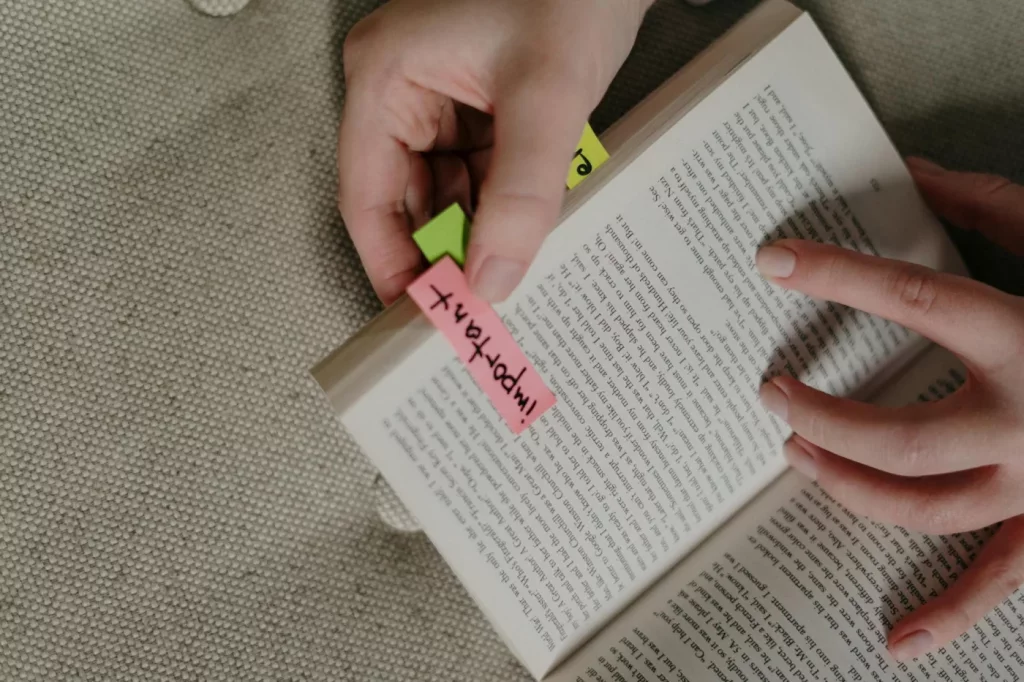
If you’re wondering how to annotate a textbook without leaving marks, warping pages, or killing resale value, the short answer is this: use a reversible system built for textbook paper, not random pens and sticky notes. This guide shows you how to annotate a textbook in a way that actually helps you study while keeping a rented, borrowed, or resellable copy safe.
You’ve probably been here before. A $90 rental is open on your desk, the exam is coming fast, and you want margin notes, tabs, and highlights — but you also don’t want adhesive residue, ink bleed, or that sinking feeling when you realize you can’t erase what you just did. And here’s the kicker — annotation only works if it supports learning, not if it turns into decorative busywork. That’s why I recommend pairing your reading with scientifically proven study techniques and a system that respects your attention and working memory.
So here’s the deal. You’ll get a textbook-specific method for active reading, a safe-tools comparison by paper type, and clear answers to the questions students actually ask: do sticky notes ruin books, what are the best sticky notes for annotating textbooks, should you use pencil vs pen for annotating books, and what should you annotate in a textbook in the first place? We’ll also cover rental textbook annotation methods, transparent sticky notes for textbooks, ebook alternatives, and the annotation mistakes to avoid if you want your notes to stay useful instead of messy.
Personally, I think most annotation advice is too generic. I’m a software engineer who builds learning tools at FreeBrain, and I care about study systems that are effective, low-friction, and reversible — because if a method is annoying, you won’t keep using it. Research on active reading and note-taking also points in the same direction: selective, purposeful marking beats passive highlighting, as summarized in American Psychological Association resources on learning and memory.
📑 Table of Contents
- Start Here: The Safest System
- Choose Tools That Won't Ruin Pages
- Set Up Your Annotation Key
- How to Annotate a Textbook in 7 Steps
- Mistakes, Alternatives, and Quick Answers
- Frequently Asked Questions
- How can I annotate a textbook without damaging it?
- How do you annotate a textbook effectively for exams?
- What should you annotate in a textbook?
- Do sticky notes ruin books?
- What are the most common annotation mistakes to avoid?
- Is pencil or sticky notes better for textbook annotation?
- What is the safest way to annotate a rental textbook?
- Can you annotate ebooks instead of physical textbooks?
- Conclusion
Start Here: The Safest System
Before you buy supplies, start with the method. If you’re wondering how to annotate a textbook safely, the best system is simple: light pencil marks, removable sticky flags, transparent notes, and separate summary notes, all tested on a back page first.
That approach gives you active reading without risking a rented, borrowed, library, or resale-safe book. And if you want your annotations to actually help you study, not just make pages colorful, pair them with scientifically proven study techniques rather than decorative highlighting.
The short answer
The safest stack is pencil + sticky flags + transparent notes + a notebook summary. That’s the core answer to how to annotate a textbook without damaging it, especially when you don’t fully trust the paper or binding.
Here’s the rule: if a tool leaves residue, bleeds through, smears, or dents thin paper, don’t use it. Temporary annotation methods should lift cleanly and leave the page looking untouched after removal.
- Use a hard pencil pressure limit: light, erasable marks only
- Mark key pages with removable flags, not heavy tabs
- Add comments on transparent notes instead of writing in margins
- Keep chapter summaries in a separate notebook or doc
Why this guide is textbook-specific
Textbooks aren’t novels. They pack in formulas, diagrams, definitions, and exam-heavy details, and many editions use thinner paper that shows pressure marks fast.
I’ve tested pencil, sticky flags, transparent notes, and separate-note workflows across school and self-study books, and one thing keeps showing up: publisher paper quality changes everything. A rental textbook from one publisher may handle flags well, while another picks up adhesive residue after a day.
So here’s the deal. This guide focuses on real student constraints: rental textbook rules, resale safe choices, library copies, ink bleed, sticky note risks, and when digital alternatives make more sense.
What makes annotation worth doing
Textbook annotation is worth doing only when it sharpens attention and review. Selective marking helps you notice structure, definitions, formulas, and likely test points without overloading your attention and working memory.
Research on active learning and retrieval practice suggests engagement beats passive rereading alone; for example, guidance from the American Psychological Association on effective studying emphasizes self-testing over simple review, and the NCBI overview of memory consolidation helps explain why revisiting marked ideas matters. Which brings us to the real point: annotation is a support tool, not a magic grade booster.
Personally, I think this is the part most people get wrong. Your notes should help later recall, which is why it helps to understand memory consolidation explained before you start marking every other sentence.
Next, let’s get specific about the tools that are actually safe for pages.
Choose Tools That Won’t Ruin Pages
Once you’ve got a safe annotation system, your tools matter just as much. If you’re learning how to annotate a textbook, the wrong pen or adhesive can turn useful notes into page damage fast.

And here’s the kicker — annotation should support recall, not become arts-and-crafts busywork. That fits what makes scientifically proven study techniques actually work: low friction, easy review, and selective marking that protects attention and working memory.
Safe vs risky tools
Pencil is the default safest option for owned books. For pencil vs pen for annotating books, an HB or 2B pencil gives light, erasable notes without much bleed risk, but don’t press hard or you’ll leave grooves that never fully disappear.
Transparent sticky notes for textbooks are excellent when margins are tiny, diagrams need labels, or the book is borrowed. Do sticky notes ruin books? Usually not if they’re low-tack and used short term, but cheap adhesive, heat, and months of storage raise the odds of adhesive residue.
📋 Quick Reference
| Tool | Usefulness | Damage | Residue | Bleed | Rental-safe |
|---|---|---|---|---|---|
| Pencil | High | Low | None | None | Medium |
| Mechanical pencil | High | Low-Med | None | None | Medium |
| Ballpoint pen | Medium | High | None | Low-Med | Low |
| Gel pen | Medium | High | None | Med-High | Low |
| Standard highlighter | Medium | Med | None | Med-High | Low |
| Erasable highlighter | Low-Med | Med | None | Varies | Low |
| Transparent sticky notes | High | Low | Low | None | High |
| Sticky flags | High | Low | Low | None | High |
| Page tabs | Medium | Low-Med | Low-Med | None | Med |
| Separate notebook method | High | None | None | None | Highest |
How paper type changes everything
Paper type changes the answer more than most students expect. Thin, bright-white matte pages show ink bleed, ghosting, and pressure dents easily, while glossy coated pages often resist bleed but can smear before drying.
Older rental copies are trickier. Their paper fibers are already stressed, so removing notes can lift the surface. Even paper chemistry matters; the Library of Congress guidance on caring for books is a good reminder that handling and materials affect long-term wear.
- Test every pen, note, or flag on an inconspicuous back page first.
- Avoid gel ink and flag pens on thin paper.
- Prefer low-tack flags over full-page sticky notes on fragile pages.
Rental-safe defaults
For rentals, the safest stack is simple: sticky flags, a chapter note sheet, and a separate notebook or reading journal. That’s usually better for review anyway, especially if you care about memory consolidation explained during spaced rereading.
For library books, leave no adhesive in place long term and use notebook references or photos only if allowed. Resale-safe usually means no ink, no heavy highlighting, and no pressure dents. Research on reading and writing tools also suggests surface and friction can change legibility and control, as summarized in Wikipedia’s overview of pencil materials and writing behavior.
So, how to annotate a textbook without regret? Pick the least damaging tool that still helps you review fast. Next, you’ll make that even cleaner by setting up a simple annotation key.
Set Up Your Annotation Key
Once you’ve picked page-safe tools, don’t jump straight into marking everything. If you’re learning scientifically proven study techniques, your notes should reduce thinking load, not add more of it.
So here’s the deal: the best system for how to annotate a textbook is usually boring. And that’s why it works. A small legend keeps your attention and working memory focused on ideas, not decoration.
A simple 5-mark legend
Use an annotation key you can write fast in the margin or on transparent notes. Personally, I think five marks is the sweet spot.
- D = definition
- F = formula or rule
- Q = question or confusion
- E = exam-worthy point
- ! = surprising or especially important claim
If you already use a color coding system, keep it tight: one writing tool plus 2-3 flag colors max. Fewer marks means faster review, less clutter, and better retention during memory consolidation explained.
What deserves a mark
Mark definitions, arguments, formulas, process steps, exceptions, diagrams, and likely test points. Research on selective attention, including classic work summarized by the American Psychological Association on attention, supports filtering for task-relevant information instead of treating every sentence equally.
What to annotate in a textbook depends on the subject. In history, mark dates only when they connect to causes or consequences. In science and math, prioritize worked examples, common error points, and chapter summary notes. Most chapters follow the 80 20 rule for studying: a few high-value ideas drive most exam prep notes and questions.
What to leave alone
Skip repeated examples, obvious transitions, decorative details, and anything you couldn’t explain later in one sentence. If everything is important, nothing stands out.
Don’t highlight full paragraphs or tab every page. Well, actually, a better rule for how to annotate a textbook is one summary note per section, not ten tiny comments. For background on how memory selects and stabilizes useful information, Wikipedia’s overview of memory consolidation is a decent starting point. Next, I’ll show you exactly how to use this system in 7 clear steps.
How to Annotate a Textbook in 7 Steps
Now that your key is set, use it sparingly. That’s the real answer to how to annotate a textbook: preview first, then mark only what earns attention, because selective notes reduce overload and support attention and working memory.

The 7-step workflow
How to annotate a textbook
- Step 1: Preview the chapter. Scan headings, diagrams, summaries, and end questions before touching a highlighter.
- Step 2: Read one short section, then mark only definitions, formulas, claims, and likely test points.
- Step 3: Add tiny margin notes: “compare with osmosis,” “cause not event,” or “common exam trap.”
- Step 4: Flag confusion with one Q mark or one colored tab so you can revisit it fast.
- Step 5: Write a 2-4 sentence summary in a notebook or app.
- Step 6: Turn key ideas into flashcards, self-quiz prompts, or a one-page review sheet. That’s where scientifically proven study techniques beat passive rereading.
- Step 7: Before exams, scan only symbols, flags, summaries, and question marks. Research on active recall and memory consolidation explained helps show why this works better than rereading whole chapters, and retrieval practice research summarized by NCBI points the same way.
Real-world examples by subject
- History: mark the thesis, major causes, turning points, and one margin note linking event to consequence.
- Math or physics: flag formulas, define variables, and star one worked example per problem type.
- Biology or psychology: note definitions, contrasts, and process arrows instead of full copied sentences.
From experience: keep it reviewable
The best system is the one you can scan in 5-10 minutes before a quiz. If you’ve got more than one mark every few lines, it’s probably too dense.
And yes, use a separate notebook or reading journal for harder classes. Keep the book for signals, and your chapter summary notes for thinking. Next, let’s cover the mistakes, alternatives, and quick answers that save you from messy, low-value annotation.
Mistakes, Alternatives, and Quick Answers
Now that you’ve got the 7-step process, the next question is practical: what ruins it? When people learn how to annotate a textbook, they usually struggle less with technique and more with restraint.
Common mistakes to avoid
The biggest annotation mistakes to avoid are simple. Over-highlighting turns pages into yellow wallpaper, over-tabbing makes sections harder to find, and vague notes like “important” or “study this” won’t help when you review later.
And here’s the kicker — heavy pencil pressure can leave grooves even if graphite erases. Some gel pens and markers also bleed through thin textbook paper, which matters if you want to know how to annotate a book without ruining it. Personally, I’d keep marks limited to definitions, formulas, likely exam ideas, and questions you need to answer later.
One more thing: annotation isn’t the same as learning. Evidence-based review still depends on recall, self-testing, and spaced review, which is why annotation should support scientifically proven study techniques, not replace them.
Best options for rentals and library books
For rentals, borrowed texts, and anything you may resell, start with zero-ink methods. Sticky flags plus a chapter note sheet are usually the safest default.
- Use thin sticky flags to mark pages, not cover text
- Keep actual notes in a separate notebook or reading journal
- Take photos only if the book policy allows it
- Use ebook annotation when available for search, highlights, and exported notes
Can you annotate ebooks instead? Yes — often more safely and with less friction, especially for expensive, borrowed, or resale-safe texts.
If your system still leaves you overwhelmed before exams, clean workflows can help reduce friction, but persistent anxiety or concentration problems are worth discussing with a qualified professional.
Quick reference and next steps
📋 Quick Reference
- Safest tools: pencil with light pressure, sticky flags, separate notebook, ebook highlights
- What to mark: key terms, formulas, exam-worthy examples, confusing points
- What to avoid: full-page highlighting, thick tabs, adhesive residue, bleed-through pens
- 1-page review workflow: flag page, write 3-5 notes on a chapter sheet, close the book, recall from memory, then check gaps
- Best test run: try this on one chapter before using it across the course
If exam stress is part of the problem, FreeBrain also has related help on test anxiety study skills, motivation, and study systems. Next, let’s wrap up with the most common questions and the simplest way to put this into practice.
Choose the Right Annotation Method for Your Book and Goal
If you are still unsure how to annotate a textbook without damaging it, use this quick decision rule before you start marking pages. The safest method depends on two things: whether the book must stay clean, and whether you need notes for fast review later.
Use pencil only if you own the book, the paper is thick enough to erase cleanly, and you are comfortable keeping marks in the margins. Use sticky flags plus a separate notebook if the book is rented, borrowed, or likely to be resold. Use transparent notes when the margins are too small, the page includes diagrams, or you want comments that can be removed later. If the paper feels thin, glossy, or fragile, assume it is less forgiving and test every tool on a back page first.
Here is a simple way to decide:
If the book is a rental: use flags for navigation, one summary sheet per chapter, and no long-term adhesive left in the book.
If the book is borrowed or from a library: avoid writing directly on pages and keep all notes separate.
If the book is owned and you are studying for an exam: use light pencil for definitions, formulas, and questions, then move the important points into review notes.
If the chapter is dense or technical: annotate less on the page and spend more effort turning key ideas into recall prompts with the Active Recall Builder.
A practical example helps. Imagine a biology chapter with definitions, labeled diagrams, and a process you need to remember. A safe setup would be one flag for the diagram, one transparent note with a short question like “What are the 3 stages?”, and a separate summary page with five bullet points. For a history chapter, you might flag one page for causes, one for consequences, and write a short timeline in a notebook instead of filling the margins. For math, mark only the worked example that shows the pattern of mistakes, then create a short review plan in the Spaced Repetition Generator so the annotation leads to actual revision.
A good final check is this: if you removed every flag and note tonight, would the book still look acceptable to return or resell? If the answer is no, your system is too aggressive. If your notes would make sense to you one week later, your system is probably clear enough. If not, simplify the legend and move more of the thinking into a separate study guide. Readers who want a fuller reading workflow can pair this article with What Is the SQ3R Reading Method? 5 Steps That Actually Help or build chapter review notes with How to Make a Smarter Study Guide for an Exam.
Frequently Asked Questions
How can I annotate a textbook without damaging it?
If you’re figuring out how to annotate a textbook without damaging it, start with the safest tools: a light pencil, removable sticky flags, transparent notes, and a separate notebook for anything longer than a few words. Keep your marks minimal, avoid pressing hard, and place sticky items on the page edge instead of over large blocks of text. And one thing most people skip: test every tool on a back page first, because paper thickness and coatings vary a lot by publisher. If the book is expensive, rented, or hard to replace, use page markers plus external notes instead of writing directly in it.

How do you annotate a textbook effectively for exams?
If you’re asking how do you annotate a textbook effectively for exams, the short answer is this: mark only what you’re likely to be tested on. Focus on definitions, formulas, core arguments, worked examples, and any point your teacher repeats in class or your syllabus highlights. Then turn those annotations into something active—summary sheets, self-quiz questions, or flashcards—because annotations help most when they lead to retrieval practice. If you want a structured way to review those notes, use a study workflow that includes spaced recall rather than rereading alone.
What should you annotate in a textbook?
When deciding what to annotate in a textbook, go after high-value information, not every sentence that sounds important. That usually means key terms, cause-and-effect links, formulas, exceptions, diagrams, and end-of-chapter summaries. Skip repeated examples, filler transitions, and details you know you won’t review later. A good rule? If a note won’t help you answer a question, explain an idea, or solve a problem later, don’t mark it.
Do sticky notes ruin books?
Do sticky notes ruin books? Usually not, if they’re low-tack, used for short periods, and removed slowly and carefully. The bigger risks come from cheap adhesives, heat, long-term storage, and older or fragile paper, all of which can increase residue or tearing. Transparent notes and page flags are generally safer than large sticky notes covering text. If you want to be extra careful, check basic book-handling guidance from preservation sources like the Library of Congress.
What are the most common annotation mistakes to avoid?
The biggest annotation mistakes to avoid are over-highlighting, over-tabbing, using permanent ink on thin paper, and writing vague notes like “important” or “study this.” But wait—there’s another one that matters even more: marking everything and reviewing nothing. Good annotation is selective and useful later, not decorative in the moment. If your page looks busy but you can’t explain the chapter from memory, your system needs fewer marks and more active review.
Is pencil or sticky notes better for textbook annotation?
For most students, pencil vs pen for annotating books isn’t really a close contest—pencil is usually the better choice for books you own because it’s light, erasable, and less risky on thin pages. Sticky flags and transparent notes are safer for rentals, library books, and books you may want to resell. Pen can work in sturdy personal copies, but it’s much less forgiving if you misread a passage or change your mind later. So here’s the deal: own it and plan to keep it? Use pencil. Borrowed or temporary? Use removable flags and external notes.
What is the safest way to annotate a rental textbook?
The safest rental textbook annotation methods rely on marking location, not writing in the book itself. Use sticky flags to tag pages, keep your actual notes in a notebook or reading journal, and label each note with the page number so you can find it fast during review. Avoid ink, heavy pressure, and adhesives left in place for weeks or months. If you’re learning how to annotate a textbook you don’t own, think “temporary and removable” every time.
Can you annotate ebooks instead of physical textbooks?
Yes—can you annotate ebooks? Absolutely. Ebooks are often easier to search, highlight, tag, and export notes from, and you don’t have to worry about damage, resale value, or messy pages. The smart move is to use the same symbol system digitally that you’d use on paper, so your review process stays consistent across formats. If you’re working on how to annotate a textbook more efficiently, digital annotation can be a strong option, especially when paired with a review system like summaries or flashcards. For related note-taking strategies, you can also read FreeBrain’s articles on study methods and active recall.
Conclusion
If you remember four things, make them these: use removable tools like transparent sticky notes, page flags, and pencil-only marks on inserts; keep a simple annotation key so your symbols stay consistent; work in short passes instead of trying to mark everything at once; and focus your notes on questions, summaries, and connections rather than random highlighting. That’s really the heart of how to annotate a textbook without damaging it. And honestly, that small shift matters more than people think.
You don’t need a perfect color system or beautiful notes to make this work. You just need a method you’ll actually keep using. If you’ve ever hesitated because the book is expensive, rented, or one you want to resell later, you’re not overthinking it. Plenty of students run into that. The good news is that once you build a clean, repeatable system, annotating starts to feel less risky and a lot more useful.
Want to keep improving your study system? Browse more practical guides on FreeBrain.net, including how to study from a textbook and active recall studying. If you came here wondering how to annotate a textbook, your next step is simple: grab your flags, pick your key, and annotate your next chapter with purpose.