If you’re searching for how to sleep when stressed and anxious, the short answer is this: stress can make it hard to sleep because it flips on your body’s fight-or-flight response, raises mental alertness, and keeps your thoughts spinning long after your head hits the pillow. The good news? How to sleep when stressed and anxious is usually a solvable problem, especially when the issue is short-term stress rather than a deeper sleep disorder. If you need fast relief right now, start with a few simple ways to reduce anxiety immediately while you read.
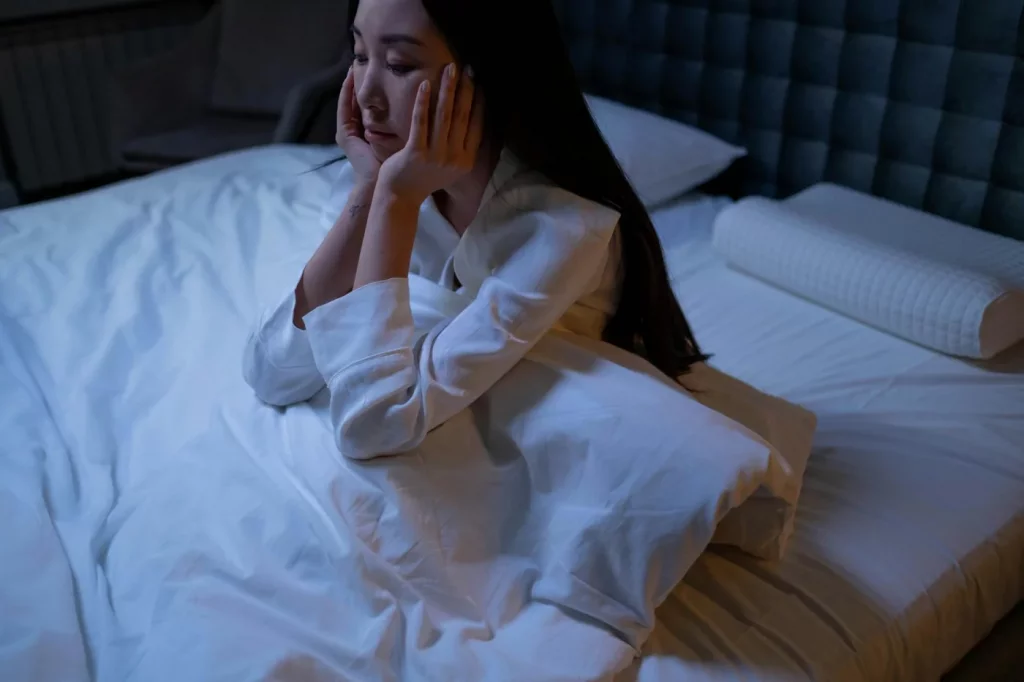
You know the feeling. You’re exhausted, but your brain suddenly wants to replay awkward conversations, tomorrow’s deadlines, and every worst-case scenario at 1:17 a.m. And yes, can stress make it hard to sleep? Absolutely. Research on hyperarousal and stress-related sleep disruption helps explain why your mind can feel tired and wired at the same time.
So here’s the deal. This guide on how to sleep when stressed and anxious won’t stop at generic sleep hygiene tips. You’ll get a clear tonight plan for when your mind won’t shut off, a simple way to decide whether to stay in bed or get up, specific fixes for racing thoughts and middle-of-the-night wakeups, and longer-term stress reduction techniques that make sleep easier over time. We’ll also separate normal short-term stress insomnia from anxiety-related insomnia and warning signs that deserve professional attention.
I’m a software engineer, not a clinician, but I spend a lot of time translating solid research into practical systems people can actually use. One quick note before we go further: this article is educational, not medical advice, and if how to sleep when stressed and anxious keeps being a problem for weeks, or you have severe anxiety, loud snoring, breathing pauses, panic symptoms, or other possible sleep disorder signs, it’s smart to consult a qualified healthcare professional.
📑 Table of Contents
- Why how to sleep when stressed and anxious starts with understanding the stress-sleep loop
- Stress insomnia, sleep anxiety, or something else? How to tell the difference
- What to do tonight if you can't sleep due to stress: a step-by-step reset
- 10 proven ways to sleep when stressed and anxious without forcing sleep
- Common mistakes that make stress-related insomnia worse
- Real-world application: your tonight plan, longer-term prevention, and when to get help
- Frequently Asked Questions
- Conclusion
Why how to sleep when stressed and anxious starts with understanding the stress-sleep loop
So here’s the deal. If you’re searching for how to sleep when stressed and anxious, the short answer is this: stress flips on your fight-or-flight response, raises alertness, and fuels racing thoughts, which can block sleep even when your body feels exhausted. For more on stress and sleep, see our stress and sleep guide.
That’s why how to sleep when stressed and anxious usually starts with calming your nervous system, not forcing sleep. If you’re awake right now, start with something simple that can reduce anxiety immediately, then come back to the bigger pattern tomorrow.
Short-term stress insomnia is common. Exams, deadlines, caregiving, burnout, travel, and relationship conflict can all throw off sleep for days or weeks, and evidence suggests it’s often reversible when you respond well during the day and at bedtime with solid stress reduction techniques.
What stress does to your body at bedtime
Your brain doesn’t care whether the threat is a tiger or an unread email from your boss. If it reads danger, it can trigger the fight or flight response, increasing heart rate, tightening muscles, and making breathing shallower. That’s a bad setup for sleep.
Research summaries from the American Psychological Association on how stress affects the body and the National Institute of Mental Health stress overview both describe this body-wide stress activation clearly. In plain English: nighttime stress keeps your system on guard, and cortisol and sleep don’t mix well when your brain still thinks it needs to stay watchful.
- Higher alertness can delay falling asleep
- Nervous system activation can cause middle-of-the-night waking
- Racing thoughts can make you monitor sleep instead of drifting into it
Why you can feel tired but still too wired to sleep
This is the part most people get wrong. You can have strong sleep pressure and still have difficulty falling asleep because cognitive hyperarousal keeps your mind switched on. In other words, your body is tired, but your brain won’t stop scanning, planning, replaying, and predicting.
And yes, can stress make it hard to sleep? Absolutely. For learners and professionals, that matters because poor sleep can worsen memory, focus, emotional regulation, and next-day stress reactivity, which is why I often point readers to sleep stress memory focus and simple breathing options like box breathing vs 4-7-8 when the mind won’t shut off.
This article is educational, not medical advice. If your insomnia is persistent, your anxiety feels severe, you have breathing pauses, or your daytime functioning is really dropping, get evaluated by a qualified professional. Next, let’s separate ordinary stress insomnia from sleep anxiety and possible sleep disorders.
Stress insomnia, sleep anxiety, or something else? How to tell the difference
Once you see the stress-sleep loop, the next question is obvious: what kind of sleep problem are you actually dealing with? That matters, because how to sleep when stressed and anxious depends on whether you’re facing a normal stress spike, sleep anxiety, or signs of something else.
Normal short-term stress insomnia
Short-term insomnia usually means a brief run of bad sleep tied to a clear stressor. Think exam week, job interviews, caregiving, a breakup, travel, deadlines, or illness in the family. If your brain stays “on” for a few nights, that’s unpleasant, but it doesn’t automatically mean you have a chronic sleep disorder.
This is classic stress-related insomnia. You fall asleep later, wake earlier, or wake up in the middle of the night replaying tomorrow’s problems. And yes, can stress cause difficulty sleeping? Absolutely. The body’s stress response raises arousal, which is the opposite of what sleep needs.
According to symptom guidance from MedlinePlus on insomnia, insomnia can be short-term or longer lasting, and a brief pattern is often linked to stress or life disruption. Personally, I think this distinction helps a lot, because many people panic after three rough nights and start searching how to sleep when stressed and anxious as if something is permanently broken.
Usually, it isn’t. Not yet.
What helps here? Lower the daytime stress load before you try to “fix” bedtime. If your nervous system is overloaded all day, sleep gets stuck carrying the bill, which is why daytime stress reduction techniques often work better than adding five new sleep hacks at 11:30 p.m.
Anxiety-related insomnia and bedtime dread
Sleep anxiety is different. The main problem isn’t just stress in your life; it’s fear about sleep itself. You start checking the time, calculating how many hours are left, scanning your body for signs of drowsiness, and thinking, “If I don’t fall asleep now, tomorrow is ruined.”
That pattern creates conditioned arousal. OK wait, let me back up: your bed starts to feel less like a place for sleep and more like a place where you perform, monitor, and fail. That’s why how to sleep when stressed and anxious gets harder when you try to force it.
This is the part most people get wrong. If you’re lying there thinking “I can’t sleep because of stress and anxiety,” ask yourself: are you stressed, or are you now anxious about being awake? That second layer is often the stickier one.
Common signs of sleep anxiety or bedtime anxiety include:
- Clock-checking or checking your wearable repeatedly
- Mentally counting hours left before morning
- Dreading bedtime before you even get into bed
- Mind racing can’t sleep anxiety that gets worse the moment lights go out
- Using your phone to escape the frustration, then feeling more alert
If that sounds familiar, start with one very small calming action instead of a full bedtime overhaul. A quick routine to reduce anxiety immediately can interrupt the spiral, and simple breathing drills like box breathing vs 4-7-8 are often more useful than lying there negotiating with your brain.
There can be overlap with generalized anxiety, panic, and burnout. But don’t self-diagnose from one bad week. The useful question is simpler: is sleep avoiding stress, or has sleep itself become the threat?
When symptoms may point to another sleep or health issue
Sometimes how to sleep when stressed and anxious isn’t the full story. Red flags matter, and competitors often blur them together with ordinary short-term insomnia.
- Loud snoring, choking, or gasping can suggest sleep apnea
- Uncomfortable leg sensations relieved by movement can suggest restless legs syndrome
- Alcohol may help you doze off, then cause rebound waking later
- Some medications, stimulants, and substances can disrupt sleep
- Severe depression, panic attacks, mania, or trauma-related nightmares need professional evaluation
The National Heart, Lung, and Blood Institute’s sleep guidance and resources from Mayo Clinic and the CDC all frame persistent, severe, or unusual symptoms as a reason to seek care. If symptoms keep showing up for weeks, become frequent, or feel intense and out of character, consult a qualified healthcare professional. This is educational content, not medical advice.
And one more thing: for chronic insomnia, CBT-I is considered the first-line treatment by major sleep medicine groups. So if your sleep problem is hanging on, there’s a proven path forward.
Next, let’s get practical: what to do tonight if you can’t sleep due to stress, including when to stay in bed, when to get up, and how to reset in 10 to 30 minutes.
What to do tonight if you can’t sleep due to stress: a step-by-step reset
If the last section helped you figure out whether this is stress insomnia, sleep anxiety, or something else, good. Now let’s make it practical. If you’re lying awake wondering how to sleep when stressed and anxious, use this reset in order tonight.
This is for short-term, stress-driven wakefulness. If loud snoring, choking awakenings, severe restless legs, panic symptoms, or ongoing insomnia keep showing up, talk with a qualified clinician because those can point to a medical sleep issue, not just stress.
How to reset your night in 10 to 30 minutes
- Step 1: Stop checking the time.
- Step 2: Slow your exhale for 1 to 3 minutes.
- Step 3: Release tension from jaw, shoulders, hands, and body.
- Step 4: If still wide awake after about 15 to 20 minutes, get out of bed.
- Step 5: Move to dim light and do one low-stimulation activity.
- Step 6: Return to bed only when your body feels sleepier, not just when you’re annoyed.
- Step 7: Don’t force sleep or spiral into “I’m ruined tomorrow.”
- Step 8: Don’t use alcohol, doomscrolling, or problem-solving as a sleep plan.
Step 1-3: The 10-minute emergency reset
First, stop feeding the threat signal. That means no clock-checking and no phone in your hand. Put it face down or, better, out of reach. If you need fast downshifting right now, start with these ways to reduce anxiety immediately and come back to bed once your body feels less activated.
Step 1 matters because every time you check the time, your brain does sleep math. “It’s 2:17. I have 4 hours and 43 minutes left.” That thought spikes arousal. And that’s the opposite of how to sleep when stressed and anxious.
Step 2 is breathing. Do 1 to 3 minutes of slow exhale breathing: inhale for 4 seconds, exhale for 6 to 8. Longer exhales tend to help shift you away from nervous system activation. If you’re unsure which pattern feels best, I’d compare methods in box breathing vs 4-7-8, because the best breathing exercises for sleep anxiety usually depend on whether you feel panicky, mentally wired, or physically tense.
Research on slow breathing suggests it can support parasympathetic activity and lower physiological arousal, which is exactly what you want at 1 a.m.; the review on slow-paced breathing in Frontiers in Human Neuroscience is a solid overview. Personally, I think people overcomplicate this. One gentle pattern you’ll actually do beats the “perfect” technique you skip.
Step 3: do a 60-second body scan meditation. Unclench your jaw. Drop your shoulders. Open your hands. Loosen your belly and thighs. OK wait, let me back up: you are not trying to “make sleep happen.” You’re removing physical resistance so sleep has a chance to return.
Step 4-6: The 20- to 30-minute calming protocol
If you’re still alert after roughly 15 to 20 minutes, get out of bed. Should you get out of bed if you can’t sleep from stress? Usually yes, if you’re frustrated, mentally busy, or fully awake. Staying in bed while angry teaches your brain that bed is where thinking and struggling happen.
Move to dim light. Then pick one low-stimulation activity for 10 to 20 minutes:
- Read a paper book with low emotional charge
- Listen to a boring podcast at low volume
- Do light stretching or slow breathing
- Write a brain dump: “What’s on my mind?” and “What can wait until tomorrow?”
This is what to do if you can’t sleep due to stress and your mind keeps looping. Write the thought once. Example: “Email Sam, pay electricity bill, prep slides.” Then stop. Don’t turn a brain dump into midnight planning.
Avoid email, work, bright screens, doomscrolling, and emotionally loaded videos. And yes, that includes checking your sleep score. The American Psychological Association’s sleep overview notes that stress and hyperarousal can interfere with sleep onset, so your goal is to lower input, not add more. Daytime stress reduction techniques help too, but tonight the win is simple: less stimulation, less pressure, more repetition.
If you wake in the middle of the night, use the same framework. Don’t negotiate with the clock. Run the 10-minute reset, and if you’re still wide awake, do the calming protocol again. That’s often the most realistic version of how to sleep when stressed and anxious.
Step 7-8: What not to do when you’re desperate to sleep
Don’t force sleep. Don’t stay in bed for an hour getting more frustrated. And don’t chase perfect sleep metrics if wearable sleep tracking anxiety is making you more alert. This is the part most people get wrong: effort helps with work, but effort backfires with sleep.
Don’t use alcohol as a shortcut either. It may make you drowsy at first, but evidence indicates it can worsen sleep quality and increase rebound waking later in the night. And don’t solve tomorrow’s life problems at 2 a.m. Capture them on paper, tell yourself “not now,” and return to the routine.
If you remember only one thing, remember this: how to sleep when stressed and anxious is mostly about reducing arousal, not forcing unconsciousness. In the next section, I’ll break down 10 proven ways to sleep when stressed and anxious without turning bedtime into a performance test.
10 proven ways to sleep when stressed and anxious without forcing sleep
If the reset from the last section helped you settle a little, good. Now let’s build the bigger playbook for how to sleep when stressed and anxious without turning bedtime into a fight.
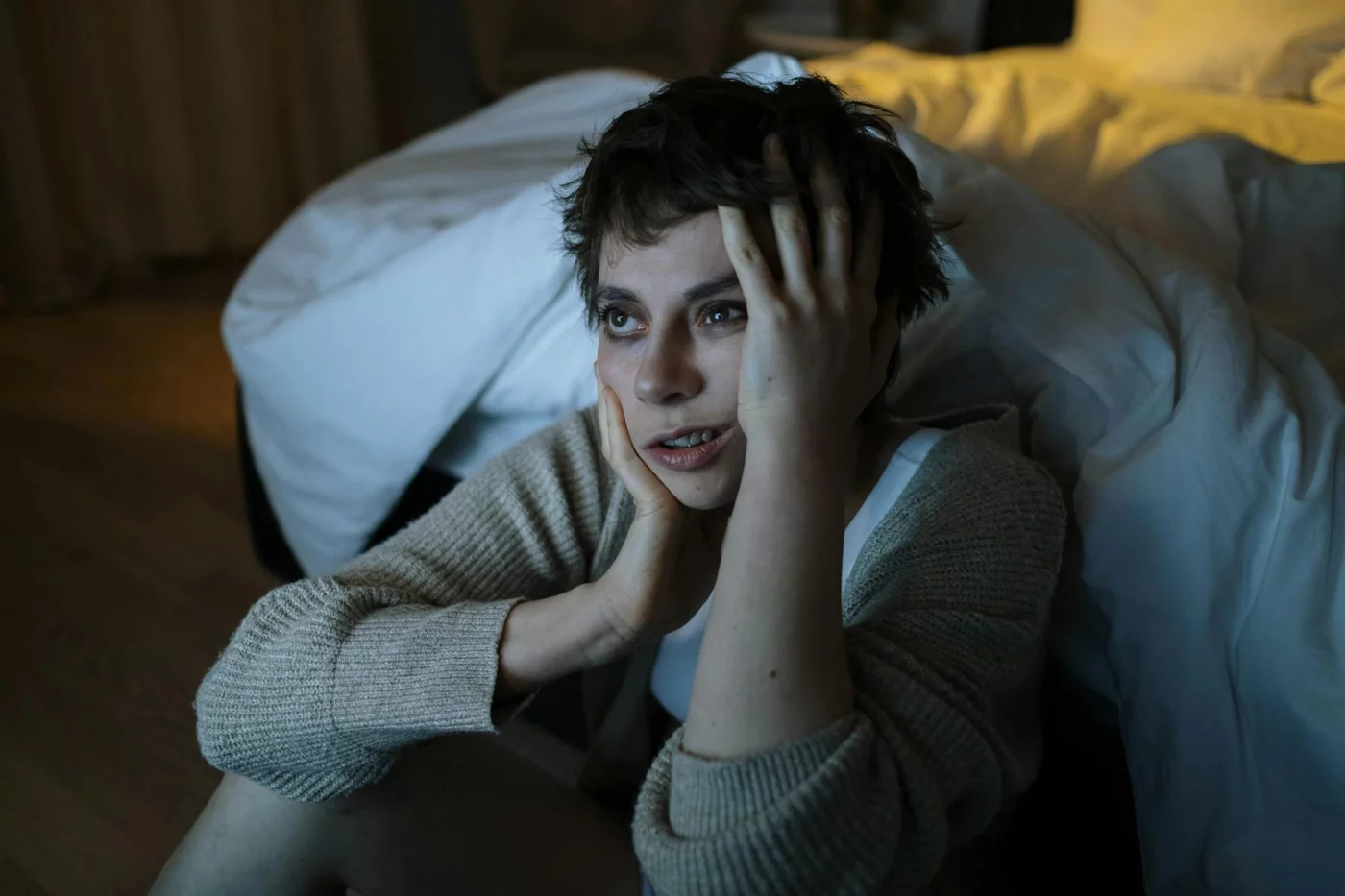
The big idea is simple: don’t force sleep. Shift your body, quiet the mental load, and remove the inputs that keep your brain on alert. If you need a fast calm-down first, try these ways to reduce anxiety immediately, then come back to this list.
Downshift your body first
Body-first methods often work better than “thinking” yourself to sleep. Why? Because stress insomnia usually starts with arousal in the nervous system: faster heart rate, muscle tension, shallow breathing, and that wired-but-tired feeling. The National Center for Complementary and Integrative Health on relaxation techniques notes that practices like breathing and muscle relaxation can reduce stress symptoms that interfere with sleep.
Method 1 is slow breathing. Try a longer exhale than inhale for 3 to 5 minutes, such as inhale for 4 seconds and exhale for 6 to 8. If you’re deciding between patterns, this guide on box breathing vs 4-7-8 can help, but for sleep anxiety, longer-exhale breathing usually feels less stimulating than box breathing.
Method 2 is progressive muscle relaxation. Tense one muscle group for about 5 seconds, then release for 10 to 15, moving from feet to face. It works best when your jaw, shoulders, or stomach feel tight — and yes, that physical release often quiets mental noise too.
Method 3 is body scan meditation. Instead of “clearing your mind,” place attention on one body area at a time and notice sensations without fixing them. This is especially useful if your mind won’t shut off but you can still follow a neutral sequence.
Method 4 is a warm shower or bath 1 to 2 hours before bed. The warmth helps you relax, and the gradual cooling afterward may support sleepiness. For students and busy professionals, a 10-minute shower around 8:30 or 9:00 p.m. is often more realistic than a full bath.
Quiet racing thoughts without trying to suppress them
This is the part most people get wrong. They try not to think. But thought suppression often rebounds, which makes racing thoughts at night feel even louder.
Method 5 is brain-dump journaling. Spend 2 minutes writing unfinished tasks, worries, and reminders on paper. A simple “parking lot” list works: email professor, send invoice, buy groceries, reply to Sam, finish slide 4.
Method 6 is scheduled worry time earlier in the evening, ideally 2 to 3 hours before bed. Set a 10-minute timer, write what’s bothering you, and add one next action for each item. That’s one reason daytime stress reduction techniques improve sleep later: your brain stops using midnight as planning time.
Method 7 is a neutral audio cue, like a sleep story, calm narration, or even a boring podcast you’ve heard before. Best use case? When silence makes your mind louder, but music or exciting content pulls you back into alertness. Keep the volume low and the content emotionally flat.
If you wake in the middle of the night, use the same rule. Stay in bed if you feel drowsy between thoughts. Get up if you’re wide awake for roughly 15 to 20 minutes and repeat one quiet method in dim light.
Adjust your environment and habits
Now this is where it gets interesting. A lot of people asking how can I sleep when stressed are really dealing with stacked triggers: bright light, late caffeine, doomscrolling, and an inconsistent wake time.
Method 8 is dim light and phone boundaries. Lower overhead lights 60 to 90 minutes before bed, switch your phone to grayscale or leave it outside reach, and avoid emotionally loaded feeds. Late-night phone use doesn’t just steal time; it keeps your attention and stress system activated.
Method 9 is a caffeine cutoff based on your sensitivity. A practical default is no caffeine after 1 p.m. if you’re sensitive, or after 2 to 3 p.m. if you metabolize it well. Personally, I think this is one of the most underrated parts of how to sleep when stressed and anxious, especially for students using coffee to patch poor sleep.
Method 10 is a consistent wake time, even after a bad night. Not fun. But it’s one of the fastest ways to rebuild sleep pressure and stabilize your body clock. If you need a nap, keep it short and early; this guide on a power nap without oversleeping can help you avoid turning a rough night into two rough nights.
- Best for immediate physical tension: slow breathing or progressive muscle relaxation
- Best for overthinking: brain dump plus scheduled worry time
- Best for busy schedules: warm shower, dim lights, fixed wake time
One quick caution: supplements come after behavioral strategies, not before. Some may help some people, but evidence varies, interactions are real, and if anxiety, snoring, gasping, panic symptoms, or long-running insomnia are part of the picture, talk with a qualified clinician. That matters because how to sleep when stressed and anxious can overlap with anxiety disorders or sleep disorders, and those need a different level of care.
Use these 10 methods as a menu, not a challenge. Pick two or three that match your pattern, test them for a week, and you’ll start seeing what actually moves the needle. Which brings us to the next problem: the common mistakes that quietly make stress-related insomnia worse.
Common mistakes that make stress-related insomnia worse
The last section covered what helps. This one matters just as much, because if you’re trying to figure out how to sleep when stressed and anxious, a few common habits can quietly undo your best efforts.
And yes, some of these feel harmless in the moment. But they keep your brain alert, fragment sleep, or teach your body that bed is where frustration happens instead of rest.
Phone habits and stimulation traps
If you want to know how to sleep when stressed and anxious, start with your phone. The problem isn’t just blue light. It’s cognitive and emotional activation.
Doomscrolling before bed, late-night email, and fast-cut video content keep your brain in problem-solving mode. You read bad news in bed, check one work message, then your mind starts generating scenarios. That’s often what causes racing thoughts before sleep: not random anxiety, but fresh mental input right before lights out.
A 2022 study in Sleep Health found that bedtime media use was linked with shorter sleep and poorer sleep quality, especially when content was emotionally activating. Personally, I think this is the part most people get wrong. They blame the screen, but the real issue is the state the screen creates.
Example? You wake at 3 a.m., check your notifications “for one second,” see stressful news, then start calculating tomorrow’s problems. Now bed becomes a place for vigilance. If that’s your pattern, it’s worth trying a 30-minute no-input buffer and learning how to stop doomscrolling before bed before you’re already overtired.
- Turn on grayscale mode after a set hour
- Charge your phone outside arm’s reach
- Avoid email and news in bed
- Use a paper book or low-stimulation audio instead
Simple? Yes. Easy? Not always. But for how to sleep when stressed and anxious, reducing late night phone use is one of the highest-return changes you can make.
Caffeine, alcohol, naps, and late exercise
These are classic sleep hygiene issues, but they matter even more during stress-related insomnia. Why? Because your nervous system is already more reactive.
Caffeine sensitivity varies a lot. Still, research published in the Journal of Clinical Sleep Medicine found that caffeine even 6 hours before bed can reduce total sleep time in some people. So if you have difficulty falling asleep, that 4 p.m. coffee may still be in the picture.
Alcohol is trickier. It can make you sleepy at first, but evidence reviewed by the National Center for Biotechnology Information shows it tends to disrupt the second half of the night, increasing awakenings and reducing REM sleep. In plain English: it sedates, then fragments.
And naps? Helpful sometimes, harmful sometimes. A short early-afternoon nap can help if you’re sleep deprived, but long or late naps reduce sleep drive at night. Well, actually, that’s the key tradeoff with sleep hygiene: anything that makes tonight’s bedtime less “sleepy” can backfire.
- Cut caffeine earlier than you think you need to
- Don’t use alcohol as a sleep tool
- Keep naps under 20-30 minutes and earlier in the day
- Finish intense exercise at least a few hours before bed if it leaves you wired
If you’re working on how to sleep when stressed and anxious, consistency beats perfection. An irregular wake time after a bad night may feel tempting, but sleeping in can shift your body clock and make the next night harder.
Wearables, sleep scores, and orthosomnia-style anxiety
Now this is where it gets interesting. Sleep trackers can help you spot trends, but they can also create wearable sleep tracking anxiety if you treat every number like a verdict.
Researchers have used the term “orthosomnia” to describe people becoming so fixated on perfect sleep data that the tracking itself worsens sleep. Checking a score at 3 a.m. and thinking, “Great, now my recovery is ruined,” is almost the opposite of how to sleep when stressed and anxious.
What about garmin stress score during sleep meaning? Garmin’s stress metric is a rough estimate based largely on heart rate variability and related physiological signals. It is not a direct readout of your thoughts, your emotional state, or whether something is medically wrong.
So use wearables for patterns, not nightly judgment. Ask weekly questions instead: Did my sleep drop on high-caffeine days? Do late meals or late work correlate with worse nights? That’s useful stress management. Obsessing over one “bad” score usually isn’t.
Three habits make tracker data more helpful:
- Check trends once a week, not in the middle of the night.
- Pair data with behavior notes like caffeine, alcohol, naps, and bedtime.
- Ignore single-night spikes unless a clinician tells you otherwise.
Get these mistakes under control, and how to sleep when stressed and anxious gets much simpler. Next, I’ll show you how to turn that into a realistic tonight plan, plus what to do longer term and when it’s time to get help.
Real-world application: your tonight plan, longer-term prevention, and when to get help
If the last section was about what not to do, this one is the reset. When you’re searching how to sleep when stressed and anxious, you usually don’t need more theory — you need a simple plan you can follow tonight.
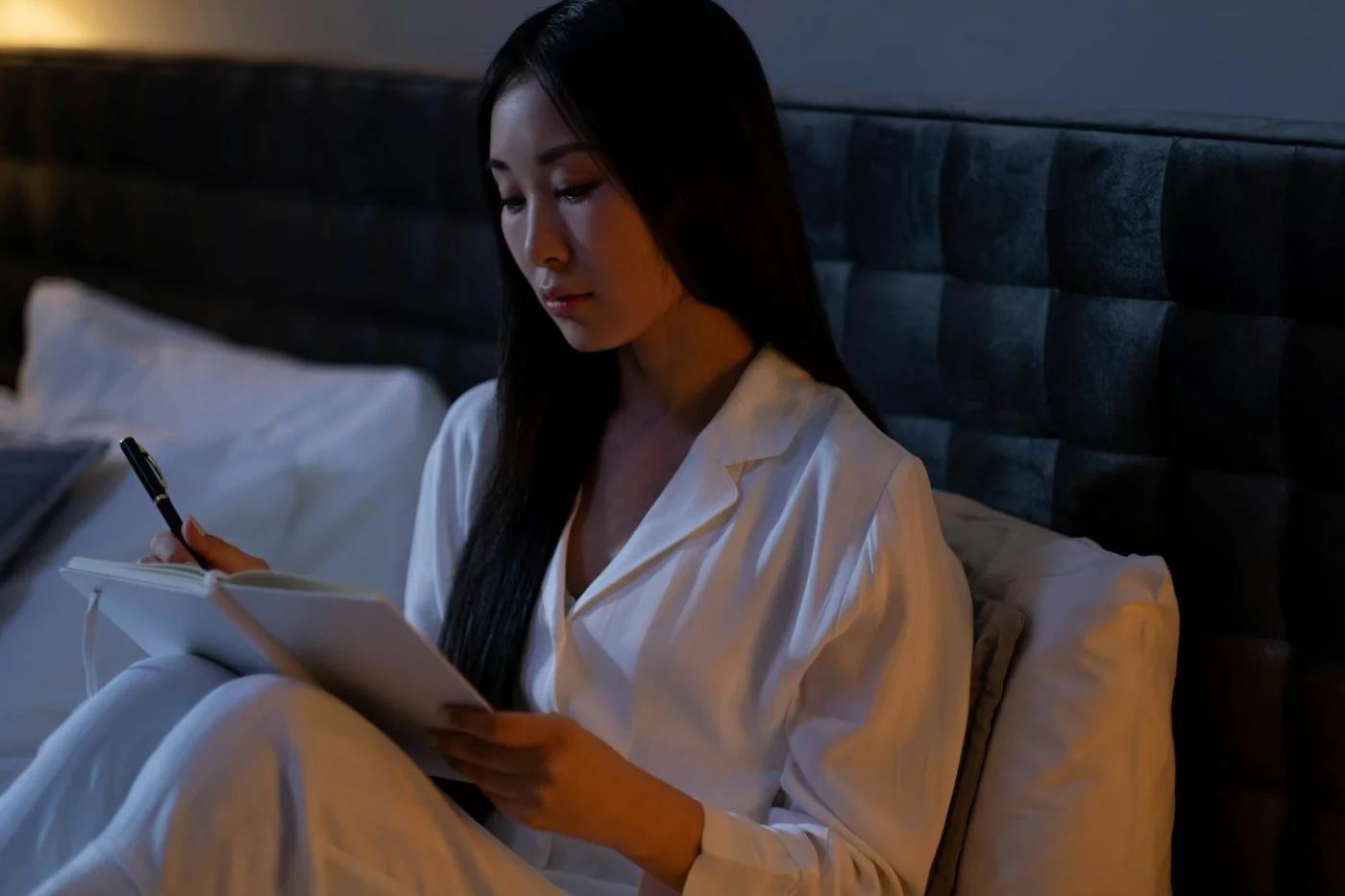
Quick Reference: what to do in the moment
📋 Quick Reference
Just getting into bed and already keyed up: put the phone out of reach, dim lights, do 1-2 minutes of slow exhaling, then relax your jaw, shoulders, and hands. If you need a fast reset, try these ways to reduce anxiety immediately before you try to force sleep.
Awake for about 20 minutes: stop trying harder. Get out of bed, keep lights low, and do something boring for 10-15 minutes: paper reading, gentle stretching, or a brain dump on paper.
Awake at 3 a.m. with racing thoughts: don’t negotiate with every thought. Write down the top 3 worries, add one next action for tomorrow, then return to bed only when your body feels a little less activated.
So here’s the deal. If you’re wondering what to do if you can’t sleep due to stress, the goal isn’t to knock yourself out. It’s to lower arousal enough that sleep can happen on its own.
A practical decision tree helps:
- If you’re tense but sleepy, stay in bed and focus on long exhales, muscle release, and not checking the time.
- If you’re awake and irritated after roughly 20 minutes, get up briefly rather than teaching your brain that bed is for frustration.
- If you’re waking up in the middle of the night with a mind racing can’t sleep anxiety loop, write, breathe, and keep stimulation low.
This is one of the biggest missing pieces in advice about how to sleep when stressed and anxious. People stay in bed battling thoughts, then add phone light, doomscrolling, and wearable-data panic on top of stress. But wait. The bed should stay linked with sleepiness, not problem-solving.
From experience: why simple systems beat perfect routines
I’m a software engineer, not a clinician, but after building learning and stress-management content, I keep seeing the same pattern: people don’t need a perfect 12-step evening ritual. They need a repeatable low-friction sequence they’ll actually do when they’re tired, annoyed, and not at their best.
Personally, I think a 10-15 minute minimum viable wind-down beats an ideal routine you abandon in three days. Three things matter: consistency, low stimulation, and closure.
- Pick a stable wake time and protect it most days, even after a rough night.
- Do a short wind-down: dim lights, no work, no stressful inbox checks, no doomscrolling.
- Empty your head onto paper: unfinished tasks, worries, and tomorrow’s first step.
Why does that last part help? Research on cognitive arousal and insomnia suggests that pre-sleep rumination keeps the brain in a task-monitoring mode. A small 2018 study in the Journal of Experimental Psychology found that writing a to-do list before bed helped some people fall asleep faster than journaling about completed tasks.
And yes, unfinished work is often the hidden driver. If bedtime turns into a meeting with your own guilt, nighttime stress will keep showing up. That’s why longer-term prevention isn’t just candles and tea; sometimes it’s learning to set boundaries at work, planning tomorrow before dinner, and reducing procrastination that spills into bed.
If you want the short version of how to sleep when stressed and anxious, it’s this: calm the body, postpone problem-solving, and make tomorrow feel handled enough that your brain stops standing guard.
When to seek professional help
Short-term stress insomnia is common. Anxiety-related insomnia is also common. But can stress cause difficulty sleeping for weeks and still be “just stress”? Well, actually, that’s where a professional check-in makes sense.
Get evaluated if you notice any of these sleep disorder warning signs:
- trouble sleeping most nights for 3-4 weeks or longer
- major daytime impairment, including driving risk, poor concentration, or frequent mistakes
- panic attacks, worsening depression, or feeling unsafe
- loud snoring, gasping, breathing pauses, or choking awake
- restless legs symptoms, repeated trauma nightmares, or unusual nighttime behaviors
Depending on the pattern, helpful options may include CBT-I, therapy for anxiety, or medical evaluation for sleep apnea, restless legs, medication effects, or other conditions. The American Academy of Sleep Medicine and NIH resources both support CBT-I as a first-line treatment for chronic insomnia.
So if you’re trying to figure out what to do when you can’t sleep because of anxiety, start with tonight’s low-friction plan, then look at the pattern over the next two weeks. If how to sleep when stressed and anxious keeps turning into a nightly battle, getting help is a smart next step, not a last resort. Which brings us to the final FAQ and wrap-up.
Frequently Asked Questions
What should I do if I can’t sleep due to stress tonight?
If you’re searching for what to do if you can’t sleep due to stress, start with a quick body-first reset: stop checking the clock, dim the lights, and make your exhale longer than your inhale for a few minutes. That helps lower arousal faster than trying to force sleep. If you’re still awake after about 15-20 minutes, get out of bed and do something calm in low light—like reading a few pages or listening to quiet audio—until you feel sleepy again. That’s one of the most practical ways to handle how to sleep when stressed and anxious without turning your bed into a place your brain links with frustration.
Why can’t I sleep when I’m stressed even though I’m tired?
If you’ve wondered why can’t i sleep when i’m stressed even though you’re exhausted, the short answer is that your body can be tired while your brain stays switched on. Research on insomnia points to cognitive hyperarousal—basically, your mind keeps scanning, thinking, and anticipating—along with muscle tension and a nervous system that still reads the situation as threatening. So yes, you may feel sleepy and wired at the same time. Understanding that mismatch is a big part of learning how to sleep when stressed and anxious, because it shifts your focus from “trying harder” to calming the system first.
Can stress cause difficulty sleeping for days or weeks?
Yes—can stress cause difficulty sleeping? Absolutely. Stress can disrupt sleep for several nights, and sometimes much longer, especially when the sleep problem itself becomes another thing you worry about at bedtime. If this keeps happening, gets worse, or starts affecting your mood, focus, work, or safety during the day, talk with a qualified healthcare professional; the NHLBI overview of insomnia is a solid place to start. When you’re figuring out how to sleep when stressed and anxious, it’s smart to treat persistent sleep trouble as something worth addressing early, not just “pushing through.”
How do you fall asleep when you are stressed and your mind is racing?
If your mind racing can’t sleep anxiety pattern kicks in at night, don’t start with thought control—start with your body. Try one of these for 5-10 minutes: slow breathing, progressive muscle relaxation, or a body scan. Then, if your thoughts are still looping, write down worries, tomorrow’s tasks, or unfinished thoughts on paper instead of arguing with them in your head. That’s often more effective for how to sleep when stressed and anxious because offloading reduces mental load, while suppression usually backfires.
Should I get out of bed if stress is keeping me awake?
If you’re asking should i get out of bed if i can’t sleep from stress, the answer depends on your state. If you’re calm, comfortable, and drifting in and out, staying in bed is usually fine. But if you’re frustrated, wide awake, or mentally activated after roughly 15-20 minutes, getting up for a low-stimulation reset is often the better move: sit somewhere dim, avoid your phone, and do something boring until sleepiness returns. For how to sleep when stressed and anxious, this matters because it helps your brain keep associating bed with sleep instead of struggle.
What is the best breathing exercise for sleep anxiety?
There isn’t one universal winner for the best breathing exercises for sleep anxiety, but slow-exhale breathing works well for a lot of people because it can reduce physiological arousal without feeling complicated. You might try a few patterns and keep the one that feels easiest: 4 in, 6 out; box breathing; or 4-7-8 if it feels comfortable rather than forced. Personally, I think comfort matters more than perfection here. If you’re working on how to sleep when stressed and anxious, the best breathing exercise is usually the one you can do gently for several minutes without getting tense about “doing it right.”
Is sleep meditation better than breathing exercises for anxiety at night?
For sleep meditation vs breathing exercises for anxiety, it really depends on what is driving your wakefulness. If your body feels tight, restless, or revved up, breathing exercises often work faster because they directly target physical activation. If your main issue is a loud, restless mind, sleep meditation, a body scan, or progressive muscle relaxation may work better because they give your attention somewhere safe to land; if you want a deeper breakdown, FreeBrain’s sleep anxiety at night guide can help you match the method to the problem. Either way, the goal in how to sleep when stressed and anxious is not to “knock yourself out,” but to reduce arousal enough for sleep to happen naturally.
What does a Garmin stress score during sleep actually mean?
The garmin stress score during sleep meaning is usually simpler than people think: it’s a wearable’s estimate based on signals like heart rate variability, not a direct reading of your emotional state. That means it can be useful for spotting trends across several nights, but it shouldn’t be treated as a diagnosis—or as proof that one rough night means something is wrong. And yes, this is the part most people get wrong: the data is best used as a clue, not a verdict. If you’re trying to figure out how to sleep when stressed and anxious, look for patterns over time and how you actually feel during the day, not just one number on a screen.
Conclusion
If you want the short version of how to sleep when stressed and anxious, focus on four things tonight: stop trying to force sleep, get out of bed if you’re wide awake for about 20 minutes, use a simple downshift routine like slow breathing or a brain dump, and keep your wake time consistent tomorrow morning. That’s the core reset. And yes, it works better than lying there negotiating with your brain. If your stress spikes at bedtime, the goal isn’t to “switch off” instantly — it’s to lower arousal enough for sleep to happen on its own.
Personally, I think this is the part most people need to hear: one bad night doesn’t mean you’ve broken your sleep. Or your brain. Stress can absolutely hijack sleep, but it’s also changeable. Small adjustments, repeated for a few nights, often matter more than dramatic fixes. So if you’re figuring out how to sleep when stressed and anxious, be patient with yourself and judge progress by trends, not one rough evening. And if your sleep problems keep going, or anxiety feels overwhelming, it’s worth talking with a qualified healthcare professional.
Want a practical next step? Keep building your system on FreeBrain. You can read How to Fall Asleep Fast for more bedtime tactics, or go deeper with Why Can’t I Sleep Even When I’m Tired? to troubleshoot what’s keeping your brain alert. The best approach to how to sleep when stressed and anxious is simple, repeatable, and realistic. Pick one strategy for tonight, one habit for this week, and start there.