

If you’re wondering how to use anki as a medical student, the short answer is this: use Anki to review high-volume material with active recall and spaced repetition, but keep your setup, settings, and card style simple. That’s really the core of how to use anki as a medical student without drowning in reviews by week two.
Most med students don’t fail because Anki “doesn’t work.” They struggle because they download five decks, copy lecture slides into bloated cards, and turn a useful tool into a second full-time job. Sound familiar? And yes, research on spaced repetition as a learning method helps explain why Anki can be so effective when you use it with a sane system.
This guide is built for beginners. You’ll learn how to use anki as a medical student in a way that actually fits medical school: how to set it up in the first week, which beginner settings matter, how many cards to do per day, when to use pre-made decks, when to make your own cards, and how to avoid the backlog spiral. We’ll also cover why Anki is only one part of a broader system when you study complex topics, and why better cards often come from reducing cognitive load with the chunking memory technique.
One more thing. Anki is a tool, not a requirement for success, so if you’ve been asking whether it’s necessary, worth it, or the best way to use it for med school, you’re in the right place. I’m a software engineer, not a neuroscientist, but I’ve spent years building FreeBrain learning tools and testing evidence-based study systems — and this article is the beginner-first version I wish more med students got on day one.
📑 Table of Contents
- How to use Anki as a medical student: quick answer, why it works, and when it’s worth it
- 7-step guide: how to use Anki medical school settings, decks, and daily workflow
- How to make Anki flashcards for medical school and organize them without wasting time
- Best way to use Anki for med school without burnout: daily routine, common mistakes, and quick reference
- Frequently Asked Questions
- How do you use Anki as a medical student?
- How many Anki cards should I do a day for med school?
- What are the best Anki settings for medical school beginners?
- Should I use pre-made or self-made Anki decks in medical school?
- What does 1, 2, 3, and 4 mean on Anki?
- How can I study in medical school without Anki?
- Conclusion
How to use Anki as a medical student: quick answer, why it works, and when it’s worth it
Now that the basics are on the table, here’s the short version. If you’re wondering how to use anki as a medical student, use it for active recall and spaced repetition, keep your settings simple, review every day, and treat it as one tool inside a broader system you use to study complex topics. For more on learning and study skills, see our learning and study skills guide.

That’s the practical answer. But whether how to use anki as a medical student actually pays off depends on your curriculum, exam style, and whether you’ll stay consistent when reviews start piling up.
Quick answer: how should a medical student use Anki?
How to use anki as a medical student, especially at the start, is simpler than people make it sound. Learn the concept first from lecture, textbook, or questions, then unsuspend or make a small batch of cards, and do your reviews every single day before adding more.
For beginners, a realistic range is often 20-50 new cards on lighter days. Total reviews can be 80 or 300+ depending on deck maturity, missed days, and block intensity. Thing is, if backlog starts exploding, reduce new cards early rather than trying to hero your way through it.
- Learn first, card second
- Keep cards short and specific
- Review daily, even on weekends
- Cut new cards before reviews become unmanageable
Why Anki works for memory but not for everything
If you ask, does anki work med school, the evidence says retrieval practice helps memory. Karpicke and Blunt’s test-enhanced learning research, summarized in PubMed research on retrieval practice and meaningful learning, found that recalling information beats passive rereading for long-term retention.
And is anki good for medical school? Usually, yes for pharm mechanisms, micro facts, anatomy labels, pathways, and recurring lecture details. Spaced repetition matters because reviewing near the edge of forgetting is more efficient than cramming, which fits what broader evidence on spaced repetition has shown for years.
But wait. Anki is weak for first-pass understanding, weak for clinical reasoning by itself, and weak as a replacement for question banks. Better cards also use the chunking memory technique and connect facts to meaning with elaborative rehearsal examples, instead of copying whole slides.
From experience: the students Anki helps most
This is the part most people get wrong. How to use anki as a medical student is not “put every lecture into cards.” The students who do best use Anki for repeated facts and high-yield details, not as a dumping ground for every bullet point.
Lecture-heavy in-house programs usually need a hybrid approach. Board-focused programs often get more value from pre-made decks. And no, is anki necessary for med school? Not at all. Many students succeed with it, and many succeed without it.
This is study guidance, not medical advice. If stress, anxiety, sleep problems, or burnout are hurting your performance, talk with student support services or a qualified professional. Next, let’s get into the 7-step system for settings, decks, and daily workflow.
7-step guide: how to use Anki medical school settings, decks, and daily workflow
So now we move from “why it works” to the part that actually matters: how to use anki as a medical student without creating a review pile you hate. And if you’re serious about making Anki work in med school, your setup in the first hour matters more than most beginners realize.

Step 1-2: Download Anki, sync it, and turn on beginner-safe settings
Start on desktop, not mobile. The desktop app gives you the full settings menu, better deck control, and access to the terminology used in the official Anki Manual, which is still the clearest source for how scheduling actually works.
Here’s the clean setup flow competitors often skip: do your anki medical school download on desktop first, create an AnkiWeb account, then turn on sync before you touch decks. That way your cards, media, and progress are backed up from day one. If your version supports FSRS, enable it early. FSRS is a newer scheduling system that aims to time reviews more efficiently than older defaults, which is a big deal when you’re learning how to use anki as a medical student at scale.
Anki isn’t your whole study system, though. You still need to study complex topics before you can review them well.
How to set beginner-safe Anki defaults
- Step 1: Install Anki desktop and create AnkiWeb.
- Step 2: Turn on sync and do a full sync before adding decks.
- Step 3: Enable FSRS if available in your current version.
- Step 4: Start with new cards at 20-40/day and max reviews at 150-300/day.
- Step 5: Use learning steps around 1m 10m, graduating interval about 1 day, and easy interval around 3-4 days.
- New cards/day: 20-40
- Max reviews/day: 150-300
- Learning steps: 1m 10m
- Graduating interval: ~1 day
- Easy interval: ~3-4 days
Those are starting points, not laws. The best Anki settings for medical school beginners depend on your block pace, class attendance, and how many outside resources you’re using.
Step 3-5: Choose pre-made, self-made, or hybrid decks without creating chaos
This is where most people overcomplicate things. Premade vs self made anki decks medical school isn’t an either-or question for most students.
Pre-made decks help with board-style breadth and save hours. Self-made cards fit in-house exams better because they match your lecturer’s wording, emphasis, and weird pet facts. Personally, I think the hybrid approach wins for almost everyone learning how to use anki as a medical student: use a solid board deck as your base, add 5-10 lecture-specific cards when needed, and suspend anything irrelevant aggressively.
If you’re pulling from lectures or textbooks, process the material first with the SQ3R reading method so you’re not just copying slides into cards. And when a concept feels dense, use the chunking memory technique to split one overloaded card into two or three simpler prompts.
What does 1 2 3 4 mean on Anki? Simple:
- 1 = Again: you failed recall
- 2 = Hard: you barely got it
- 3 = Good: correct with normal effort
- 4 = Easy: too easy, delay it longer
But wait. Don’t spam Easy. Beginners often overuse it, then wonder why cards disappear too long and come back half-forgotten.
Step 6-7: Build a first-week routine and cap your workload early
If you want to know how to use anki as a medical student without burning out, follow a first-7-days ramp instead of going all in on day one. Research on retrieval practice and spaced repetition, summarized in Wikipedia’s overview of spaced repetition, supports the basic logic: small, repeated recall beats cramming.
- Day 1: install, sync, and test one deck
- Day 2: set limits and learn one small deck
- Day 3: practice the answer buttons correctly
- Day 4: make 5-10 lecture cards
- Day 5: tag and suspend low-yield cards
- Day 6: test workload tolerance
- Day 7: review your stats and adjust
How many anki cards a day for med school? If you’re overloaded, stay near 20 new cards. If your block is stable, 30-50 may work. Before exams, often fewer is smarter because reviews first, new cards second. That rule alone prevents most backlog disasters.
That’s the practical core of how to use anki as a medical student: install it correctly, cap the workload, and match your deck strategy to your exams. Which brings us to the next problem — how to make medical school cards that are actually worth reviewing.
How to make Anki flashcards for medical school and organize them without wasting time
Once your settings and daily workflow are set, the next bottleneck is card quality. If you’re learning how to use anki as a medical student, this is where you save hours or quietly waste them.
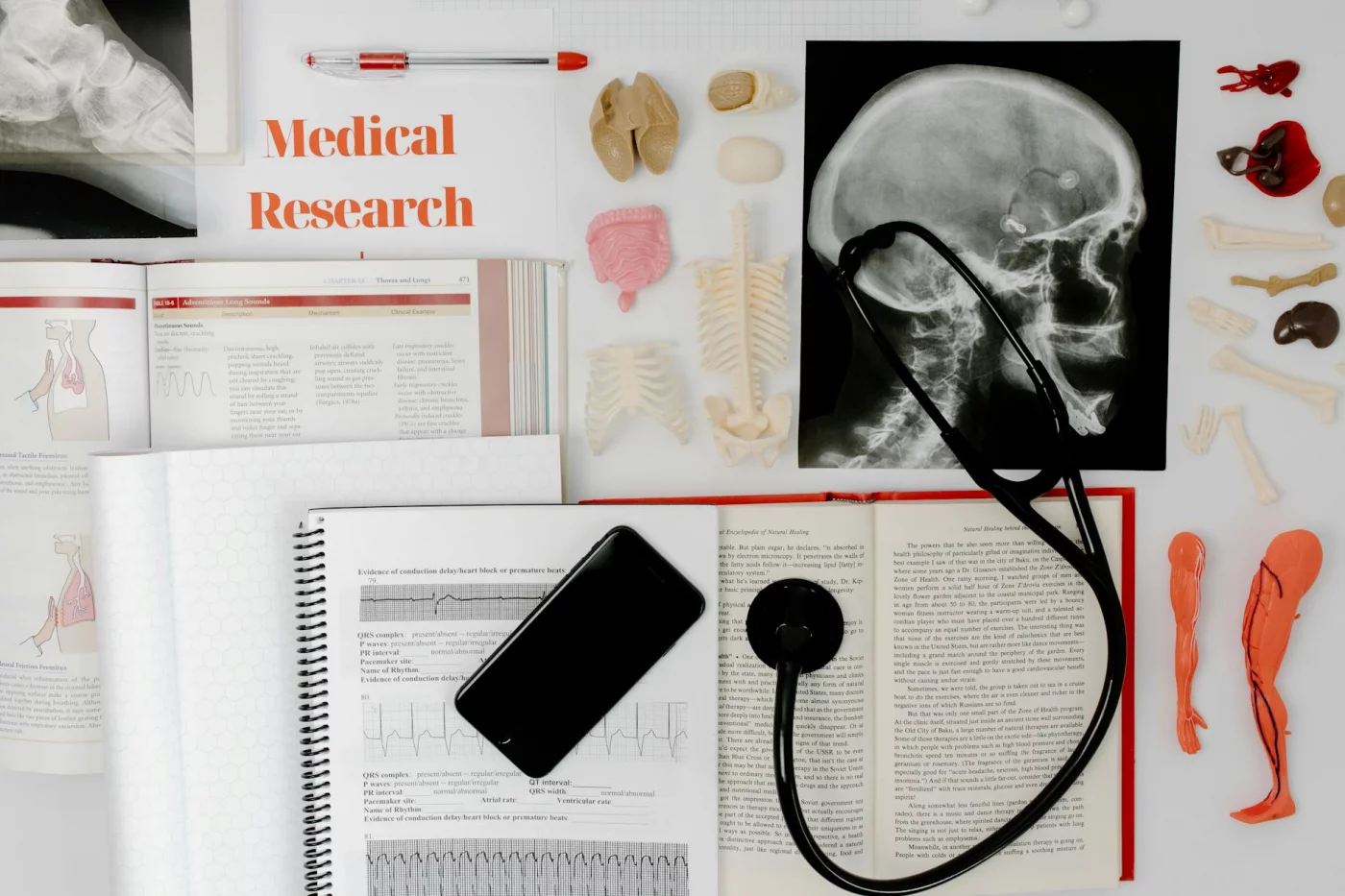
Anki works best as one part of a bigger system, not as a dumping ground for every slide. If you’re still figuring out how to study complex topics, think of cards as the last step after you understand the idea well enough to compress it.
Good vs bad medical school cards
This is the part most people get wrong. When asking how to make Anki cards for medical school, the answer isn’t “make more.” It’s “make smaller.”
Bad card: one note with an entire lecture slide on heart failure drugs pasted into the front, then “memorize this” on the back. That creates high cognitive load, slows reviews, and mixes too many facts into one prompt.
Good medical school flashcards usually test one idea at a time. That’s basic chunking, and FreeBrain has a good explanation of the chunking memory technique if you want the memory logic behind it.
- Cloze deletion, pharm: Beta-1 blockers primarily decrease {{c1::heart rate}} and {{c2::contractility}}.
- Image occlusion, anatomy: Hide one branch of the brachial plexus or one heart structure label at a time, not the whole diagram.
- Front-back, lecture fact: Front: “Most common cause of left-sided heart failure?” Back: “Ischemic heart disease.”
Why do shorter cards usually retain better? Research on cognitive load and retrieval practice suggests recall improves when you retrieve small, clear chunks instead of re-reading overloaded prompts. And here’s the kicker — shorter cards are faster, so you actually keep up with reviews.
If you’re learning how to use anki as a medical student, favor cloze deletion for mechanisms and pathways, image occlusion for labeled structures, and short front-back cards for isolated lecture facts. Personally, I think copied-slide cards are just prettier procrastination.
A simple deck and tag system that actually scales
When people ask how to organize anki decks in medical school, they often build 40 subdecks and then wonder why reviews feel messy. Too many subdecks add friction and can interfere with smooth scheduling.
Keep it simple: one main deck or a few broad decks like “Preclinical,” “Clinical,” and “Boards.” Then use a tagging system to sort by source and context.
- Block tags: cardio::lecture_03, renal::lecture_07
- Source tags: board::pathoma, class::prof_smith
- Exam tags: exam::block1, exam::final
Use card suspension instead of making endless tiny decks. For how to use anki as a medical student, this is one of the highest-leverage habits: keep cards in a stable home, unsuspend what matters now, and re-suspend low-yield extras if needed.
Real-world application: one week of lectures, one sane card workflow
OK wait, let me back up. Lecture-heavy schools need a filter, not a transcription habit.
Say you have one cardiology lecture, one pharm lecture, and one anatomy lab in the same week. Don’t make 300 low-value cards. Instead, process the lecture first, then make or unsuspend 5 to 15 high-yield cards per topic based on likely tested facts, repeated professor emphasis, and concepts you missed when self-quizzing.
Example: cardiology lecture gets 8 cards on murmurs and pressure-volume changes, pharm gets 12 cloze deletion cards on autonomics mechanisms and side effects, anatomy lab gets 10 image occlusion cards on heart vessels and mediastinal landmarks. That’s about 30 solid cards, not 300 weak ones.
And yes, premade vs self made Anki decks medical school is a real tradeoff. Use premade decks for board-style facts, then add a small number of self-made lecture cards for class-specific details. If you’re serious about how to use anki as a medical student, that hybrid approach usually gives the best return.
Which brings us to burnout prevention: now that you know how to use anki as a medical student without bloated cards or chaotic decks, the next step is building a daily routine you can actually sustain.
Best way to use Anki for med school without burnout: daily routine, common mistakes, and quick reference
Once your cards are clean and organized, the next question is practical: how do you actually keep up? If you’re trying to figure out how to use anki as a medical student without turning it into a second full-time job, the answer is routine first, settings second.
A realistic daily Anki routine for busy med students
The best way to use Anki for med school is boring, repeatable, and sustainable. Reviews first. Then lectures, question banks, or content learning. Then a short block for new cards later in the day.
A simple structure works well for most students:
- Morning: 30-60 minutes of due reviews
- Daytime: class, boards content, practice questions, or concept learning
- Evening: 15-30 minutes of new cards and cleanup
Use 25-50 minute focus blocks with short breaks. Personally, I think this matters more than fancy settings, especially if you already know your energy crashes after long study stretches. If you want a rhythm for those work-rest cycles, see our guide on ultradian rhythms for studying.
So, how many anki cards a day for med school makes sense? For many beginners, 20-50 new cards a day is enough. Reviews may land anywhere from 80 to 250+ depending on the block, but your real target is consistency, not brag-worthy numbers.
If you’re asking how to use anki as a medical student during pre-clinical courses, a good starter setup is: FSRS on if available, new cards 20-40/day, maximum reviews around 150-250/day, and learning steps kept simple. But wait. Those numbers are guardrails, not rules. If your retention rate is falling and you’re dreading reviews, lower the load.
Missed a day? Don’t panic. The best way to use Anki for medical school after a backlog is to pause or reduce new cards, chip away at due reviews, and suspend low-value material if needed. Adding more cards into a review backlog is how people burn out fast.
Common beginner mistakes that create burnout
This is the part most people get wrong. They don’t fail because spaced repetition is weak; they fail because they overload the system.
- Too many new cards: cut new cards before you cut sleep.
- Overusing Easy: this inflates intervals before the memory is stable.
- Giant cards: split them into one fact, one image, or one decision point.
- Over-organizing decks: simplify tags and stop rebuilding your system weekly.
- Chasing Reddit-perfect settings: pick reasonable defaults and leave them alone for 2 weeks.
- Treating Anki as understanding: learn first, then memorize.
If you want to know how to use anki as a medical student effectively, think “memory support,” not “entire curriculum.” Research on sleep and memory consolidation consistently suggests that overload, stress, and short sleep hurt retention. And yes, a rising review backlog often tracks with both.
Well, actually, one more thing: if a concept is still fuzzy, explain it out loud before reviewing. That’s often a faster fix than hammering the same card ten times.
Quick Reference: what to do today if you’re starting from zero
📋 Quick Reference
- Start with one deck source: lecture-heavy school = hybrid or self-made emphasis; board-heavy = more pre-made, selectively unsuspended.
- Use starter settings: 20-40 new cards/day, max reviews 150-250/day, simple learning steps, FSRS if available.
- Do reviews first every day, then learn content, then add a small batch of new cards.
- If reviews pile up, pause new cards, clear due cards first, and suspend low-yield material.
- If you hate flashcards, try question banks, active recall notes, teaching concepts aloud, and a spaced review calendar instead.
So, is anki worth it for medical school? Yes, if it saves time and improves retention. No, if it becomes a second curriculum you serve instead of a tool you control. That’s really how to use anki as a medical student well.
Next, I’ll answer the questions med students ask most before deciding whether Anki fits their study system.
Frequently Asked Questions
How do you use Anki as a medical student?
If you want to know how to use Anki as a medical student, start by learning the topic first from lecture, a textbook, or a video, then use Anki to rehearse what you already understand. Do your reviews every day with spaced repetition, keep cards short enough to answer in a few seconds, and pick a deck strategy that matches your goal: lecture-focused cards for in-house exams, board-focused decks for Step prep, or a mix of both. And yes, this is the part most people get wrong — Anki works best as a review system, not as your first exposure to dense medical content.
How many Anki cards should I do a day for med school?
For how many Anki cards a day for med school, most beginners do well starting around 20-40 new cards per day, and some move up to 50 new cards once their review load feels stable. But wait — total daily reviews often climb much higher over time, sometimes into the low hundreds, so the right number depends on your class schedule, exam timing, and whether you’re building a backlog. If you’re figuring out how to use Anki as a medical student, the smarter rule is this: add only as many new cards as you can keep reviewing consistently for the next few weeks.
What are the best Anki settings for medical school beginners?
The best Anki settings for medical school beginners are usually simple, not fancy: try 20-40 new cards/day, max reviews around 9999 so Anki doesn’t artificially cap due cards, learning steps like 1m 10m, a graduating interval of 1-3 days, and an easy interval around 4-7 days. Those settings are a practical starting point if you’re learning how to use Anki as a medical student, but you should adjust them based on retention, stress, and available study time. For the actual logic behind spaced repetition, the NCBI overview of the testing effect and retrieval-based learning is worth reading.
Should I use pre-made or self-made Anki decks in medical school?
The short answer to premade vs self made anki decks medical school is that pre-made decks are usually better for efficient board-style coverage, while self-made cards are better when your school tests tiny lecture details. For most students learning how to use Anki as a medical student, a hybrid approach works best: use a strong pre-made base deck, then add a small number of lecture-specific cards only for material your professors emphasize. Personally, I think this saves time and keeps your card load from getting ridiculous.
What does 1, 2, 3, and 4 mean on Anki?
If you’re wondering what does 1 2 3 4 mean on anki, here’s the plain-English version: 1 = Again (you missed it), 2 = Hard (you got it with difficulty), 3 = Good (correct with normal effort), and 4 = Easy (too easy right now). When you’re learning how to use Anki as a medical student, you’ll usually press Good most often; beginners tend to overuse Easy, which can push cards too far out before the memory is actually stable. Quick sidebar: if a card feels confusing rather than difficult, fix the card instead of blaming your memory.
How can I study in medical school without Anki?
If you’re asking how to study in medical school without anki, you can still do very well by using retrieval practice in other forms: question banks, self-quizzing from blank paper, teaching concepts out loud, and revisiting notes on a spaced schedule. Knowing how to use Anki as a medical student is helpful, but Anki isn’t required for success if your system still forces you to recall information actively and review it over time. A good setup is: learn the topic, test yourself, review weak spots, repeat — and if you want a structured memory strategy, check FreeBrain’s spaced repetition guide.
Conclusion
If you remember just four things, make them these: keep your Anki setup simple, use high-yield decks instead of collecting too many, make brief cards that test one idea at a time, and protect a realistic daily review habit. That’s really the core of how to use anki as a medical student without turning it into a second full-time job. And yes, your settings matter, but your consistency matters more. A clean workflow, limited new cards, and fast review sessions will take you further than endlessly tweaking add-ons or redesigning every deck.
Medical school is already a lot. So if your system feels messy right now, that doesn’t mean you’re behind. It usually just means you need fewer decisions and a better routine. Personally, I think this is the part most students get wrong: they assume Anki has to feel intense to work. It doesn’t. When you learn how to use anki as a medical student in a way that fits your actual schedule, it becomes lighter, more predictable, and much easier to stick with during busy rotations and exam blocks.
Want to keep building a study system that actually lasts? Start with more practical guides on FreeBrain, including how to study for long hours without losing focus and our spaced repetition guide. Which brings us to the real next step: don’t just read about how to use anki as a medical student — open Anki today, clean up one deck, set tomorrow’s review target, and make your system easier to trust.