You’re not imagining it: one of the biggest effects of test anxiety on students is that you can know the material and still blank when it counts. That gap between what you studied and what you can actually show under pressure is real, and it usually comes down to stress disrupting focus, recall, and decision-making. If you’ve been wondering about the effects of test anxiety on students — and which study methods actually help — this article will give you a practical answer, not vague advice.
Maybe you’ve had this happen. You finish a practice session at home and feel fine, then sit down for the real exam and suddenly your mind goes noisy, your heart speeds up, and even familiar facts feel slippery. Research from the American Psychological Association on anxiety and its effects on thinking and performance helps explain why: anxiety can pull attention away from the task right when you need it most. And yes, that’s why understanding attention and working memory matters so much here.
So here’s the deal. I’m going to break down how anxiety affects test performance, then map specific study skills to the exact problems anxiety creates. You’ll see which CBT tools for test anxiety can calm spiraling thoughts, why active recall and practice exams help you retrieve under pressure, how spaced repetition lowers last-minute panic, and what to do 7 days before, 24 hours before, the morning of, and during the exam itself.
I’m a software engineer, not a clinician, and I built FreeBrain’s learning tools because I’ve seen how often students need systems, not just motivation. This article is educational, not medical advice, and if your anxiety is severe, persistent, or affecting daily life, you should talk with a qualified mental health professional.
📑 Table of Contents
- Why anxiety hurts test performance
- 7 effects of test anxiety on students
- Study habits that make anxiety worse
- Study skills that calm the chaos
- Your exam anxiety game plan
- Frequently Asked Questions
- How does anxiety affect exam performance in students?
- What are the effects of test anxiety on students?
- Why do I blank out during exams?
- What study skills reduce test anxiety?
- How can students reduce exam anxiety before a test?
- Does anxiety affect memory during tests?
- How should I study when feeling anxious?
- Conclusion
Why anxiety hurts test performance
So here’s the deal. Many students really do know the material, yet score below their actual ability because stress hijacks attention, recall, and decision-making right when they need them most. For more on learning and study skills, see our learning and study skills guide.
In plain English, test anxiety is a mix of worry, body tension, and threat-focused thinking before or during an exam. These effects of test anxiety on students can be academic, emotional, and physical. If your anxiety is severe, persistent, or comes with panic symptoms or major impairment, talk with a licensed clinician, school counselor, or healthcare provider. And if you want practical support, start with FreeBrain’s CBT tools for test anxiety.
What test anxiety actually feels like
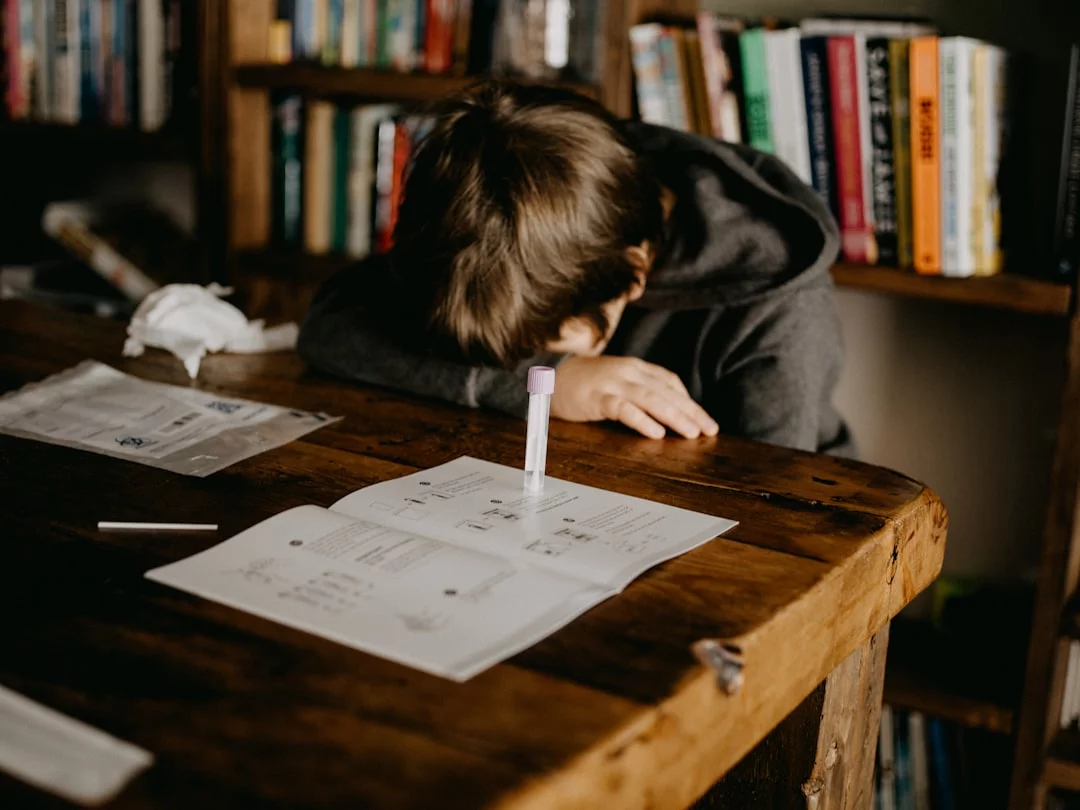
What does test anxiety feel like in real life? Usually some combination of racing thoughts, sweaty hands, a tight chest, nausea, blanking out, rereading the same line, rushing easy questions, or freezing on hard ones.
A little stress can help performance under pressure by increasing alertness. But wait—too much stress can narrow attention and make your brain treat the exam like a threat. That’s part of why students sometimes “know it yesterday, lose it today,” a pattern that overlaps with an amygdala hijack explained in simple terms.
- Normal nerves: sharper focus, more energy, mild tension
- Disruptive anxiety: intrusive worry, mental blanks, careless mistakes
- After-effects: exhaustion, rumination, poor sleep before the next exam
Why knowing the material isn’t always enough
Here’s the mechanism. Anxiety increases cognitive load, which leaves less working memory available for reading a question, tracking multi-step logic, and retrieving facts under time pressure.
Say you can solve a chemistry problem at home in 3 minutes. In the exam room, worry eats up bandwidth, so you lose your place halfway through and stall. That’s why how anxiety affects test performance is often less about intelligence and more about overloaded mental resources. If you want the deeper learning-science version, FreeBrain has a practical guide to attention and working memory.
A quick evidence note
I’m a software engineer, not a therapist. My job at FreeBrain is translating published learning science into study systems students can actually use. Research suggests test anxiety and academic performance are linked through attention, working memory, sleep, and retrieval problems, though moderate stress doesn’t affect everyone the same way.
For background, the American Psychological Association’s anxiety overview explains common anxiety symptoms, and research from the National Institute of Mental Health on stress outlines how stress can affect thinking and the body. This article is educational, not medical advice or a treatment plan. Which brings us to the next question: what are the specific effects of test anxiety on students?
7 effects of test anxiety on students
So what does that look like in real life? The main effects of test anxiety on students show up fast: weaker focus, shakier recall, worse pacing, poorer sleep, more avoidance, and lower confidence. If anxious thoughts keep hijacking your test day, practical supports like CBT tools for test anxiety can help you interrupt the spiral.
Attention gets pulled away from the test
This is the part most people notice first. Intrusive thoughts like “I’m going to fail” compete with reading and reasoning, which creates concentration problems even when you studied well. On a multiple-choice exam, missing one word like “except” or “best” can flip the answer completely.
Anxiety also eats working memory. Your brain is trying to solve the question and manage threat at the same time, which is why multi-step math, essay planning, and comparing answer choices suddenly feel harder. If you want the mechanics, FreeBrain has a plain-English guide to attention and working memory.
- Misreading prompts and key words
- Rereading the same sentence 2-3 times
- Rushing easy items or freezing on harder ones
Memory and recall feel less reliable
Blanking out during tests is real. Well, actually, the information often isn’t gone; retrieval just gets less reliable under stress, especially when the threat system is firing. That’s the basic idea behind an amygdala hijack explained in plain English.
You may recognize the answer right after the exam but fail to pull it up in the moment. Research on stress and memory, including background from NCBI’s overview of the amygdala and CDC guidance on sleep and health, helps explain why stress-related memory disruption and poor recovery can hurt recall.
Sleep, timing, and confidence start to slide
Here’s the rest of the list: time management gets worse, sleep and recovery suffer, avoidance rises, and grades can drop. Students may stay up late, feel less alert, procrastinate with low-value tasks, and then lose confidence after another bad exam. And yes, test anxiety and academic performance can become a self-reinforcing loop.
Which brings us to the next section: the study habits that quietly make this cycle worse.
Study habits that make anxiety worse
Those 7 symptoms don’t come from nowhere. A big part of the effects of test anxiety on students is that anxious students often choose study habits that feel safe now but fail under pressure later.
So here’s the deal: the wrong method can quietly add more exam stress. If you want practical ways to interrupt that cycle, FreeBrain’s CBT tools for test anxiety can help you catch the thought patterns driving it.
Why cramming backfires
Cramming gives you a double hit: less sleep and weaker consolidation. Research on sleep and learning consistently shows that memory stabilizes after study, especially with rest and spacing, which is why memory consolidation basics matter more than one last panic session.
And yes, it can feel productive. But after five late-night hours, many students feel even less ready because fatigue makes recall shakier and uncertainty louder. That’s one reason the effects of test anxiety on students get worse right before the exam.
The false comfort of passive review
Rereading, highlighting, and watching solution videos create recognition, not reliable recall. Your notes look familiar, but can you produce the answer from scratch when the page is gone?
Personally, I think this is the trap most students miss. Two hours of active recall usually beats five hours of passive review for exam readiness because testing yourself strengthens retrieval, while passive review mainly boosts false confidence. Anxiety also strains attention and working memory, so familiar-looking material can still vanish on test day. For background, APA’s overview of memory explains why recall is harder than recognition.
Avoidance disguised as studying
But wait. Anxiety often pushes you toward low-friction tasks:
- color-coding notes
- rewriting headers
- cleaning your desk
- checking your phone
- making the “perfect” plan
That feels calming in the moment. Well, actually, it’s avoidance and procrastination wearing a study costume. If your escape route is your device, start with this guide to stop phone distraction. And when stress starts to feel like a threat response, this plain-English explainer on the amygdala hijack response helps make sense of the freeze-and-blank-out pattern.
Next, let’s replace these habits with study skills that actually calm the chaos.
Study skills that calm the chaos
If bad habits amplify stress, better ones can dial it down fast. A big part of the effects of test anxiety on students is uncertainty: “Do I actually know this?” Practical methods answer that question before exam day, and tools like CBT tools for test anxiety help when anxious thoughts keep looping.

What to use instead of rereading
Rereading feels safe, but it often creates false confidence. Active recall for test anxiety works better because you practice pulling answers from memory, which strengthens retrieval practice and makes blanking out less likely when pressure hits attention and working memory.
- Biology: close the notes and explain photosynthesis out loud.
- Math: solve 3 problems from memory before checking steps.
- History: do a blank-page brain dump of causes, dates, and consequences.
How spacing lowers last-minute panic
Spacing cuts overload by spreading review: same day, next day, 3 days later, then 1 week later. It’s especially useful for formulas, vocab, and definitions, and research on memory supports spaced review over cramming, as summarized by this PubMed review on the spacing effect in learning.
If you want less friction, use an SRS. FreeBrain’s SRS app comparison can help you pick one that fits your course load.
Practice tests, planning, and error review
Practice exams under realistic timing train recall under pressure. They also make the format feel familiar, which matters because the effects of test anxiety on students often include freezing when the test feels threatening — basically an amygdala hijack explained in plain English.
📋 Quick Reference
- Panic from uncertainty → Active recall → Better retrieval confidence
- Last-minute overload → Spaced repetition → Less cramming, steadier memory
- Fear of the unknown → Practice exams → Better pacing and question triage
- Decision fatigue → 2-3 planned tasks → Easier starts
- Repeated mistakes → Error log → Clear weak-spot review
Keep planning simple: 2-3 priority tasks per session, not a perfect color-coded system. Track small wins too—quiz score, recall accuracy, cards reviewed—because visible progress calms your brain. Next, let’s turn these study techniques for anxious students into your exam anxiety game plan.
Your exam anxiety game plan
Study skills help. But when the clock is real, you need a plan you can follow under pressure. That’s how you reduce the effects of test anxiety on students from something overwhelming to something manageable.
How to study when anxious: step by step
How to study when anxious: step by step
- Step 1: 7 days before: switch to active recall, spaced review, and one timed practice set. Pick your top 3 weak areas and focus there first.
- Step 2: 24 hours before: do light review only, one short retrieval session, pack materials, and stop adding new topics late.
- Step 3: Night before: protect sleep, cut stimulation, and don’t panic-study. The CDC consistently recommends enough sleep for attention and memory the next day.
- Step 4: Morning of: eat something simple, drink water, arrive early, and do one 60-second breathing reset.
- Step 5: During the exam: if anxiety spikes, pause, exhale longer than you inhale, name the feeling, and start with one doable question.
Example schedule: Monday review Chapter 1 with recall prompts, Tuesday Chapter 2, Wednesday formula sheet, Thursday mixed quiz, Friday timed practice test, Saturday weak spots, Sunday light review. Personally, I think this works because it turns “study more” into visible reps. And yes, the effects of test anxiety on students usually get worse when review stays vague.
What to do if you blank out mid-exam
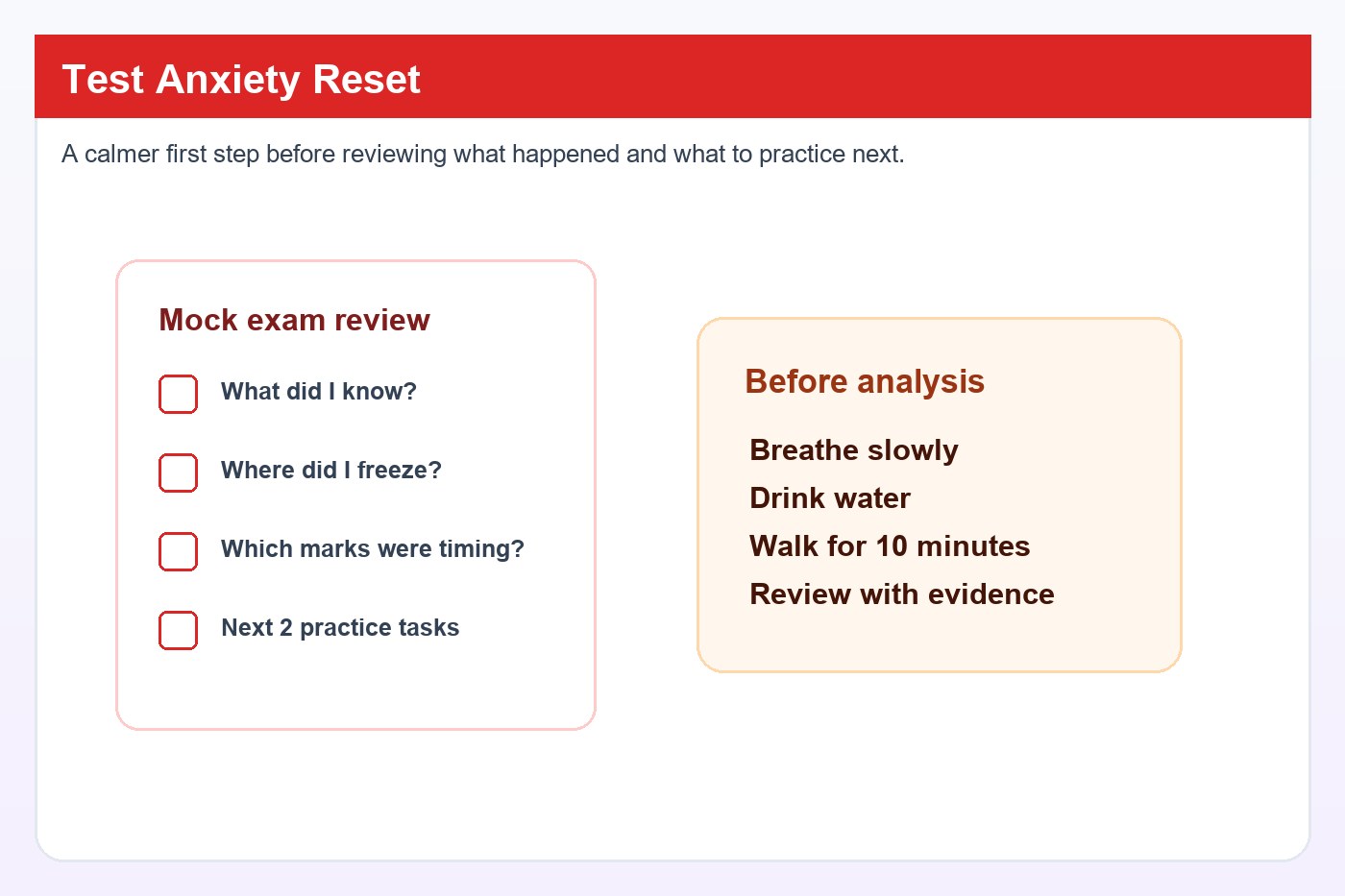
Blanking out feels dramatic, but the rescue plan is simple. Put both feet on the floor, do one slow exhale longer than your inhale, drop your shoulders, then circle one easy question and restart with action. Want the why behind that freeze response? Read our amygdala hijack explained guide.
- Multiple-choice: mark and move.
- Essay: make a 3-point outline first.
- Timed math or science: write the known steps to restart working memory.
From experience: what actually helps most
While building FreeBrain study systems, the biggest shift wasn’t getting students to feel calm first. It was reducing uncertainty with retrieval practice, review timing, and simple checklists. Thing is, anxiety may not vanish, but your performance can get far more stable.
If anxiety brings panic symptoms, major sleep loss, severe avoidance, or problems across classes, talk to a counselor or healthcare professional. For now, use this exam anxiety study plan, then keep going into our FAQ and FreeBrain guides on working memory, stress, and evidence-based study systems.
Frequently Asked Questions
How does anxiety affect exam performance in students?
If you’re asking how does anxiety affect exam performance in students, the short answer is this: anxiety competes for your attention. It can overload working memory, make it harder to hold steps in mind, and reduce reliable recall under pressure. So even when you know the material, you might misread a question, freeze for a minute, rush through easy items, or forget facts you could remember perfectly well later.
What are the effects of test anxiety on students?
The effects of test anxiety on students often show up before, during, and after the exam. Common signs include poor focus, blanking out, bad time management, sleep disruption, procrastination, and lower confidence. Over time, repeated anxious testing experiences can drag down academic performance and motivation, especially if students start avoiding practice or assuming they’re “just bad at tests.”
Why do I blank out during exams?
If you’re wondering why do I blank out during exams, it’s usually not because the information vanished. More often, stress narrows attention and makes retrieval harder in the moment, especially when the clock is running and the stakes feel high. A quick reset helps: pause for 2 slow breaths, answer an easier question first, and build in regular practice tests so your brain gets used to recalling under exam-like conditions.
What study skills reduce test anxiety?
The best answer to what study skills reduce test anxiety is simple: use methods that train recall, not just recognition. The most useful ones are active recall, spaced repetition, timed practice tests, simple planning, and error review. These lower uncertainty because you’re proving to yourself that you can retrieve information on demand — and yes, that’s usually more calming than rereading notes for the fifth time. If you want a structured way to study like this, try FreeBrain’s study tools and planners at FreeBrain.net.
How can students reduce exam anxiety before a test?
If you want to know how to reduce exam anxiety before a test, start earlier than feels necessary and make retrieval practice your default. That means quizzing yourself, protecting sleep, and avoiding last-minute cramming, which tends to increase stress without improving recall much. The day before, keep review light, focus on confidence-building recall of familiar material, and skip brand-new topics unless your teacher specifically says they’re essential.
Does anxiety affect memory during tests?
Yes — if you’re asking does anxiety affect memory during tests, evidence suggests it can make retrieval feel less reliable, especially for facts you need to recall quickly under pressure. That doesn’t always mean the memory is gone; often, access is disrupted in the moment because stress is pulling resources away from recall. This is one of the most frustrating effects of test anxiety on students, and it’s one reason practice under timed conditions can help. For a broader overview of test anxiety, the American Psychological Association has useful background on how anxiety affects thinking and performance.
How should I study when feeling anxious?
If you’re figuring out how to study when feeling anxious, keep the system small and repeatable. Use short sessions with one clear goal, test yourself actively, take planned breaks, and stop on time instead of chasing the “perfect” study day. A good pattern is: pick one topic, do 5-10 retrieval questions, review mistakes, then move on — because when anxiety is high, simple structure usually works better than ambitious plans.
Conclusion
The biggest shift is simpler than most students expect. Don’t wait until the night before, don’t reread passively for hours, and don’t confuse “time spent” with real preparation. Instead, use short study sessions, active recall, practice under light time pressure, and a clear pre-exam routine that lowers mental noise before it spikes. That combination does two things at once: it improves memory and reduces the effects of test anxiety on students by making the test feel more familiar, more predictable, and less threatening.
And if you’ve been stuck in the panic-cram-regret cycle, you’re not broken. Really. Anxiety can make smart, prepared students blank out, second-guess themselves, and perform below their actual ability. But wait—this is the part that matters most: study skills are trainable. Small changes, repeated consistently, can calm your brain faster than you think. Personally, I think that’s the most hopeful part of this whole topic. You don’t need perfect confidence. You need a better system.
If you want to keep improving, explore more practical guides on FreeBrain.net. Start with Active Recall: The Study Method That Actually Works and How to Use Spaced Repetition to Remember More. Those two habits alone can reduce the stress patterns behind the effects of test anxiety on students while helping you study with more control. Build your plan, practice it early, and walk into your next exam with something better than hope: evidence-based preparation.