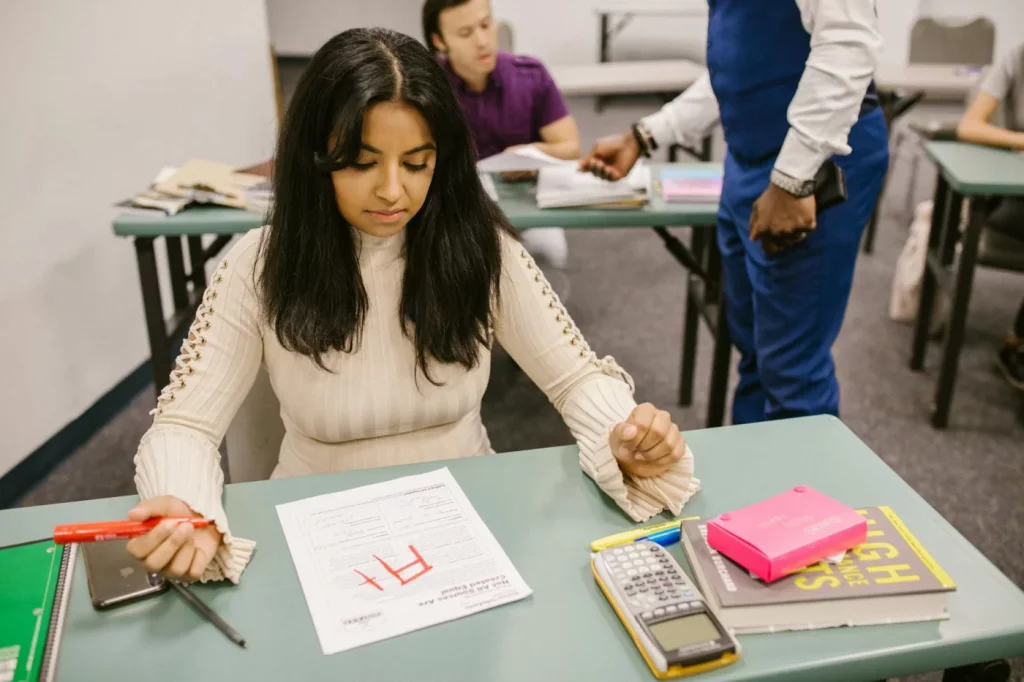
If you’re thinking, “i did bad on a test i studied hard for”, start here: one bad result usually means something in your method, timing, or exam state broke down — not that you’re incapable. And if you’re stuck on i did bad on a test i studied hard for, the fastest move is to treat that paper like data, not a verdict.
Do this in the next 24 hours:
1. Stop the post-exam spiral and give yourself 30-60 minutes to cool off.
2. Mark exactly what went wrong: recall, timing, misreading, anxiety, or burnout.
3. Separate “didn’t know it” from “knew it but couldn’t show it.”
4. Pick one fix for each problem instead of restarting your whole study plan.
5. Build a short comeback plan for the next 7-30 days.
You know the feeling, right? You revised for days, opened the paper, and somehow your brain went blank, you rushed easy questions, or you walked out thinking, “What just happened?” Research on stress and performance suggests pressure can interfere with recall and attention, which is one reason poor results aren’t always about effort alone; if that sounds familiar, these guides on test anxiety study skills and stress from the American Psychological Association help explain why.
So here’s the deal. This article will help you calm down fast, figure out the real cause of the bad result, and make a targeted recovery plan instead of doing more random revision. You’ll get a simple mock exam mistake analysis, a bad mock exam recovery plan for the next 24 hours, and specific fixes for weak recall, bad timing, question misreading, panic, and mental fatigue — plus how to switch to active study methods if your current revision looked productive but wasn’t.
I’m a software engineer, not a neuroscientist — but I’ve spent years building FreeBrain tools for self-learners and testing these review systems in real study workflows. Personally, I think this is the part most students miss: when you say i did bad on a test i studied hard for, the answer usually isn’t “study harder.” It’s “diagnose better, then fix the right thing.”
📑 Table of Contents
First, do this in the next 24 hours
If you’re thinking, “i did bad on a test i studied hard for,” don’t start fixing it by panicking. A poor mock is feedback, not a verdict, and your first job is to stop the emotional spiral before you analyze anything.
And yes, anxiety can make a solid student look underprepared. If that sounds familiar, start with these test anxiety study skills before assuming the problem was only revision.
Quick answer: your next 5 moves
How to recover from a bad mock in 24 hours
- Step 1: Stop post-exam doom-scrolling for 30-60 minutes.
- Step 2: Save the paper and mark scheme.
- Step 3: Write down how the exam felt while it’s fresh.
- Step 4: Don’t immediately cram the same topic.
- Step 5: Schedule a review block within 24 hours.
This is what to do after a bad mock, whether it’s GCSEs, A-levels, SATs, university exams, or professional tests. Scored 48% after revising for 10 hours? The useful question isn’t “Why am I bad at this?” but “Which 2-3 failure points caused the missing 52%?”
Calm down before you analyze
Do a short reset first: 5 slow breaths, a 10-minute walk, some water, and no immediate re-checking if you’re spiraling. The American Psychological Association explains that test anxiety can disrupt attention, recall, and performance, and NCCIH guidance on relaxation techniques supports simple stress-reduction habits that can help you settle enough to think clearly.
If panic, severe anxiety, sleep disruption, or low mood keep going, speak with a qualified healthcare professional, school counselor, or academic support service. This section is educational, not medical advice.
From experience: bad scores are usually mixed failures
After building FreeBrain study tools and reviewing how learners use retrieval-based methods, one pattern keeps showing up: poor exam performance usually comes from a mix of weak recall, bad timing, and shaky question handling. Not one dramatic flaw.
Maybe you “forgot everything.” Or maybe you knew the content but ran out of time on a 60-minute paper, or misread command words like compare, evaluate, or justify. Personally, I think this is the part most students miss: notes can feel familiar without being retrievable under pressure.
So if you’re asking, “i did bad on a test i studied hard for,” the paper now needs diagnosis, not self-criticism. Which brings us to why it happened and how to review it properly.
Why it happened and how to review it
You’ve steadied the emotion. Now diagnose the result. If you’re thinking, i did bad on a test i studied hard for, the answer is usually one of five buckets: knowledge gaps, weak retrieval, exam-technique errors, anxiety or timing problems, or burnout.
Knowledge gap or exam-technique problem?
This split matters. If you couldn’t start, forgot the formula, or blanked on key facts, that’s usually a content or recall issue. But if your answer was close and still lost marks, you may need better test anxiety study skills, timing control, or cleaner exam technique.
- GCSE science: knew the method, lost marks for missing units.
- SAT reading: understood the passage, fell for a trap answer.
- University essay: had ideas, but weak structure cost points.
- Professional exam: knew content, spent 18 minutes on a 6-mark question.
Tag each lost mark: didn’t know, couldn’t recall, misread, weak application, timing, anxiety, or burnout. That’s how to improve exam technique after a bad mock without guessing.
Use a simple mistake-analysis table
Do a fast question analysis, not a dramatic overhaul. Copy this table: Q#, topic, error type, likely cause, exact fix, re-test date.
Example: Q4 | algebra | knew method but dropped negative sign | rushed final line | slow final check on sign changes; redo 5 similar questions Thursday. The goal of mock exam mistake analysis isn’t collecting errors. It’s turning every miss into one next action.
What to avoid after a bad mock
Don’t just reread the mark scheme. Don’t label every error “careless.” Well, actually, that label hides the real poor exam performance causes: fatigue, speed, weak checking, or shaky understanding.
Avoid revenge studying, passive rereading, obsessive score comparison, and changing everything at once. Research on retrieval practice, feedback, and spaced review tends to show better learning than passive review; see PubMed search results and the APA’s page on test anxiety. Practical rule: if more than 25% of lost marks come from one cause, that’s your priority for the next 7 days.
Quick Reference: the 5 cause buckets
📋 Quick Reference
- Content gap → relearn the topic
- Weak recall → use active retrieval
- Question misreading → drill command words
- Timing/anxiety → practice timed sets
- Burnout → recovery, sleep, lighter review
If you keep thinking i did bad on a test i studied hard for, use this diagnosis to build a focused 30-day exam study plan.
Which brings us to the next step: turning this review into a comeback plan you can actually follow.
Build your comeback plan
Now turn that review into a schedule. If you’re thinking, “i did bad on a test i studied hard for,” the next 14 days matter more than the last 14.
A 2-week recovery plan you can actually follow
How to rebuild after a bad mock
- Step 1: Days 1-2: analyze the paper and sort mistakes by topic, timing, and question type.
- Step 2: Days 3-6: relearn your top 2 weak topics.
- Step 3: Days 7-10: do timed, mixed practice under exam conditions.
- Step 4: Day 11: review your error log and write fixes.
- Step 5: Days 12-14: retest with a mini mock.
A solid bad mock exam recovery plan is simple: spend about 60% of study time on your weakest areas, 30% on timed application, and 10% maintaining stronger topics. Exam closer than 2 weeks? Compress it, but keep the order: diagnose, target, practice, retest.
Fix the exact problem, not your whole life
If timing was the issue, set per-section limits and a hard move-on rule. If panic hit, rehearse the first 2 minutes and use a brief breathing reset; the APA guidance on test anxiety is useful, and so is our guide to active study methods if passive review was the real problem.
- Ran out of time? Practice section timing and skipping rules.
- Knew it but couldn’t apply it? Do mixed practice and compare worked examples.
- Couldn’t recall it? Use retrieval, flashcards, and spaced review instead of rereading.
- Exhausted? Cut low-value study and protect sleep.
What happens if you fail a mock?
Usually, not much happens immediately beyond getting feedback. Some schools use mock exam results for predicted grades, intervention groups, or placement, so check your school or exam board policy.
But one mock is a snapshot, not destiny. If you can explain why you underperformed, you can change the next study block.
How to stop replaying the test
Try this tonight: write 3 lessons, choose 1 next action, then stop. A rule like “no post-mortem after 8 p.m.” helps reduce rumination when you keep thinking, “i did bad on a test i studied hard for.”
If anxiety, panic, sleep problems, or low mood feel severe or keep going, talk to a qualified professional or student support service. Next, let’s wrap up with the key questions students usually ask after a bad mock.
Frequently Asked Questions
What should I do right after a bad mock exam?
If you’re wondering what to do after bad mock exam results, don’t jump straight into more cramming. Pause, calm down, save the paper, and write a few quick notes on what felt hard while the experience is still fresh: timing, memory blanks, confusing wording, panic, or specific topics. Then review the exam within 24 hours using a mistake-analysis table so you’re not guessing why you lost marks, and pick the top 2-3 causes to fix first instead of trying to repair everything at once.
Why did I do bad on a test I studied hard for?
If you’re thinking, i did bad on a test i studied hard for, the problem usually isn’t effort alone. Studying hard can still be the wrong kind of studying if most of it was rereading, highlighting, or watching solutions without enough retrieval practice, timed work, and application. Low scores often come from a mix of weak recall, timing problems, anxiety, misreading questions, or burnout — and the paper itself usually gives you the evidence if you review it carefully.
How do I review a bad mock exam properly?
Good mock exam mistake analysis is simple but specific: go question by question and label each lost mark by cause, such as didn’t know, couldn’t recall, misread, weak application, timing, or panic. Use an error log with four columns: topic, cause, exact fix, and re-test date. And yes, every mistake should turn into a concrete next task, like “do 10 timed algebra rearrangement questions” or “self-quiz definitions from memory,” not a vague plan to “revise more”; if you want a structured way to do that, FreeBrain’s study tools and planners can help you turn errors into a repeatable review system.
What happens if I fail a mock?
If you’re worried about what happens if i fail a mock, the answer is usually less dramatic than it feels in the moment. In most schools, a failed mock acts as feedback and may lead to extra support, intervention sessions, or a conversation with teachers, though in some systems it can influence predicted grades or set placement decisions. One result rarely locks in your final outcome, but you should check your school, course, or exam board policy for the exact rules; for general exam stress and performance guidance, the National Institute of Mental Health has useful resources.
How can I improve exam technique after a bad mock?
How to improve exam technique after a bad mock comes down to practicing the skill of taking exams, not just learning more content. Work under timed conditions, learn the command words your subject uses, and use a move-on rule so one hard question doesn’t drain time from easier marks later. Review near-miss answers as closely as blank ones — this is where technique errors often hide — then use mixed practice and short retests to check that the fix actually worked; if you’re saying, i did bad on a test i studied hard for, this step is often the missing piece.
Conclusion
If you’re thinking, “i did bad on a test i studied hard for,” start with the moves that actually change the next result: don’t spiral in the first 24 hours, write down what went wrong while the test is still fresh, sort the problem into content gaps vs. test-taking mistakes, and turn that review into a simple comeback plan for the next 7 to 14 days. Three things matter most: identifying the exact breakdown, switching to more active study methods like retrieval practice and spaced review, and practicing under conditions that look more like the real exam. And yes, that sounds basic. But this is the part most people skip.
One bad score doesn’t erase the work you put in. Really. Sometimes the issue isn’t effort at all — it’s method, timing, stress, or a mismatch between how you studied and how you were tested. OK wait, let me back up: that still feels awful in the moment, and you’re allowed to be frustrated. But a disappointing exam can become useful fast when you treat it like feedback instead of a verdict. Your next test is built by what you do now.
If you want help rebuilding smarter, explore more on FreeBrain.net. Start with How to Study for a Test Effectively and Active Recall vs Passive Review to tighten your study system and avoid the same trap again. If you’ve been stuck in the loop of “i did bad on a test i studied hard for,” don’t just study harder next time. Study differently, review honestly, and make your next session count.