

An exam review error ledger is a one-page log for missed practice questions on accounting errors and corrections. You record the error type, your wrong reasoning, the correct journal or ledger treatment, and one retest date so the same mistake doesn’t quietly follow you into the exam.
So here’s the deal. This isn’t a generic page of accounting definitions; it’s a compact workflow for turning missed questions into corrected habits, adapted from FreeBrain’s broader one-page exam review template.
You know the pattern: you miss a suspense account question, read the solution, nod like it makes sense, then miss the same type again three days later. Why? Because rereading feels productive, but retrieval practice tends to build stronger memory than passive review, as shown in classic research on test-enhanced learning.
This ledger fixes that gap. For each mistake, you’ll label whether it was an error of omission, commission, principle, original entry, reversal, trial balance issue, or correcting-entry problem — then write the rule in plain English.
By the end, you’ll have a simple error ledger template you can use for accounting exam review questions, rectification of errors ledger examples, trial balance errors and suspense account practice, and ledger account mistakes examples. More importantly, you’ll know how to schedule a focused retest using what to review next instead of wasting an hour rereading everything.
My angle is practical. I’m a software engineer and self-taught learner who builds FreeBrain study tools, so I treat missed accounting errors and corrections questions like bugs: reproduce the failure, label the cause, patch the rule, and retest once.
Table of Contents
- Build the error ledger first
- Fix accounting errors and corrections
- Practice, retest, and avoid traps
- Frequently Asked Questions
- What should be included in an error ledger template for accounting revision?
- How do you correct errors in ledger accounts during exam review?
- What is the difference between an error of omission and commission?
- Which accounting errors do not affect the trial balance?
- How do you fix a trial balance error with a suspense account?
- Conclusion: Turn Every Mistake Into Exam Fuel
Build the error ledger first
Before fixing anything, capture the mistake. For accounting errors and corrections, your first tool is a compact missed-question log, not a second set of notes.
Quick answer
An exam review error ledger is a one-page table that turns every missed question into a correction task. Usually, it should hold the last 10 missed questions before an exam, because that’s enough to reveal patterns without becoming a monster spreadsheet.
The goal isn’t to copy the model solution. The goal is to catch the exact thinking error: wrong-side posting, omission, reversal, suspense account confusion, or a rule you half-remembered.
Template fields
| Question ID | topic | error type | wrong move | correct rule | correcting entry | trial balance effect | retest date |
|---|---|---|---|---|---|---|---|
| Q14 | trial balance | wrong-side posting | credited sales return instead of debiting it | sales returns reduce sales | Dr Sales Returns / Cr Suspense or relevant account | affects trial balance | retest Friday |
Download or copy the one-page exam review error ledger.
Each column has a job. Question ID makes the error traceable, error type creates patterns, the correction rule makes the fix reusable, and the retest date prevents false confidence.
- 30-second rule: fill the row right after checking your answer.
- If it takes longer: write a shorter rule, not a paragraph.
- If unsure: mark the trial balance effect and verify it later.
Why this works
This works because you’re using error analysis, active recall, and spaced retesting instead of rereading answer keys. And yes, highlighting feels productive, but solving and correcting usually gives your brain better retrieval practice; the learning-techniques review available through NCBI Bookshelf gives stronger support to practice testing and spaced review than passive rereading.
For a broader study-method frame, FreeBrain’s active study methods guide explains why doing the work beats recognizing the answer. Quick trust note: this workflow helps with exam practice, but your course rules and marking scheme always come first.
From Experience: treat it like a bug
From software and study-tool design, one recurring learner problem is invisible patterns. Thing is, students often think they “don’t understand accounting,” when the real issue is one repeated bug.
Treat a missed accounting question like software debugging: reproduce the wrong move, label the bug type, write a patch rule, then rerun a similar test. If the same error type appears twice in 10 questions, it earns a retest slot before the exam.
Now that the ledger is built, the next move is to use it to fix accounting errors and corrections with clean correcting entries.
Fix accounting errors and corrections
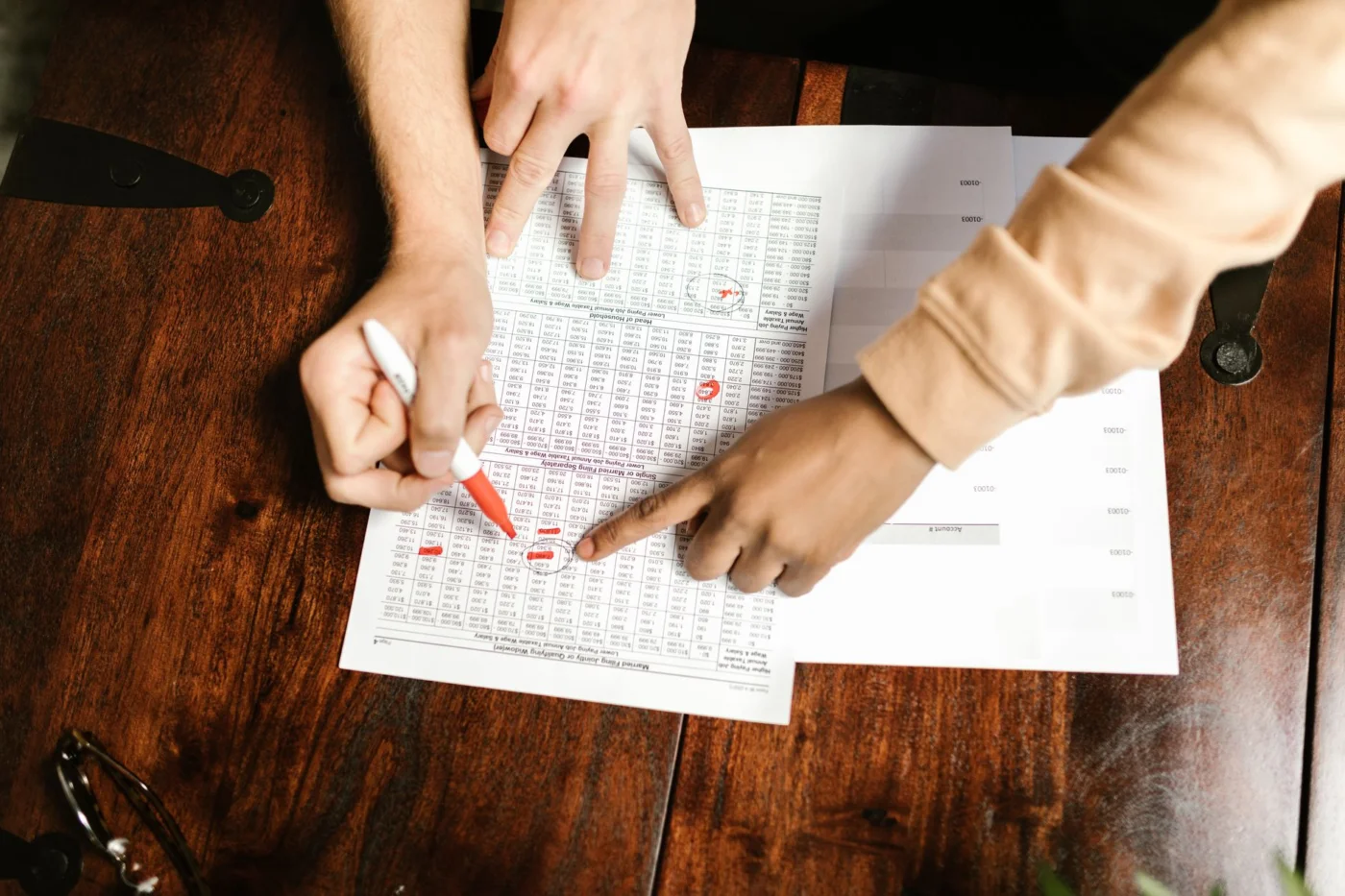
Now that your error ledger exists, don’t rush into the journal entry. The fastest way to fix accounting errors and corrections is to name the error first, then choose the correction method.
Name the error first
So here’s the deal. The main types of errors in accounting tell you where to look: omission means the entry was left out, commission means it hit the wrong account, principle means the wrong category was used, and compensating errors cancel each other.
| Error type | Example | Trial balance effect | Correction clue |
|---|---|---|---|
| Omission | Purchase invoice not recorded | May still balance | Enter the missing transaction |
| Commission | Rent paid recorded as wages | May still balance | Move amount to the correct account |
| Principle | Equipment purchase recorded as expense | May still balance | Fix the account category |
| Wrong-side error | Debit posted as credit | Often unbalances | Reverse and post correctly |
Use the trial balance decision rule
This is the part most students get wrong. A trial balance can reveal unequal debit and credit totals, but a balanced one doesn’t prove the ledger is correct.
| Often affects the trial balance | May not affect the trial balance |
|---|---|
| One-sided posting, wrong-side entry, casting error, transposition error, unequal debit/credit amount | Complete omission, error of principle, wrong account of same class, equal original-entry amount error, compensating errors |
- If debit and credit totals disagree, check one-sided posting, casting, transposition, or wrong-side errors.
- If totals agree, check omission, commission, principle, original-entry amount errors, and compensating errors.
- Use a suspense account only as background for temporary imbalance handling, not as exam autopilot.
Four-step correction workflow
How to correct ledger errors
- Step 1: Write the correct journal entry first, before looking at the correction.
- Step 2: Write what was actually posted, even if it feels obvious.
- Step 3: Compare both entries and post only the difference needed to move from wrong to correct.
- Step 4: Schedule one similar retest question, then use what to review next to track repeated error types.
That’s the core method for correcting entries for accounting errors. Next, you’ll practice, retest, and learn the traps exam questions use to make simple ledger mistakes look confusing.
Practice, retest, and avoid traps
Once you know the fixing entry, practice has one job: turn each mistake into a reusable rule. This is where accounting errors and corrections finally become exam-ready.
Mini-example: wrong posting to correction
Rent of $500 was paid, but posted as: Dr Wages $500, Cr Cash $500. The correct entry was: Dr Rent $500, Cr Cash $500.
Cash is already right. So the correction is simple: Dr Rent $500, Cr Wages $500. In your ledger row, write: error type = commission or wrong expense account; trial balance effect = no imbalance; correction clue = transfer between accounts.
Two exam questions
- Q1: Debit total exceeds credit total by $120 because a credit sale was posted only to receivables. What happens? Answer: use a suspense account or correction based on your course convention; the missing credit is the clue. Row: one-sided posting, affects trial balance, check suspense.
- Q2: A $300 purchase invoice was not recorded at all. Answer: omission. Record Dr Purchases/Expense or Inventory $300, Cr Payables $300, depending on syllabus wording. Row: full omission, no trial balance effect, enter both sides.
Common mistakes to avoid
This is the part most people get wrong: they write the correction before writing the correct entry. Don’t patch first. Compare wrong entry versus correct entry, then post only the difference.
Also, not every accounting error affects the trial balance. Omission, principle, original-entry, compensating, and same-class commission errors can still balance perfectly. If a quiz knocked your confidence, use your ledger calmly after a bad test, then schedule retests for the error types that repeat.
Quick Reference
Quick reference checklist
- Log it: copy the missed question type, not the whole solution.
- Label it: omission, commission, principle, suspense, wrong side, or original entry.
- Write the rule: one line only.
- Post the difference: don’t redo correct parts.
- Retest once: prioritize repeated accounting errors and corrections.
Shortcut: imbalance usually points to one-sided, casting, transposition, wrong-side, or unequal amount errors. A balanced trial balance points you toward omission, principle, same-class commission, original-entry, or compensating errors.
Next, we’ll clean up the common questions students ask before using this in a real exam review.
Frequently Asked Questions
What should be included in an error ledger template for accounting revision?
An error ledger template should include: Question ID, topic, error type, wrong move, correct rule, correcting entry, trial balance effect, and retest date. Keep each row short enough that you can fill it in immediately after marking a question — if it takes five minutes to log one mistake, you probably won’t keep using it.
How do you correct errors in ledger accounts during exam review?
If you’re learning how to correct errors in ledger accounts, use a four-part check: write the correct entry, write what was actually posted, compare the two, then journal only the difference. After that, add the mistake to your error ledger and retest with one similar question so accounting errors and corrections become a repeatable process, not guesswork.
What is the difference between an error of omission and commission?
The simple version of error of omission vs commission is this: an error of omission means a transaction was left out completely or partly, while an error of commission means the entry was made but posted to the wrong account or person. For example, forgetting to record a cash sale is omission; posting a customer payment to the wrong customer account is commission.
Which accounting errors do not affect the trial balance?
If you’re asking which accounting errors do not affect the trial balance, watch for complete omission, some commission errors, principle errors, original-entry amount errors, and compensating errors. These can leave debit and credit totals equal, which is why a balanced trial balance does not prove every ledger account is correct; it only proves the totals agree. For a refresher on how trial balances work, see this trial balance overview.
How do you fix a trial balance error with a suspense account?
For trial balance errors and suspense account questions, use the suspense account only as a temporary placeholder when debit and credit totals do not agree and your course allows that format. Once you find the specific error, write the correcting entry that clears the suspense balance according to your instructor’s method. This is one of those accounting errors and corrections topics where the safest move is to follow the exact format used in your class or exam board.
Conclusion: Turn Every Mistake Into Exam Fuel
Your best review system is simple: build the error ledger before you do more practice, record the exact mistake type, fix the accounting treatment, then retest the same concept under exam-like pressure. Don’t just write “careless error” and move on. Label whether you missed recognition, measurement, classification, timing, wording, or journal-entry logic. That’s how accounting errors and corrections stop feeling random and start becoming patterns you can actually repair.
And yes, this takes a little discipline. But it’s also weirdly calming. Instead of staring at a wrong answer and thinking, “I’m bad at accounting,” you get to say, “OK wait, this is a depreciation adjustment problem, and I keep mixing up book value and accumulated depreciation.” That’s fixable. The goal isn’t perfection on the first pass; it’s building a feedback loop that makes your second and third passes sharper.
If you want to keep improving, build this ledger into your wider study system. Start with FreeBrain’s guide to active recall so your review forces retrieval, not rereading. Then pair it with spaced repetition to revisit your weakest accounting errors and corrections before they fade. Pick one past paper, create your ledger, retest the misses, and make your next review session impossible to waste.