
If you’re searching for how to enhance focus and improve productivity, you don’t need another list of “try harder” hacks. You need a mechanism-first system that matches what’s breaking your attention—so how to enhance focus and improve productivity becomes predictable, not personal. Start with FreeBrain’s Focus & Productivity Tools to get quick structure before you read another tip.
Focus is trending again because it’s collapsing again. One notification becomes ten minutes, ten minutes becomes an hour, and suddenly you’re struggling to focus on studying or doing deep work even when you “have time.” That pattern isn’t a character flaw—it’s what fragmentation does to working memory and motivation, and it’s why how to enhance focus and improve productivity now feels like a daily battle.
This guide gives you a fast, high-ROI path: a 2-minute diagnostic to pinpoint your main failure mode (sleep debt, task ambiguity, phone loops, stress, environment, overload), then 7 proven focus fixes ranked by impact vs. effort. Each fix comes with a one-line “why it works” tied to cognitive mechanisms like attentional residue, reward prediction, the arousal curve, and ultradian rhythms—plus strength-of-evidence labels grounded in sources such as APA guidance on stress and performance.
You’ll also get a simple 12-step setup and a 14-day protocol so your plan survives real life. For the fastest start, plug your next work block into the Focus Session Planner—then use the fixes below to make how to enhance focus and improve productivity feel less like willpower and more like engineering.
📑 Table of Contents
- How to enhance focus and improve productivity (fast overview + tools)
- Cognitive science productivity tips for focus (quick list + deep focus techniques)
- What is focus in cognitive science (and why it’s harder now)
- 2-minute diagnostic: what’s breaking your focus (and the first fix to try)
- The 7 highest-ROI fixes to enhance focus and improve productivity (evidence-labeled)
- 12-step ‘deep focus in 10 minutes’ guide (best way to start deep work)
- Common focus mistakes to avoid + real-world application (14-day plan)
- Frequently Asked Questions
- Conclusion
How to enhance focus and improve productivity (fast overview + tools)
If the introduction helped you see why focus fails, this section turns that into a fast, mechanism-first plan. Here’s how to enhance focus and improve productivity by fixing the highest-impact constraints first, not by stacking more “habits.” For more on productivity and focus, see our productivity and focus guide.
Start with FreeBrain’s Focus & Productivity Tools to run a quick diagnostic and pick the right intervention. The fastest first move is scheduling one protected block with the Focus Session Planner, so you can test improvements today instead of “waiting for motivation.”
What you’ll get (system, not tips)
This guide is built for ROI: the highest impact per unit of effort. ROI ranking matters because trying 15 changes at once increases cognitive load and makes tracking results impossible—especially for deep focus techniques that actually work.
- 2-minute diagnostic: identify your main failure mode (sleep debt, task ambiguity, environment, anxiety/arousal, dopamine loops, or overload).
- 7 ROI-ranked fixes: each tagged with an evidence label (Strong/Moderate/Emerging).
- 12-step protocol: a repeatable “setup → work → reset” routine (the best way to focus for deep work is usually a consistent protocol).
- 14-day installation plan: simple metrics (minutes in focus, distraction count, restart time) to prove what works.
Credibility check: evidence is weighted meta-analyses and randomized controlled trials (highest), then longitudinal studies, then cross-sectional findings (lowest). Claims are reviewed against FreeBrain’s Sources & Citations Policy (outline placeholder) and updated when stronger evidence appears.
Definition: Focus (cognitive-science accurate, plain English)
Focus is selective attention plus executive control: your brain keeps working memory on the target and uses inhibitory control to block competing cues (tabs, notifications, worries). Mind-wandering is normal (default-mode drift); focus is mainly the skill of noticing drift and reorienting quickly, not “never drifting.”
Mechanism note: multitasking creates attentional residue—your working memory stays partly stuck on the last task—so monotasking usually wins for how to enhance focus and improve productivity. For background on executive control and attention, see an overview of executive functions.
Definition: Cognitive load (why tasks feel ‘mentally heavy’)
Cognitive load is the total demand placed on working memory by task complexity, distractions, and unclear next steps. When load exceeds working memory limits, you feel “mentally heavy,” make more errors, and procrastinate. Many techniques to strengthen focus work by reducing load (clarify the next action, remove inputs) before adding willpower.
Next up: a cognitive-science list of practical fixes (including deep-focus techniques) you can plug into your schedule immediately.
Cognitive science productivity tips for focus (quick list + deep focus techniques)
The overview is useful, but focus improves fastest when you translate it into a repeatable session you can run on demand. This section turns how to enhance focus and improve productivity into a short menu of high-ROI moves plus a 60-second “start script.”

If you want a single place to pick tactics based on your failure mode (sleep debt, phone loops, task ambiguity, or overload), start with Focus & Productivity Tools. Later sections will label evidence as Strong (meta-analyses/RCTs), Moderate (well-replicated lab/field studies), or Emerging (early or mixed results) so you can prioritize confidently.
Quick list: 10 high-ROI moves (one line each)
Fastest implementation: open the Focus Session Planner and schedule one block today before you negotiate with yourself.
- Monotasking rule [Best for: WFH] — one task, one window, one timer.
- Time boxing [Best for: Studying] — “25 minutes only, then stop.”
- Pomodoro method [Best for: Tired] — 25/5 x 3, then longer break.
- Phone friction [Best for: Anxious] — put it in another room; alerts off.
- Notification diet [Best for: WFH] — allowlist only people, not apps.
- Next physical action [Best for: Studying] — write the first tiny move. Example: “open doc → write 3 bullets.”
- Tab limit [Best for: WFH] — 3 tabs max during deep work.
- Break menu [Best for: Tired] — pick 3 default breaks (water, walk, stretch).
- Cue-based start [Best for: Anxious] — same trigger every time (tea + headphones = start).
- Distraction log [Best for: Studying] — jot urges on paper; return to task.
Why these work (in plain cognitive science): your working memory is limited, so task ambiguity and too many open loops raise cognitive load; and switching tasks creates “attentional residue,” making the next task slower and noisier. These ideas are widely discussed in cognitive psychology and attention research (see the overview at the American Psychological Association’s attention topic page and the definition/history of working memory).
📋 Quick Reference
Diagnose your main focus failure mode:
- Sleep debt / fatigue: shorten blocks; add movement breaks; protect a consistent wake time.
- Task ambiguity: write the next physical action + “done” definition before starting.
- Phone/dopamine loops: add friction (distance + silence) and log urges instead of fighting them.
- Overload/anxiety: time box + tab limit; choose one outcome, not five.
The ‘minimum viable focus session’ (what to do in 60 seconds)
When you’re struggling to focus on studying, don’t “try harder.” Run a tiny protocol that reduces decisions and prevents early switching—the fastest route into a deep focus state.
How to start a focus session in under 60 seconds
- Step 1: Pick one outcome (one sentence). Example: “Understand photosynthesis basics.”
- Step 2: Write the next physical action (10 words max). Example: “Read 2 pages → close → write 5 recall bullets.”
- Step 3: Set a timer (10–30 minutes). Commit to staying with the process, not the mood.
- Step 4: Remove your phone (distance beats discipline). Put it face down, out of reach, or outside the room.
- Step 5: Start immediately—no “prep spiral.” If you get an urge, log it, then continue.
This is how to enhance focus and improve productivity when motivation is low: reduce choices, reduce switching, and make “start” automatic.
Fastest setup: use a planner instead of willpower
Deep focus techniques stick when they’re pre-committed. Planning a single block ahead of time lowers decision fatigue and cognitive load because your brain isn’t renegotiating start times, durations, and break rules mid-session.
Try this today: schedule one deep-work block with a start time, a fixed duration, and a pre-chosen break (that’s time boxing in its simplest form). For many people, that’s the best way to focus for deep work because it prevents the “just one more minute” drift that turns into scrolling.
Measure it with one number: minutes on task (not hours “at the desk”). After 7–14 days, small tweaks—like tighter phone friction or clearer next actions—compound into how to enhance focus and improve productivity without adding more hours.
Next, we’ll define what “focus” means in cognitive science and why modern environments make it harder—so you can match the right tactic to the right mechanism.
What is focus in cognitive science (and why it’s harder now)
The quick techniques above work best when you understand what they’re changing in your brain and environment. That’s the missing piece for how to enhance focus and improve productivity in a way that keeps working after the novelty fades.
If you want to test and track what’s actually moving the needle, start with FreeBrain’s Focus & Productivity Tools—they’re built around the same cognitive mechanisms below (working memory, inhibition, and switching costs).
In cognitive science, “focus” isn’t willpower. It’s the outcome of several systems working together:
- Working memory limits: the small “mental workspace” that holds task-relevant info. The American Psychological Association defines working memory as a limited-capacity system for temporarily holding and manipulating information; when it’s overloaded, performance drops fast.
- Inhibitory control: the ability to suppress distractions and competing impulses (like checking a tab “just for a second”).
- Salience vs. default mode dynamics: your attention system toggles between externally driven, “what’s important right now?” processing and internally generated thought (mind wandering). When the default mode network wins at the wrong time, you drift.
- Mind wandering: normal and sometimes useful for creativity, but costly during reading, problem solving, or writing when you need stable context.
You might notice these common signs that the system is overloaded or conflicted:
- Rereading the same lines because the “workspace” didn’t hold the meaning.
- Tab-hopping or app-switching whenever a task gets ambiguous or slightly uncomfortable.
- An urge to check your phone right after you hit uncertainty (“What’s the next step?”) or after a minor error.
- “Starting friction”: opening the doc is easy; beginning the first sentence feels oddly hard.
Deep focus state: a practical definition (not mystical)
A deep focus state is sustained attention on one target with minimal switching and a clear feedback loop (you can tell whether you’re making progress). It’s the opposite of “keeping many things warm in mind.” It’s also a core ingredient in how to enhance focus and improve productivity for knowledge work and studying.
Deep focus isn’t the same as “flow.” Flow (as described by Mihaly Csikszentmihalyi’s research tradition) is a specific optimal-experience state: high engagement, clear goals, and a sense of effortless control. Deep focus can be effortful, even uncomfortable, and still productive—especially early in a session when you’re building context. For a monotasking framework that makes deep work easier to repeat, see the Deep Work guide.
Fastest setup: draft one “next visible action” before you start. If you need a structure in under a minute, use the Focus Session Planner to set a single outcome, a stop time, and a distraction capture list.
Why task switching feels productive (but isn’t)
Task switching often feels like progress because you’re constantly “doing something.” But switching has measurable costs: you lose time reloading context into working memory, and you make more errors when the task is complex or emotionally charged.
Sophie Leroy’s 2009 research on attentional residue showed that when you leave a task unfinished, part of your attention remains stuck on it, reducing performance on the next task. The more unresolved the prior task feels (uncertainty, social stakes, looming deadlines), the stronger that residue tends to be. This is why “just checking email” can quietly wreck deep focus techniques for the next 30–60 minutes.
Why focus feels harder now: variable rewards + infinite inputs
Modern distraction isn’t only about “too many things.” It’s about variable reward loops: feeds, notifications, and inboxes deliver unpredictable rewards (a useful message, a like, a breaking update). Unpredictability drives checking because the brain learns from reward prediction errors—the gap between what you expected and what you got. When the reward is occasional and surprising, the “maybe this time” pull gets stronger.
Layer in infinite inputs—open-plan noise, always-on chat, and multi-tab workflows—and cognitive load spikes. Cognitive load theory predicts that as extraneous load rises (context switching, unclear instructions, distracting stimuli), less capacity remains for learning or problem solving. Sleep loss makes this worse by weakening attention and inhibitory control; NIH sleep resources summarize how insufficient sleep impairs attention, reaction time, and decision-making (sleep deprivation information from the National Heart, Lung, and Blood Institute).
This is the setup for the next section: a fast diagnostic to pinpoint whether your biggest blocker to how to enhance focus and improve productivity is sleep debt, task ambiguity, environment overload, anxiety/arousal, or reward-loop checking—then choose the first fix that matches the mechanism.
2-minute diagnostic: what’s breaking your focus (and the first fix to try)
The previous section explained focus as a limited control system—constrained by working memory, cognitive load, and “attentional residue” after switching tasks. This 2-minute diagnostic turns that science into an action plan for how to enhance focus and improve productivity without guessing.
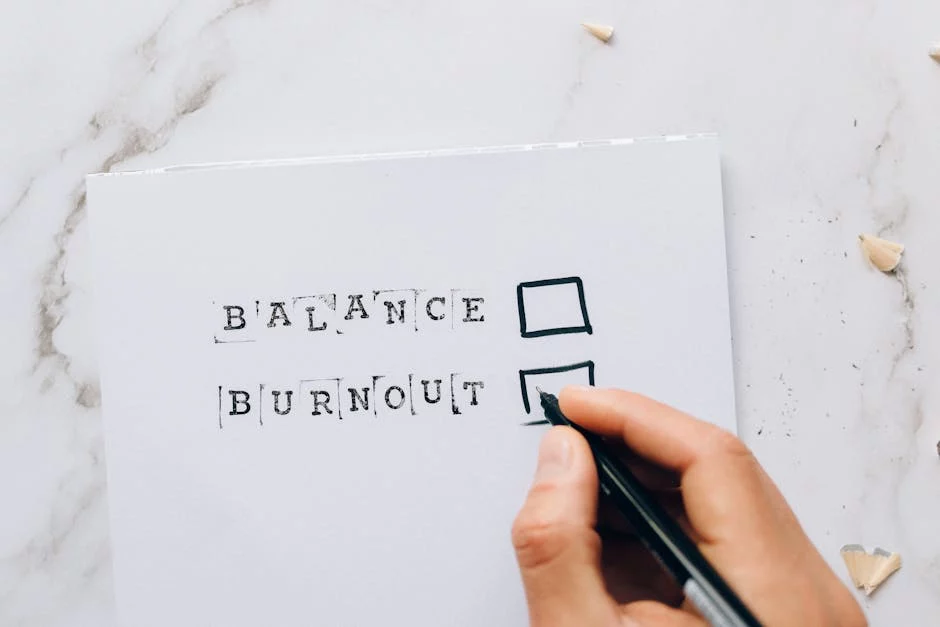
To keep this fast, score five common failure modes and start with the highest score. If you want a ready-made place to track results (sleep, sessions, distractions), start in FreeBrain’s Focus & Productivity Tools.
Pick your primary failure mode (5 types)
Score each category 0–2 (0 = rarely, 1 = sometimes, 2 = often). Your highest score is your “start here.” This is a metacognition shortcut: it helps you stop treating all “improving mental focus” problems as the same problem.
- 1) Sleep/energy debt (working memory runs “low battery”): symptoms—afternoon crash, rereading the same line, heavy caffeine dependence. Tell: focus improves noticeably after a short nap or a full night’s sleep.
- 2) Task switching / attentional residue (your brain stays partly on the last task): symptoms—many tabs, checking email “between” steps, slow restarts. Tell: you lose 5–15 minutes every time you “just switch briefly.” Research on task switching shows measurable performance costs when toggling goals (see APA summary of multitasking research).
- 3) Environment/overload (too many cues compete): symptoms—interruptions, noise, clutter, constant notifications. Tell: you can focus in a library/cafe but not at your desk.
- 4) Task ambiguity / high cognitive load (unclear next action overloads working memory): symptoms—procrastination despite time, “I don’t know where to start,” endless planning. Tell: once someone defines the next step, you move quickly. Cognitive load theory predicts performance drops when tasks aren’t chunked into manageable steps (see Sweller’s cognitive load framework overview on NCBI).
- 5) Phone/variable rewards (habit loops hijack attention): symptoms—reflex checking, “just one scroll,” urge spikes during boring moments. Tell: you pick up the phone without deciding to.
Student example: struggling to focus on studying often scores high on #4 when the assignment is “Study chapter 7.” If the next action becomes “Do 10 retrieval questions on sections 7.1–7.2,” the resistance drops.
WFH example: a meeting-heavy day often scores high on #2 and #3—Slack pings + context switching create residue, so even easy tasks feel sticky.
Decision tree: the first fix to try this week
Rule 1: highest score wins. Rule 2: if there’s a tie, start with sleep/energy because low sleep increases lapses of attention and worsens emotion regulation, making every other fix harder (a consistent finding across sleep research; see sleep loss and cognition review on NCBI).
- If sleep/energy debt → start with Fix #1 (sleep + circadian anchors).
- If switching → start with Fix #2 (monotask rules to reduce attentional residue).
- If phone loops → start with Fix #5 (friction + reward redesign).
- If anxious/over-aroused or wired-tired → start with Fix #6 (downshift arousal before deep work).
- If unclear tasks → start with Fix #4 (define the next visible action; reduce cognitive load).
- If environment overload → start with Fix #3 (time-boxing) plus one environment tweak (noise, notifications, or interruptions).
Fastest setup: plan one block using the Focus Session Planner, then run the week as a single experiment. This is one of the most reliable techniques to strengthen focus because it converts “be more disciplined” into a concrete constraint.
This is also the simplest way to learn how to enhance focus and improve productivity: you’re not chasing motivation, you’re removing the bottleneck.
Micro-log template (30 seconds) to build metacognition
Use a tiny distraction log right after a slip. Logging works because it turns vague guilt into patterns you can interrupt; that’s metacognition in practice.
- Time: 2:10pm
- Trigger: hard paragraph / notification / hunger
- What happened: opened phone, switched tabs, reread
- What you did: kept scrolling / restarted / avoided
- Which fix next time: #1, #2, #3, #4, #5, or #6
After 7 days, circle the top two triggers. If most entries start with “unclear next step,” you’re dealing with cognitive load. If most start with “ping,” it’s cue-driven switching. Either way, the log shows exactly how to enhance focus and improve productivity by targeting the real cause, not your willpower.
Next, we’ll rank the 7 highest-ROI fixes (with evidence labels) so you can apply the right intervention with the least effort.
The 7 highest-ROI fixes to enhance focus and improve productivity (evidence-labeled)
The 2-minute diagnostic likely pointed to one main failure mode (low energy, constant switching, unclear tasks, phone loops, or stress). Below are the highest-ROI fixes in order—use them as a decision tree for how to enhance focus and improve productivity without guessing.
If you want a single place to run these experiments (timers, planners, trackers), start with FreeBrain’s Focus & Productivity Tools and pick one fix to test for 7 days.
Fixes #1–#3: energy, switching, and time-boxing
Fix #1 (Strong): Protect sleep + circadian anchors. Mechanism: sleep loss and circadian misalignment reduce attention control and working memory capacity (the APA defines working memory as a limited-capacity system for holding and manipulating information). Steps:
- Lock a consistent wake time (even on weekends) and aim for the CDC’s common adult target of 7+ hours of sleep; individual needs vary.
- Get outdoor morning light within 1 hour of waking for 5–15 minutes (longer on cloudy days) to strengthen circadian timing; Harvard Health notes evening blue light can disrupt circadian rhythms and sleep.
- Set a caffeine cutoff (many people do better stopping 8–10 hours before bed) to protect sleep depth.
Best for: “Brain fog,” afternoon crashes, and focus that improves only after coffee. Evidence: Strong (CDC/NIH sleep guidance; broad sleep-cognition literature). Common pitfall: chasing “sleep hacks” while keeping an inconsistent wake time. If insomnia or sleep apnea is possible, consult a qualified clinician rather than self-treating.
Fix #2 (Strong/Moderate): Monotask using attentional-residue rules. Mechanism: after switching tasks, part of attention stays stuck on the previous task (“attentional residue”), reducing performance; Leroy (2009) demonstrated measurable costs after task switching. Steps:
- Finish or park: before switching, write a 1–2 line “parking note” (next step + where you left off).
- Single-task window: close all unrelated tabs/apps; keep one document visible.
- Batch comms: check email/messages at set times (e.g., 11:30 and 4:30), not continuously.
Best for: meeting-heavy schedules, knowledge work, writing, coding, studying. Evidence: Strong/Moderate (strong mechanism evidence; real-world adherence varies). Common pitfall: “multitasking” inside one task (tabs, notes, chat) and calling it monotasking.
Fix #3 (Moderate): Time-box deep work + breaks to match ultradian rhythms. Mechanism: attention and alertness fluctuate in cycles; planned breaks can prevent performance drift. Steps:
- Pick an interval you can repeat: 25/5, 50/10, or 90/15 (optimal varies by person and task).
- Define the deliverable for the block (one page, 10 problems, one slide).
- Take a real break (stand, water, brief walk) instead of swapping to “fun” screens.
Best for: anyone asking for deep focus techniques that actually work, especially when motivation is inconsistent. Evidence: Moderate (strong behavioral logic; interval research is mixed). Common pitfall: using breaks for social media, which restarts the distraction loop.
Fixes #4–#5: reduce cognitive load + break phone reward loops
Fix #4 (Strong/Moderate): Shrink and clarify tasks to reduce cognitive load. Mechanism: working memory is limited (APA), and Sweller’s cognitive load theory explains why vague, complex tasks overload attention. Steps:
- Write “done” in one sentence (what would be true when finished?).
- Write the next physical action (e.g., “open dataset.csv and compute mean” vs. “analyze data”).
- Limit scope to 15 minutes for the first chunk; you can expand after you start.
Best for: procrastination that feels like “confusion,” not laziness. Evidence: Strong/Moderate (strong theory + consistent applied results). Common pitfall: planning forever—if the next action isn’t physical and observable, it’s still too big.
Fix #5 (Strong): Add phone friction + a notification diet. Mechanism: variable rewards (new messages/feeds) train checking behavior and fragment attention. Steps:
- Turn on grayscale and remove social apps from the home screen.
- Use Focus/Do Not Disturb with only 1–2 allowed contacts.
- Studying-at-home rule: phone in another room during work blocks; if needed, use a basic timer or computer-only tools.
Best for: “I can’t stop getting distracted by my phone,” especially while studying at home. Evidence: Strong (robust attention/distraction findings; strong behavior change logic). Common pitfall: keeping notifications “just in case,” which keeps your brain on alert.
Fixes #6–#7: arousal control + habit installation
Fix #6 (Moderate): Control arousal using Yerkes–Dodson. Mechanism: performance peaks at moderate arousal; too low (sleepy) or too high (anxious) hurts focus (Yerkes–Dodson). Steps:
- 2-minute downshift: box breathing (4-4-4-4) before starting when stressed.
- Start tiny when anxious: commit to 2 minutes of the next action only.
- Energize when tired: 30–60 seconds brisk movement + cold water on face.
Best for: test anxiety, “wired but stuck,” or low-energy afternoons. Evidence: Moderate (strong concept; individual response varies). Common pitfall: using arousal tools as avoidance instead of starting the task immediately after.
Fix #7 (Strong/Moderate): Install focus with implementation intentions + habit stacking. Mechanism: “if/then” plans reduce decision load and automate cues—reliable techniques to strengthen focus over time. Steps:
- If/then script: “If I open my laptop, then I start a 25-minute timer and write the next physical action.”
- Stack it: attach to an existing habit (after coffee, after brushing teeth, after sitting at desk).
- Track one metric daily: number of completed focus blocks (not hours).
Best for: inconsistent routines, ADHD-like distraction patterns (not a diagnosis), and anyone learning how to enhance focus and improve productivity long-term. Evidence: Strong/Moderate (good behavioral evidence; adherence is the challenge). Common pitfall: tracking too many habits at once—start with one.
Next, we’ll turn these fixes into a repeatable routine with a 12-step “deep focus in 10 minutes” guide—so you can start a high-quality work block even when you don’t feel ready.
12-step ‘deep focus in 10 minutes’ guide (best way to start deep work)
The highest-ROI fixes work best when they’re turned into a repeatable starting ritual. This 12-step “deep focus in 10 minutes” guide is a fast on-ramp for how to enhance focus and improve productivity when you need deep work, not just busywork.

If you want a one-page workflow you can reuse daily, pull up FreeBrain’s Focus Session Planner once, then reuse the same structure. The goal is simple: reduce cognitive load (fewer choices), prevent attentional residue (fewer switches), and protect working memory (one outcome at a time).
How to get into a deep focus state quickly (12 steps)
- Step 1 (0:00–0:15): Stand up and clear your desk to only the tools you’ll use. Less visual noise = lower distraction load (fits cognitive load theory).
- Step 2 (0:15–0:30): Open only what you need and close everything else. Use a tab cap: 3 tabs max (task doc + reference + notes).
- Step 3 (0:30–0:45): Start a “parking lot” note titled Not now. Intrusive thoughts go there, not into your task.
- Step 4 (0:45–1:15): Write one outcome you can finish this block (e.g., “Draft intro + 3 bullets,” not “Study biology”).
- Step 5 (1:15–1:30): Write the next physical action (observable): “Open lecture 6 slides and summarize slide 1,” or “Write the first sentence.”
- Step 6 (1:30–2:00): Phone out of reach (another room or bag). If you can’t, flip it face-down and enable Do Not Disturb. This is one of the best deep focus techniques for how to stop getting distracted by your phone.
- Step 7 (2:00–2:15): Choose a timer: 10/2 (tired/anxious), 25/5 (default), or 50/10 (high energy). This is time boxing: one target + one timer.
- Step 8 (2:15–2:30): Start with a 2-minute “entry ramp”: do the next physical action only. Momentum beats motivation.
- Step 9 (during work): If the phone urge hits: If I want to check my phone, then I will write “phone” in the parking lot and take 3 breaths, then continue for 120 seconds.
- Step 10 (during work): If confusion lasts 60 seconds: If I’m stuck for 60 seconds, then I will write the smallest next action and do it for 2 minutes.
- Step 11 (during work): If fatigue spikes: If my eyes glaze over, then I will switch to a smaller subtask (2 minutes) or shorten the interval to 10/2. (Shorter blocks can preserve accuracy.)
- Step 12 (during work): If anxiety rises: If I feel anxious, then I will label it (“anxiety”), write the fear in one sentence, and take 6 slow breaths, then restart with the next physical action.
Setup (2 minutes): environment + phone + single outcome
Setup works because it prevents “attention switching costs.” A classic study in the Journal of Experimental Psychology: Human Perception and Performance (Rogers & Monsell, 1995) showed task switching carries measurable time costs, which add up fast in knowledge work.
- Environment: clear desk + 3-tab cap to reduce working-memory load.
- Phone: out of reach to break cue-driven checking loops.
- Single outcome: one finish line to stop scope creep.
- Parking lot note: capture thoughts without derailing the deep focus state.
Execute (5–25 minutes): one target + one timer
This is the best way to focus for deep work: one timer, one definition of “done,” and zero renegotiation mid-block. Research on attentional residue (Leroy, 2009, Organizational Behavior and Human Decision Processes) suggests even small unfinished leftovers from another task can keep part of attention stuck elsewhere.
Quick diagnostic for “how do I get into deep focus”: if you’re sleepy or anxious, start with 10/2; if you’re steady, use 25/5; if you’re in flow, extend to 50/10. This is a practical way to apply how to enhance focus and improve productivity without forcing a one-size schedule.
Example (student, 30-minute study sprint): Setup 2 minutes → 25 minutes: “Solve 6 practice problems; next action: problem #1, write given/unknown” → Recover 3 minutes → optional 5-minute mini-block to review errors.
Example (remote worker, 45-minute deep work block): Setup 2 minutes → 40 minutes: “Draft client email + 3-slide outline; next action: write subject line + first paragraph” → Recover 3 minutes with sunlight + water.
Recover (2–5 minutes): break menu + next cue
Recovery protects your next block. Avoid scrolling because it introduces new stimuli and makes restart harder (more cognitive “open loops”). Choose one:
- Drink water
- 20 bodyweight squats or a brisk 2-minute walk
- 1–3 minutes of sunlight by a window
- Quick tidy (reset the desk)
- Slow breathing (longer exhales)
Before you end the break, write the next physical action for the next block. That single cue reduces restart friction and is a reliable way to keep improving mental focus—especially when your day is meeting-heavy. Next, we’ll cover the common focus mistakes that quietly sabotage this system and how to apply it in a realistic 14-day plan for how to enhance focus and improve productivity.
Common focus mistakes to avoid + real-world application (14-day plan)
The “deep focus in 10 minutes” routine works best when it’s protected from the predictable mistakes that pull attention apart. This section turns that quick start into a repeatable system for how to enhance focus and improve productivity across real weeks, not just one good day.
If you want templates to run the plan with less friction, start with FreeBrain’s Focus & Productivity Tools and pick one tracker to keep the process simple.
What to avoid (the traps that keep you distracted)
- Relying on willpower → Use “default friction.” Put the phone in another room, close extra tabs, and pre-open only the next file you’ll work in. Working memory is limited, and extra cues increase cognitive load (Sweller’s cognitive load theory).
- ‘Perfect’ morning routines → Use a “minimum viable start.” One 10–25 minute block beats a 90-minute routine you can’t repeat.
- Long to-do lists → Pick one outcome. Write a single “done” statement (e.g., “Submit problem set Q1–Q5 with checks”). Unclear endpoints keep attention searching for what matters.
- Multitasking / task switching → Batch work by task type and use one-tab rules. Research on attentional residue (Leroy, 2009) shows switching leaves leftover attention on the previous task; this is the core of how to stop task switching and focus on one thing.
- Overlong sessions → Shorten blocks on tired/anxious days. Deep focus techniques that actually work are the ones you can finish: 25–50 minutes is often more sustainable than 90+.
- Notification whack-a-mole → Schedule checks (e.g., once per hour or between blocks). Each “quick peek” reopens a goal stack and burns time reloading context.
- Caffeine too late → Move caffeine earlier or skip it. Caffeine is optional; timing matters because late caffeine can reduce sleep quality and next-day focus (see NIH overview: Caffeine effects and sleep). If you’re testing how to focus without caffeine, replace the “boost” with light, water, and a 2-minute brisk walk.
- Measuring too many metrics → Track only three numbers (below). Too many dashboards become another form of procrastination.
Real-World Application: what consistently works in school + WFH
Across students and remote workers, we see the biggest wins come from: (1) sleep anchors (stable wake time), (2) phone friction (distance + barriers), (3) task clarity (“done” defined), and (4) shorter blocks on high-stress days. These reduce cognitive load and protect limited working memory capacity.
Student example (focus habits for students): 2 × 25/5 work blocks on one topic, then a 10-minute closed-notes recall (write what you remember, then check). Retrieval practice reliably beats rereading for durable learning (Roediger & Karpicke, 2006; PubMed: testing effect study).
WFH example (how to improve focus while studying at home and working at home): 2 × 50/10 deep blocks in the morning, then batch meetings into a single afternoon window. Meeting batching reduces context switching and protects the highest-energy hours for creation work.
Measure progress (without obsessing) + 14-day focus reset
To learn how to enhance focus and improve productivity without perfectionism, track only three metrics, just 3 days per week:
- Deep-work minutes/day: total minutes in distraction-controlled blocks.
- Task switches per block: count any non-essential app/tab/task change.
- Shutdown time: when work ends (protects recovery and next-day attention).
Use a quick distraction log (metacognition in action): when you drift, write the trigger (sleepy, bored, anxious, notification, unclear next step). After three logs, your primary failure mode usually shows up.
How to run the 14-day focus reset (12-step checklist)
- Step 1: Days 1–3: baseline your three metrics on three separate days.
- Step 2: Days 1–3: write one “done” outcome for tomorrow’s first block.
- Step 3: Days 1–3: identify your top distraction trigger from the log.
- Step 4: Days 4–7: add phone friction (out of reach + silent) for every block.
- Step 5: Days 4–7: time-box with two blocks/day minimum (even if short).
- Step 6: Days 4–7: schedule notification checks (between blocks only).
- Step 7: Days 8–10: set a fixed wake time (sleep anchor) within a 60-minute range.
- Step 8: Days 8–10: get outdoor light within 1 hour of waking (circadian cue).
- Step 9: Days 8–10: move caffeine earlier or taper; protect sleep quality.
- Step 10: Days 11–14: write implementation intentions: “If X happens, then I do Y.”
- Step 11: Days 11–14: stack one habit onto an existing cue (after lunch → 1 block).
- Step 12: Days 11–14: review metrics once per week and adjust only one variable.
For the fastest setup, run the plan inside the Focus Session Planner so each block starts with a defined “done,” a time limit, and a pre-commitment to one task. That’s the simplest path to how to enhance focus and improve productivity without relying on motivation.
Next, we’ll answer the most common questions that come up once you start the reset (and how to keep results after day 14).
Frequently Asked Questions
What is a deep focus state (and how is it different from “flow”)?
What is a deep focus state? It’s a sustained attention mode where you keep switching low, keep the “next action” clear, and stay on one task long enough to build momentum—even if it feels effortful. Flow is a specific optimal-experience state (often enjoyable and time-distorting), while deep focus is a more controllable work mode you can train with structure, making it a reliable way to practice how to enhance focus and improve productivity. To build it, define one outcome, write the next physical action (e.g., “open doc and draft 5 bullets”), then protect a single-task window.
Why is it so hard to focus on studying even when I care?
Why is it so hard to focus on studying even when motivation is high? Usually it’s not “laziness”—it’s cognitive load from unclear tasks (“study biology” is too vague), phone reward loops, sleep debt, or anxiety-driven scanning that keeps your brain searching for threats instead of committing to one page. To apply how to enhance focus and improve productivity, start with a quick diagnostic (What exactly am I doing next?), then use shorter time boxes and retrieval practice: read a section → close it → recall key points from memory before checking.
How do I get into deep focus quickly if I only have 30 minutes?
How do I get into deep focus fast with a short window? Use a 25/5 (or 20/5) block and commit to one clearly defined outcome, then run a mini “12-step” setup: remove your phone to another room, cap tabs to the minimum, and write the next physical action before you start the timer. This structure reduces decision friction and is one of the fastest ways to practice how to enhance focus and improve productivity in real life.
How do I stop getting distracted by my phone while studying?
How to stop getting distracted by your phone starts with adding friction, not relying on willpower: put the phone in another room, turn on Focus Mode/Do Not Disturb, and disable notifications for your highest-trigger apps. Then replace the urge loop with a “break menu” so breaks don’t become scrolling:
- drink water
- 2-minute walk
- 10 slow breaths
This swap keeps breaks restorative and supports how to enhance focus and improve productivity during study blocks.
What are the best deep focus techniques that actually work for deep work?
Deep focus techniques that actually work tend to be simple and high-ROI:
- Monotasking rules (avoid attentional residue by not “just checking” messages mid-task)
- Time boxing (a start/stop container reduces procrastination)
- Task clarification (turn vague goals into a next action to cut cognitive load)
Pair these with phone friction and a consistent shutdown routine (write tomorrow’s first task, close loops) to protect the next day’s attention and reinforce how to enhance focus and improve productivity.
How can I focus without caffeine (or when I’m cutting back)?
How to focus without caffeine is mostly about energy timing: use circadian anchors like a consistent wake time and morning light exposure, then work in shorter focus blocks with movement breaks to maintain alertness. If you do use caffeine occasionally, timing matters for sleep (late-day caffeine can reduce sleep quality), and the NIH notes caffeine’s stimulant effects can last for hours—see NIH guidance on caffeine. If you have anxiety, heart issues, or medication questions, consult a qualified healthcare provider; these steps still support how to enhance focus and improve productivity without over-relying on stimulants.
How do I improve focus when I’m tired or sleep-deprived?
Improving mental focus when you are tired starts with prioritizing sleep recovery, because sleep loss reliably harms attention and executive control. For the work you must do today, shorten intervals (10–25 minutes), reduce task complexity (do “easy wins” first), and avoid multitasking to prevent extra errors—this is a practical way to keep how to enhance focus and improve productivity from collapsing when energy is low. If sleep problems are persistent, consult a qualified clinician to rule out sleep disorders; FreeBrain’s sleep and recovery resources can also help you plan a sustainable reset.
How do I stop task switching and focus on one thing?
How to stop task switching and focus on one thing works best with a “finish or park” rule: before switching, write a one-line parking note (“Next: summarize paragraph 3 and add 2 citations”) so your brain doesn’t keep rehearing the unfinished thread. Batch messages into scheduled windows (e.g., 11:30 and 4:30), and keep a single-task workspace during deep work blocks (one doc, one tab group, one timer) to reduce cues that trigger switching. This setup directly supports how to enhance focus and improve productivity by preventing attentional residue and making re-entry fast.
Conclusion
If you want results fast, keep it simple and repeatable. Start by running the 2-minute diagnostic to name what’s actually breaking your attention (notifications, unclear next step, fatigue, or task overload), then apply the first fix immediately. Next, use the “deep focus in 10 minutes” startup: clear the workspace, write a one-sentence goal, choose the smallest next action, and set a short timer so you begin before motivation fades. And don’t skip the high-ROI basics: protect a single daily deep-work block, reduce context switching with batching, and use a shutdown ritual so tomorrow starts clean. Those moves are the practical backbone of how to enhance focus and improve productivity—because they change your environment and your decisions, not just your intentions.
If focus has felt harder lately, that doesn’t mean you’re “bad at productivity.” It usually means your brain is doing exactly what it’s designed to do: respond to novelty, uncertainty, and interruptions. The good news is that small, evidence-aligned changes compound quickly. Pick one fix from the 7, commit to it for 14 days, and track a single metric (minutes in deep work or completed priority tasks). That’s the most reliable way to learn how to enhance focus and improve productivity without burning out or overhauling your life.
Ready to keep building momentum? Explore more evidence-based tools and guides on FreeBrain.net, including Deep Work and Time Blocking. Choose one strategy, schedule your next 10-minute focus start, and take the next small step today—how to enhance focus and improve productivity begins with the first protected block.