Yes — you can make flashcards that actually build memory instead of just feeling productive. The best active recall studying examples all do the same thing: they force you to pull an answer out of your head before you see it, which is the core of the active recall study method. And when you know how to turn notes, lecture slides, textbook pages, and PDFs into that kind of card, studying gets a lot more effective.
Most flashcards fail for a simple reason. They test recognition, not recall. You read a card, think “yeah, I know that,” flip it over, and move on — but then blank on the exam. Sound familiar? Research on the testing effect in learning helps explain why retrieval beats rereading, and it’s why good active recall studying examples look very different from copied notes in question form.
So here’s the deal. This article will show you exactly how to make active recall flashcards from messy source material, including before-and-after card rewrites, subject-specific active recall studying examples, and a practical workflow you can use on your own. You’ll see how to make short, specific prompts, how to avoid vague cards, how to do active recall with flashcards online, and when tools like Quizlet or Anki make sense — especially if you’re curious about digital systems like Anki for medical school.
I’m a software engineer, not a neuroscientist. But after building FreeBrain tools and testing retrieval-based study workflows myself — and yes, tweaking card formats more times than I’d like to admit — I’ve found that the flashcards that work best are usually the simplest: one idea, one clear question, and repeated review with spacing. That’s the pattern behind the strongest active recall studying examples, and it’s the one we’ll use throughout this guide.
📑 Table of Contents
- What active recall flashcards are: active recall studying examples that show why they work
- How to make active recall flashcards in 7 smart steps
- How to turn notes, slides, textbooks, and PDFs into active recall flashcards
- Bad vs good flashcards: common mistakes, tool choices, and a quick reference
- Frequently Asked Questions
- Conclusion: Make Every Flashcard Earn Its Place
What active recall flashcards are: active recall studying examples that show why they work
So here’s the deal. Active recall flashcards work because they force you to retrieve an answer from memory before seeing it, which is why they beat passive rereading. If you want the broader system first, start with our active recall study method; if you already know you want a digital workflow, our guide to Anki for medical school shows how this looks in practice. For more on learning and study skills, see our learning and study skills guide.

Active recall in one sentence
At its core, active recall studying examples all point to the same idea: you learn more when you pull information out of memory than when you just look at it again. That’s what is active recall learning in plain English. And yes, the active recall method is basically retrieval practice.
Teaching guides from Stanford Teaching Commons on retrieval practice and summaries in the NCBI Bookshelf describe the same pattern: trying to remember strengthens later recall better than passive review alone. In this section, I’ll show you active recall studying examples that make that idea concrete, then the next section will show how to turn notes into cards that actually work.
Why flashcards work only when they force retrieval
Are flashcards active recall? Only sometimes. If the front of the card creates a real memory search, yes. If it gives away the answer with obvious cues, cloze overload, or three hints at once, you’re mostly doing recognition.
- Weak card: “Mitosis = ?”
- Strong card: “What are the 4 stages of mitosis?”
- Weak card: “preterite = past”
- Strong card: “When do you use the preterite in Spanish?”
- Weak card: “SyntaxError definition”
- Strong card: “What bug does this Python traceback suggest?”
See the difference? Better active recall studying examples ask for a specific decision, sequence, rule, or diagnosis. Spaced repetition matters too, but that’s the review layer, not the card-writing layer.
From experience: what better cards usually look like
As a software engineer building FreeBrain study tools, I’ve seen a consistent pattern: learners remember more when cards are shorter, more specific, and reviewed on a schedule. Personally, I think this is the part most people get wrong. They try to cram whole notes into one card instead of breaking ideas into testable units.
If your source material is messy, dense, or overwhelming, it helps to first learn how to study complex topics before turning everything into prompts. Results vary by subject and learner, of course. But the best active recall studying examples usually test one idea, one contrast, or one step at a time.
Educational note: if stress, sleep problems, anxiety, or attention issues are blocking your study, consult a qualified professional. This article is educational, not medical advice.
Which brings us to the practical part: how to write active recall studying examples into flashcards in seven smart steps.
How to make active recall flashcards in 7 smart steps
Now that you’ve seen why retrieval works, the next question is practical: how do you actually build cards that force recall? The best active recall studying examples start with a tight workflow, not a giant pile of notes and good intentions.
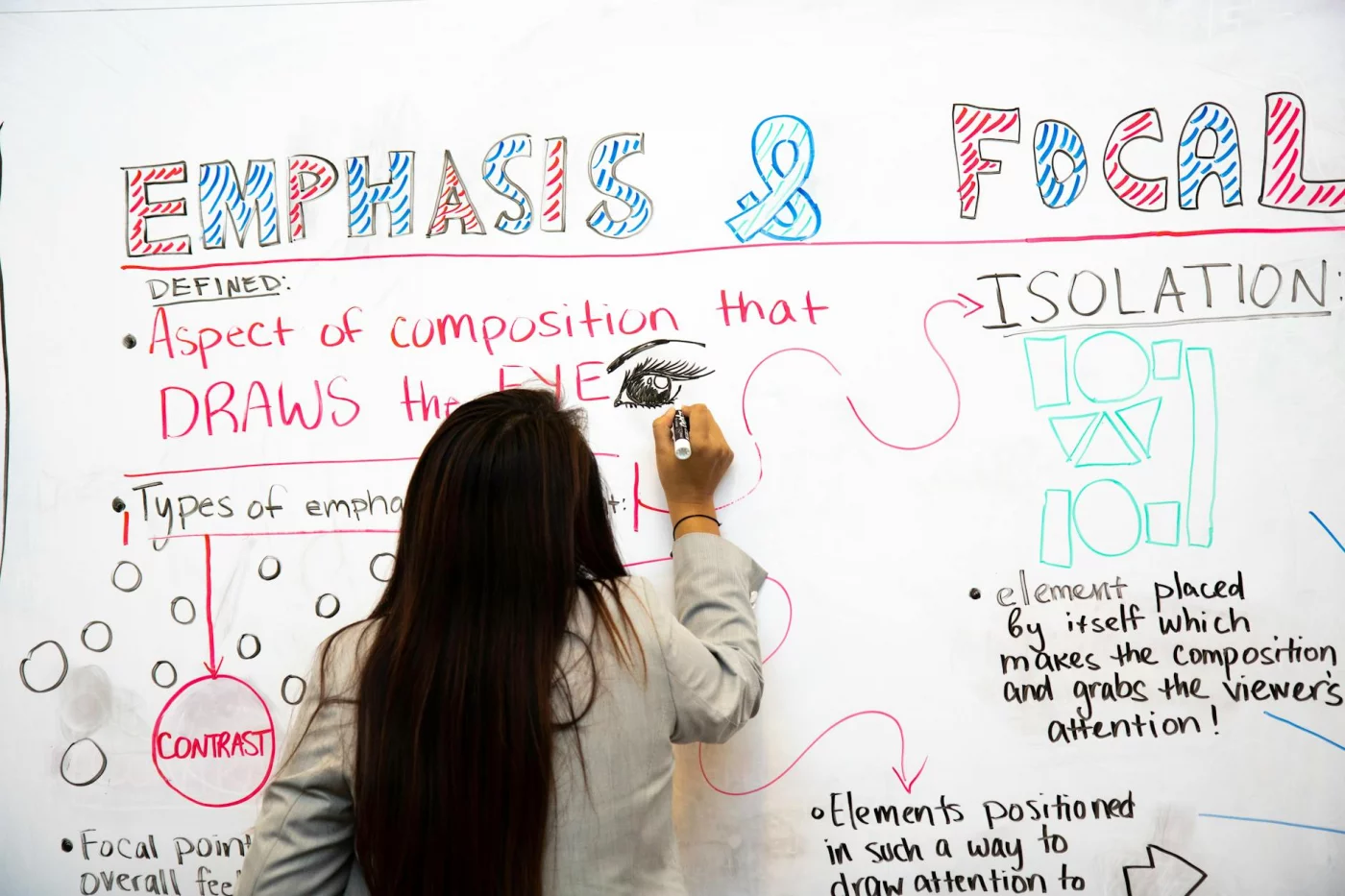
How to make active recall flashcards
- Step 1: Pick one clear learning target.
- Step 2: Break notes into small testable units.
- Step 3: Write the question before the answer.
- Step 4: Keep one fact or one decision per card.
- Step 5: Add cues, comparisons, or examples.
- Step 6: Tag hard cards and space your reviews.
- Step 7: Test honestly, then edit or delete weak cards.
Step 1-2: Start with a learning target and break notes into testable units
Start narrow. Not “Chapter 3.” Try “explain the phases of an action potential” or “identify three causes of the French Revolution.” That’s how to make active recall flashcards that actually test memory instead of just storing text.
Give yourself 10 to 15 minutes to identify targets, then 15 to 20 minutes to split notes into units. Dense pages usually become 5 to 12 cards, not one giant card. And yes, this is the part most people get wrong.
Use the chunking memory technique to separate one fact, one relationship, or one decision per card. If your lecture page feels overwhelming, the same logic helps when you study complex topics because smaller chunks are easier to retrieve and review.
Quick biology example: one slide on meiosis could become “Define crossing over,” “In which phase does crossing over occur?” and “Why does crossing over increase variation?” Those are better active recall studying examples than copying the whole slide into one prompt. Research on retrieval practice, including work summarized by the National Library of Medicine on test-enhanced learning, suggests that pulling information from memory strengthens later recall.
Step 3-5: Write better prompts, then add cues and comparisons
Write the question first. Then write the shortest answer that proves you know it. If you’re wondering how to make active recall questions, start with reusable prompts: define, compare, explain why, predict, identify, solve, or give an example.
- Weak: “Meiosis” → big paragraph answer
- Better: “How is meiosis I different from mitosis?”
- Weak: “French Revolution notes”
- Better: “Which financial problem most directly pushed France into crisis in 1789?”
Overloaded cards fail because your brain can dodge the hard part. One card asking for five causes, three dates, and two examples doesn’t test recall cleanly. Split it. One fact or one decision per card is the safer rule.
Now this is where it gets interesting. Add cues and contrasts when the topic is easy to confuse. Comparisons often create the strongest active recall studying examples because they force discrimination, not just recognition. If you use digital decks, you can batch-create these prompts in Anki or Quizlet; readers building heavy science decks may want our guide to Anki for medical school.
Step 6-7: Review, tag, and delete weak cards
Good cards drive good spaced repetition. Tag hard cards with a paper star, an Anki tag, or a Quizlet folder, then review on a practical schedule: same day, next day, 3 to 4 days later, then 1 week. The spacing effect is well established, and Wikipedia’s overview of the spacing effect gives a solid summary if you want the research background.
Answer before you flip. No half-credit. If a card feels vague, too easy, or too packed, rewrite it or delete it. The best active recall studying examples are brutally clear: you either retrieved the answer or you didn’t.
That’s the full workflow for how to active recall effectively in one session. Next, we’ll turn this into a source-by-source system for notes, slides, textbooks, and PDFs so your active recall studying examples come straight from the material you already have.
How to turn notes, slides, textbooks, and PDFs into active recall flashcards
Now that you’ve got the 7-step process, the practical question is obvious: how do you turn messy source material into cards you’ll actually review? This is where most active recall studying examples stay vague, but the conversion workflow is the part that saves time.

At its core, this is just retrieval practice: turn statements into prompts, then force your brain to answer. If you want the bigger logic behind that, see the active recall study method first.
From notes and lecture slides
Start by scanning your notes for testable units. Underline claims, formulas, dates, causes, exceptions, and distinctions. One page of decent class notes usually gives you 6-10 usable cards if you keep each card focused on one idea.
And yes, your note quality matters. If your source notes are chaotic, fix that first with a better capture system like Cornell notes vs mind mapping, then convert the strongest points into questions.
- Statement: “Mitosis has 4 main stages.” → “What are the 4 main stages of mitosis in order?”
- Statement: “Opportunity cost = next best alternative forgone.” → “What does opportunity cost mean in economics?”
- Statement: “Photosynthesis occurs in chloroplasts.” → “Where does photosynthesis occur?”
Lecture slides need a harsher filter. Ignore decorative text, learning objectives, and repeated summaries. Pull out headings, diagrams, labels, and process arrows; one strong slide often becomes 3-5 cards.
Example from a cell biology slide: heading “Sodium-Potassium Pump,” diagram with 3 Na+ out, 2 K+ in, ATP arrow. Better cards? “How many sodium ions does the pump move out?”, “How many potassium ions move in?”, and “Why does the sodium-potassium pump require ATP?” These are the kind of active recall studying examples that actually hold up in review.
From textbook chapters and PDFs
Textbook to flashcards works best when you preview before reading. Use headings, subheadings, bold terms, and end-of-section questions to predict what matters, then read with a purpose. The SQ3R reading method fits perfectly here because it turns passive reading into question-driven extraction.
For textbook chapters, pull three things first: definitions, mechanisms, and compare/contrast points. So instead of copying “Classical conditioning involves learning through association,” ask “What is classical conditioning?” or “How does classical conditioning differ from operant conditioning?”
PDF workflow is similar, but digital. Highlight sparingly, export notes or paste key lines into a draft area, then rewrite each line into a question-answer card. Copying sentences directly creates weak cards because recognition feels easy, while recall during exams does not.
Weak PDF card: “The Krebs cycle occurs in the mitochondrial matrix.” Stronger rewrite: “Where does the Krebs cycle occur?” Better still: “Why is the location of the Krebs cycle important for ATP production?” That’s one of the simplest active recall studying examples for turning reading into memory.
Real-World Application: subject-specific active recall studying examples
Card design changes by subject. This is the part most people get wrong.
- Biology/medicine: test pathways, anatomy distinctions, symptom patterns, and “what differs from what.” Example: “How does Crohn’s differ from ulcerative colitis?”
- Languages: use production cards, not just recognition. Example: “Say ‘I would have gone if I had known’ in Spanish,” plus article/gender traps.
- Humanities/social science: ask for thesis, evidence, cause/effect, and compare/contrast. Example: “What was Durkheim’s main argument in Suicide?”
- Math/technical subjects: use cards for formulas, syntax, definitions, and common error patterns, then switch to problem sets for real mastery.
Real-world use? During exam prep, med school review, language study, or learning Python on your own, active recall studying examples work best when cards cover facts and distinctions, while practice problems handle application. Which brings us to the next issue: not all flashcards are good flashcards.
Bad vs good flashcards: common mistakes, tool choices, and a quick reference
Now that you’ve turned notes into prompts, the next step is quality control. Most weak active recall studying examples fail for the same reason: the card feels like studying, but it doesn’t force real retrieval.
Common flashcard mistakes that waste study time
Three flashcard mistakes waste the most time: cards that are too vague, too packed, or too easy to guess. And yes, this is the part most people get wrong. If your card can be answered with a fuzzy phrase, a pattern match, or a glance at your notes, it’s not one of the better active recall studying examples.
Recognition is the trap. Research on retrieval practice, including work summarized by cognitive scientists like Henry Roediger and Jeffrey Karpicke, suggests memory improves more when you pull information out than when you simply re-read it. So if you flip a card and think, “Oh yeah, I knew that,” but didn’t actually say the answer first, you didn’t test memory.
- Weak definition card: “Photosynthesis definition?”
Better: “What are the two main stages of photosynthesis, and where does each occur?” - Weak process card: “Steps of glycolysis?”
Better: “What is the net ATP yield of glycolysis, and in which phase is ATP consumed versus produced?” - Weak comparison card: “Mitosis vs meiosis?”
Better: “Give two differences between mitosis and meiosis in chromosome number and genetic variation.” - Weak application card: “Newton’s 2nd law?”
Better: “A 4 kg object accelerates at 3 m/s². What force is required, and which equation do you use?”
See the pattern? Strong active recall studying examples ask for a specific output. They also make cheating harder. But wait. Another big problem is reviewing cards while half-looking at notes, which turns retrieval into copy work.
Paper, Anki, Quizlet, and free options
Paper is fine for a small deck and a short-term exam. Personally, I think it’s underrated for oral self-testing because you can’t hide behind app buttons. But for large decks, long courses, or cumulative finals, an active recall app with spaced repetition usually wins on efficiency.
Anki is best when volume matters and you want scheduling built in. Quizlet is easier for beginners and class sharing, but it can push you toward recognition-heavy modes like matching. If you want a practical setup for medicine or any content-heavy subject, see Anki for medical school.
How to do active recall on Quizlet without drifting passive? Use flashcards or test mode, hide answers, say or write your response before flipping, and avoid treating matching games as real study. For how to make active recall flashcards online or how to make active recall flashcards free, both Quizlet’s free tier and Anki work, but your card design matters more than the tool.
Can ChatGPT create flash cards? Yes, as a drafting assistant. Well, actually, treat it like a rough first pass: you still need to check accuracy, split overloaded prompts, and rewrite vague cards into one-idea-per-card active recall studying examples.
Quick Reference: rules for cards that actually work
📋 Quick Reference
- Write one clear question per card.
- Ask for a specific answer, not a topic label.
- Break long processes into 2-4 smaller cards.
- Prefer “explain,” “compare,” or “apply” over “define” when possible.
- Add context: location, cause, formula, exception, or example.
- Say or write the answer before flipping.
- Don’t review while looking at notes.
- Use spaced repetition: review hard cards sooner, easy cards later.
- Delete or rewrite cards you keep guessing.
- Keep your best active recall studying examples and retire weak ones fast.
If your deck still feels clunky, start with the Anki guide for long-term review, or branch into SAT, AP, or subject-specific study methods based on your exam. Which brings us to the last thing most readers want before they start: the practical FAQ and final next steps.
Frequently Asked Questions
Are flashcards active recall?
Yes—if they force retrieval. The short answer to are flashcards active recall is that flashcards count only when the front of the card makes you pull the answer from memory before you look. If the prompt gives away the answer through obvious wording, multiple-choice style hints, or near-identical phrasing from your notes, you’re mostly using recognition instead. In strong active recall studying examples, the card front asks a real question, you answer out loud or in writing, and only then do you check the back.
How do you create questions for active recall?
If you’re wondering how to create questions for active recall, start by turning passive notes into prompts that make you define, compare, explain, predict, or apply. Keep each card focused on one fact, one relationship, or one decision so your brain knows exactly what it’s trying to retrieve. For example, instead of writing “Photosynthesis = process plants use,” write “What are the two main stages of photosynthesis, and what happens in each?” That structure creates much better active recall studying examples because it tests memory directly rather than asking you to reread familiar text.
How do you do active recall on your own?
For anyone asking how to do active recall on your own, the basic solo method is simple: read a small chunk, hide the source, answer from memory, then check and correct. You can do this with paper cards, a blank sheet, Anki, or Quizlet, but the key rule is the same every time—answer before revealing the back. If you want a structured system, try pairing your review with spaced repetition using FreeBrain’s study tools and guides at FreeBrain. That’s one of the most practical ways to turn active recall studying examples into a repeatable routine instead of a one-off study trick.
How do you do active recall on Quizlet?
If you want to know how to do active recall on quizlet, choose study modes that make you produce the answer instead of just spotting the correct term. And here’s the kicker—many Quizlet sets are too recognition-heavy, so you may need to rewrite weak term-definition pairs into stronger question-answer prompts like “Why does this happen?” or “What comes next and why?” Quizlet can work well for active recall studying examples when you pause, answer fully from memory, and avoid flipping cards too fast. For broader evidence on retrieval practice, see this PubMed-indexed review on test-enhanced learning.
Can ChatGPT create flash cards?
Yes, but don’t stop there. If you’re asking can chatgpt create flash cards, it can definitely draft them quickly from notes, textbook sections, or lecture transcripts. But wait—raw output is rarely good enough on its own, because you still need to fact-check, simplify, and rewrite each card so it tests clear retrieval rather than vague recognition. The best active recall studying examples come from cards you edit into direct prompts with one idea per card, and if you’re unsure about source accuracy, it’s smart to verify facts against a trusted reference like NCBI or your course materials.
Conclusion: Make Every Flashcard Earn Its Place
The big idea is simple: good flashcards force your brain to retrieve, not just recognize. So when you make cards, keep one clear question per card, write the answer in your own words, break big topics into small testable chunks, and turn weak notes, slides, textbooks, and PDFs into prompts that make you think before you flip. That’s what separates useful cards from digital clutter. And if you need a model, the active recall studying examples throughout this guide show the pattern: specific question, effortful recall, fast feedback, repeat.
If your old flashcards haven’t worked, that doesn’t mean you’re bad at studying. It usually means the cards were doing too much of the work for you. Personally, I think this is the part most people get wrong. Start small. Rewrite just 10 cards today using the active recall studying examples from this article, then test yourself tomorrow without looking at your notes first. That one shift can change how much you actually remember a week from now.
Want to keep improving? Explore more practical study systems on FreeBrain.net, including How to Use Active Recall and Spaced Repetition Guide. Which brings us to the real next step: don’t just collect tips — build a small set of better cards, review them consistently, and use these active recall studying examples to make your next study session count.